The 1960s were a time of bulky screens, rotary dials, and nothing even remotely remote about any types of controls. Phones were strictly landline and wouldn’t lose their cords en masse until the 80s. Vacuum cleaners would require handholding until 2001. And video calls? Those wouldn’t become an everyday option until the 2010s. That was the case in real-life anyway. Things were very different on TV, where fictional worlds featured futuristic gadgets aplenty. And, the thing is, many of them not only became real, but part of our daily lives.
In other words, the good old goggle box has been surprisingly adept at predicting inventions well ahead of its time. Want to know which ones? Read on as we give “props” to some of its most impressive predictions.
The Jetsons' Peek-a-Boo Prober (1962)
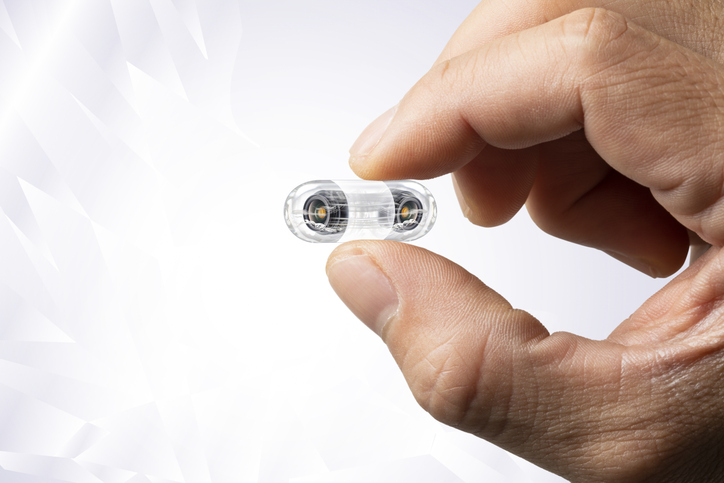
A miniaturised endoscope capsule (Credit: Yuuji via Getty Images)
As far as futurist bullseyes go, few shows have been as prolific as The Jetsons. So much so that this won’t be the last time it’ll feature in this article. A cartoon sitcom about a family living in a space-based utopia, it’s been credited with foreseeing everything from video calls to jetpacks. But perhaps one of its most fascinating inventions was a biomedical one.
In the 1962 episode titled Test Pilot, George Jetson undergoes a physical exam using the Peek-a-Boo Prober. This nifty device is sent down his throat, and travels through his entire body, transmitting live pictures of his internal organs.
Fast forward to the turn of the millennium and life imitated art with staggering accuracy when the FDA approved the use of vitamin-sized wireless camera pills. Just like the Prober, these transmit internal images of bodily organs. There are some differences however. For one thing, they only cover the gastrointestinal tract. And, for another, they’re swallowed rather than “launched” down the patient’s throat, after which they move via natural digestion rather than autonomous navigation.
Star Trek and… Most of its Things (1966)
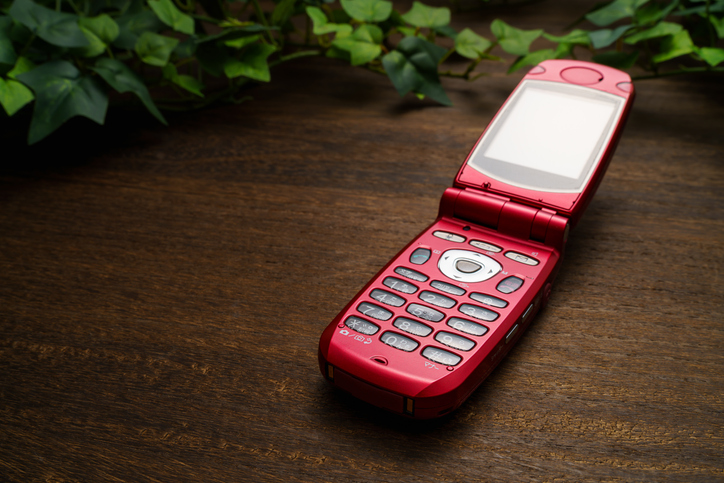
1960s Star Trek inspired the early flip phones (Credit: Wako Megumi via Getty Images)
If there’s one small screen title renowned for anticipating technological advancements, it’s Star Trek. And with good reason. Like how its ship’s interactive, voice-responsive central computer bears more than a passing resemblance to the smart assistants of today. Lieutenant Uhura’s ear piece? Bluetooth and wireless earbuds rolled into one. And the list goes on, with everything from video calls and universal translators to medical devices like handheld scanners.
But if there are two standout Trekkie gadgets that have become part of modern daily life, it’s the communicator and Personal Access Display Devices or PADDS. The communicator’s clamshell design was a direct source of inspiration for the first mobile phones. While the portable touchscreens of PADDS would later be echoed in the design of tablets.
Mission: Impossible and Ephemeral Messaging Apps (1966)

This message will self-destruct in 10...9...8... (Credit: imagefactory-studio via Getty Images)
The phrase “This message will self-destruct” is a spy-thriller trope that’s yet to be retired. Its origin? Sixties TV series Mission: Impossible, where, at the end of every taped secret instruction, the recorded message would announce its imminent destruction. Five seconds later, smoke. A bit theatrical, especially if you happened to be standing nearby.
Today’s version of disappearing messages is less explosive. Like hardware that self-destructs thermally or via electric surge. More common are the ephemeral messaging apps that wipe texts, photos, and videos after they’re viewed. Or confidential email settings that revoke access to emails after they’ve been opened.
Bit less dramatic but just as effective.
Knight Rider and Modern Cars (1982)

Will self-driving cars talk to us like KITT? (Credit: Riddhish Chakraborty via Getty Images)
It had heart, humour, action, and, of course, David “the Hoff” Hasselhoff as Michael Knight. But what set 80s cult classic Knight Rider apart was a talking car with a dry wit and a penchant for the finer things. Known as KITT, short for Knight Industries Two Thousand, this Pontiac Firebird Trans Am was a treasure trove of tech, much of it is now standard in today’s cars. Look past the opinionated sass, ejector seats, and onboard weapons and you could almost mistake it for a self-driving car. It was even environmentally conscious, apparently boasting zero carbon emissions.
Inspector Gadget and Google (1983)

Penny's map was light-years ahead of its time (Credit: sankai via Getty Images)
It’s no surprise that a detective show about a bionic man literally made of gadgets would have a shot at getting some things right. But the tech in question didn’t belong to Inspector Gadget himself. Rather, it was his niece, Penny, who wielded the tools with the most futuristic potential. Chief among these was her computer book. Shaped like a book but with a screen, it was somewhere between an ereader and a laptop. Yet it was its apps which are perhaps most impressive in the predictive stakes. Not only did it have a built in interactive map that needed the most meagre of instructions to lead the way, but it had a search feature so powerful it would make a Silicon Valley exec green with envy.
The Jetsons and Robot Vacuum Cleaners (1962)

Today's robot vacuum cleaners even clean around the cat (Credit: Elena Zaretskaya via Getty Images)
Back to The Jetsons, focusing this time on Rosie, a domestic robot who cooked, cleaned and had opinions about almost everything. For audiences still wrestling with the weekly housework, she was practically a mechanical miracle. Today’s robot vacuum cleaners can navigate rooms, avoid furniture and get on with the floor while their owners do something else. Some machines mop as well, and smart-home devices can take instructions by voice.
But there’s a fairly substantial catch. Rosie could juggle an entire household, complete with chores and conversation. Modern domestic robots are far more specialised. They may tackle the dust, but they’re not making the tea.
From TV Props to Everyday Gadgets
At least the TV remote controls are a bit more sophisticated... (Credit: Mableen via Getty Images)
As we’ve seen, in the same way as the sci-fi books and comics that came before them, the people behind yesterday’s TV had something of a knack for sniffing out tomorrow’s technology. And, even if elements like snarky appliances and instant transporters are still well beyond humanity’s frontiers, the amount they got right is undeniably impressive.