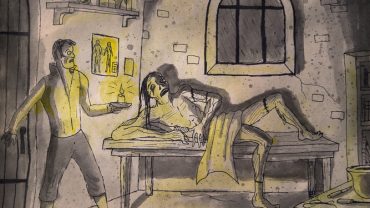
A ghost ship with no crew. A lighthouse with no keepers. A murder supposedly solved by a ghost. No, these aren’t the plots of forgotten horror films – they’re chapters from history’s rather unsettling past…
Across the centuries, strange happenings, gruesome discoveries and baffling disappearances have left behind mysteries that still send chills down the spine. But what’s really behind these extraordinary tales? We’re dusting off the Discovery files to investigate ten extraordinary events where fact really is stranger than fiction. Ready for a fright? Let’s get spooky.
Who Put Bella in the Wych Elm? (1943)
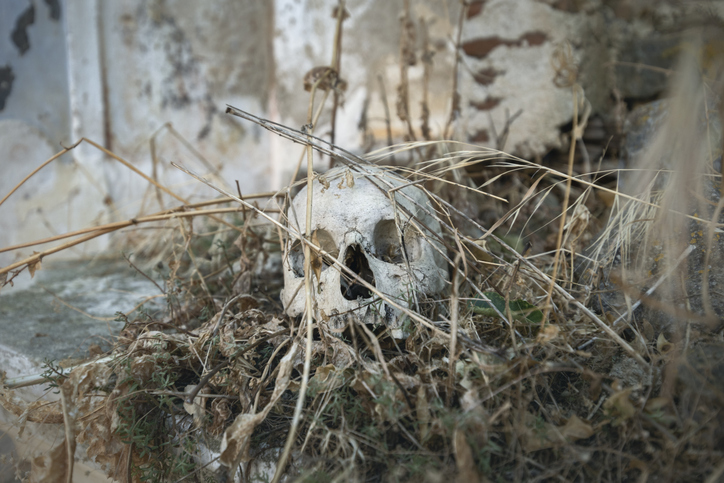
Who Put Bella in the wych elm? (Credit: Rui Almeida Fotografia via Getty Images)
In April 1943, four boys exploring Hagley Wood in Worcestershire made a horrifying discovery. Hidden inside the hollow trunk of a wych elm tree was a human skull. Police subsequently recovered the remains of a woman believed to have died around 18 months earlier, but her identity was unknown. Then came something even stranger. In 1944, mysterious graffiti began appearing around the Midlands, asking variations of the question: “Who put Bella down the wych elm?”
Was it a clue, a confession, or simply a macabre prank? Theories ranged from wartime espionage to occult rituals, but none was proven. More than 80 years later, the woman’s identity remains unknown, and the haunting question remains unanswered.
The Dancing Plague That Gripped a City (1518)
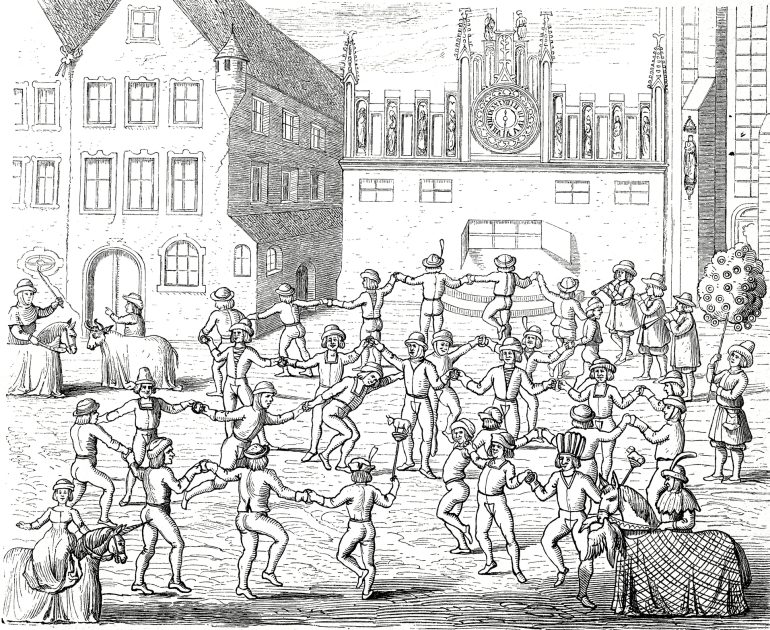
Illustration of medieval dancing (Credit: clu via Getty Images)
In July 1518, a woman reportedly began dancing uncontrollably through the streets of Strasbourg, in what’s now France. She continued for days, seemingly unable to stop. Then others joined her. Within weeks, accounts suggest that hundreds of people had become caught up in the bizarre epidemic. Local authorities were baffled. Their solution? More dancing. Musicians were hired and spaces cleared for the afflicted to dance themselves better.
Today, historians suggest extreme psychological stress and collective delusion may explain the outbreak. Claims that people actually danced themselves to death remain unclear, but the phenomenon itself was real. Mass hysteria, medieval superstition, or something else entirely? Whatever the cause, it was hardly a dancing sensation worth celebrating.
The Ghost Ship That Lost Its Crew (1872)

What happened aboard the Mary Celeste? (Credit: shaunl via Getty Images)
On 4 December 1872, sailors aboard the Dei Gratia spotted a vessel drifting through the Atlantic Ocean near the Azores. The ship, named the Mary Celeste, appeared deserted. When they boarded, they discovered something deeply unsettling. Its cargo was largely intact, personal belongings remained aboard, and there were no obvious signs of violence. Yet all ten people aboard, including Captain Benjamin Briggs, his wife and their young daughter, had vanished.
The ship’s lifeboat was missing, suggesting an evacuation. But why abandon a vessel that was still afloat? Theories have ranged from dangerous alcohol vapours to navigation errors and fears of sinking. More than 150 years later, the fate of the Mary Celeste’s occupants remains unknown.
The Ghost Who Helped Solve a Murder (1897)
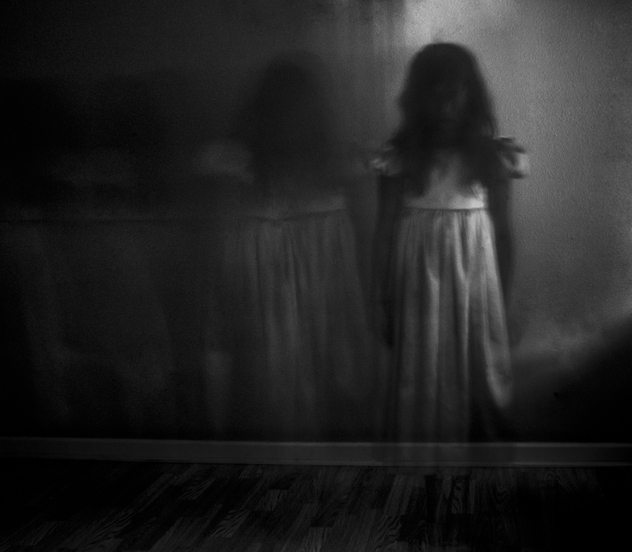
Did the ghost of a little girl help solve a murder? (Credit: Cavan Images via Getty Images)
In January 1897, Elva Zona Heaster Shue was found dead in her West Virginia home. Her death was initially attributed to natural causes, but her mother, Mary Jane Heaster, wasn’t convinced. Then came an extraordinary claim. Mary insisted her daughter’s ghost had appeared to her, revealing that Zona’s husband had murdered her by breaking her neck.
An investigation followed, and an exhumation uncovered injuries consistent with a violent death. Zona’s husband, Edward Shue, was subsequently convicted of murder. Mary’s supernatural account even emerged during the trial, although the conviction rested on evidence rather than proof of an actual haunting. Did a ghost really help expose a killer? History can’t answer that. But the murder, the trial and the conviction were very real.
The Lighthouse Keepers Who Vanished (1900)
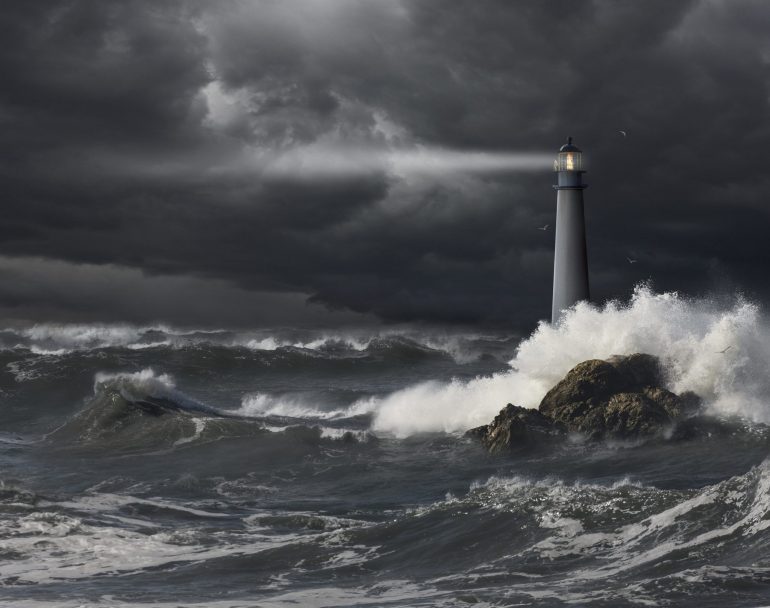
What happened to the lighthouse keepers? (Credit: John M Lund Photography Inc via Getty Images)
On 26 December 1900, a relief vessel arrived at the remote Flannan Isles lighthouse off Scotland’s Outer Hebrides. Its three keepers, James Ducat, Thomas Marshall and Donald McArthur, were nowhere to be found.
Inside, the lighthouse appeared orderly, with the lamp prepared for use. Outside, evidence of severe weather suggested they may have met a terrible fate. An official investigation concluded the men had likely been swept into the sea by an enormous wave while working near a landing area. Their bodies were never recovered.
Yet over time the disappearance inspired tales of supernatural forces and mysterious happenings, as the image of an empty lighthouse, surrounded by raging seas, remained captivatingly eerie.
The Hinterkaifeck Farm Murders (1922)

What really happened at Hinterkaifeck in 1922? (Credit: Westend61 via Getty Images)
In March 1922, an isolated farmstead in Bavaria, Germany, became the scene of one of Europe’s most disturbing unsolved crimes. Six people were murdered at Hinterkaifeck, including two children. Even stranger were the events reportedly preceding the killings. There were unusual accounts of strange noises coming from the attic. Even more bizarrely, the farmer had spoken of mysterious footprints in the snow leading towards the house, but none returning.
Investigators later considered the possibility the killer had remained at the property after the murders, tending livestock and using the house. Despite extensive investigations, nobody was ever convicted. So who was responsible? And were the unsettling incidents beforehand connected? More than a century later, Hinterkaifeck remains a chilling mystery.
The Terrifying Mystery of Dyatlov Pass (1959)
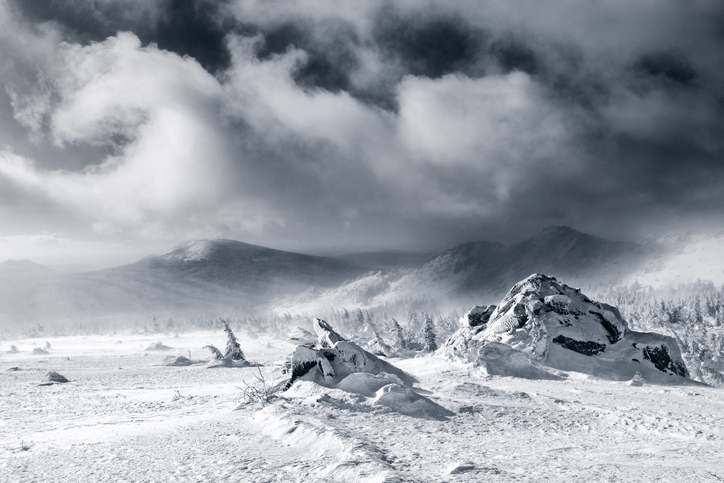
Russia's snow-covered Ural Mountains (Credit: ElenaBelozorova via Getty Images)
In February 1959, nine experienced hikers died during an expedition through Russia’s Ural Mountains. When rescuers discovered their campsite, they encountered a deeply disturbing scene. The hikers’ tent had been cut open from the inside. Footprints suggested its occupants had fled into the freezing night, some without proper clothing or footwear. Their bodies were later found in different locations, several showing severe injuries.
The terrifying circumstances led to decades of speculation, including theories involving secret weapons and mysterious creatures. More recently, research has shown how a small slab avalanche could plausibly explain the hikers’ sudden exit from their tent and some of their injuries. But for many, the bizarre incident has far more questions than answers.
The Men Who Died Wearing Lead Masks (1966)

The two men were found on a remote hillside near Niterói (Credit: Cristian Lourenço via Getty Images)
In August 1966, two Brazilian electronics technicians, Manoel Pereira da Cruz and Miguel José Viana, were discovered dead on a hillside near Niterói, overlooking Rio de Janeiro. Both were dressed in suits and raincoats. Stranger still, each had a homemade lead mask designed to cover the eyes. Nearby lay a notebook containing cryptic instructions referring to capsules, metals and a mysterious signal.
There were no obvious signs of violence, and investigators never established a definitive cause of death. Theories ranged from a failed experiment involving drugs to an attempted encounter with extraterrestrials. What were the men expecting to see? And why the metal masks? Decades later, nobody knows for certain.
The Enfield Poltergeist (1977)

Was a suburban north London street the scene of a real haunting? (Credit: Richard Newstead via Getty Images)
In August 1977, a family living in a council house in Enfield, north London, began reporting a series of disturbing incidents. Furniture allegedly moved without explanation, mysterious knocking sounds echoed through rooms, and strange voices appeared to come from one of the children. The claims attracted journalists, photographers and paranormal investigators, turning an ordinary suburban home into the centre of one of Britain’s most famous alleged hauntings.
Some investigators believed the disturbances were genuine. Others uncovered evidence of trickery and questioned the reliability of the witnesses. The supernatural claims remain unproven, but the investigation and extraordinary public fascination were very real. A haunted house in suburban London? Halloween hardly gets more traditional.
The Day It Rained Meat (1876)

Were vultures responsible for the Kentucky Meat Shower? (Credit: Utopia_88 via Getty Images)
On 3 March 1876, residents of Bath County, Kentucky, witnessed one of the most revolting weather events ever reported. Pieces of what appeared to be raw animal flesh began falling from a clear sky, scattering across the area. Newspapers quickly picked up the story, and samples were examined by investigators. Some witnesses even claimed to have tasted the mysterious material. Rather them than us.
One leading explanation involved vultures regurgitating partially digested food while flying overhead. A flock vomiting simultaneously could, in theory, create a particularly unpleasant downpour. The exact circumstances were never established, but the incident was widely documented at the time. Forget showers of rain. This was a shower of something altogether more horrifying.
The Final File: Truth Really Is Stranger Than Fiction

Happy Halloween! (Credit: Tatsiana Volkava via Getty Images)
From mysterious graffiti and deserted ships to reports of ghostly visitations and unexplained deaths, history’s produced more than its fair share of spine-tingling stories. Some have plausible explanations. Others remain unresolved. Yet behind every haunting headline lies a real event, a genuine investigation, or an extraordinary historical mystery. This Halloween, who needs fictional monsters and Hollywood horrors? The real world has supplied plenty of chilling material of its own. And sometimes, the truth is far spookier than fiction.