Space has always been a blank screen for the wild imagination. Long before rockets reached orbit, newspapers were reporting bat-winged people on the Moon, astronomers were sketching canals across Mars, and inventors were wondering whether strange signals came from other worlds.
As tech improved, the stories changed, but the appetite for cosmic mystery did not. Soon we had flying saucers, lunar conspiracy theories, sinister planets, and an ancient alien satellite supposedly circling Earth. So, how did space become such fertile ground for so many bizarre stories? From newspaper hoaxes to internet folklore, we’re plotting a course through the strangest claims ever launched skyward.
The Great Moon Hoax Takes Flight
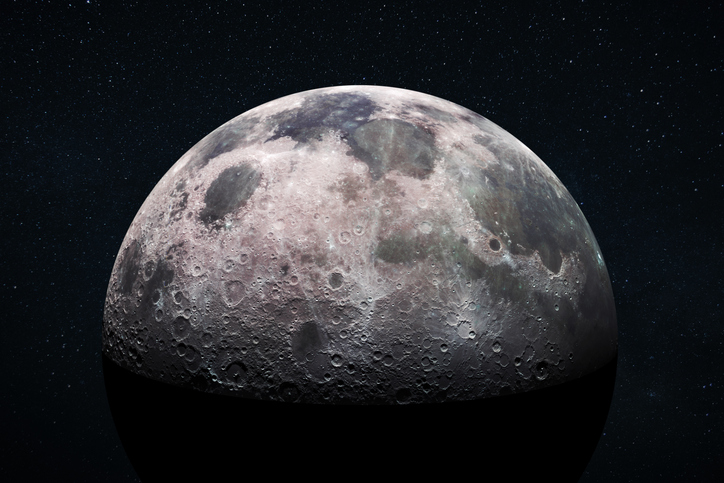
The Great Moon Hoax fooled an unsuspecting public (Credit: Alones Creative via Getty Images)
In August 1835, readers of the New York Sun were treated to sensational reports supposedly describing astonishing discoveries made by English astronomer Sir John Herschel. According to the newspaper, a powerful telescope had revealed forests, strange animals and, most memorably, winged humanoids living on the Moon. There was, however, one small problem: it was all a hoax.
As Stephen King is often quoted as saying, “good fiction is the truth inside the lie.” And such was the case with the Great Moon Hoax. Part of what made the stories believable were the genuine facts peppered within them. Herschel was real. And the article correctly placed him in South Africa, with a large reflecting telescope. Even a lunar volcano echoed an earlier observation by his father, William Herschel.
What’s more, the articles didn’t lead with the more outlandish ‘finds’. Instead, they began as a description of an expedition, slowly adding a unicorn-like creature here, bipedal beavers there. Bat-people were only introduced in the fourth installment. Coupled with the fact that Herschel was unable to refute the claims in a timely manner as he was largely off the grid – and one of history’s most detailed hoaxes gained wings.
When Mars Got a Canal Network
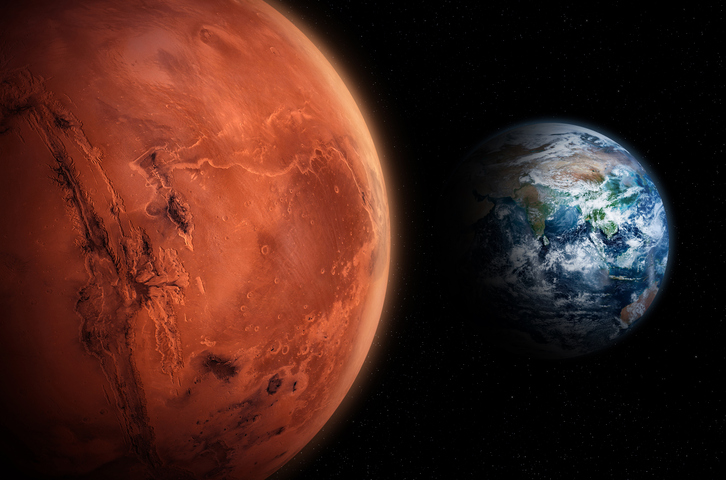
The 'canali' on Mars are most certainly natural (Credit: buradaki via Getty Images)
In 1877, Italian astronomer Giovanni Schiaparelli observed long features across the surface of Mars and described them using the word canali, meaning channels. In English, however, these became widely known as “canals”, a word carrying the rather important suggestion that somebody had actually built them.
American astronomer Percival Lowell ran with the idea spectacularly. He mapped elaborate networks across Mars and argued they might have been engineered by an intelligent civilisation struggling to move water around a drying planet. Better telescopes eventually made the apparent canals disappear. They were largely products of poor resolution, optical illusion and some very enthusiastic line-joining.
Did Nikola Tesla Hear Martians?
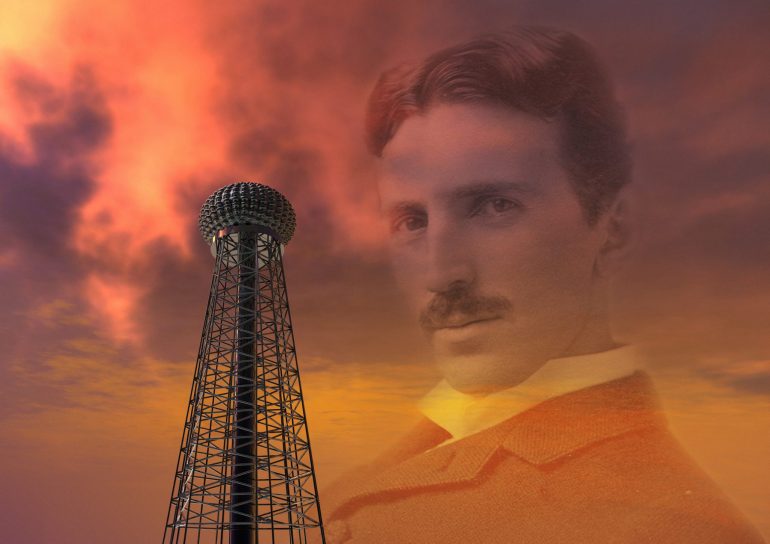
What did Nikola Tesla hear? (Credit: VICTOR HABBICK VISIONS/SCIENCE PHOTO LIBRARY via Getty Images)
At the end of the 19th century, Nikola Tesla was experimenting with wireless signals at his Colorado Springs laboratory when he detected curious rhythmic electrical disturbances. Tesla wondered whether they might have an intelligent source and later publicly entertained the possibility that he’d received a message from another planet, possibly Mars.
It sounds wonderfully science-fictional now, but radio technology was then brand new and the universe suddenly seemed capable of speaking.
No Martian transmission was ever confirmed, and there are numerous possible explanations for what Tesla detected. Even so, the episode helped cement an idea that has never really gone away: mysterious signal equals extra-terrestrial contact from (usually) super-intelligent aliens.
The War of the Worlds Panic That Grew in the Retelling
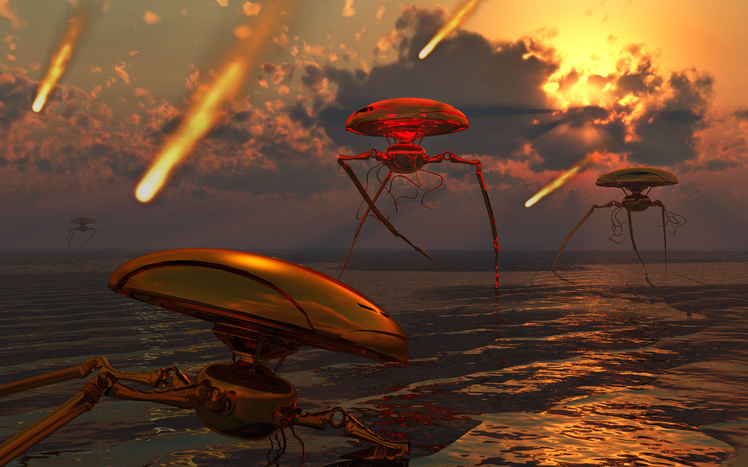
Orson Welles' broadcast caused 'some' panic (Credit: Mark Stevenson/UIG via Getty Images)
On 30 October 1938, Orson Welles and the Mercury Theatre broadcast a radio adaptation of H. G. Wells’ The War of the Worlds. Presented partly through realistic news-style interruptions, the drama described Martians invading New Jersey.
The legend says America immediately descended into nationwide panic, with terrified listeners fleeing their homes en masse. The reality was rather less cinematic. Some people certainly misunderstood what they were hearing and became alarmed, but later research suggests the scale of the panic was greatly exaggerated. Which gives this story a particularly neat cosmic twist: the Martian invasion was fictional; but so, to an extent, was the enormous panic it supposedly caused.
Flying Saucers Enter the Atmosphere

Kenneth Arnold's sighting near Mount Ranier kickstarted the modern UFO era (Credit: @ Didier Marti via Getty Images)
In June 1947, pilot Kenneth Arnold reported seeing nine unusual objects moving near Mount Rainier in Washington State. His description of their movement helped inspire the phrase “flying saucer”. Within weeks, America seemed to be constantly looking skyward.
Then came Roswell. In July that year, unusual debris recovered in New Mexico briefly generated headlines before the military said it came from a weather balloon. Decades later, Roswell was transformed into an almost sacred story among enthusiasts, involving crashed extraterrestrial spacecraft and recovered alien bodies. The official explanation eventually linked the debris to Project Mogul, a secret balloon programme. By then, however, the idea of the flying saucer had already flown the proverbial cosmic coop.
The Moon Landing Conspiracy Blasts Off
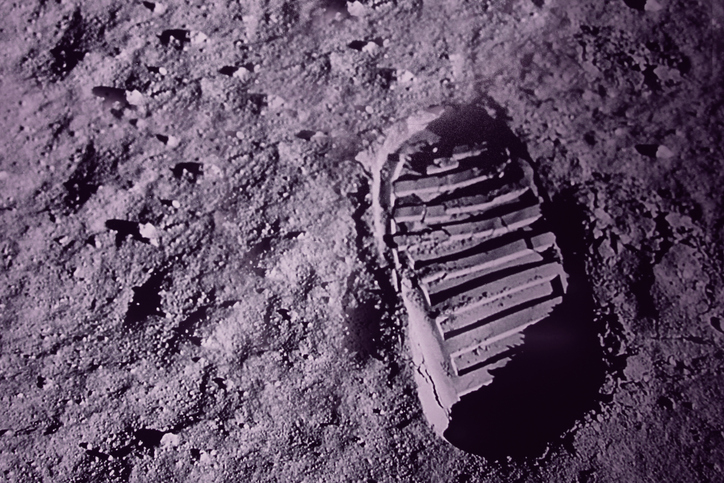
Buzz Aldrin's footprint on the moon (Credit: AJITH ACHUTHAN via Getty Images)
When Apollo 11 landed on the Moon in July 1969, hundreds of millions watched one of humanity’s greatest technological achievements. Inevitably, somebody eventually decided the whole thing had happened on a film set.
Moon landing hoax claims gathered momentum during the 70s and later flourished online. Why are there no stars in the photographs? Why does the American flag appear to move? Why do shadows point in different directions?
For the mainstream scientific community, each proposed smoking gun has a straightforward explanation involving photography, perspective, fabric movement or the unusual lighting conditions of the lunar surface. Add lunar rocks, independent tracking of the missions and reflectors still used for laser measurements, and the conspiracy requires a cover-up considerably harder than simply going to the Moon. And would probably involve more time, money and effort.
The Face on Mars Looks Back
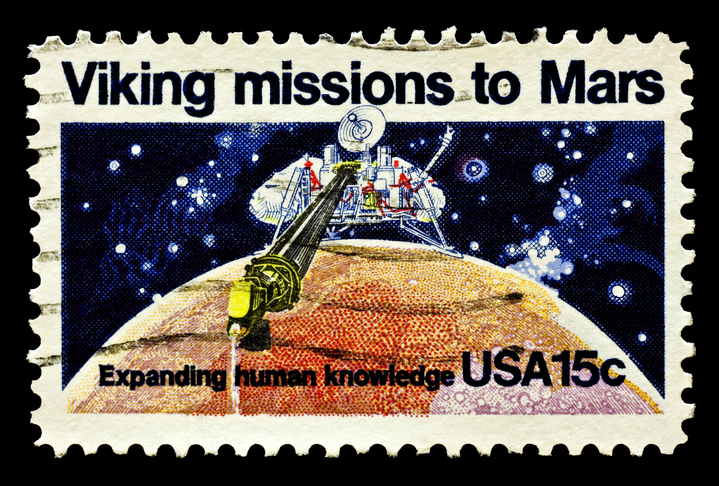
1979 stamp comemmorating the Viking 1 mission to Mars (Credit: MikeRega via Getty Images)
In 1976, NASA’s Viking 1 orbiter photographed a rocky formation in the Cydonia region of Mars. With low resolution, strong shadows and just the right viewing angle, the mesa appeared startlingly face-like.
And thus, an alien monument was born. Books, television programmes and conspiracy theories transformed the formation into everything from a Martian sculpture to evidence of a vanished civilisation.
Scientists explained that shadows across an eroded hill had created the illusion, exaggerated by the photograph’s limited detail. Later, sharper images confirmed its natural origins. Yet the face remains a space-age curiosity: a striking example of pareidolia, our tendency to recognise familiar shapes in random patterns, much as we spot animals in passing clouds.
Nibiru and the Planet That Refused to Destroy Earth
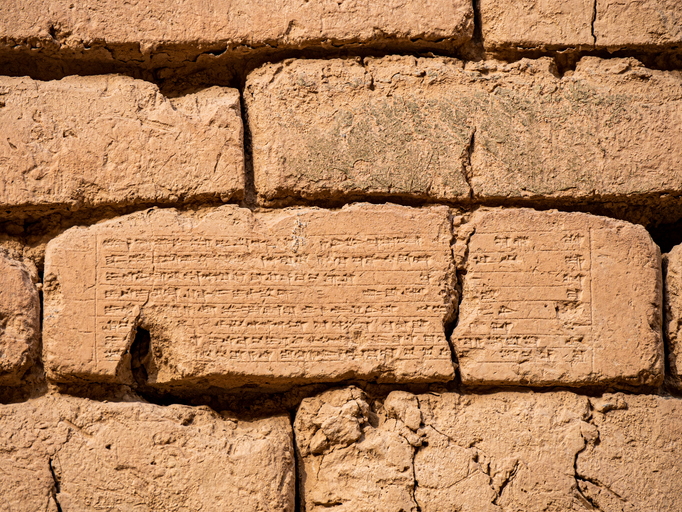
Did ancient Mesopotamian texts describe Nibiru? (Credit: Amine Bouzidi Idrissi via Getty Images)
In his 1976 book The Twelfth Planet, Zecharia Sitchin claimed that ancient Mesopotamian texts described Nibiru, a mysterious planet whose alien inhabitants had visited Earth. Scholars rejected his readings, but the idea of an extraterrestrial homeworld proved difficult to resist.
Then somebody gave it a deadline. It came from a self-proclaimed alien contactee, and linked Nibiru to the idea of a “Planet X”, predicting its approach would unleash catastrophe in May 2003. Sitchin rejected the idea. May 2003 passed without the advertised apocalypse. When that prediction failed, online believers linked the supposed catastrophe to 2012 and misunderstandings of the Maya calendar. Once again, nothing happened.
The astronomical evidence was equally uncooperative. As NASA explained, a planet approaching Earth would be visible through telescopes and betray its presence through its gravitational effects. And of course astronomers do investigate the possibility of undiscovered distant planets, but a world lurking beyond Neptune is a rather different proposition from one arriving next Tuesday to end civilisation.
The Black Knight Satellite: Conspiracy in Orbit
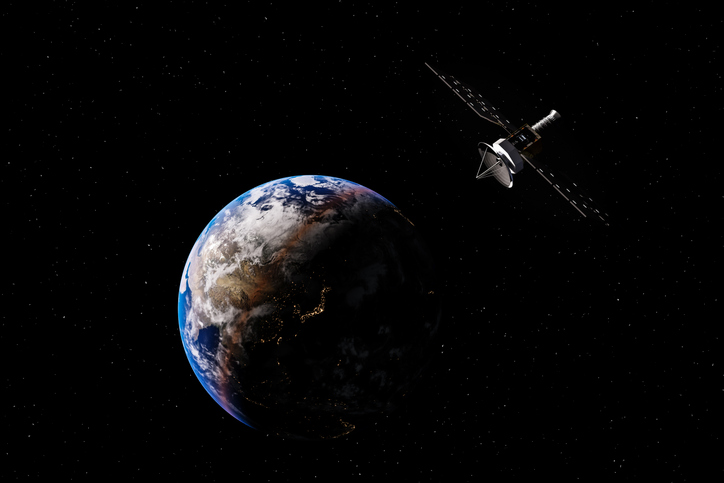
Ancient spacecraft or space junk? Is the Black Knight Satellite real? (Credit: OsakaWayne Studios via Getty Images)
Few space legends have been assembled from quite as many unrelated ingredients as the so-called Black Knight satellite. The story claims that an ancient extraterrestrial spacecraft, sometimes said to be around 13,000 years old, has secretly orbited Earth for millennia while governments quietly monitor it.
Its supposed evidence is a cosmic scrapbook. Old radio mysteries, Cold War satellite reports and photographs from NASA missions have all been folded into the tale.
One particularly famous image from a 1998 Space Shuttle mission shows a dark object floating above Earth. Alien probe? Not according to scientists. It was photographed after a thermal blanket escaped during work outside the spacecraft. Sometimes mysterious space objects really are just misplaced space DIY…
Why Space Nonsense Never Comes Back Down
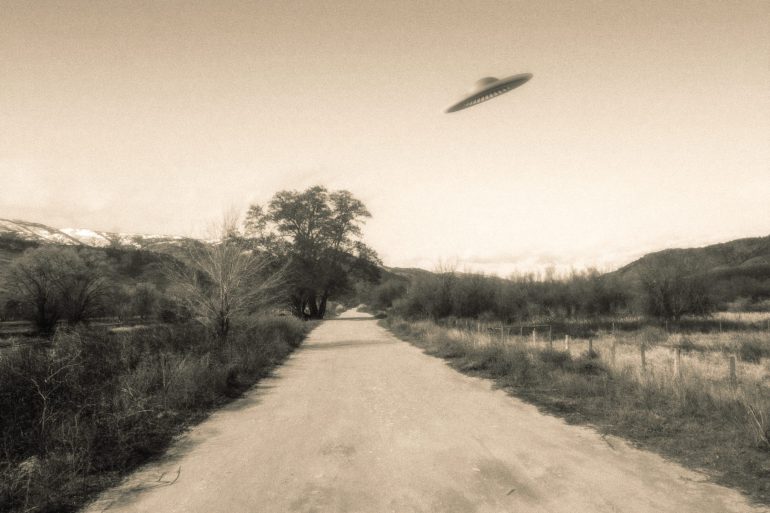
Never let the truth get in the way of a good story... (Credit: Joe Regan via Getty Images)
Space offers almost perfect conditions for the classic flight of fancy. It’s unimaginably large, mostly inaccessible and filled with things that can look particularly peculiar to those who don’t understand the science. A blurry photograph, unexpected radio burst or oddly shaped rock can become whatever imagination wants it to be.
And every generation gets new tools for spreading the story. Newspapers gave us Moon bats. Radio supplied Martians. Television popularised UFOs. The internet supercharged Nibiru, Moon-hoax claims and mysterious satellites. The technology changes. The pattern rarely does. Where evidence runs out, storytelling rushes enthusiastically into the vacuum.
Houston, We Have Some Nonsense
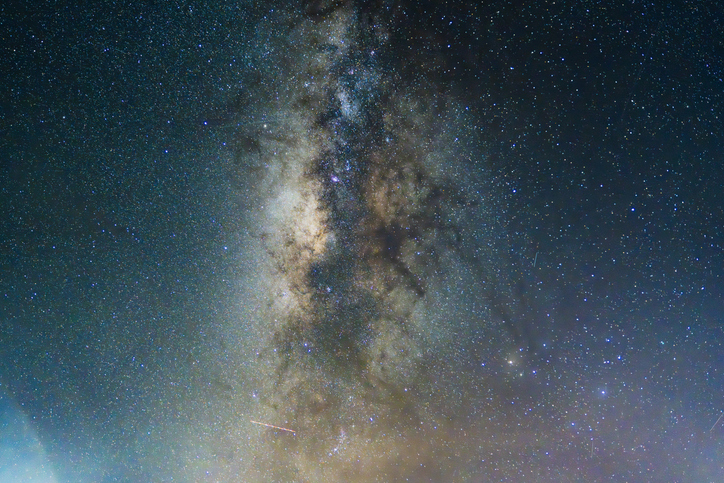
What's out there? (Credit: Witthaya Prasongsin via Getty Images)
From lunar bat-people and Martian canals to faces, fake planets and extraterrestrial satellites, our view of space has always contained a generous helping of classic science fiction. Some stories began as deliberate hoaxes, others as honest mistakes, and a few grew from mysteries stretched far beyond the available evidence. Perhaps that’s inevitable. Space is dark, distant and magnificently strange. And whenever humans look into the unknown, there follows a remarkable talent for seeing something looking back.