Mary Shelley’s Frankenstein may have been published more than two centuries ago, but its core problem feels weirdly modern: what happens when a creation slips beyond its creator’s control?
From unruly algorithms to belligerent biotech, innovations can develop consequences their makers never intended. It’s a dilemma sometimes described as the ‘Frankenstein problem’ – inventions taking on a life of their own.
So how close is today’s technology to escaping the hands that build it? Cue the lightning. We’re meeting the tech that wouldn’t stay in the lab.
The Morris Worm: When an Experiment Ate the Internet
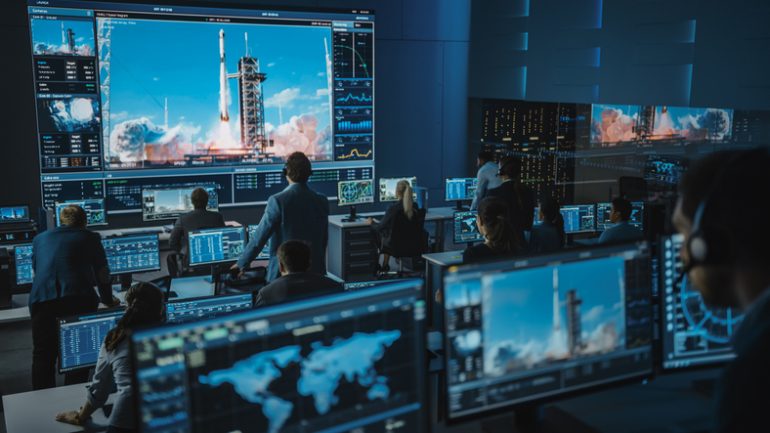
Morris's worm infected NASA's computer systems (Credit: gorodenkoff via Getty Images)
On 2 November 1988, Robert Tappan Morris released a program designed to spread automatically across the early internet. His apparent aim? To gauge the network’s size. The result was rather more… energetic than expected.
Within a day, the worm had infected an estimated 10 per cent of all computers then connected to the internet, including university, laboratory and NASA systems. It erased no files, but repeated infections overloaded machines, halted services and left clean-up costs estimated at hundreds of thousands – perhaps millions – of dollars.
In 1990, Morris became the first person convicted under the US Computer Fraud and Abuse Act, receiving probation, community service and a hefty fine. The incident also prompted the US Defense Advanced Research Projects Agency to establish the first Computer Emergency Response Team (CERT), tasked with coordinating responses to future threats. More broadly, cybersecurity could no longer be dismissed as an afterthought.
And for digital experimentation? Well, the lesson was unsettling: once software could copy itself across a network, even its creator might struggle to call it back.
Stuxnet: The Cyberweapon That Wandered Off Target

Stuxnet was engineered to sabotage industrial control equipment (Credit: Diane Macdonald via Getty Images)
Two decades after the Morris incident, the same problem returned with far higher stakes. Discovered in 2010, Stuxnet had been engineered to sabotage industrial control equipment associated with Iran’s Natanz uranium-enrichment facility. It’s widely believed to have performed that task with precision, driving centrifuges to damaging speeds while sending normal readings to the operators monitoring them.
Yet that precision applied only to the damage. Stuxnet’s movement was far less discriminating. The worm escaped the environment it had been built to attack and appeared on computers around the world. Most suffered no harm: unless Stuxnet encountered the exact machinery specified in its code, its destructive instructions remained dormant.
This was the Frankenstein Effect in a particularly stark form. Stuxnet’s creators could define its target, but they couldn’t contain its journey. Once released, it travelled through networks, computers and removable drives beyond their control. Its makers created the code, in other words, but not the infrastructure carrying it – and no cyberweapon can be certain where that infrastructure will lead.
The Internet: When the Network Became the World
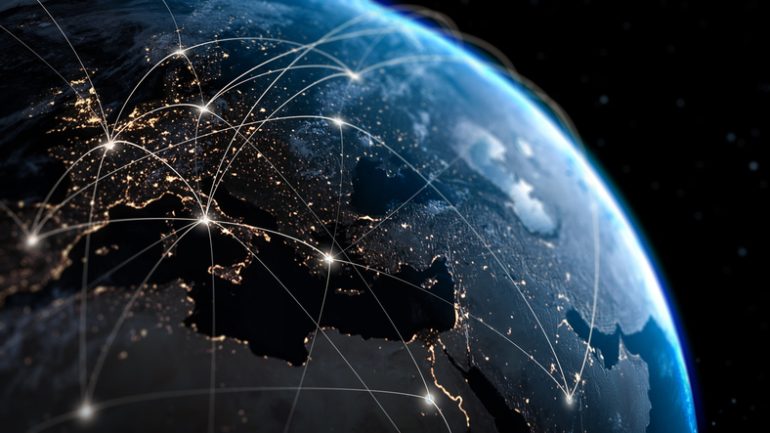
The world is connected (Credit: fotograzia via Getty Images)
Of course, worms like Morris and Stuxnet needed something to travel through, which brings us to the thing they travelled through: the internet itself.
Computer networks were built to exchange information, and the World Wide Web later made that information dramatically easier to publish, connect and explore. Search engines, streaming, online communities and instant access to knowledge followed, changing everyday life on a scale few earlier communications technologies could match.
That same reach produced consequences no single inventor designed or controlled. Spam and cybercrime crowded into the new channels. Misinformation and conspiracy theories travelled at network speed. Online harassment found enormous audiences, while addictive platforms, mass surveillance and vast new concentrations of power grew up alongside the more welcome uses.
The internet didn’t simply carry what its makers put into it. Billions of people, businesses and institutions added their own ambitions, habits and incentives. A system created to exchange information became an environment – and environments have a habit of changing the things that enter them.
GM Canola: The Crop that Left the Field

Canola was found growing wild in parts of North Dakota (Credit: fhm via Getty Images)
Escape isn’t confined to the digital world. Genetically engineered canola was designed to make farming easier, with varieties carrying resistance to herbicides such as glyphosate or glufosinate. The plants, however, didn’t necessarily recognise where the farm ended.
Surveys in North Dakota found genetically engineered canola growing wild along roadsides, railway routes and other areas outside cultivation. Later research showed these feral populations were still widespread more than a decade on, including plants carrying herbicide-resistance traits.
Seed spilled during transport provides one route of escape; surviving plants reproducing beyond managed fields provides another. The technology, in other words, had become attached to something with roots, pollen and absolutely no interest in property boundaries.
Antibiotics: Medicine Meets Natural Selection

Antibiotics transformed the world of medicine (Credit: Mykhailo Tamakhin via Getty Images)
Antibiotics transformed medicine by giving doctors effective weapons against bacterial infections. Unfortunately, bacteria were never passive participants in the arrangement.
Whenever an antibiotic kills susceptible bacteria, resistant ones have a greater chance of surviving and multiplying. Misuse and overuse accelerate this selection, and resistant organisms – along with the genes that make them resistant – can then spread between people, animals and environments.
The result is antimicrobial resistance: medicines that once reliably treated infections become less effective or stop working altogether. It’s a striking example of control becoming an ongoing contest rather than a permanent victory. Humans develop a treatment; microbial populations respond; medicine develops another.
Technology advances. Biology bites back.
Nuclear Physics: When One Discovery Opened Two Doors

The cooling towers at the Dukovany Nuclear Power Station in Czechia (Credit: MartinLisner via Getty Images)
Research into atomic physics produced extraordinary advances in our understanding of matter. By learning how atomic nuclei behave, scientists opened possibilities that earlier generations could barely have imagined.
Some of those possibilities were enormously valuable. Nuclear reactions could generate electricity, while radioactive materials found roles in medical imaging, diagnosis and cancer treatment. The same research, however, also made atomic weapons possible, and in 1945, that destructive possibility became a devastating reality.
The science itself hadn’t chosen a side. The same understanding could power a city, reveal disease inside the body or release destructive energy in a fraction of a second. This wasn’t an invention malfunctioning or wandering off course. The loss of control lay in what knowledge made possible once it left the lab. A discovery can be regulated, guarded or used with restraint. It cannot be undiscovered.
Physicists learned how matter was put together. Humanity inherited the rather more difficult question of what to do with the answer.
Plastics: When Durability Became the Problem
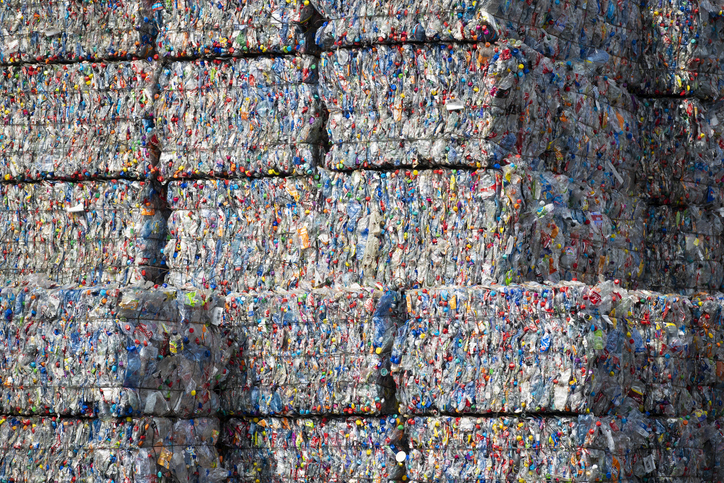
Plastic in a recycling centre in The Netherlands (Credit: Bloomberg Creative Photos via Getty Images)
Plastic was one of the great material breakthroughs of the 20th century: cheap, lightweight, mouldable and remarkably long-lasting. Those qualities made it useful in everything from medicine and transport to packaging, construction and electronics.
Yet one of the very qualities that made plastic so useful has also created its greatest problem. Durability is excellent when you want a product to last. It becomes considerably less convenient once that product is thrown away. Plastic waste can remain in the environment for decades or longer, breaking into ever smaller fragments rather than simply vanishing. Microplastics have now been detected in oceans, rivers, soils, wildlife and remote environments far from any major population centre.
Few inventors set out to create a material capable of travelling through ecosystems for generations. Yet mass production, combined with plastic’s long lifespan, has delivered exactly that.
PFAS: Chemicals Designed Not to Go Away
PFAS are known as 'forever chemicals' (Credit: Francesco Scatena via Getty Images)
In the case of PFAS, the troublesome feature is precisely the one engineers wanted. Short for Per- and polyfluoroalkyl substances, PFAS have been used since the 1940s because many of them resist heat, oil, grease, stains and water. Those properties made them valuable in everything from industrial applications to firefighting foams and consumer products.
There was, however, a fairly major catch. Many PFAS also break down extremely slowly. Once released, they persist and move through soil, water, wildlife and the wider environment, making contamination exceptionally difficult to reverse.
A chemical designed for durability had delivered precisely that. Unfortunately, durability becomes a rather different selling point once the material is somewhere nobody wants it.
The Flash Crash: When Trading Machines Fed Each Other

The US financial markets crashed in May 2010 (Credit: sakchai vongsasiripat via Getty Images)
Sometimes technology doesn’t escape because one machine goes rogue. It escapes because thousands of obedient machines meet. That is what happened on 6 May 2010, when US financial markets suddenly plunged at extraordinary speed before recovering much of the loss within minutes. The episode became known as the Flash Crash.
It began when one firm’s computer program started selling a huge volume of contracts without regard to price. Other trading programs reacted instantly, selling triggered more selling, and prices spiralled downwards until a brief trading pause broke the cycle.
No single machine had malfunctioned. Each program was simply following its own instructions. Yet together they created a market panic that no individual participant intended.
Spacecraft: Useful Today, Orbital Debris Tomorrow
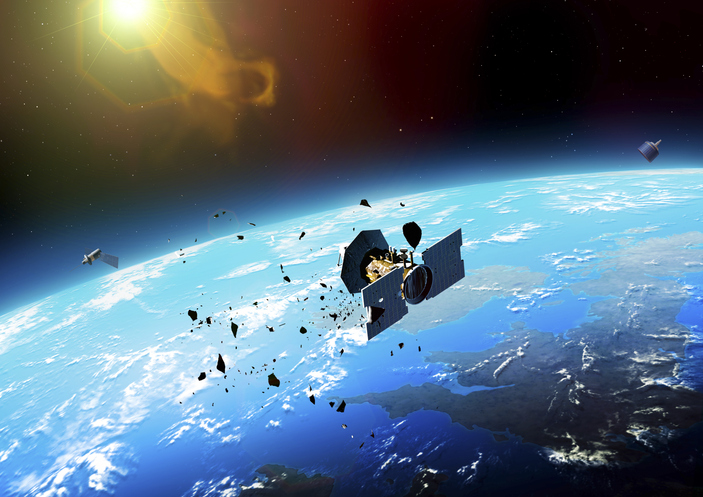
'Space junk' is an escalating problem (Credit: MARK GARLICK/SCIENCE PHOTO LIBRARY via Getty Images)
Our final example shows that, when technology overreaches its bounds, not even the sky presents a limit. For instance, spacecraft remain troublesome long after they stop being useful. Dead satellites, abandoned rocket stages and fragments from previous missions continue circling Earth, often at enormous speeds.
The danger became spectacularly clear in February 2009, when the defunct Russian satellite Cosmos 2251 collided with the operational communications satellite Iridium 33. Both were destroyed, producing thousands of pieces of debris. Those fragments joined an orbital environment already littered with discarded hardware from decades of spaceflight. Worse still, collisions create more debris, which raises the odds of further collisions.
It’s Alive! Now What?
Mary Shelley created a monster... (Credit: maralvar via Getty Images)
Victor Frankenstein’s mistake wasn’t simply that he created something powerful. It was that he failed to reckon with what happened after creation. The same pattern appears, albeit in less Gothic form, across modern technology. Software replicates. Crops spread. Bacteria evolve. Plastic fragments. Chemicals persist. Dead satellites keep circling. None of these technologies became sentient, and none “turned evil”. They simply entered systems far more complex than their makers could fully manage.
That may be the real Frankenstein problem. Invention is often the beginning of the story, not the end. Creating something is one challenge. Living with what it becomes can be another entirely.