Small but spectacularly skilled, some wild cats don’t need lion-sized swagger to dominate their patch. From the sand cat padding across desert dunes to the rusty-spotted cat slipping through forests like a whiskered shadow, these pocket predators are masters of stealth, speed, and surprise.
Often overlooked beside their bigger cousins, the world’s smallest felines are fierce hunters with outsized personalities and remarkable adaptations. So, what makes these miniature moggies such mighty forces in the wild? Time to prowl into their secret lives.
Who Are You Calling Small?
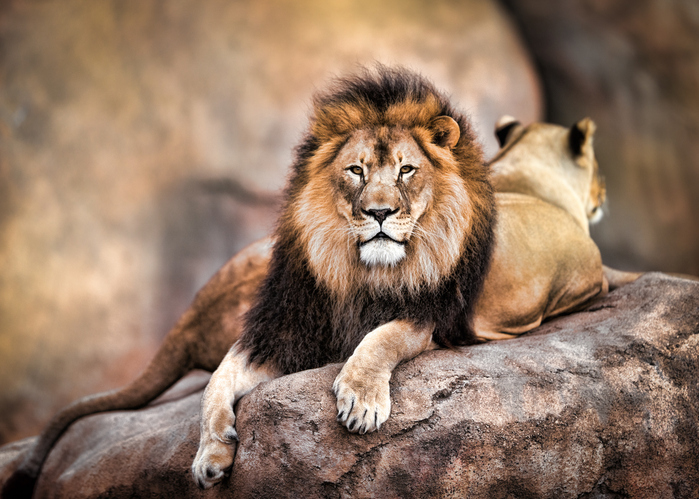
A male lion, the King of the Jungle (Credit: Todd Ryburn Photography via Getty Images)
Before looking at individual species, let’s examine what we mean by small cats. The cat family, or Felidae, is split into two main branches. On one side are the cats that roar. These are the Pantherinae and are exclusively big cats; lions, tigers, leopards, and so on. On the other are the Felinae: the cats that do not roar, but purr. All of the cats on our list are in this subfamily, although not all cats in this subfamily are small. Still, the rule holds: small cats do not roar. And we’ll be focusing solely on the lower end of the size scale.
What’s more, we’ll be showing that, when it comes to predators, fun-sized felines are often superbly adapted to their environments, whether that means surviving in extreme heat, climbing through rainforest canopies, stalking rodents in grasslands, or slipping through reeds beside rivers. They’re not mini versions of big cats. They’re specialists in their own right.
The Rusty-Spotted Cat: Tiny but Terrific
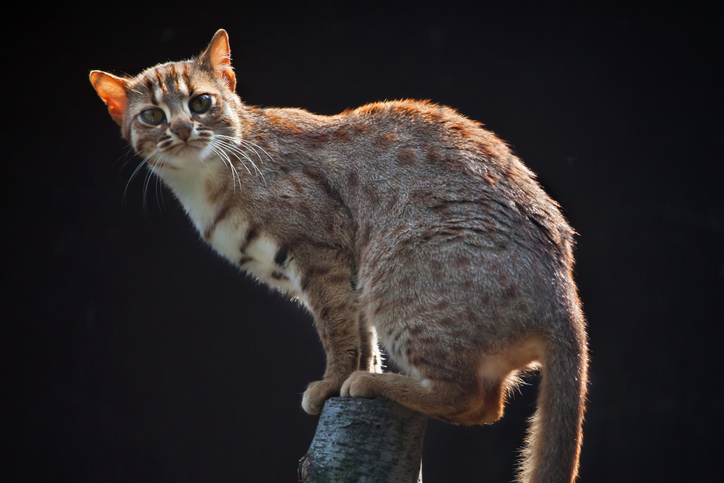
A rusty-spotted cat (Credit: wrangel via Getty Images)
Widely considered the smallest wild cat on Earth, the rusty-spotted cat weighs roughly 1-2 kilograms and measures around 35-48 centimetres in body length. By comparison, the average house cat weighs around 5kg and measures around 60-80cm from head to tail.
Found in parts of India, Sri Lanka, and Nepal, this dappled little hunter is mostly nocturnal, slipping through vegetation after dark in search of rodents, birds, frogs, lizards, and insects. Its huge eyes help navigate the night, while its markings break up its outline among leaves and shadows.
The Black-Footed Cat: Africa’s Fierce Little Hunter
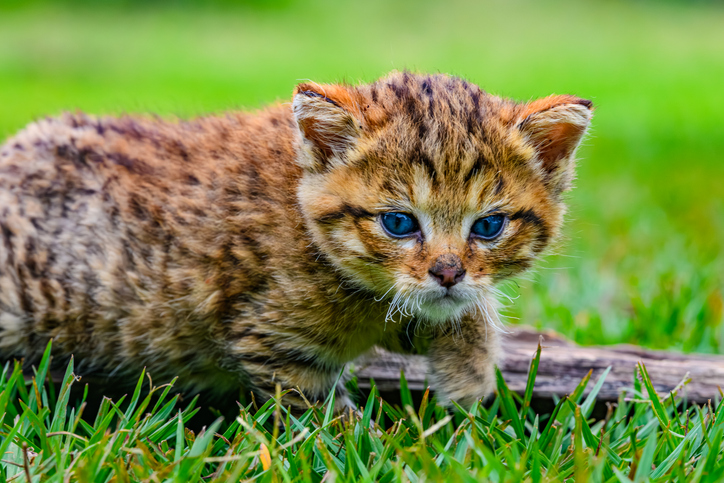
The black-footed cat is a formidable hunter (Credit: SHANE P WHITE via Getty Images)
The black-footed cat may look like a kitten, but this tiny Southern African predator has fully earned its nickname: the “anthill tiger”. Famous for extraordinary bravery and tenacity, it shelters by day in abandoned burrows or hollow termite mounds, then emerges after dark as a pocket-sized menace.
Its high metabolic rate means it has huge energy demands; in one night, it may travel over five miles and eat up to 14 small prey animals. With a hunting success rate of around 60%, it easily outdoes the 20 and 30% respectively of tigers and lions.
The Sand Cat: Desert Specialist
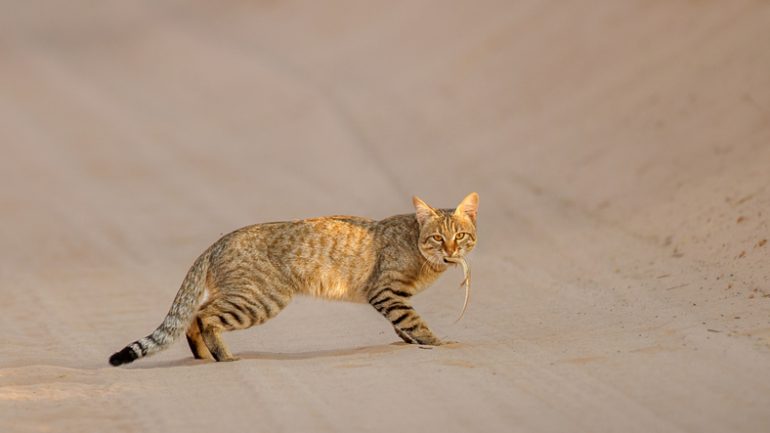
A sand cat with a lizard for lunch (Credit: Fanie Heymans / 500px via Getty Images)
With its broad face, large ears, and paws that seem far too soft for one of the planet’s toughest habitats, the sand cat looks almost cartoonishly cute. Yet this little feline is built for desert life. Found across parts of North Africa, the Middle East, and Central Asia, it can cope with searing heat, chilly nights, and landscapes where water may be scarce.
Black hairs on its paws protect it from hot sand and may also soften its footsteps, making it even harder for prey to detect. Sand cats hunt rodents, reptiles, birds, and insects, often emerging under cover of darkness. During the day, they retreat into burrows to avoid the worst of the desert sun. Cute? Certainly. Easy to outwit? Absolutely not.
The Fishing Cat: Wetland Warrior
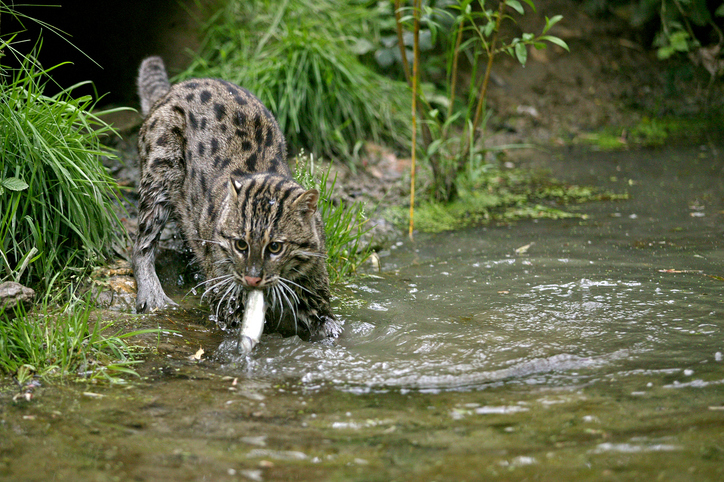
A fishing cat living up to its name (Credit: slowmotiongli via Getty Images)
For anyone who thinks cats all hate water, the fishing cat is the slick, whiskered exception that pulverises the rule. Found across fragmented wetlands in South and Southeast Asia, Prionailurus viverrinus is built for reeds, mangroves, marsh edges and muddy night patrols.
With its double-layered, water-resistant fur, partially webbed back feet and a short, stout tail that works like a little rudder, it’s no wonder this wild cat is such a strong swimmer. Meanwhile, its half-retractable claws grip slick banks and snare fish, crustaceans, frogs and other aquatic prey with startling precision.
The Margay: Acrobat of the Forest
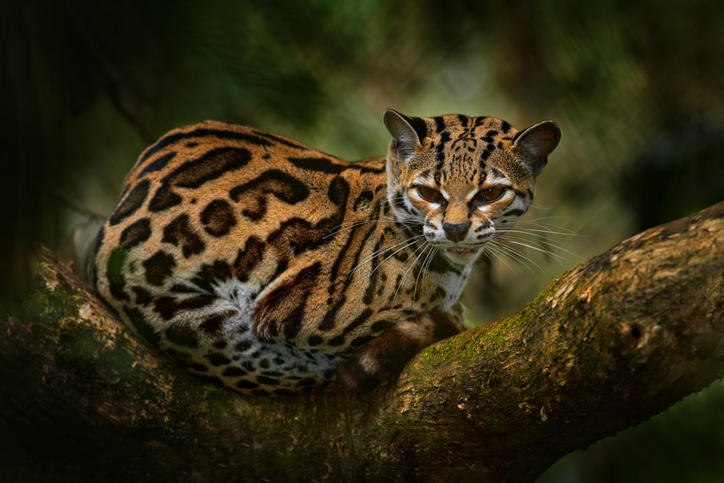
The margay is a tree-climbing expert (Credit: Ondrej Prosicky via Getty Images)
High in the forests of Central and South America, the margay takes small cat skills to dizzying heights. This spotted feline is a tree-climbing expert, equipped with flexible ankles that help it move through branches with extraordinary agility. It can clamber headfirst down trunks, leap between branches, and hunt in the layered world above the forest floor.
Its long tail helps with balance, while its large eyes suit a life of twilight and night-time movement. The margay’s prey can include birds, small mammals, lizards, and other arboreal creatures. It’s not simply a cat that climbs. It’s a cat that’s turned the forest canopy into a hunting ground.
The Pallas’s Cat: Fluff with Attitude
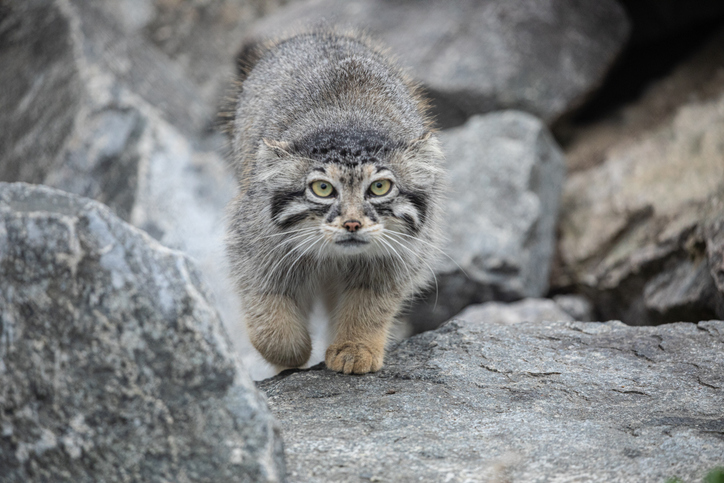
Pallas’s Cat is fabulously furry (Credit: Elen Marlen via Getty Images)
Stocky, frost-furred and magnificently unimpressed, the Pallas’s cat – or manul – looks like a disgruntled house cat redesigned for the Central Asian steppe. Its dense grey coat, low-set rounded ears and squat body help it vanish among dry, rocky grasslands, where it hunts pikas, rodents and other small prey from cover. Unlike many small cats, its pupils are round, adding to that famous “grumpy” stare. In other words, it may look like a furious cushion, but beneath the comic expression is a cold-climate specialist.
The Flat-Headed Cat: The Oddball of the Wetlands
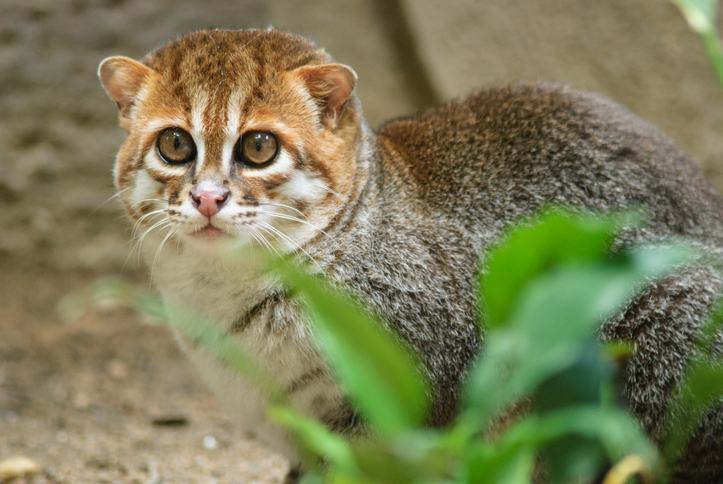
The flat-headed cat is odd, but not to be underestimated (Credit: Warmlight via Getty Images)
The second example on our list with an affinity for waterways is the small, secretive and wonderfully odd flat-headed cat. Native to the Thai-Malay Peninsula, Sumatra and Borneo, it haunts peat swamps, lowland freshwater forests, riversides and flooded ground, where fish, frogs and crustaceans form much of its supper. Its long, flattened skull, close-set eyes, strong jaws and partly exposed claws help it grip slippery prey, while its reddish-brown crown and white muzzle give it a sharp, fox-like expression.
The Bay Cat: Tiny Cat, Massive Mystery
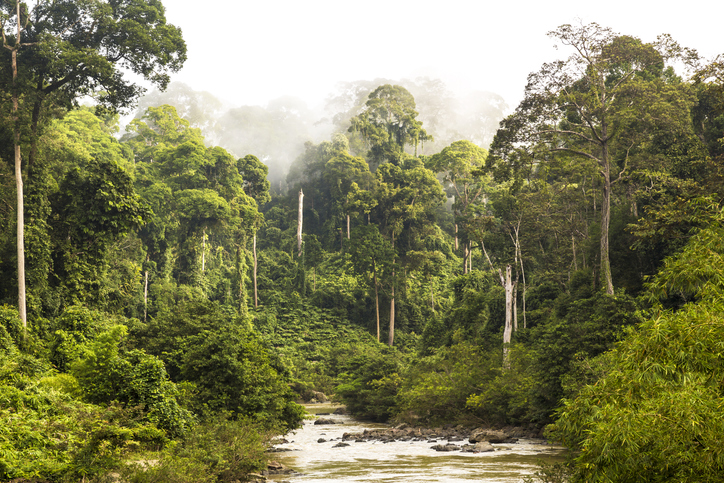
The bay cat lives in the wilds of Borneo (Credit: Peter Adams via Getty Images)
This forest-dwelling feline lives only in Borneo, has a reddish-bay coat, a long tail, and a talent for dodging camera traps. That is, more or less, the sum total of what is known about the Bay Cat, scientific name Catopuma badia. In fact, it’s seen so rarely that when the species was first identified in 1874, experts were working from little more than fragments of skull and skin.
Wildcats: Cats, But Wild
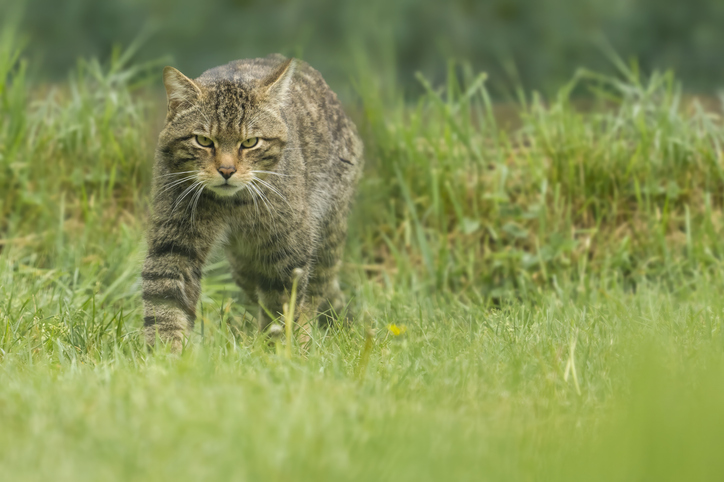
A prowling Scottish wildcat (Credit: Lakes4life via Getty Images)
Search far enough back in your tabby’s family tree and eventually there’s likely a wildcat. Because, while they may look like your typical moggy, true wildcats are the ancient ancestors of modern house cats. Found prowling across parts of Europe, Africa and Asia, their characteristics differ depending on their habitat, but they tend to be stocky, striped and fiercely solitary. In other words, no matter how cuddly they seem, these small predators are basically ghosts with claws.
Small Paws, Mighty Claws
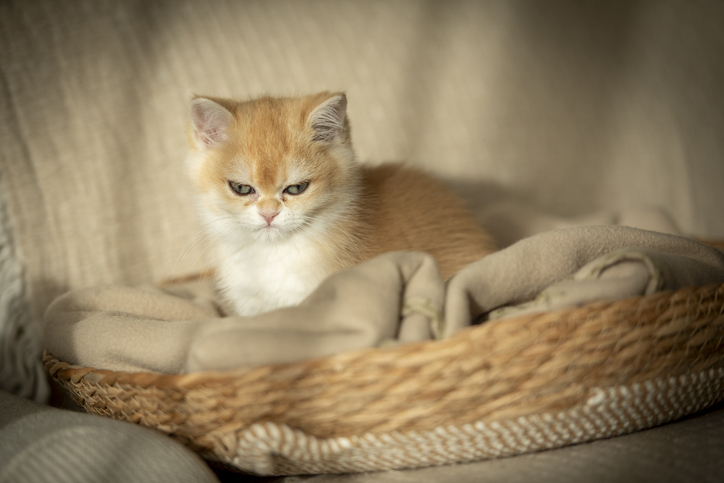
These cats may be small, but there's fire in their bellies...! (Credit: Carlos G. Lopez via Getty Images)
As we’ve seen, the wild world’s smaller cats are anything but lesser predators. From desert-dwelling sand cats and wetland fishers to canopy-climbing margays and the mysterious bay cat, each has carved out a niche with quiet precision. They may lack the roar, bulk, and celebrity status of lions or tigers, but what they have is arguably more fascinating: strange adaptations, secretive habits, and a talent for thriving where larger predators might struggle.