A visit to the doctor today might mean tests, digital records, specialist referrals and medicines shaped by decades of research. It can feel ordinary now. Yet for most of British history, medical care looked very different. Before modern hospitals, people turned to village healers, monasteries, midwives, apothecaries, and surgeons who were as handy with a razor as they were with a bone saw.
Treatments mixed plants, prayer, theory, guesswork and, increasingly, observation. Some remedies were useless. Some were dangerous. Others, surprisingly, had real value. So how did Britain move from monastic herbs and plague houses to GP surgeries and the NHS? Let’s trace the story.
Prehistoric and Roman Medicine
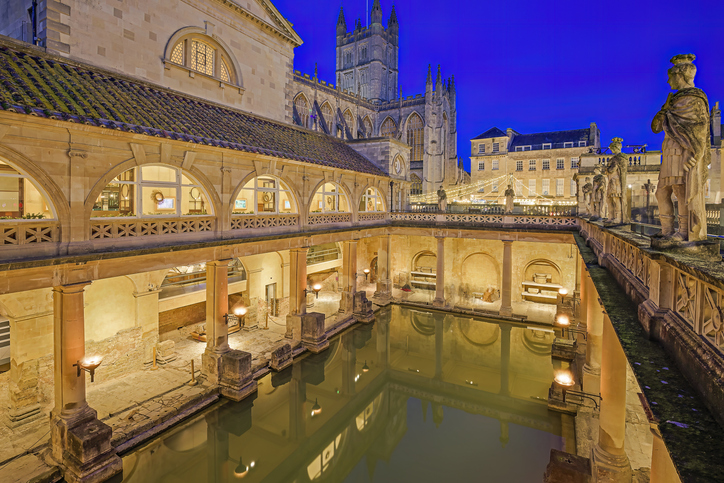
The Roman Baths in Somerset were used for healing (Credit: by Andrea Pucci via Getty Images)
The earliest evidence of medicine in Britain is fragmentary, but fascinating. Archaeologists have found skulls where holes were cut into the cranium, suggesting attempts to treat injury, pain or illness. Plants were almost certainly used as well, though direct proof rarely survives.
With Roman Britain, the picture sharpens. Roman medicine blended practical treatment with religious belief. Soldiers and townspeople might consult trained doctors, while others relied on herbs, bathing, massage, charms, prayers and healing shrines.
The Romans also brought organised ideas about hygiene, anatomy, surgery and public bathing. It was not modern medicine, of course, but it did introduce a more structured way of thinking about the body. When Roman rule ended in Britain around AD 410, much of that structure began to fade.
Healing After Rome
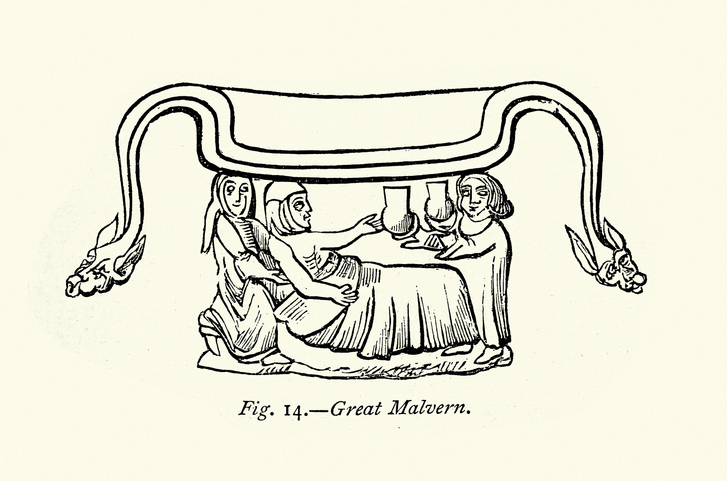
A medieval wood carving of a doctor giving medicine to a sick patient (Credit: duncan1890 via Getty Images)
In early medieval Britain, care became local, personal and often spiritual. Village healers, herbalists and religious communities all played a part, using remedies passed down through families or preserved in manuscripts.
Illness was often seen as both physical and spiritual. A treatment might therefore involve garlic or yarrow, but also prayer, blessings, charms or pilgrimage. To modern eyes, that mixture can look strange. Yet early medieval medicine was not simply superstition dressed up as treatment.
One remarkable example is Bald’s Leechbook, a tenth-century Anglo-Saxon medical text packed with remedies. In recent years, researchers recreated one of its eye salves and found it could kill MRSA bacteria. Not every cure was nonsense, then. Some were working better than anyone at the time could explain.
Monks, Manuscripts and Medieval Hospitals
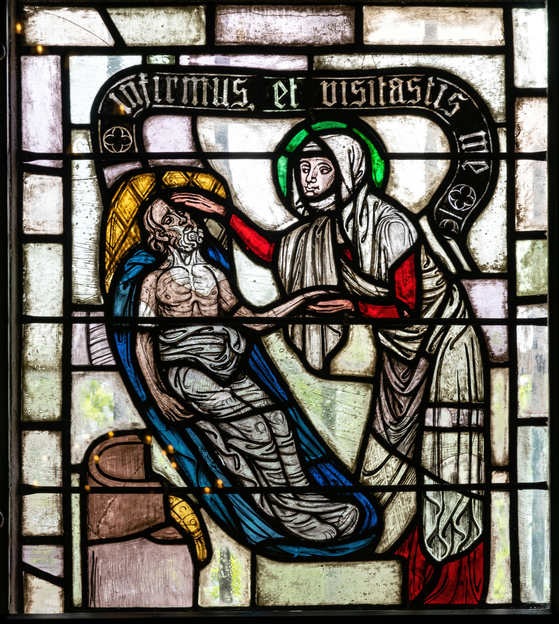
A medieval stained glass window depicting a religious man healing the sick (Credit: Konoplytska via Getty Images)
After the Norman Conquest in 1066, monasteries became some of the closest things Britain had to organised healthcare institutions. Many kept infirmaries where monks cared for fellow brothers, travellers, pilgrims and the poor.
Monasteries also preserved medical knowledge by copying texts from Greek, Roman and Arabic writers. Their herb gardens supplied ingredients such as sage, fennel, mint and comfrey, while their infirmaries often offered shelter, care and religious comfort.
This was healthcare, but not quite as we understand it. Medieval hospitals were more generally places of prayer, rest and charity rather than diagnosis and cure. St Bartholomew’s Hospital in London, founded in 1123, is one of the most famous examples and still provides care on its original site today.
Physicians, Apothecaries and the Rise of Medical Status
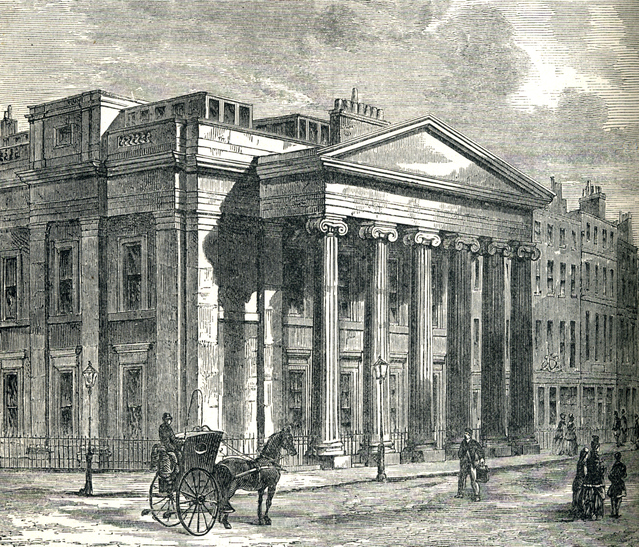
The Royal College of Physicians, founded by Henry VIII in 1518 (Credit: RockingStock via Getty Images)
As medieval towns grew, medicine became more divided. Different practitioners took on different roles, and not all of them enjoyed the same status.
Physicians sat near the top. Usually university educated, they studied classical texts, philosophy and anatomy before diagnosing illness and recommending treatment. They were expensive, so their patients were often wealthy.
Apothecaries were more accessible. Trained through apprenticeships, they prepared and sold remedies made from herbs, minerals and other ingredients. In many ways, they were the ancestors of modern pharmacists, though their role could stretch further into advice and treatment.
The Tudor period saw further change and brought greater regulation. In 1518, Henry VIII founded the Royal College of Physicians, an important step towards setting standards for medical practice in England. Medicine was still shaped by tradition, but the profession was becoming more formal.
Barber-Surgeons and Practical Medicine
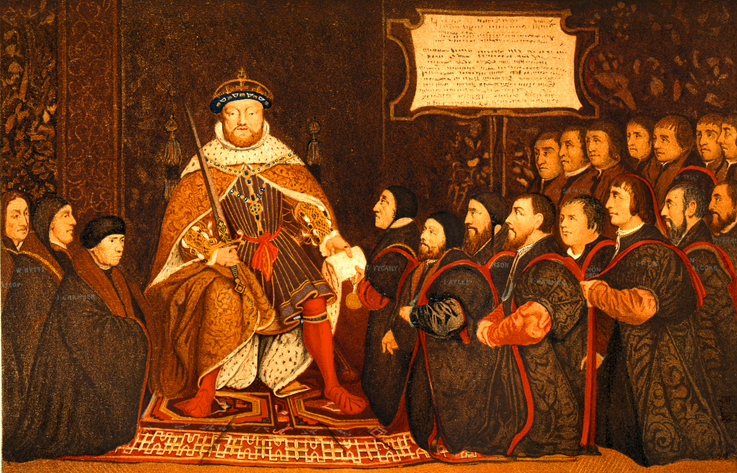
Henry VIII presenting his charter to the Company of Barber-Surgeons (Credit: wynnter via Getty Images)
If physicians diagnosed, barber-surgeons did much of the physical work. They learned through apprenticeship rather than university and dealt with the messy, practical side of care.
Their tasks included pulling teeth, setting bones, stitching wounds, bloodletting and performing amputations. In 1540, Henry VIII united London’s barbers and surgeons into the Company of Barber-Surgeons, formally recognising their trade.
Surgery at the time though, was brutal. There were no reliable anaesthetics, no germ theory and little protection from infection. Speed mattered because pain was intense and shock could kill. A good surgeon needed nerve, strength and a steady hand.
Even so, barber-surgeons were vital. Alongside midwives, apothecaries, physicians and household healers, they formed Britain’s patchwork medical world: uneven, class-bound and risky, but gradually moving towards professional care.
Science Enters the Surgery
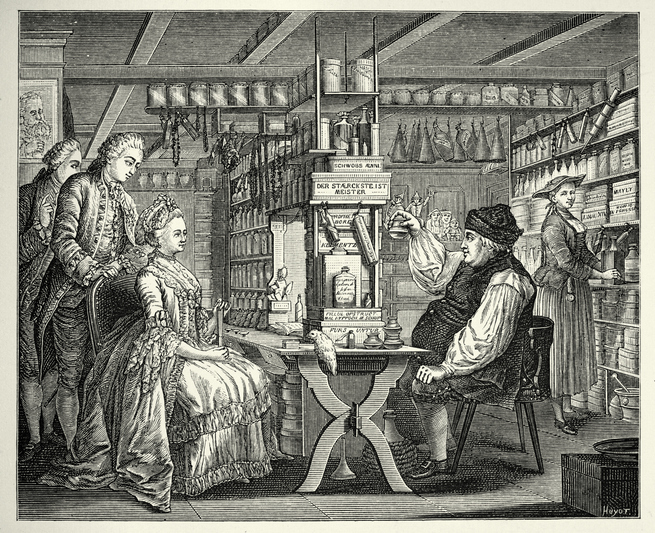
An 18th century apothecary, or pharmacy (Credit: duncan1890 via Getty Images)
The 17th and 18th centuries did not sweep old medicine away overnight. However, they did change the direction of travel.
In 1628, William Harvey published his work on the circulation of blood, using observation and experiment to challenge older ideas about the body. The Royal Society, founded in 1660, helped promote evidence, discussion and enquiry over inherited authority.
Medical education also became more organised. The University of Edinburgh’s Faculty of Medicine, established in 1726, helped make lectures, anatomy, clinical teaching and examinations central to the training of doctors. Edinburgh soon became one of Europe’s leading medical centres.
Still, practice and apprenticeship remained important. Surgeons, midwives and apothecaries continued to learn by watching and doing. British medicine was becoming more scientific, but it was still a long way from safe.
Plague, Smallpox and Public Health
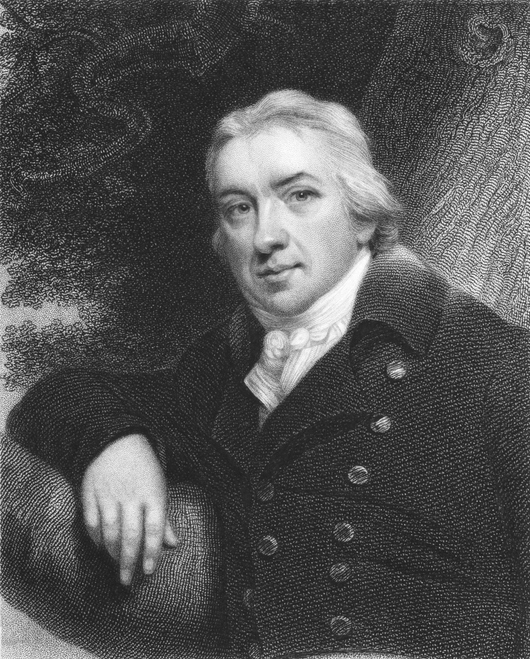
Edward Jenner developed the smallpox vaccine (Credit: GeorgiosArt via Getty Images)
Disease repeatedly exposed how little ancient and medieval doctors understood. The Black Death, which reached England in 1348, killed a vast share of the population. Later outbreaks, including the Great Plague of London in 1665, brought fear, quarantine and desperate attempts to contain infection.
People did not yet know about bacteria or viruses, but they did begin to see that disease could demand public action. Isolation, household marking and local controls were harsh measures, yet they hinted at a growing idea: health was not only an individual matter.
Then came vaccination. In 1796, Gloucestershire doctor Edward Jenner tested whether exposure to cowpox could protect against smallpox. His work led to the first successful vaccine and eventually helped make smallpox the first human disease to be eradicated.
By the 19th century, industrial cities made public health impossible to ignore. Overcrowding, poor sanitation and polluted water helped disease spread. Reformers increasingly argued that preventing illness mattered as much as treating it.
Hospitals Become Modern
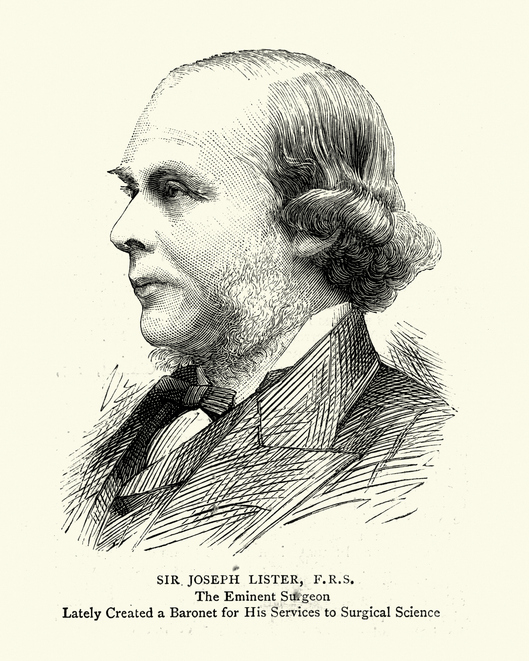
Sir Joseph Lister, pioneer of antiseptic surgery (Credit: duncan1890 via Getty Images)
The 18th and 19th centuries transformed the hospital. Once associated mainly with charity, poverty and last-resort care, hospitals became places of teaching, research, surgery and specialist treatment.
Medical schools expanded, doctors compared cases, and bedside teaching became more important. Hospitals allowed practitioners to observe disease repeatedly, refine diagnosis and test new methods.
Surgery changed dramatically too. Ether anaesthesia was publicly demonstrated in Britain in 1846, making longer operations possible. In the 1860s, Joseph Lister introduced antiseptic surgery, using carbolic acid to reduce infection.
Together, anaesthesia and antisepsis changed what surgery could achieve. Operations that had once been unbearable and often fatal became more survivable. The hospital was no longer merely a place to go when all else failed. It was becoming a centre of medical progress.
Victorian Reform and Professional Care
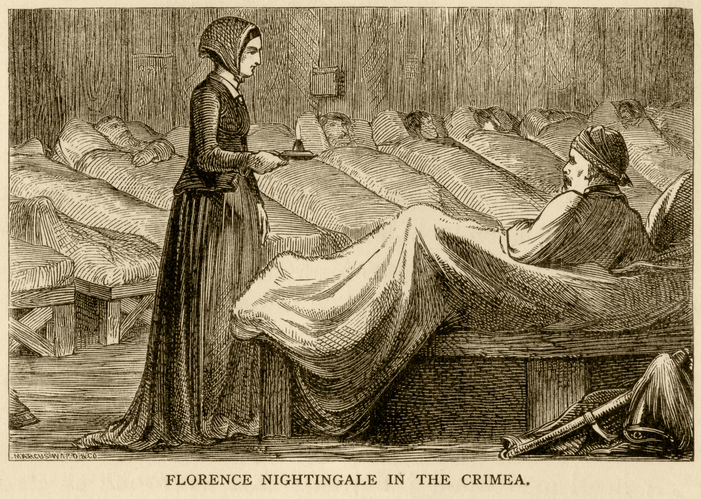
Florence Nightingale at Scutari military hospital in the Crimea (Credit: whitemay via Getty Images)
The Victorian era pushed medicine closer to the system we recognise today. Industrial growth created demand for trained doctors, nurses, surgeons and public health officials.
Florence Nightingale was central to this shift. Her work during the Crimean War helped transform nursing through better hygiene, ventilation, record-keeping and patient care. Nursing began to emerge as a respected profession, not simply domestic work carried out at the bedside.
Midwifery also began to gain formal recognition. The Midwives Institute was founded in 1881, later becoming the Royal College of Midwives. Progress was uneven, but the direction was clear: care was becoming more trained, more regulated and more professional.
Access, however, remained deeply unequal. Money, class, geography and charity still shaped who received treatment and how quickly.
The Birth of the NHS
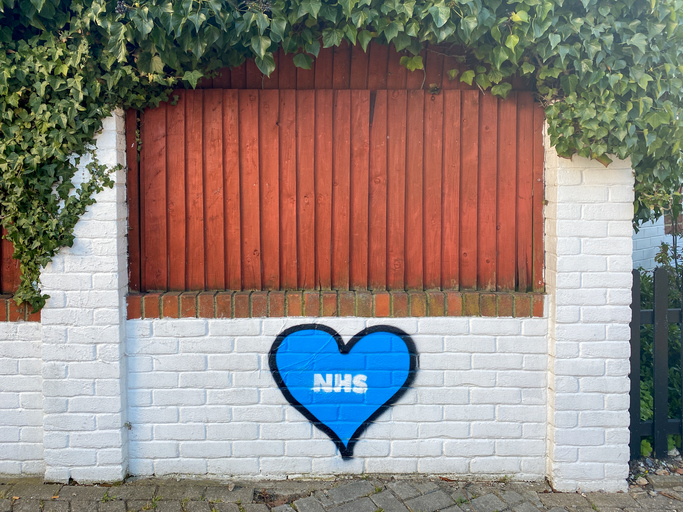
The NHS was launched in 1948 (Credit: paul mansfield photography via Getty Images)
By the early 20th century, Britain had hospitals, doctors, nurses, public health reforms and medical science. What it did not have was equal access.
That changed on 5 July 1948, when Health Minister Aneurin Bevan launched the National Health Service. Built on the principle that care should be available to everyone, regardless of income, the NHS brought hospitals, doctors, nurses, dentists and specialists into a publicly funded system.
For millions of people, treatment became free at the point of use. It was one of the great social reforms of modern Britain, and it changed the relationship between the public and healthcare.
The NHS did not appear from nowhere. It drew on centuries of hospitals, local doctors, charitable care, professional training, public health campaigns and wartime planning. But it brought those threads together in a new national system.
The Modern GP: Healthcare's First Point of Contact
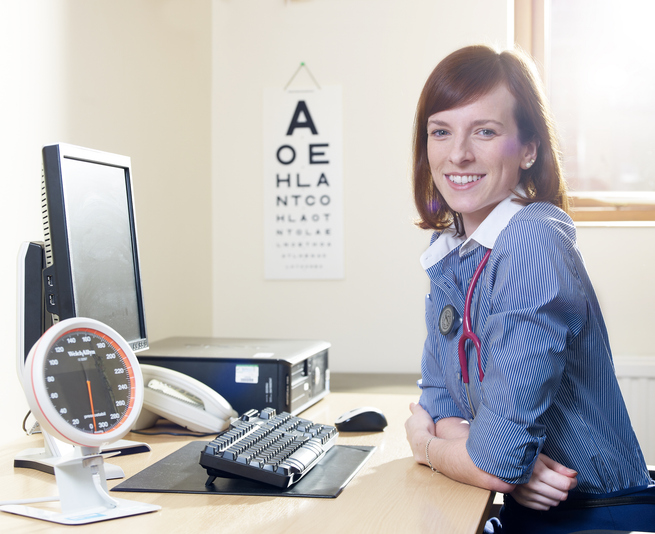
GPs are at the front line of medical care in the UK (Credit: Mike Harrington via Getty Images)
Today, the family GP remains one of the most familiar figures in British healthcare. Since 1948, general practitioners have usually been the first port of call for patients, diagnosing illness, managing long-term conditions, giving vaccinations and referring people to specialists.
Modern general practice combines local access with scientific and medical resources. A single appointment might involve mental health support, blood tests, screening, prescriptions, digital records or a hospital referral.
In that sense, the GP sits at a meeting point between past and present. Like earlier community healers, they offer care close to home. Unlike their predecessors, they work within a national system supported by research, regulation and specialist medicine.
From Herbs to Healthcare
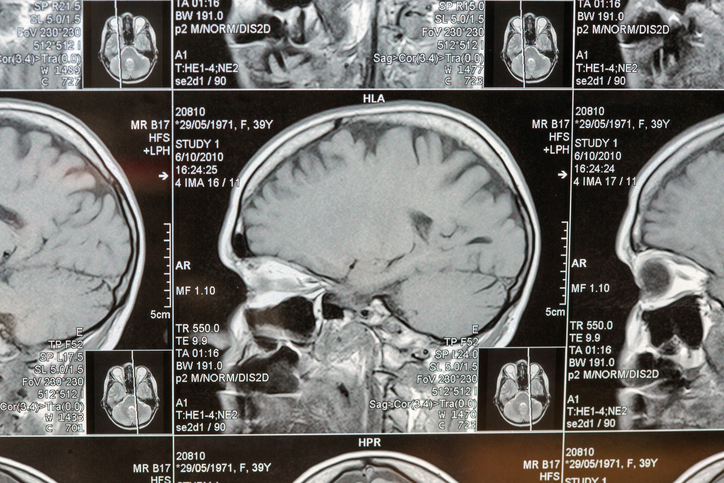
There's a lot we know, but still lots to discover (Credit: Panama7 via Getty Images)
The history of medical care in Britain is not a neat march from ignorance to brilliance. It’s far messier than that. There were dead ends, harmful treatments and painful mistakes. Yet there were also breakthroughs, careful observations and generations of practitioners trying to make sense of sickness with the tools they had.
Monks preserved knowledge. Midwives guided childbirth. Barber-surgeons carried out dangerous but necessary work. Physicians, apothecaries, nurses, scientists and reformers all added something to the story.
From monastery infirmaries and plague streets to teaching hospitals and GP surgeries, British healthcare has been moved from superstition, faith and folklore, to science, social reform and public health. The journey was long, uneven and often uncomfortable. But it led to a system that would have astonished almost everyone who helped build it.