Asteroids have been blamed for wiping out the dinosaurs, flattening forests, and giving Hollywood no shortage of apocalyptic fuel. But if one really was barrelling towards Earth, would we be helpless spectators, or could we actually do something about it?
From smashing spacecraft into space rocks to nudging them gently off course, we’re exploring the options and separating the science from the space dust.
First, Find the Thing
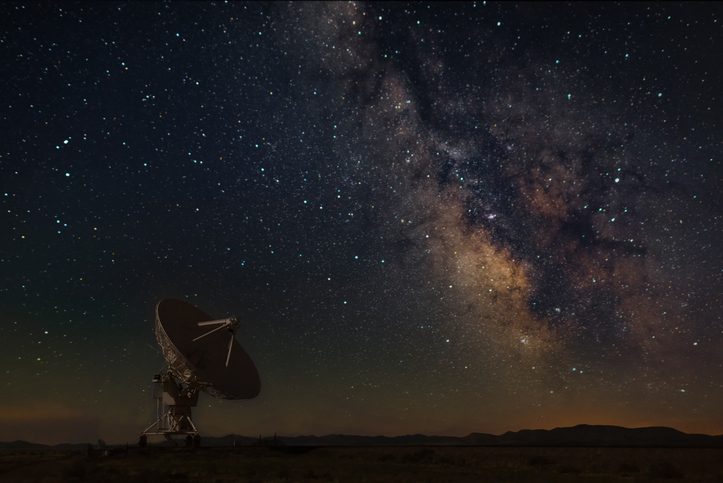
Telescopes are constantly scanning the night sky (Credit: hwho via Getty Images)
The best asteroid defence begins long before anything appears in the sky. It starts with surveys: telescopes scanning for near-Earth objects, calculating their orbits, and checking whether any could cross our path. NASA’s Planetary Defense Coordination Office was established in 2016 to manage work on finding, tracking, and understanding asteroids and comets that could pose an impact hazard.
This is where the unglamorous work matters most. A faint dot moving against the stars may not look like much, but repeated observations can reveal its orbit and future path. NASA’s Sentry system continually scans the current asteroid catalogue for possible impacts over the next 100 years, publishing results when potential risks are found.
Then, Work Out if It’s Actually a Threat
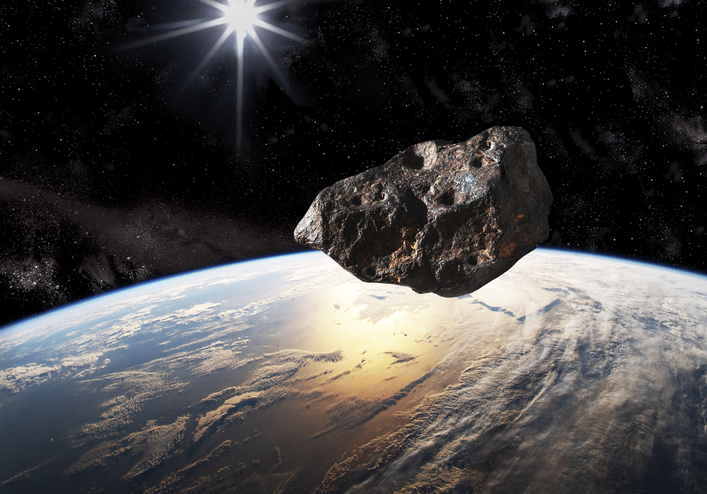
Not every asteroid is a threat (Credit: Erik Simonsen via Getty Images)
Not every alarming asteroid headline means doom. In fact, most newly spotted “possible impactors” become less worrying once astronomers gather more data. Early calculations can be fuzzy, because a short observation window leaves a wide range of possible future paths. More observations usually shrink that uncertainty.
This is why the first response would not be panic, but precision. Astronomers would try to pin down the asteroid’s orbit, size, spin, shape, and composition. The Torino Scale, adopted by the International Astronomical Union in 1999, helps communicate potential impact risks by combining likelihood and possible consequences on a zero to ten scale.
In other words, “could hit Earth” is not the same as “will hit Earth”. Planetary defence begins by telling the difference.
The Bigger They Are...
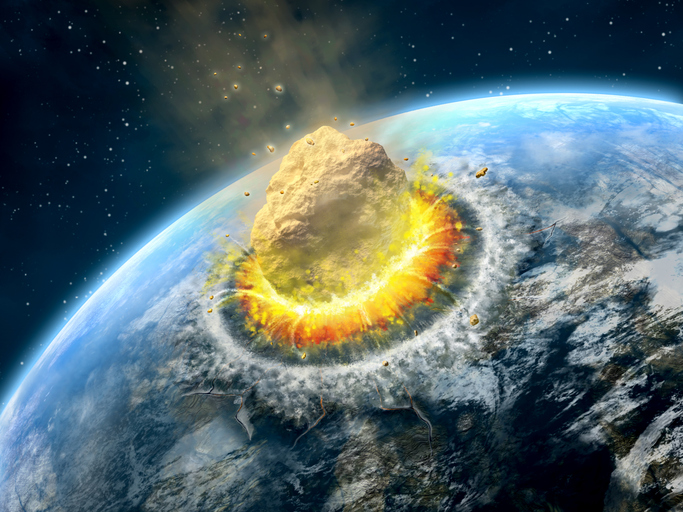
... the harder they fall (Credit: Andreus via Getty Images)
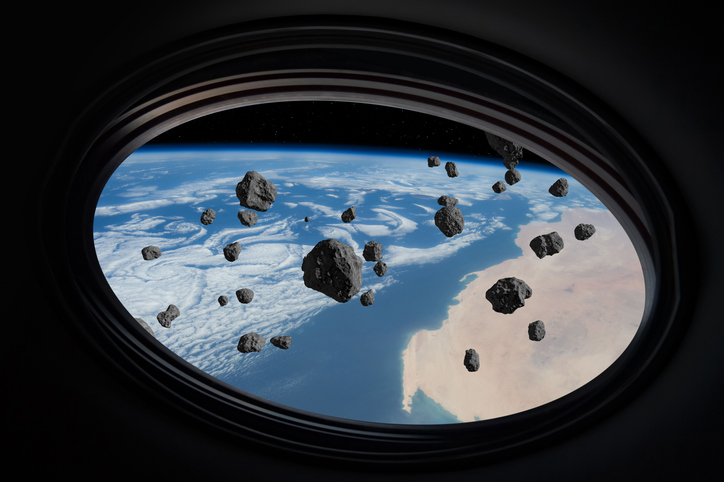
The danger depends hugely on scale. Small objects hit Earth frequently and usually burn up harmlessly in the atmosphere. Larger ones are another story. NASA’s planetary defence strategy notes that near-Earth objects range from small meteoroids only a few metres across to bodies several kilometres wide, with larger impacts capable of local damage or even global devastation.
A modest object might call for warning people to avoid windows or evacuating a limited area. A larger one could require a full international response. A truly enormous asteroid would be rare, but the stakes would be planetary.
The Best Weapon is Time
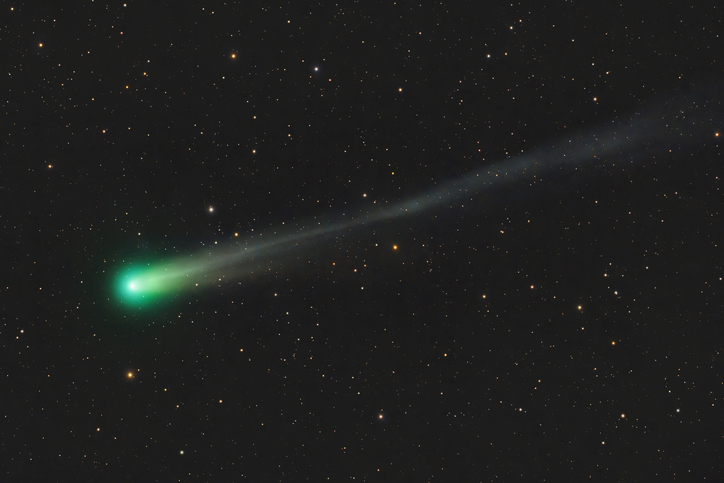
Asteriods travel unimaginable distances through space (Credit: Javier Zayas Photography via Getty Images)
If there’s one rule of asteroid defence, it’s this: earlier is better. With years or decades of warning, a tiny change in an asteroid’s speed or direction can add up to a huge miss distance by the time it reaches Earth. With only days or weeks, options become far more limited.
Planetary defence isn’t really about dramatic last-minute heroics. It’s about buying time before heroics are needed at all.
Could We Nudge It Out of the Way?
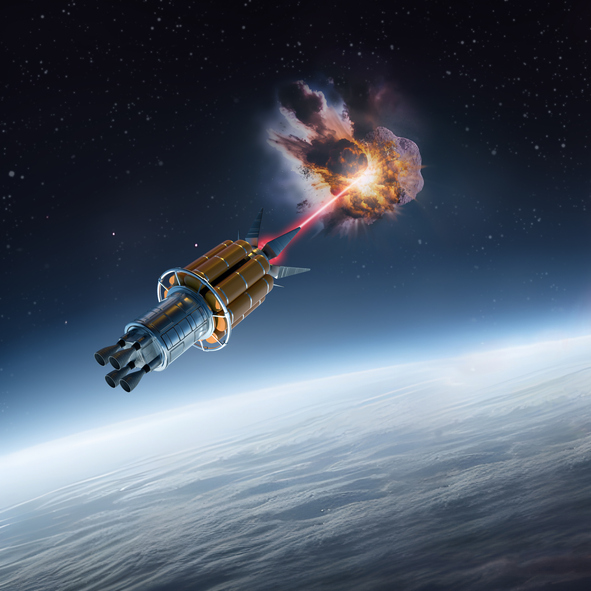
An illustration of a spacecraft striking an asteroid (Credit: estt via Getty Images)
Yes, potentially. The most realistic tested method is called a kinetic impactor, which is a wonderfully technical way of saying: hit it with a spacecraft, or several. The goal is not to blow the asteroid apart, but to change its motion just enough that Earth is no longer in the way.
NASA’s DART mission proved this was possible in principle. On 26 September 2022, DART deliberately struck Dimorphos, a small moonlet orbiting the asteroid Didymos, in the first mission dedicated to demonstrating asteroid deflection through kinetic impact. This was not a dangerous asteroid, but a test target. The point was to see whether humanity could alter the motion of a real object in space. It could, and that’s a very big deal.
The Follow-Up: Measure the Mess
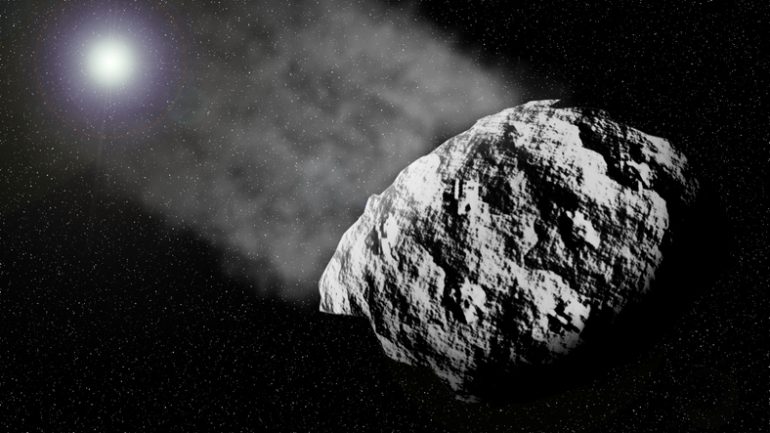
Solid rock, or loose rubble? The difference is crucial (Credit: Piotrekswat via Getty Images)
Smashing a spacecraft into an asteroid is only half the story. The other half is understanding exactly what happened. Did the asteroid behave like solid rock, loose rubble, or something in between? How much material was thrown off? How efficiently did the impact change its path?
That’s where the European Space Agency’s Hera mission comes in. Hera is travelling to Dimorphos to perform a detailed post-impact survey of the DART target and help turn the experiment into a better understood, repeatable planetary defence technique.
This matters because no two asteroids are guaranteed to be alike. One might be dense and metallic. Another might be a loosely held rubble pile. If we ever need to deflect a real threat, knowing the difference could be critical.
What About a Gravity Tractor?
A gravity tractor is vastly different from a normal tractor (Credit: buradaki via Getty Images)
A gentler option is the gravity tractor. This would involve parking a spacecraft near an asteroid and using the tiny gravitational pull between them to gradually tug the asteroid onto a safer course. It sounds delicate because it is. No crash, no explosion, no cinematic fireball, just patient celestial towing.
The catch is time. A gravity tractor would need a long warning period, possibly several decades, because its effect is slow. It may be useful for a smaller or well-characterised asteroid discovered many years in advance, but it would not be the first choice for a short-notice emergency.
Still, it has one elegant advantage: control. Unlike a violent shove, a slow gravitational pull could be adjusted over time, making it a potentially tidy option in the right circumstances.
Would We Ever Use Nuclear Explosives?

The nuclear option is a last resort (Credit: Maciej Frolow via Getty Images)
The Hollywood answer usually arrives early. The real answer is: only as a last-resort option, and not necessarily by drilling into anything. Some planetary defence studies consider nuclear devices as a way to deflect, disrupt, or alter the course of a threatening object – usually when warning time is short or the asteroid is too large for simpler methods. NASA-linked research has described kinetic impactors and nuclear explosive carriers as two realistic response types, with the choice depending on the object’s size, mass, available warning time, and uncertainties.
This would be legally, politically, technically, and scientifically complicated. It could also create dangerous fragments if handled badly. So, despite its dramatic appeal, it’s not the tidy “press button, save planet” option. Planetary defence prefers prevention with plenty of notice.
The less chaotic version would be a nuclear standoff deflection: detonating a device near the asteroid so radiation heats part of its surface and gives it a shove. Trying to break the object apart would be a much riskier, shorter-notice option, because fragments could still threaten Earth.
And if We Couldn’t Stop It?

What would we do? (Credit: Maria Korneeva via Getty Images)
If an impact couldn’t be prevented, the focus would shift to civil protection. That might mean evacuating the predicted impact zone, preparing hospitals and emergency services, protecting infrastructure, moving aircraft and ships away from danger areas, and warning people about blast waves, fire, tsunami risk, or falling debris.
This is where international coordination becomes essential. The International Asteroid Warning Network is a worldwide planetary defence collaboration recommended by United Nations resolution; if a threat were identified, it would act as a hub for sharing information with governments and supporting impact analysis and response planning.
For smaller impacts, good warning could save lives even without deflection. For larger ones, every extra day would matter.
So, Could We Save the Planet?
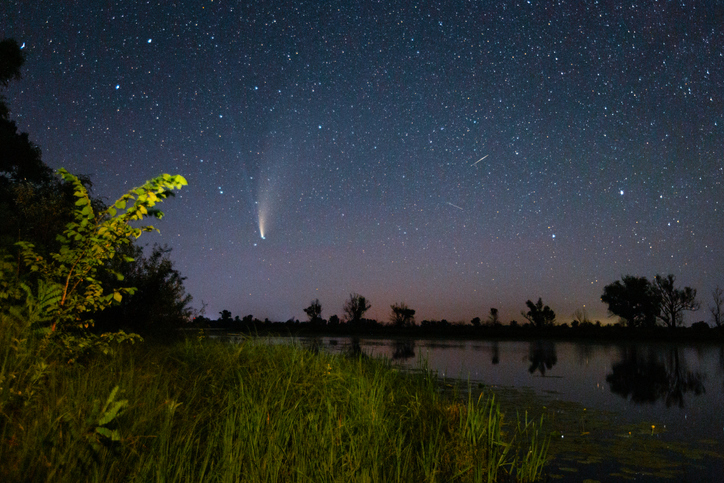
Let's hope it never happens... (Credit: TorriPhoto via Getty Images)
The honest answer is: maybe, and our chances improve enormously with warning time. Broadly speaking, the more controlled the method, the more time it needs. A kinetic impactor might need years; a gravity tractor could need decades; and the shortest-warning options are generally the messiest and riskiest. The good news is, humanity has already detected, tracked, and deliberately altered the path of an asteroid-sized object. That doesn’t mean every scenario is solvable, but it does mean we’re no longer starting from scratch.