Before children had Wonderland, Narnia, Neverland or Hogwarts, they had alphabets, prayers and morality tales. In fact, for centuries, books aimed at young readers were less about wonder than instruction. So when did stories written especially for children begin to appear, and how did they grow into one of the most beloved genres in literature?
From early pioneers to enduring classics, we’re taking a journey through the great children’s books of history. Ready to fall down the rabbit hole? Let’s go.
Before There Were Books
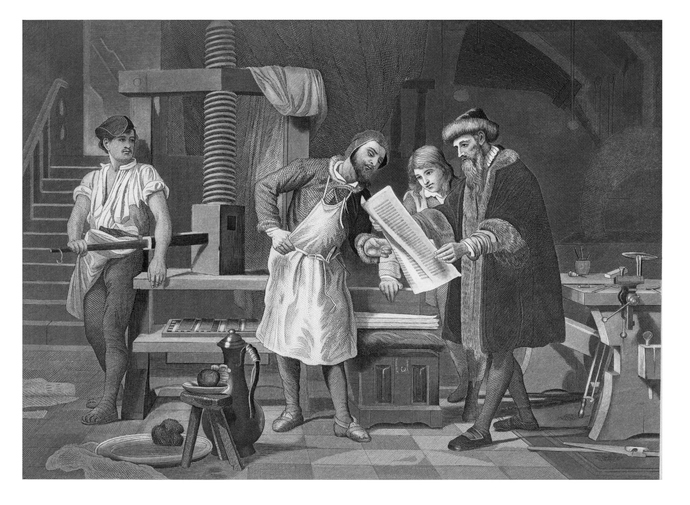
Johannes Gutenberg and his printing press (Credit: mikroman6 via Getty Images)
The story of children’s books begins in the 15th century, with the invention of the mechanised printing press. For the first time, the written word could reach a wider array of ordinary readers. Yet what rolled off those early presses for children wasn’t anything we’d recognise as a book. It was the hornbook: a small wooden paddle holding a single printed sheet, sealed beneath a thin, translucent layer of animal horn. There were no stories here, no fun, no fiction. Hornbooks existed to teach, and little else, so a child peering at one would find only the alphabet or a prayer staring back.
Chapbooks and Cheap Print
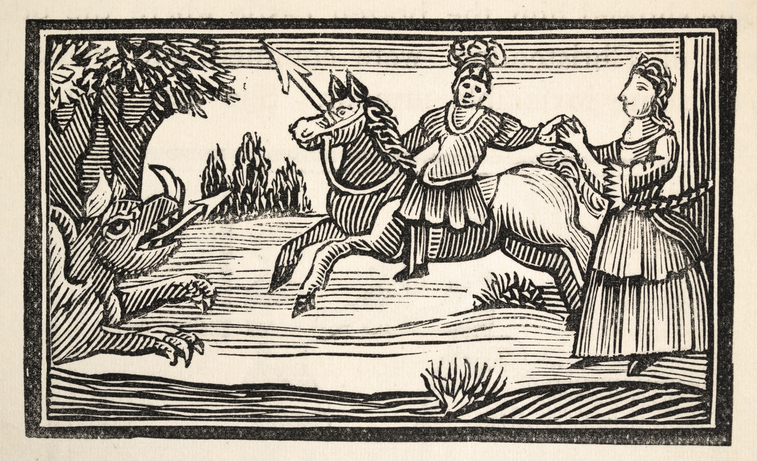
An example of an illustration in a chapbook (Credit: duncan1890 via Getty Images)
The 16th century changed things. In the classroom, hornbooks gave way to battledores: lighter and cheaper, made from folded cardboard rather than wood, and no longer needing a sheet of horn to shield the paper beneath.
The bigger shift, though, came from cost. As printing grew cheaper, the printed word slipped free of the schoolroom and became something else entirely: entertainment. For roughly a penny, anyone could buy a chapbook, a slim little booklet packed with ballads, riddles, folk tales, and adventures. They weren’t written with children in mind. But children read them all the same, and for the first time, kids found reading could be a pastime rather than a lesson.
But whether a child was reading to learn or simply to be entertained, the words still came first. The next innovation would change that, by letting pictures do some of the talking.
Pictures Enter the Page
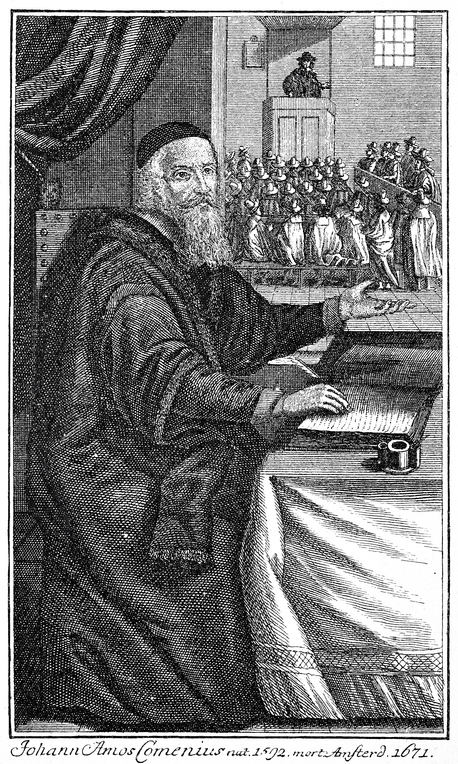
Johann Amos Comenius, 1592 - 1670 (Credit: clu via Getty Images)
The evolution of printed stories and pictures wasn’t a global straight line. While in Europe the page still belonged firmly to the schoolroom, Japan was producing colourful illustrated stories in bound works called akahon or “red books.” Directly written with children in mind, these were an ancestor of manga.
In Europe, this type of approach was first widely seen in 1658, when Czech educator Johann Amos Comenius published Orbis Sensualium Pictus, widely regarded as the first picture book for the young, matching images of objects, animals and people to their names so children could learn to read the world. For children still learning their letters, pictures did something radical: they allowed the page to speak before the words had fully opened.
In any event, even with the use of pictures, Comenius’s work was still a textbook. There was still a dearth of titles for children beyond the instructive. That required a shift in public attitude, and was one that would take another century or so.
A First Step Towards a New Genre
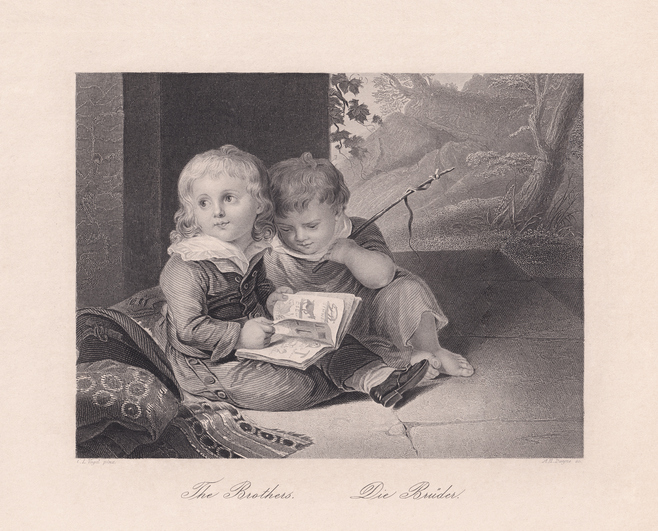
A painting of children in the 18th century by Christian Leberecht Vogel (Credit: ZU_09 via Getty Images)
Before children’s books could be widely produced, publishers had to see children as a target audience for more than purely educational titles. By the 18th century, this began to happen. And, in 1744, London publisher John Newbery produced a book that was both entertaining and educational, as well as designed to appeal to young readers and their parents. A Little Pretty Pocket-Book contained a mix of rhymes, games, pictures, moral lessons, and amusement. This marked an important milestone on the journey towards publishers catering to kids – not only opening up the idea of written adventures, but also a space for classic stories to shine.
The Victorians and a New View of Childhood
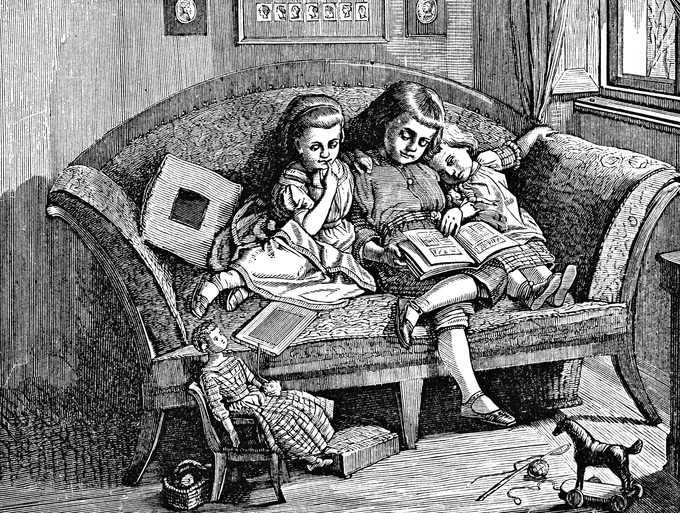
Story time in Victorian England (Credit: CatLane via Getty Images)
The 19th century changed not just children’s books but childhood itself. Earlier generations had often treated the young as small adults in need of correction; the Victorians came to see childhood as more of a developmental time, and imagination as something worth cherishing for its own sake. The machinery of the age then caught up with the sentiment. Steam presses, cheaper paper and, before long, colour printing made books plentiful and more affordable, while the spread of schooling created a vast new readership of literate children.
For the first time, the conditions were right for children’s books to flourish in all directions at once. They didn’t have to be only primers, prayers or moral lessons. They could be silly, frightening, beautiful, adventurous or strange. Fairy tales were gathered and remade for family reading. New nonsense stories revelled in absurdity. Adventure books sent child protagonists to islands, rivers and faraway lands. By the end of the century, children’s literature was no longer edging towards a genre of its own. It was becoming a whole landscape of genres.
Fittingly, one of the first great breakthroughs was pure nonsense.
Alice and the Age of Nonsense
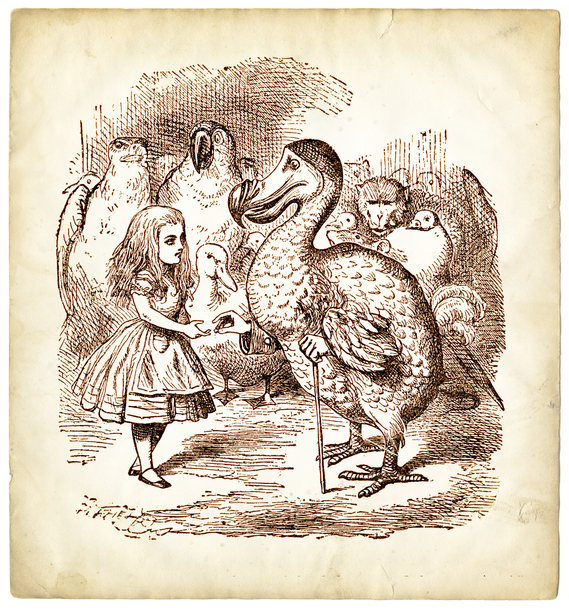
An illustration from Lewis Carroll's Alice's Adventures in Wonderland (Credit: THEPALMER via Getty Images)
In 1865, Lewis Carroll’s Alice’s Adventures in Wonderland tore up the rulebook. Rather than teach children how to behave, it dropped them down a rabbit hole into a world where logic misbehaved first in a riot of jokes, puzzles, wordplay and sheer absurdity. Its genius lay in how seriously it took silliness. Adults became ridiculous, language wriggled out of meaning, and Alice moved through it all with curiosity, irritation and common sense.
Here, perhaps for the first time, was a hugely popular children’s book with no ambition loftier than to enchant. It didn’t reward obedience or punish naughtiness in the old, improving fashion. It trusted children to enjoy confusion, contradiction and play for their own sake. The child reader was no longer simply being trained, they were being entertained.
Yet Victorian children weren’t only being invited into absurd new worlds. They were also being given older, darker stories, rescued from oral tradition and reshaped for the nursery shelf.
Into the Fairy-Tale Forest
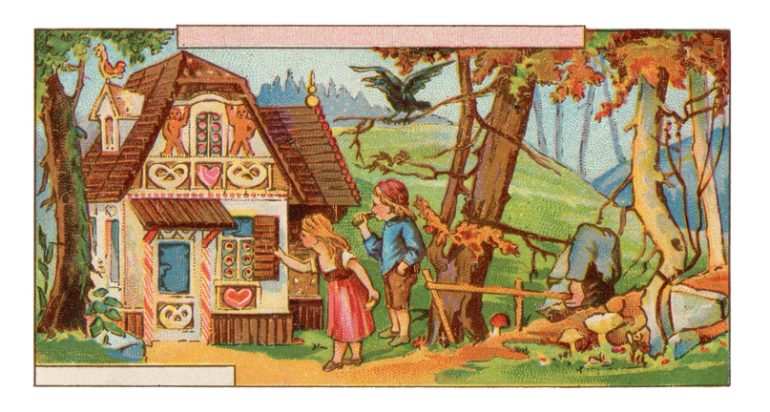
A 19th century illustration of Hansel & Gretel at the Gingerbread House (Credit: Grafissimo via Getty Images)
Fairy tales had been travelling long before children’s publishing knew what to do with them. They passed through voices, households and local traditions, changing as they moved. In the 19th century, however, they became part of the printed furniture of childhood.
In 1812, Jacob and Wilhelm Grimm published the first edition of their collected folk tales in Germany, including versions of Cinderella, Hansel and Gretel, Rapunzel and Snow White. These weren’t gentle stories, at least not at first. They were full of hunger, danger, punishment and envy. Over time, the Grimms revised the tales for family audiences, and the fairy-tale collection became one of the most defining books of childhood: a place where fear and wonder could sit side by side.
Hans Christian Andersen took the form somewhere different. While the Grimms collected and reshaped existing folk tales, Andersen often created new ones. From the 1830s, the Danish author wrote stories including The Little Mermaid, The Ugly Duckling, The Emperor’s New Clothes and The Snow Queen. They may have felt as if they’d always existed, yet many came directly from Andersen’s imagination. His stories brought a different approach to children’s literature. They could be funny, but they could also be lonely, tender, painful and strange.
Together, the Grimms and Andersen helped give children’s literature a jump-start towards the modern world. The old instructive book had dealt in rules. Fairy tales dealt in forests, bargains, curses and jeopardy. But not every young reader wanted a forest. Some wanted a map.
Worlds of Adventure
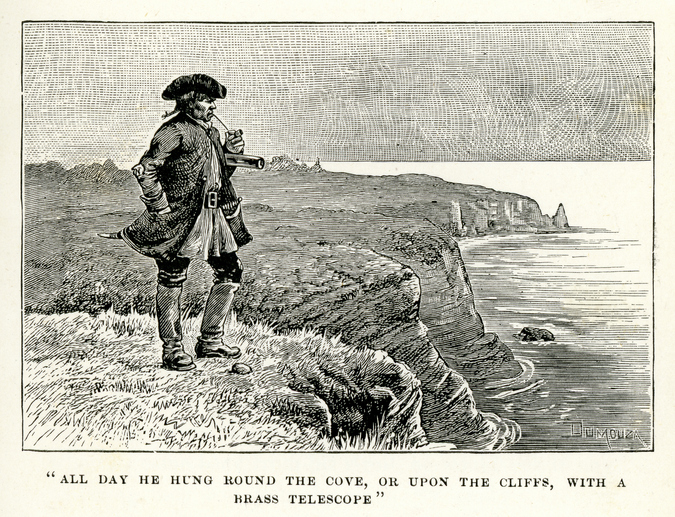
A scene from Treasure Island, one of the great adventure stories (Credit: duncan1890 via Getty Images)
As the century went on, children’s books began to push outwards. If nonsense had broken the rules of sense, and fairy tales had opened the door to enchantment, adventure stories offered another pleasure: travel. They gave young readers journeys, danger, secret places and the thrill of being far from home.
Robert Louis Stevenson set the standard in 1883 with Treasure Island, a tale of pirates, maps and buried gold that became an iconic adventure story for generations. Its world wasn’t cosy or improving. It was risky, vivid and morally unstable, full of greed, courage, betrayal and luck.
Other writers took a similar path. Kenneth Grahame sent Mole, Ratty, Badger and the irrepressible Toad messing about on the river in The Wind in the Willows, while J.M. Barrie gave the world Peter Pan, the boy who refused to grow up. These books weren’t all adventure stories in the same mould, but they built places children could inhabit: islands, riverbanks, underground homes, Neverland.
By then, children’s literature had travelled a long way from the hornbook, and the next century would take these new horizons and make them larger still, sending children through wardrobes, into hobbit holes and up giant beanstalks of mischief.
Magic, Wardrobes and Giant Peaches
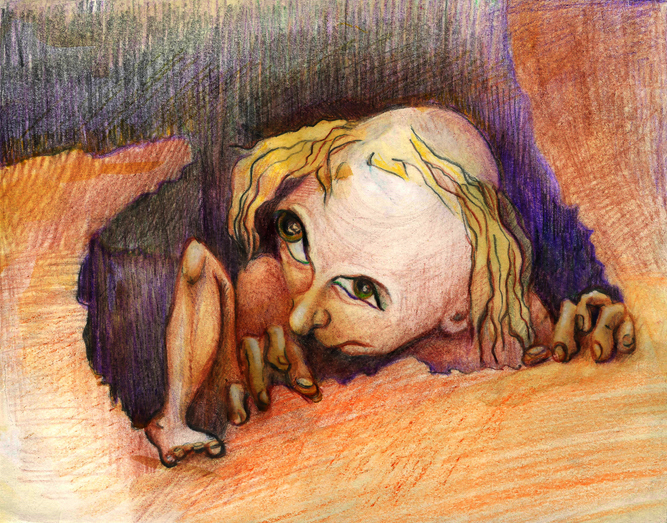
Gollum, a character in Tolkien's The Hobbit and The Lord of the Rings (Credit: Irina Lopukh via Getty Images)
The mid-twentieth century brought a flowering of fantasy and mischief that still dominates the bookshelf today. In 1937, J.R.R. Tolkien opened The Hobbit with a hole in the ground and a reluctant hero, laying foundations for modern fantasy fiction. His friend C.S. Lewis then ushered a generation through a wardrobe into Narnia, beginning in 1950. Meanwhile, a former fighter pilot named Roald Dahl was perfecting a gleefully subversive style all his own: chocolate factories, giant peaches, dreadful aunts and triumphant children. Dahl gave young readers a touch of the grotesque, alongside that ever-satisfying comeuppance.
Together these authors proved that children’s books could be thrilling, strange and serious, while remaining irresistibly fun. Yet not every powerful children’s book needed a spell, a portal or a dragon. Some found their strangeness much closer to home.
School, Rebellion and Real Life

Children's fiction began to explore more grown-up themes (Credit: Daniel Llao Calvet via Getty Images)
Across the 20th century, while some took readers to strange new worlds, other writers created drama in far more mundane places – gardens, classrooms, families and ordinary bedrooms. Mary Norton’s The Borrowers made the home feel vast and perilous, while Philippa Pearce’s Tom’s Midnight Garden turned loneliness and time into something haunting. Later, S.E. Hinton, Judy Blume and Mildred D. Taylor helped children’s and young adult fiction face class, bodies, shame, racism, friendship and injustice more directly. These books mattered because they asked not only where a child might escape to, but what a child might already be carrying.
Prizes, Paperbacks and the Rise of the Modern Classic
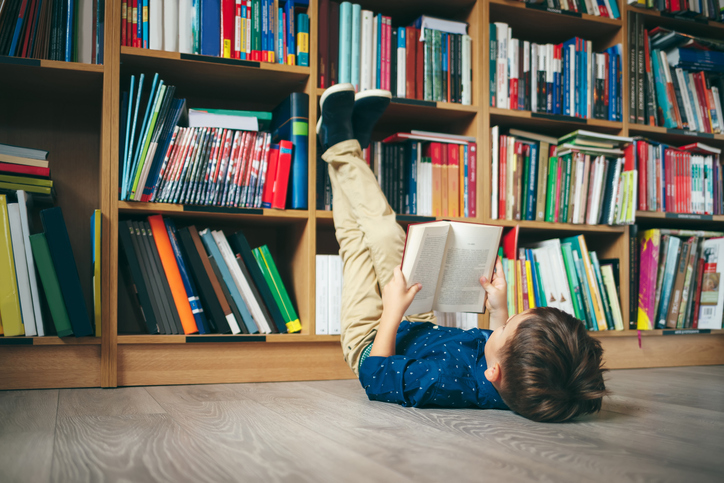
Libraries are places of wonder for children (Credit: diignat via Getty Images)
By the 20th century, children’s literature had become a recognised literary field, with its own prizes, publishers, librarians, critics and devoted readers. The Newbery Medal was first awarded in the United States in 1922, while Britain’s Carnegie Medal followed in 1936. Libraries, schools and paperbacks helped good children’s books travel further and last longer. Writers such as Ursula K. Le Guin, Alan Garner, Susan Cooper, Diana Wynne Jones, Michael Morpurgo and Jacqueline Wilson showed how ambitious the field could be. Children’s books were poetic, political, frightening, domestic and strange, all without losing their sense of fun.
The Next Leap

Harry Potter's Hogwarts Express (Credit: Delpixart via Getty Images)
In 1997, Harry Potter and the Philosopher’s Stone arrived in Britain with a modest first printing. It didn’t stay modest for long. J.K. Rowling’s story of an orphaned boy, a hidden school of magic and a dark past grew into a seven-book series that sent readers queuing outside bookshops at midnight. Its success proved that children would commit to long stories, complex plots and vast fictional worlds. Philip Pullman’s His Dark Materials offered a darker, more philosophical kind of fantasy around the same period. Together, these books supercharged children’s literature – leading to worldwide acclaim, film adaptations and vast online fandoms.
New Formats for New Readers
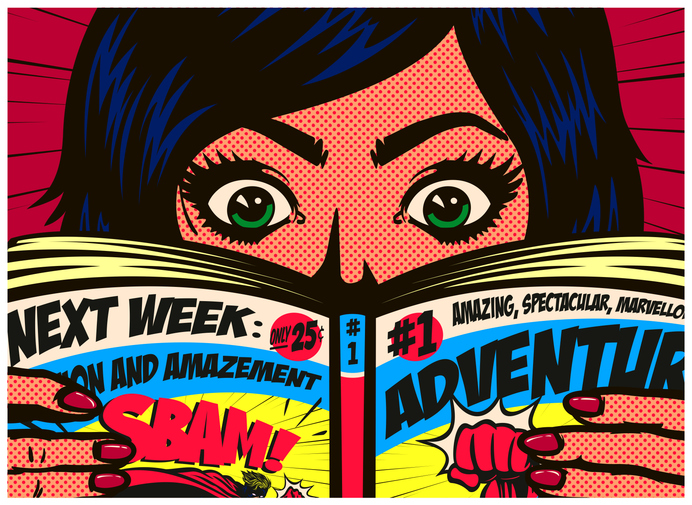
Graphic novels sit happily alongside more traditional children's books (Credit: drante via Getty Images)
Today’s children’s books no longer arrive in one shape. The traditional novel now sits beside graphic novels, illustrated diaries, verse novels, wordless picture books, audiobooks and hybrid formats that mix image and text with ease. Jeff Kinney’s Diary of a Wimpy Kid, Dav Pilkey’s Dog Man books and Raina Telgemeier’s graphic novels have shown how visual storytelling can be funny, sharp and inviting. Meanwhile, writers such as Kwame Alexander, Elizabeth Acevedo and Joseph Coelho have used verse to bring pace, music and emotion to stories about family, pressure, identity and growing up.
More Voices on the Shelf
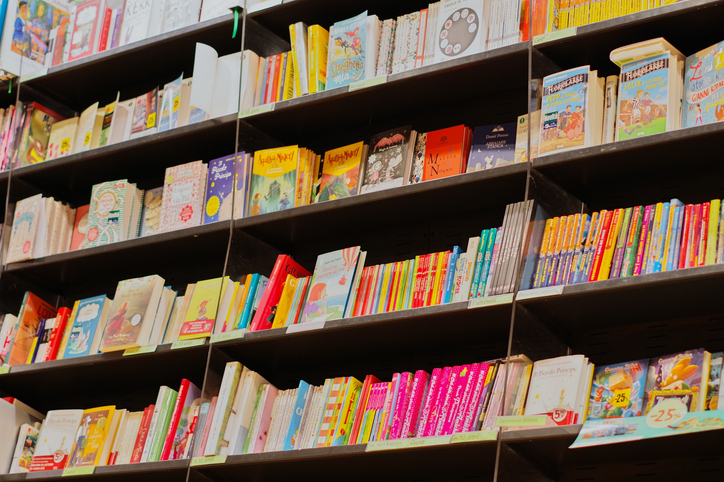
Bookshop shelves have more variety than ever (Credit: Maurizio Siani via Getty Images)
The subjects of children’s literature have widened too. Contemporary books increasingly make room for experiences once pushed to the margins of the shelf. Malorie Blackman’s Noughts & Crosses confronted racism and power through an alternate Britain, while Angie Thomas’s The Hate U Give brought protest, police violence and code-switching into young adult fiction. In Britain, writers such as Onjali Q. Raúf, Elle McNicoll, Sharna Jackson, SF Said and Katherine Rundell show how varied modern children’s writing can be: funny, political, adventurous, neurodivergent, lyrical, urban, historical and humane. The shelf is wider now, and more children can find themselves on it.
The Story Continues
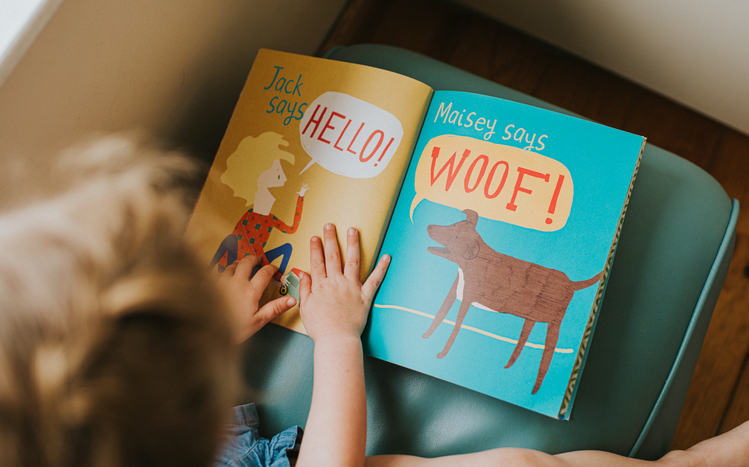
Reading is a pure joy! (Credit: Catherine Falls Commercial via Getty Images)
From a horn-covered paddle bearing the alphabet to a wizard’s tale read across continents, the children’s book has undergone one of literature’s great transformations. What began as a tool for instruction became a place of mischief and fun. Its greatest change wasn’t simply that books became more entertaining, it was that children themselves were taken more seriously: as thinkers, dreamers, rebels, worriers, jokers and makers of meaning. Every children’s book meets a young reader somewhere real, then carries them somewhere they hadn’t imagined. That’s why the shelf keeps changing, and why the next great children’s classic is never far away.