Coffee may begin with a bean, but much of its history has been shaped by innovation. Over the centuries, inventors have roasted it more evenly, ground it more precisely, brewed it faster and, eventually, squeezed the entire process into the touch of a button.
Some breakthroughs transformed cafés and coffee houses, while others quietly revolutionised what happened on kitchen counters around the globe every single morning. So, which inventions really rewrote the coffee routine? From bubbling percolators and gleaming espresso machines to paper filters and tiny aluminium capsules, we’re pouring over ten innovations that changed coffee forever.
1. The Mechanical Coffee Roaster
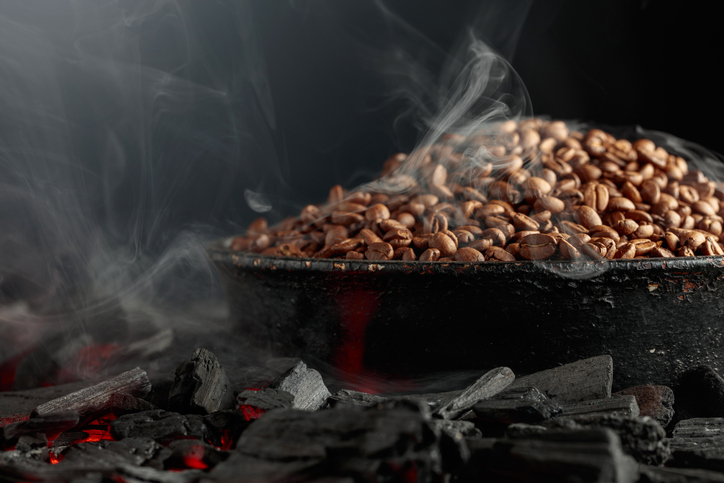
Before the mechanical roaster, coffee beans were roasted over charcoal (Credit: igorr1 via Getty Images)
For centuries, roasting coffee was a hands-on affair, often involving beans heated in pans or simple rotating drums over a fire. Industrialisation changed that dramatically. During the 19th century, increasingly sophisticated mechanical roasting machines allowed much larger quantities of coffee to be roasted with greater consistency.
One important development came from American inventor Jabez Burns, who patented an influential commercial coffee roaster in 1864. His machine allowed beans to be emptied without removing the roasting cylinder from the heat, helping make large-scale production faster and more controlled. Coffee roasting was no longer simply kitchen craft. It was becoming an industry.
2. The Coffee Grinder
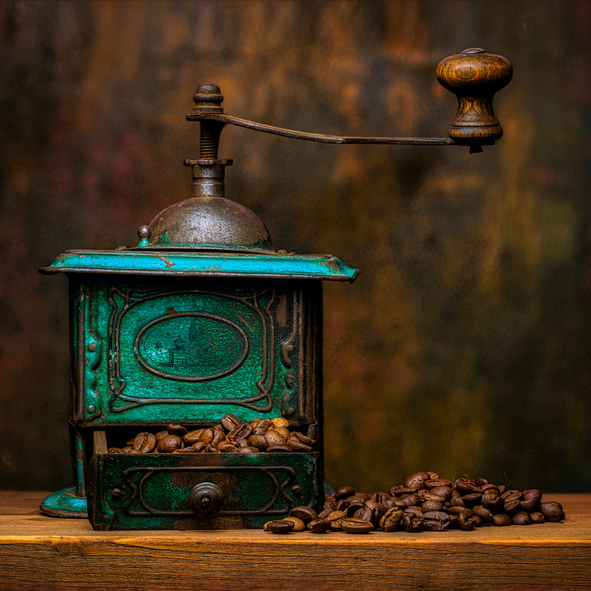
A hand-cranked coffee grinder (Credit: Helmut Hess via Getty Images)
Whole roasted beans keep their flavour far better than coffee that’s been ground and left sitting around. The problem, historically, was turning those stubborn little beans into something brewable without a lot of effort.
Early coffee drinkers used mortars and mills adapted from spice grinding, but purpose-built coffee grinders gradually became common. By the 19th century, hand-cranked burr grinders were appearing in homes and shops, crushing beans between hard surfaces rather than chopping them randomly. That mattered because grind size affects how quickly flavour is extracted. Suddenly, drinkers could prepare coffee more consistently and, crucially, grind it just moments before brewing.
3. The Coffee Percolator

Percolators revolutionised the morning coffee (Credit: Anna Blazhuk via Getty Images)
Few brewing devices make their presence known quite like the percolator. Water heats in a lower chamber, rises through a tube and repeatedly passes through ground coffee, producing that familiar bubbling soundtrack once heard in countless kitchens.
An early version was created by Parisian tinsmith Joseph-Henry-Marie Laurens in 1818, while later designs refined the basic principle. By the late 19th and early 20th centuries, percolators were becoming hugely popular. They made brewing larger quantities of coffee more straightforward, particularly before automatic drip machines arrived. The downside? Leave one bubbling too long and the coffee can become impressively bitter. Convenience, apparently, came with consequences.
4. The Vacuum Coffee Maker
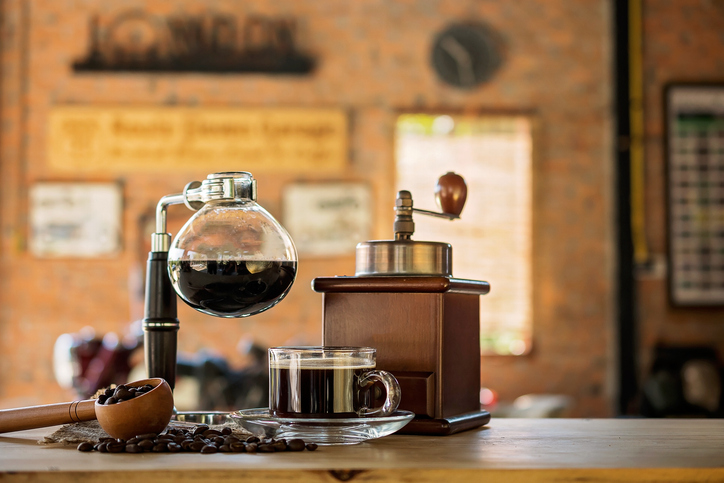
Vacuum coffee makers were elaborately theatrical (Credit: aedkais via Getty Images)
If brewing coffee ever looked like a school science experiment, the vacuum or siphon brewer deserves much of the credit. Developed in Europe during the 19th century, it uses two chambers and changing air pressure to move hot water through coffee grounds before drawing the finished drink back down.
The result wasn’t merely practical. Vacuum brewers turned coffee preparation into theatre. Glass chambers, rising water and dramatic changes in pressure made the brewing process visible in a way few earlier devices had managed. Although siphon coffee never conquered every kitchen, the principle endured, and modern speciality cafés often still use this wonderfully elaborate method today.
5. The Espresso Machine
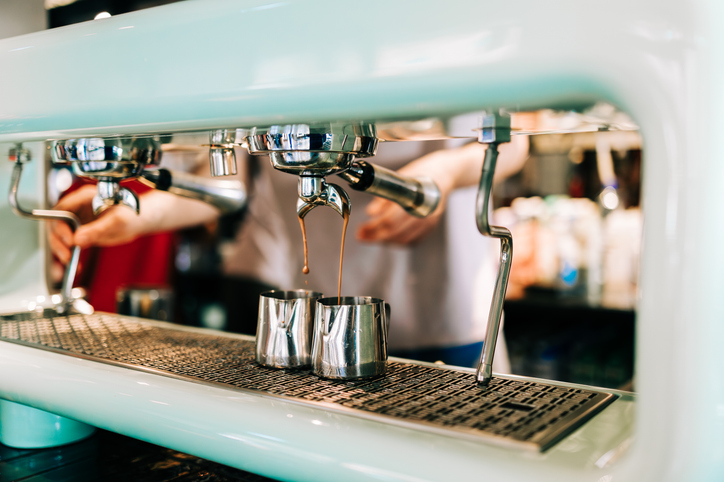
Espresso machines are a very familiar sight (Credit: Olga Pankova via Getty Images)
Espresso changed almost everything: café culture, coffee menus and the speed at which a very strong drink could arrive in a tiny cup. Italian inventor Angelo Moriondo patented an early steam-powered coffee machine in 1884, designed to produce coffee quickly for commercial customers.
Other inventors pushed the idea further. Luigi Bezzera developed machines that prepared individual servings, while Desiderio Pavoni helped commercialise them in the early 20th century. Later, Achille Gaggia’s lever machines used water pressure instead of steam, helping produce the thick crema now associated with espresso.
From cappuccinos and lattes to flat whites, an enormous chunk of modern coffee culture followed these innovations.
6 and 7. The Paper Filter and Electric Drip Machine
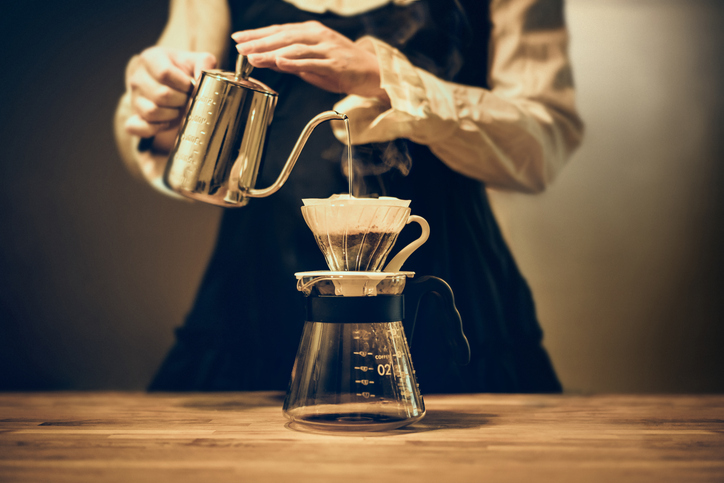
Paper coffee filters made a smooth cup (Credit: Photo taken by Kami (Kuo, Jia-Wei) via Getty Images)
In 1908, German housewife Melitta Bentz found herself irritated by coffee grounds and bitter brews. Her wonderfully simple solution was to place blotting paper inside a pierced container, creating an early disposable coffee filter. She patented the idea and founded a company around it.
Over the next decades the idea was taken further. In the 1950s, electric machines such as the German Wigomat automated drip brewing by heating water and passing it steadily through ground coffee held in a filter. Together, the inventions created one of coffee’s most enduring combinations: ground beans, hot water, paper filter, gravity. No bubbling pot required, and considerably less sludge in the cup.
8. Instant Coffee
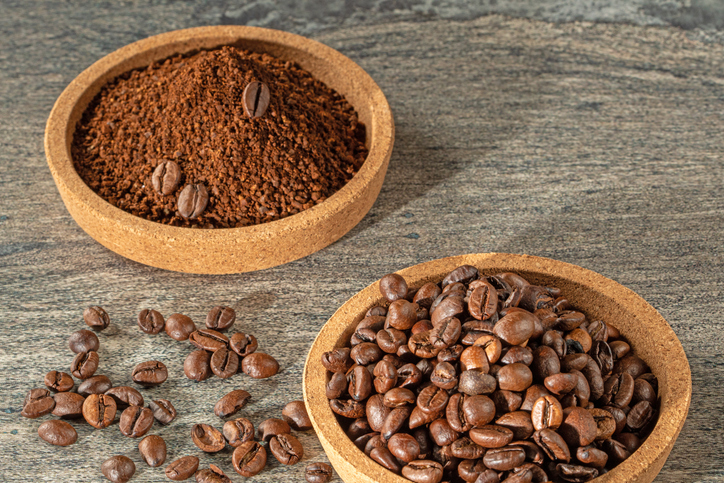
Coffee in an instant (Credit: Victor Ilin via Getty Images)
Coffee without grinding, brewing or waiting? It sounded almost suspiciously convenient. Experiments with soluble coffee appeared in different forms during the 19th and early 20th centuries, with several inventors contributing to its development.
What transformed instant coffee into a global product was industrial-scale production. Nestlé launched Nescafé in 1938 after developing a method for producing soluble coffee that could first be stored, and then prepared simply by adding hot water.
Instant coffee proved especially useful where proper brewing equipment was impractical. It travelled easily, lasted well and turned coffee into something almost anyone could make in seconds. Coffee purists may have recoiled, but convenience had officially entered the cup.
9. The Moka Pot
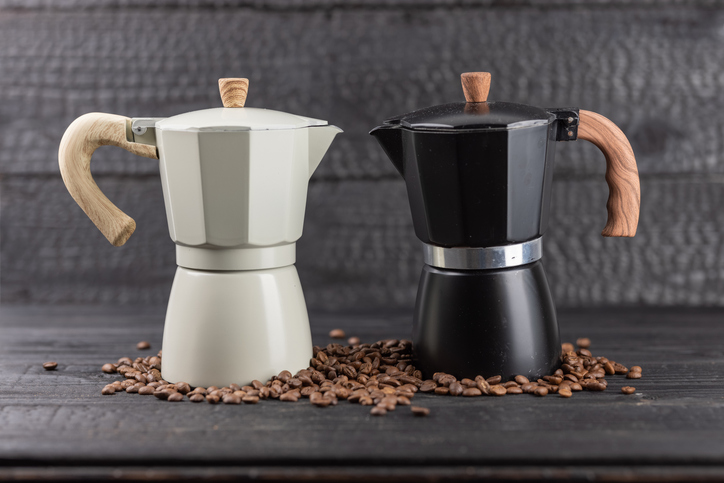
Alfonso Bialetti's iconic moka pot (Credit: akegooseberry via Getty Images)
In 1933, Alfonso Bialetti introduced a small aluminium brewer that would become an icon of Italian domestic life. The moka pot used steam pressure generated on a stovetop to push hot water through ground coffee and into an upper chamber.
It was compact, reusable and capable of producing a strong drink without the enormous, expensive machinery associated with café espresso.
The distinctive eight-sided Bialetti design became instantly recognisable, while the underlying brewing method spread around the world. Strictly speaking, a moka pot does not create true espresso because it operates at much lower pressure. Tell that to generations of devoted owners, though, and you may start an argument before breakfast.
10. The Coffee Capsule
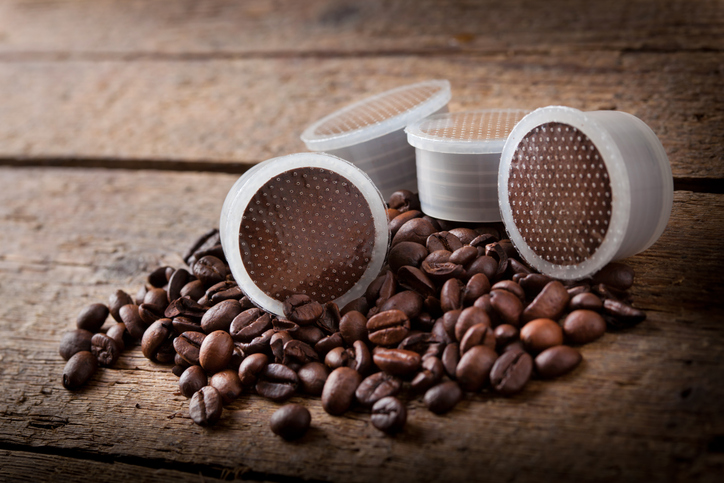
Insert capsule, press button, coffee (Credit: fotograv via Getty Images)
The final great coffee shortcut was tiny, sealed and remarkably powerful. During the 1970s, Swiss engineer Eric Favre developed a system for preparing individual servings from pre-portioned coffee capsules. Nespresso launched commercially in 1986, and capsule brewing eventually exploded into the mainstream.
The appeal was obvious. There was almost nothing to measure, grind or clean. Insert capsule, press button, receive coffee.
Pods also helped bring espresso-style drinks into homes without demanding barista skills. Yet their success created new questions, particularly around packaging waste and recycling. Still, as an exercise in turning complicated coffee preparation into an almost effortless process, the capsule was revolutionary.
Grounds for Innovation
Good morning! (Credit: fotograv via Getty Images)
From roaring industrial roasters to countertop capsule machines, the changing nature of coffee has been driven by a surprisingly inventive collection of gadgets. Each solved a different problem: consistency, speed, cleanliness, portability or sheer convenience. The next great coffee invention may still be brewing, but it has plenty to live up to.