Dogs have walked beside humans for thousands of years, so perhaps it’s no surprise they’ve also followed us into our myths, legends and ghost stories. Across cultures, mysterious canines have guarded the dead, escorted travellers, hunted impossible prey, predicted disaster and, occasionally, simply waited faithfully for their owners to come home. Some were monsters. Others were protectors. A few remain difficult to categorise at all.
So, who are mythology’s most memorable mutts? From ancient Greece to misty British castles and the dark roads of Central America, we’re unleashing ten remarkable dogs whose stories refuse to stay buried.
Cerberus: The Hound at the Gates of Hades
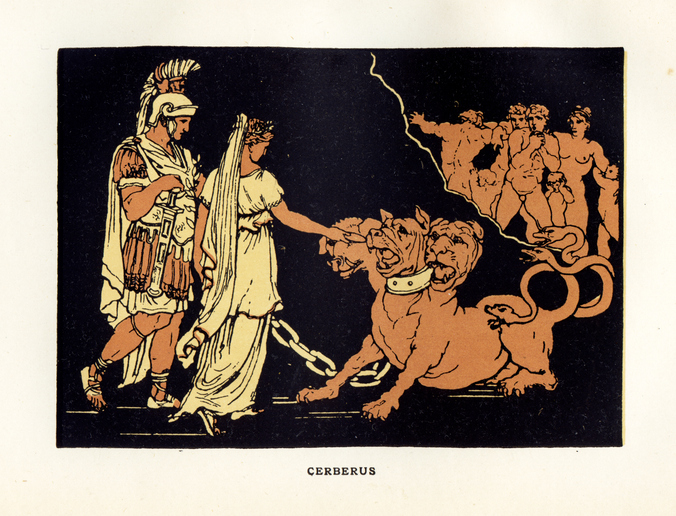
Cerberus in a scene from Virgil's Aeneid (Credit: duncan1890 via Getty Images)
Few mythical dogs come with a more intimidating job description than Cerberus. In Greek mythology, this monstrous hound guarded the entrance to the Underworld, preventing the dead from escaping and the living from casually wandering in. He’s usually described as having three heads, although ancient accounts weren’t always consistent about the exact number, because apparently one terrifying head simply wasn’t enough.
Cerberus crops up in several famous myths. Heracles was ordered to capture him as one of his Twelve Labours, while Orpheus reportedly soothed the beast with music. Fierce, many-headed and stationed at the gates of death itself, Cerberus became the ultimate mythological guard dog.
Argos: The Dog Who Never Forgot
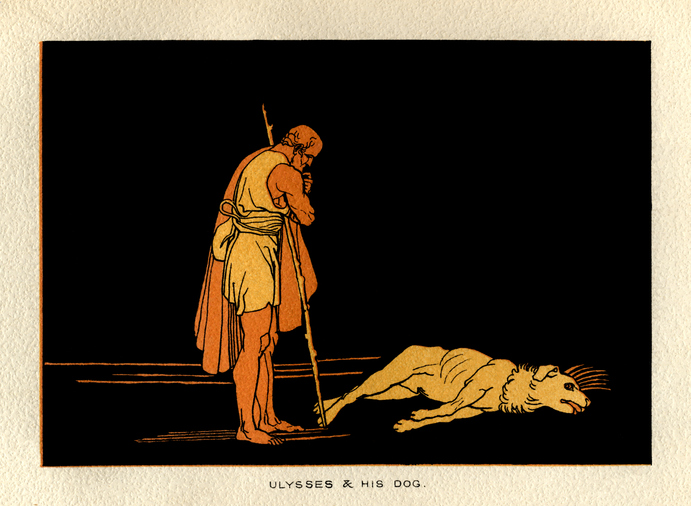
An illustration of Ulysses and his dog, Argos (Credit: whitemay via Getty Images)
Not every legendary dog breathed fire or guarded the realm of the dead. Argos earned his place in mythology by doing something much simpler: remembering.
In Homer’s Odyssey, Odysseus returns to Ithaca after twenty years away, disguised so that almost nobody recognises him. Argos, his once-prized hunting dog, is now elderly and neglected. Yet the moment Odysseus approaches, Argos knows exactly who he is. The old dog lifts his head, moves his ears and wags his tail before dying soon afterwards.
It’s a tiny episode in an enormous epic, but one that has endured for centuries. Monsters may grab the headlines. Loyalty, it seems, lasts even longer.
Laelaps: The Dog That Could Never Miss

Laelaps is represented by the constellation Canis Major, or 'Greater Dog' (Credit: grebeshkovmaxim via Getty Images)
Greek mythology also gave us Laelaps, a supernatural hunting dog with one particularly useful ability: whatever it chased, it always caught. An excellent gift, right up until somebody sent it after an animal that could never be caught.
That animal was the Teumessian fox, another mythical creature whose special talent was permanently escaping its pursuers. The result was an impossible paradox. Laelaps had to catch the fox, while the fox had to escape Laelaps.
Rather than allow the chase to continue forever, Zeus intervened, turning both animals to stone. In later traditions, the pair became associated with constellations. It was mythology’s version of an unstoppable force meeting an immovable object, only considerably furrier.
Garmr: Norse Mythology’s Ferocious Watchdog
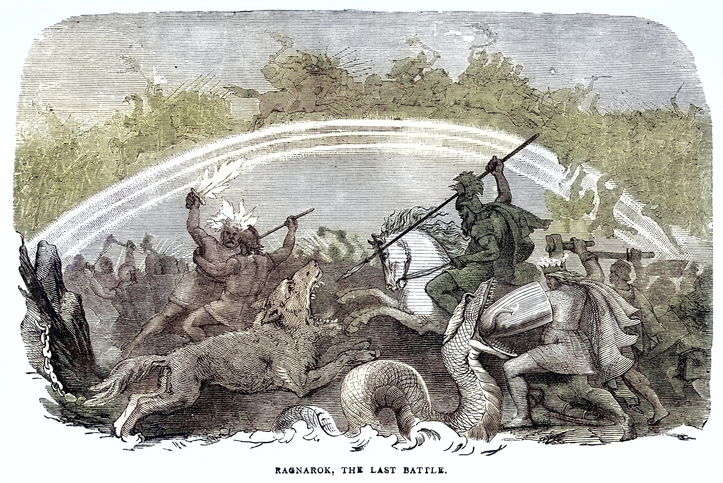
Ragnarok's final battle with Fenrir, the monstrous wolf, in the foreground (Credit: duncan1890 via Getty Images)
Cerberus wasn’t the only canine stationed near the land of the dead. Norse mythology had Garmr, a fearsome hound linked with the entrance to Hel, the gloomy realm ruled by the goddess of the same name.
Garmr appears most dramatically in accounts of Ragnarök, the catastrophic series of events marking the destruction and rebirth of the world. During the final chaos, he breaks free and fights the god Týr, with both ultimately killing one another.
Exactly how Garmr relates to Fenrir, Norse mythology’s better-known monstrous wolf, has long been debated, with some traditions appearing to blur their roles. Either way, Garmr belongs firmly among mythology’s least welcoming watchdogs.
Feldgeister: The Dogs in the Corn
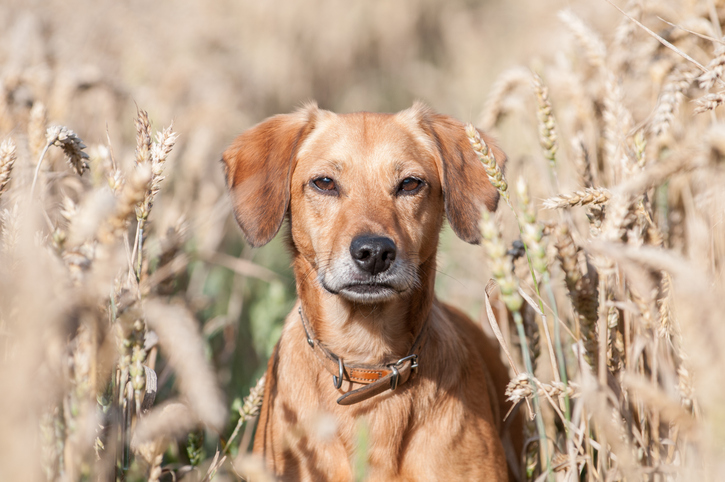
German folklore tells stories of dogs in cornfields (Credit: dageldog via Getty Images)
German folklore imagined fields as home to mysterious spirits known as Feldgeister, or “field spirits”, which could appear in numerous animal forms. Among the strangest were supernatural dogs such as the Kornhund, or “corn dog”, and Roggenhund, meaning “rye dog”. When wind rippled through a field of grain, people sometimes imagined a hidden dog racing between the stalks.
These weren’t necessarily friendly farmyard companions. Traditions could cast the creatures as frightening figures lurking among the crops, particularly as warnings to children who wandered into fields. It turned an everyday sight – grain moving mysteriously in the breeze – into something altogether more canine and considerably creepier.
Irawaru: The Man Who Became a Dog

Māori culture and traditions date back thousands of years (Credit: Boy_Anupong via Getty Images)
In Māori tradition, Irawaru is closely associated with the origin of the kurī, the Polynesian dog once kept in Aotearoa New Zealand. He was said to be the brother-in-law of Māui, the famous demigod and trickster whose adventures appear throughout Polynesian mythology. In one account, Māui became angry with Irawaru and transformed him, pulling and reshaping his body until he had become a dog.
When Irawaru’s family later asked where he had gone, Māui told them to call “Moi!”, a traditional call for a dog. Irawaru came running. It’s an unsettling origin story, turning one of humanity’s closest animal companions into the result of a distinctly mythological family feud.
Barghest: The Hound of Northern Folklore
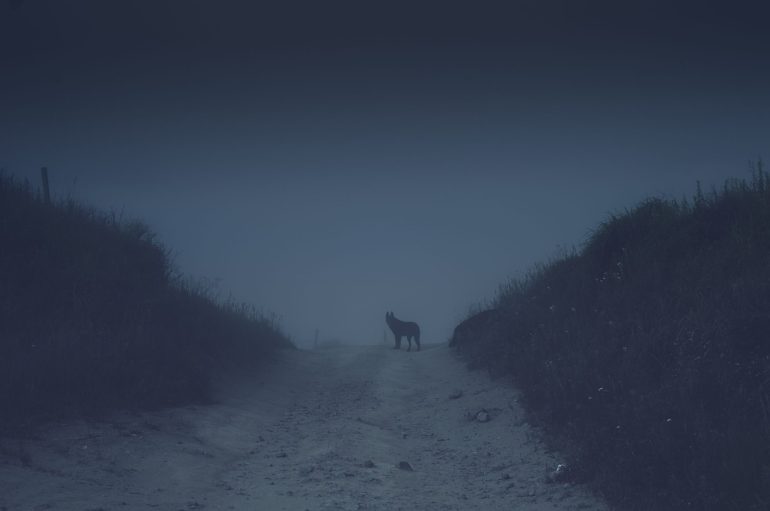
Barghest is said to roam remote stretches of the countryside... (Credit: Anna_Anikina via Getty Images)
In the folklore of northern England, the Barghest is a fearsome supernatural hound said to haunt lonely roads, churchyards and remote stretches of countryside. Stories vary from place to place, but encounters with the creature were often treated as very bad news indeed, sometimes as warnings of death or disaster.
The Barghest was no ordinary stray, either. Tales describe an unnaturally large dog appearing suddenly at night, occasionally accompanied by the sound of rattling chains or vanishing without explanation. In some traditions, it could even change shape. Part ghost, part omen and entirely unsettling, the Barghest became one of Britain’s most unsettling phantom-dog legends.
Okuri-Inu: The Dog Following Behind You
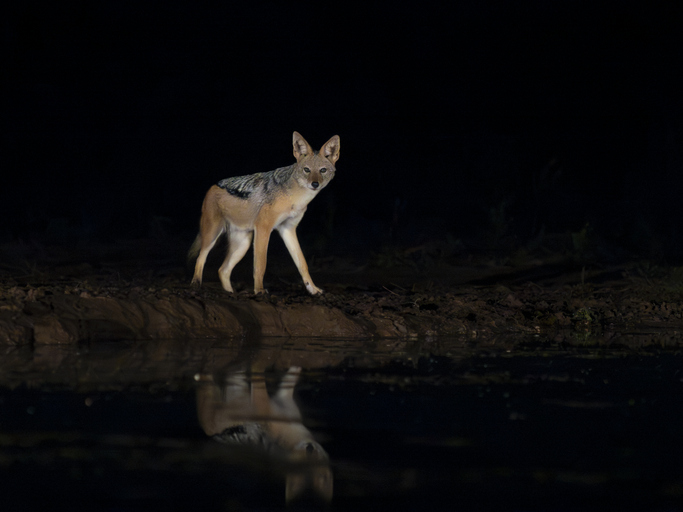
Does Okuri-inu follow lone travellers...? (Credit: Henrik Karlsson via Getty Images)
Japanese folklore has its own unnerving roadside canine: the okuri-inu, a yōkai said to follow lone travellers walking through mountains or dark paths at night.
Its behaviour changes between regional versions. Sometimes the creature acts almost like a supernatural escort, following a traveller safely through dangerous territory. In other tales, stumbling can trigger a much nastier outcome, with the waiting beast attacking the moment its victim falls.
That uncertainty makes the legend particularly eerie. Is the creature protecting you, hunting you, or simply waiting to see what happens? The safest strategy in many stories is to remain calm, keep walking and, above all, watch your footing. Few journeys come with quite such intimidating roadside assistance.
The Church Grim: Guardian of Sacred Ground
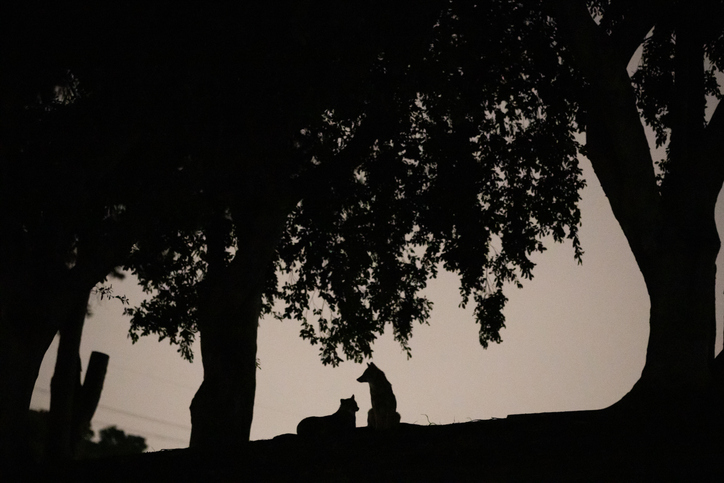
Church Grim is said to keep watch over churches and graveyards (Credit Corinna Kern via Getty Images)
In British and Scandinavian folklore, the Church Grim is a supernatural guardian associated with churches and graveyards. It frequently takes the form of a large black dog, patrolling consecrated ground and keeping watch over the dead.
One particularly dark strand of folklore claimed that an animal might be buried beneath or near a newly constructed church, its spirit then becoming the site’s permanent protector. Whether this was ever widespread practice is another matter, but the idea proved remarkably persistent.
Unlike many phantom dogs, the Grim isn’t necessarily hunting innocent travellers. Its role is protective, albeit in a distinctly gothic fashion. Think less friendly parish pet and more eternal security guard with glowing eyes.
Sarama: The Divine Dog Who Found the Stolen Cattle

Sarama appears in the Rigveda, a sacred Indian text (Credit Tarannum Gupta via Getty Images)
Sarama appears in the Rigveda, one of the oldest sacred texts of ancient India, as a remarkable divine dog sent on an important mission. A group known as the Panis had hidden a herd of valuable cattle, so Sarama was dispatched by Indra, a powerful Vedic god associated with storms and warfare, to track them down. She crossed a great distance, found the hiding place and refused to be persuaded into abandoning her task.
Later Hindu traditions gave Sarama an even bigger mythological family. She became known as the mother of the Sarameyas, supernatural four-eyed dogs associated with Yama, the god connected with death and the afterlife. Divine tracker, loyal messenger and ancestor of otherworldly watchdogs? That’s quite the pedigree.
Every Dog Has Its “Tail”
Humans and dogs, a bond that never breaks (Credit Giacomo Augugliaro via Getty Images)
From Cerberus guarding Hades to spectral hounds roaming British roads, dogs have occupied an extraordinary place in human storytelling. Sometimes they embody loyalty, as with Argos and Sarama. Elsewhere they become guardians, monsters, omens or companions between worlds.
Perhaps that variety explains their staying power. Humans have long trusted dogs to stand beside us, protect our homes and follow us into dangerous places. In myth and mystery, we simply asked them to follow us a little further.