The name Bram Stoker conjures up one fictional character above all else: Count Dracula. Published in 1897, the vampire novel casts such a long shadow that it almost swallowed the rest of its author’s career. Yet Stoker’s imagination was far too restless to stay in one Transylvanian castle. In fact, he wrote a dozen novels and multiple short story collections during his lifetime.
So what else was lurking in the Irish writer’s literary imagination? From dark fairy tales to decidedly peculiar thrillers, we’re opening the crypt on Stoker’s lesser-known creations.
Jerry O’Sullivan: The Man Who Lost Everything
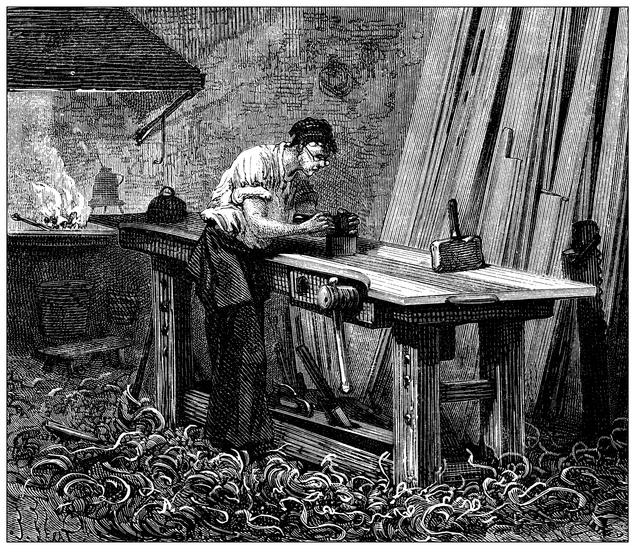
Jerry O'Sullivan, carpenter-turned-murderer (Credit: ilbusca via Getty Images)
Jerry O’Sullivan doesn’t start out as a monster. In The Primrose Path (1875), he’s a hardworking Dublin carpenter who moves to London with his wife Katey and their children, hoping for a better life. But things quickly go wrong. After losing his job, Jerry turns to drink, becomes increasingly jealous and starts imagining his wife is being unfaithful. His behaviour grows more violent, ending in murder and suicide. There’s nothing supernatural about Jerry, which makes him one of Stoker’s more disturbing creations: an ordinary family man who becomes capable of terrible things.
The Invisible Giant: A Walking Plague
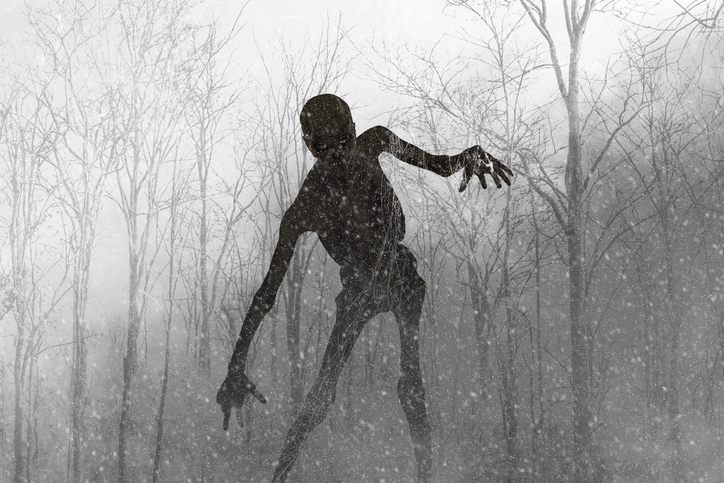
The Invisible Giant was a deadly plague (Credit: chainatp via Getty Images)
Imagine a giant so enormous it fills the sky, with outstretched arms, blind eyes and a huge robe that fades into the mist. Now imagine you’re the only person who can see it.
That’s the problem facing a young girl called Zaya in The Invisible Giant (1881). The creature is actually a deadly plague, slowly approaching her city. Zaya and an elderly man called Knoal try to warn everyone, but they’re mocked and ignored. Then people start dropping dead. Even by Stoker’s standards, it’s a pretty grim monster to introduce in a collection of children’s fairy tales.
Seven: The Number That Lost Its Mind

Tineboy wished 'seven' had never been invented (Credit: Simon McGill via Getty Images)
Even numbers have their breaking point. In How 7 Went Mad (1881), a schoolboy called Tineboy gets so annoyed with his times tables that he wishes the number seven had never been invented. He falls asleep and dreams of Seven suffering what can only be described as a serious meltdown. Found foaming at the mouth in the Number Stables, the unfortunate digit complains about being constantly added, subtracted and multiplied incorrectly. An ‘Alphabet Doctor’ arrives armed with a stethoscope, telescope, microscope and horoscope, but Seven isn’t particularly interested in getting better. It’s a wonderful, ridiculous creation – quite possibly the weirdest maths lesson ever written.
The Snake King: The Bog That Ate a House

St. Patrick banished the Snake King (Credit: ManuelVelasco via Getty Images)
According to the local legend in The Snake’s Pass (1890), a powerful Snake King once ruled an Irish mountain until St Patrick banished him. Before leaving, the creature hid his golden crown and promised to return in another form to guard it. The locals believe he came back as a shifting bog, an enormous glob of wet, muddy earth that creeps across the mountainside. And it’s every bit as dangerous as it sounds.
At one point, the bog swallows an entire house, along with its unfortunate occupant, before surging down the mountain towards the sea. Whether a serpent in disguise or quick-sand on a mission, it’s definitely not something you’d want at the bottom of your garden.
The Judge: A Rat with a Dark Secret

The rat and the judge has sinister eyes... (Credit: susandaniels via Getty Images)
There’s something pretty unsettling about the enormous rat in The Judge’s House (1891). It sits in a high-backed chair, snarls its teeth at a young student called Malcolmson, and escapes up an old bell rope whenever he tries to chase it away.
Things get considerably worse for poor Malcolmson, when he notices that a portrait of the house’s former owner – a notoriously cruel judge – has the same strikingly sinister eyes as the rat itself. Is this a classic case of evil reincarnated?
Eventually, the Judge himself appears, armed with a hangman’s noose. It turns out the previous occupant has no intention of giving up his favourite chair, or allowing his new guest to leave alive.
Gormala MacNiel: The Woman Who Sees Death Coming

Gormala MacNeil is always watching... (Credit: freemixer via Getty Images)
The Mystery of the Sea (1902) introduces the reader to the rather forlorn figure of Gormala MacNiel. Tall, thin, with unusually large eyes, she’s described as a mysterious Scottish woman who claims to possess second sight. She can apparently predict people’s deaths, and takes a particular interest in a young man who begins experiencing strange visions of his own.
Gormala keeps turning up wherever he goes, watching him, questioning him and insisting that he shares her gift. Throw in some Spanish treasure, suspicious scriptures and mysterious coded messages, and Gormala makes for a particularly unwelcome companion for anyone hoping for a quiet Scottish getaway.
Queen Tera: The Seven-Fingered Mummy
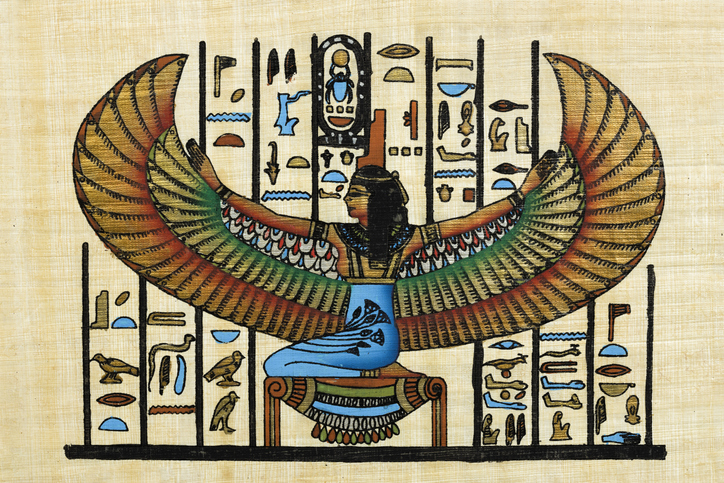
Queen Tera becomes the Queen of Egypt (Credit: ewg3D via Getty Images)
Stoker’s Queen Tera wasn’t the sort of ruler to take orders, even from the gods. In The Jewel of Seven Stars (1903), she becomes the young queen of ancient Egypt and outfoxes powerful priests to take control of other-worldly powers which give her power over sleep itself along with other people’s minds. In classic Stoker style, she even spends a month sealed inside a coffin to test her abilities. In the story, when her mummy is discovered thousands of years later, it looks remarkably lifelike – with smooth skin, thick black hair and a bizarre right hand with seven fingers. For the people who found her, those fingers prove particularly menacing: matching marks which appear on the throats of victims found dead near her tomb. Queen Tera proves the archetypal Stoker character – looming terror, complex past and never one to be disturbed…
Teuta Vissarion: The Vampire Who Wasn't
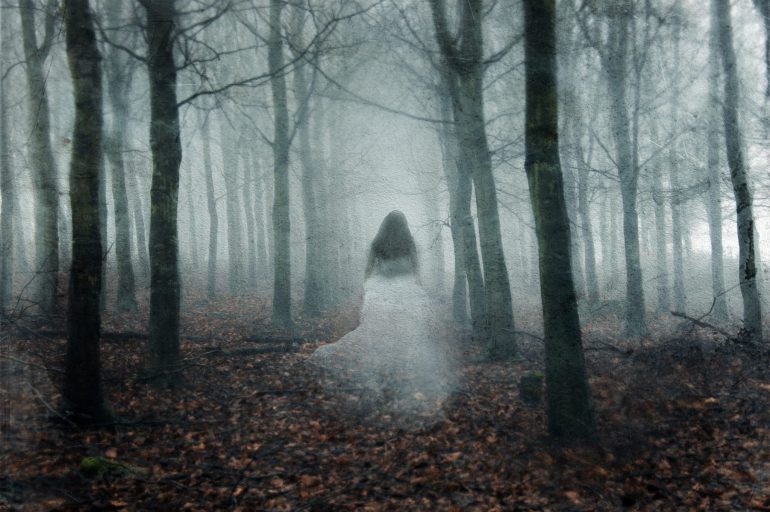
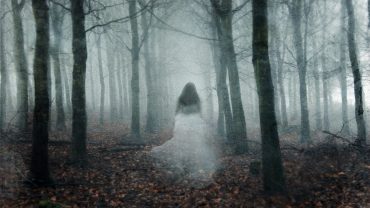
A ghostly woman (Credit: David Wall via Getty Images)
Teuta Vissarion certainly looks the classic Stoker creation. Wrapped in a burial shroud, she appears at night, moves silently through a castle and sometimes rests inside a coffin beneath a glass cover. So far, so on Bram-d. And in The Lady of the Shroud (1909), a young Englishman called Rupert becomes obsessed by her, despite having some serious reservations about whether she’s actually alive.
But Teuta isn’t actually a vampire. After falling into a deathlike trance, she was mistakenly buried before recovering. To keep her survival secret from her country’s enemies, her protectors encouraged rumours that she was undead. It’s an elaborate story, and has all the trappings of a classic Stoker character, minus the strange choice of drinks.
The Children of Gibbet Hill: Three Unpleasant Playmates

The story was rediscovered at the National Library of Ireland (Credit: Borisb17 via Getty Images)
Children and Gothic horror are possibly the classic pairing. In Gibbet Hill (1890), Stoker introduces three children standing beside a memorial. At first glance, they might not seem particularly frightening. But these plucky youngsters are anything but ordinary.
The boy has a particular fondness for worms, which he carries around for amusement, while all three kids share an unsettling interest in strange and bizarre rituals. They make eerie music, communicate with a mysterious snake-like creature and seem remarkably happy to hang around with terrifying portents which would frighten most grown-ups. Their casual approach to cruelty reflects many of Stoker’s best baddies, but in this case it’s wrapped up in a remarkably unassuming package.
The long-forgotten story was republished in 2024 after being rediscovered at the National Library of Ireland.
Beyond the Bite
The count kept some very strange company (Credit: CSA Images via Getty Images)
Dracula may have secured Stoker’s place in literary history, but it was hardly his only journey into the strange. Across fairy tales, thrillers, ghost stories and Gothic extravaganzas, he explored everything from arithmetic anxiety to ancient monsters and mysterious mummies. Some are chilling, some are gloriously over the top, and others are just plain bonkers. Together, they reveal a writer whose imagination was never content to stay in one coffin. The Count, it turns out, had some wonderfully weird company.