Few Australian UFO stories have left as strange a mark on the landscape – literally and metaphorically – as the Tully saucer nests incident. What began as an ordinary morning for banana farmer George Pedley soon turned into one of the country’s most bizarre mysteries, after he reported seeing a saucer-shaped object rise from the reeds and vanish into the sky.
Unlike many UFO sightings, this one left behind a physical scene – a circular depression in the reeds, which were flattened and twisted into a remarkable pattern. Within days, at least three similar impressions were reported by locals, and it was the Tully saucer nests that are widely considered to be the spiritual precursor to the later ‘Australian crop circle’ phenomenon that swept the country and globe in the late 1970s and early 1980s.
While there are many famous stories about UFOs in Australia – from the Balwyn photograph and Melbourne’s Westall Encounter, to the mysterious disappearance of Frederick Valentich, and the Nullarbor Plain UFO incident – the Tully saucer incident somehow feels different.
So what turned a remote Queensland farm into the focus of national attention? Was it the work of swirling winds, fighting crocs, a natural whirlpool, or something altogether more out-of-this-world? This is the puzzling story of the Tully saucer nests.
The Tully Saucer Nests: Where & When

Farmland in Tully, Queesnland. (Credit: Oliver Strewe via Getty Images)
On the morning of 19 January 1966 in Tully, a tiny town near the Queensland coast around 1,600 kilometres north of Brisbane, it was an ordinary working day at the Pennisi family’s sugar cane farm. George Pedley, a 28-year-old banana farmer who worked a neighbouring plot, was driving his tractor across Albert Pennisi’s property near Horseshoe Lagoon when suddenly, his morning – and his life – were disrupted.
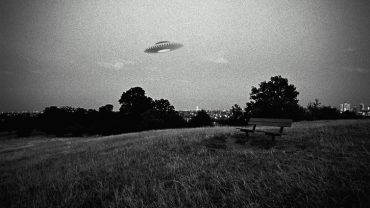
According to Pedley, he heard a hissing sound above his tractor’s engine coming from the direction of the lagoon. As he looked over, he saw a grey, saucer-shaped object hovering in the air, before speeding away and disappearing from view.
He rushed to the spot where he saw the mysterious craft, and what he found became known as the Tully saucer nests. An area of flattened, twisted reeds that transformed a quiet Queensland backwater into the centre of one of Australia’s strangest UFO mysteries.
The Nest in the Reeds
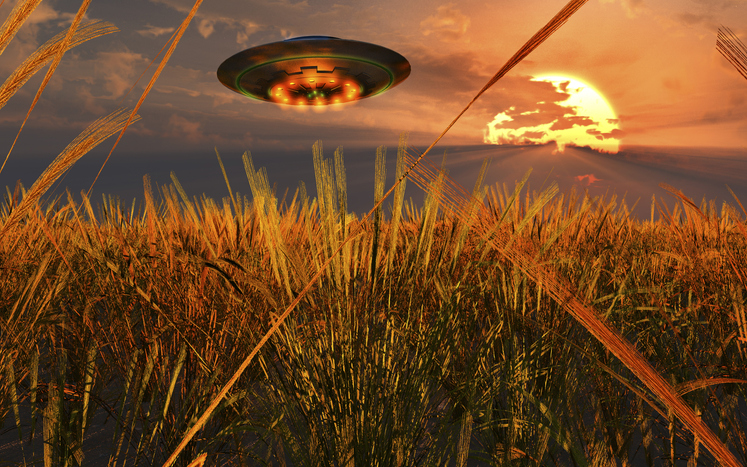
George Pedley was sure he'd seen a UFO (Credit: Mark Stevenson/Stocktrek Images via Getty Images)
When he reached the edge of Horseshoe Lagoon, the swamp grass appeared to have been flattened in a clockwise swirl, with some stalks uprooted and drawn towards the centre of the circle. The supposed ‘Queensland UFO’ seemingly left what we now call a crop circle, broadly oval in shape – reported to have measured around eight metres by ten metres.
There were no obvious tracks leading into or out of the Tully crop circle, and for a farmer who knew every inch of the land he worked, George Pedley was faced with a scene that was difficult to explain.
What Did He See?
George Pedley’s account was clear in its broad details, but left plenty of wiggle room. He described the UFO as a grey, saucer-shaped object, around seven or eight metres in diameter. However, the details of its size, speed and movement would change over time as the story was told and re-told. He said it was dull rather than shiny, and it rose vertically before speeding away.
What made the Tully saucer incident unusual was that Pedley had not just reported lights in the sky. He claimed to have seen an actual object emerge from a specific location, and then found physical evidence at that same spot. The nest became the focus of attention because it offered tangible evidence, but it couldn’t prove what Pedley had seen. The mystery rested on two separate questions – what did he see fly away, and what had flattened the reeds below?
Start Spreading the News…
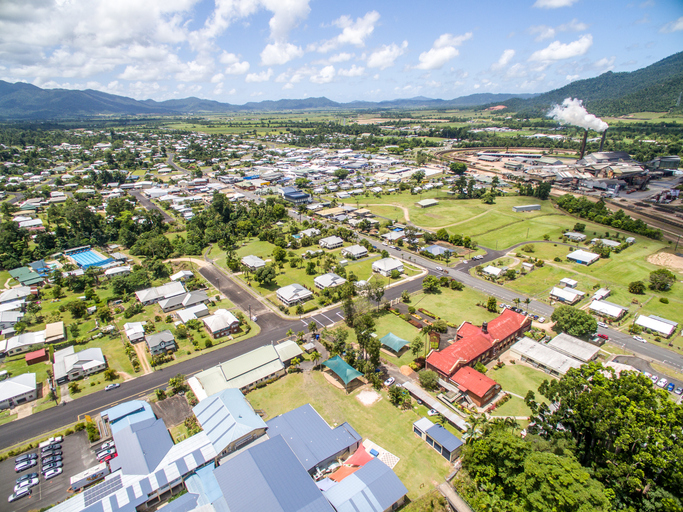
Tully is a small, close-knit community where news spreads quickly (Credit: Tom Watson via Getty Images)
In such a small community, word of the Tully saucer nests spread quickly. It didn’t take long for locals to come and see the site for themselves, but in a rural community where unusual weather, flooding and wild animals were familiar parts of life, the idea of a UFO wasn’t obviously accepted by everyone. As word spread, newspapers began reporting on the story.
At first, George Pedley gave interviews, but soon the coverage soured. Over time he would face mockery and ridicule from certain quarters. Some even said he’d ‘gone troppo’, where excessive and oppressive tropical heat can make one become slightly mad or eccentric. But regardless of what people thought of his story, the perplexing Tully crop circle was there for all to see.
More Nests, The Police and The Air Force
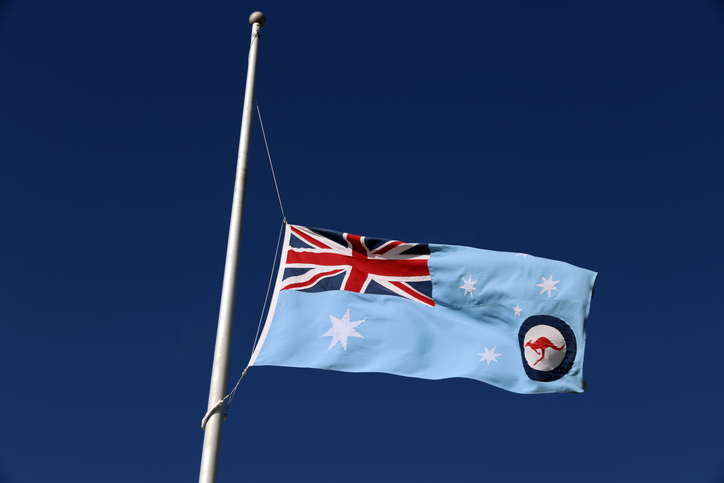
The RAAF erred towards a natural explanation for the saucer nests (Credit: Simon McGill via Getty Images)
As interest in the story grew, the mystery got more bizarre. Further saucer nests – at least three more – appeared in the local area, all with similar characteristics as the first, and it changed the narrative of the story. This was no longer just one farmer’s account of a strange object rising from a swamp. There were now multiple physical sites to examine, photograph and measure.
Local Tully police were called in to investigate. Sergeant Moylan initially considered a helicopter and also recorded a suggestion that a whirlwind or waterspout could have produced a similar formation. Before long, the case reached the Royal Australian Air Force who took a deeper look into these supposed Australian crop circles. Botanists from the University of Queensland were also involved in the search for an explanation.
The RAAF reviewed the police report, witness questionnaires, physical samples and other available evidence. Its investigators erred towards a natural explanation, believing the depressions had been caused by small isolated waterspouts. But not everyone was convinced. The formations were too neat, too localised, and too unusual to have been dismissed quite so easily. The official line might have accounted for the flattened vegetation, but couldn’t explain what George Pedley claimed to have seen.
The Holes in the Story
The Tully saucer nests were examined, photographed and measured, however the available evidence had clear limits. There were no reliable photographs of the object Pedley claimed to have seen, no radar records, and no independent witnesses to the sighting itself. The nests could be measured, but they couldn’t be dated with precision or linked to the idea of an actual UFO. This lack of certainty became central to the six-decade debate surrounding the Tully saucer incident. On one hand, believers argue the physical formations give weight to Pedley’s story. On the other, sceptics say the saucer nests prove nothing about the presence of a UFO. In a nutshell, the nests were real, but their cause uncertain.
Was Tully the Birth of the Crop Circle Phenomenon?
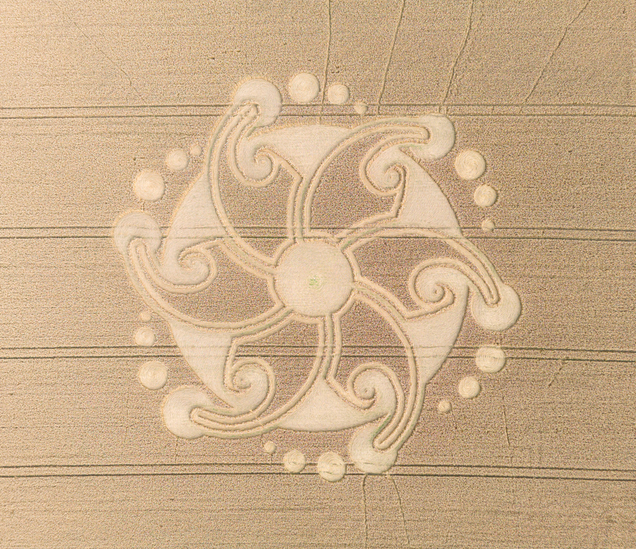
An intricate crop circle made in Wiltshire (Credit: David Marsden via Getty Images)
These Australian crop circles are often seen as the forerunner of the craze that emerged in southern England in the late 1970s and grew internationally during the 80s and 90s. While the Tully saucer nests weren’t crop circles as we’d recognise them today – the basic idea was there. A circular formation that appeared with no obvious cause.
As reports of crop circles began to emerge, some researchers looked back to the Tully saucer incident as an early example of the same broad mystery. The case helped establish the idea that UFOs might leave physical traces behind, and the term ‘saucer nest’ became part of UFO vocabulary.
The connection became even more significant after English hoaxers Doug Bower and Dave Chorley admitted in 1991 to creating hundreds of crop circles using simple tools, adding that Tully had inspired their activities.
The Theories

A waterspout, or a flying saucer? (Credit: Joe Regan via Getty Images)
Sixty years later, no clear explanation for the Tully saucer nests has satisfied everyone. The most logical theory was that whatever caused the Tully crop circle was natural. A very intense, hyper-localised whirlwind known in Australia as a willy-willy, or even a helicopter rotor, was discussed by the police. The RAAF thought it was probably caused by an isolated waterspout, and botanists from the University of Queensland considered the option that the reeds had died due to submersion.
Other ideas pointed towards animals, or some kind of hoax. Suggestions put forward included fighting crocodiles, mating birds or just a fun prank. There are some, however, who accepted George Pedley’s account of what happened that day. That a flying saucer had indeed landed, making the indentation in the reeds, and then left.
The Circle of Truth
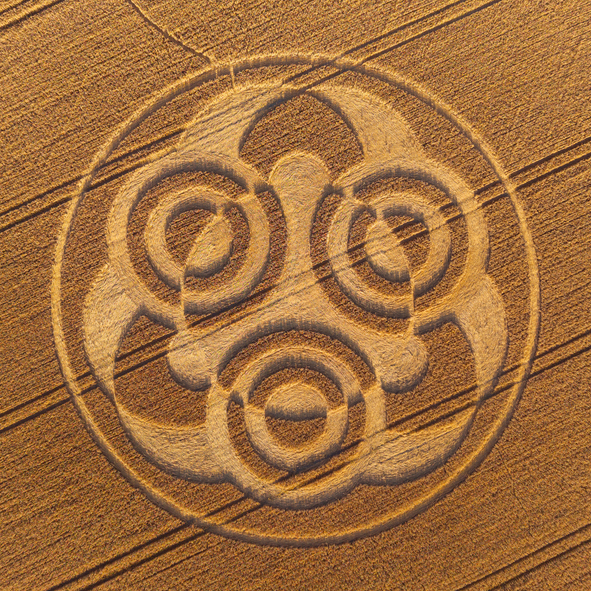
The curious case of the Tully Saucer Nests remains a mystery... (Credit: David Marsden via Getty Images)
George Pedley died in 2022 aged 85. For decades, he was certain of what he saw at Horseshoe Lagoon. The mysterious case of the Tully saucer nests remains one of Australia’s most intriguing UFO mysteries, and the debate rages on. The flattened reeds were never in doubt – they were photographed, measured and examined – but what caused them is still very much up in the air.