Suffolk is a county of quiet market towns, rugged coastlines, windswept fields and long straight roads that seem to disappear into the horizon. It’s not the sort of place you’d expect to be ground zero for some of the world’s most famous UFO stories. Yet across the region, a string of strange encounters has earned the area its own uneasy nickname – the East Anglian UFO corridor.
Inside this corridor are two names that spark debate to this day – the Rendlesham Forest Incident which occurred on Boxing Day 1980, and more than two decades earlier, the Lakenheath-Bentwaters Incident.
Yet this spooky Suffolk UFO report isn’t a tale of little green men or flying saucers. It begins with lights on a radar screen, a handful of trained observers, and a sequence of events that doesn’t quite fit the known rules of flight. It left behind a trail of technical logs, witness statements and an unusually frank line in an official study saying that the probability of at least one genuine UFO being involved was “fairly high.”
Almost seventy years on, the same unsettling questions remain unanswered – was this a misreading of radar signals and shooting stars, or did something far more mysterious slip through eastern England’s Cold War defences?
To find out, we’re heading back to those strange skies above Suffolk, where an RAF UFO encounter on one routine night took a very unexpected turn.
Lights on a Radar Screen - Part 1
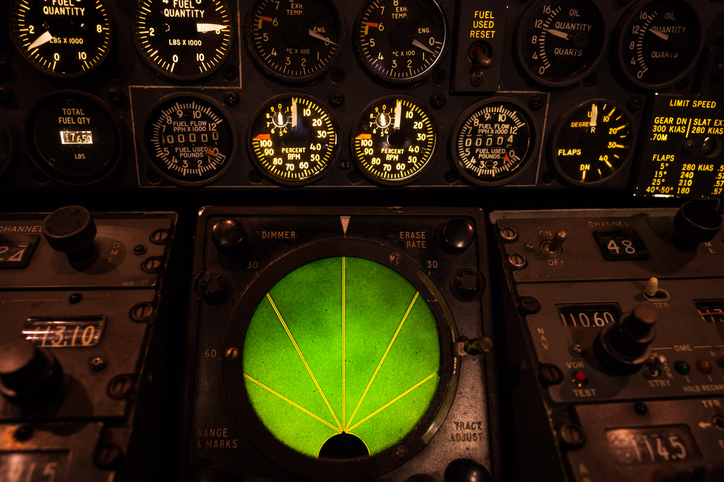
The scrambled American jets saw nothing unusual... (Credit: tsvibrav via Getty Images)
In the summer of 1956, RAF Bentwaters and RAF Lakenheath in Suffolk were among Europe’s most important Cold War air bases, packed with British and American personnel, nuclear‑capable bombers and state-of-the-art, 24/7 radar coverage. It was into this setting that the night of 13th August became so unusual, with multiple bases logging strange contacts, and ground controllers and aircrew watching events unfold in real time.
The Lakenheath-Bentwaters Incident, as it became known, began around 9.30pm on 13 August, when Bentwaters’ Ground-Controlled Approach (GCA) radar picked up a single target off the Suffolk coast. It raced inland at extraordinary speed, reported to be upwards of 4,000 mph, before vanishing.
A few minutes later a group of slow radar echoes merged into one powerful radar return that sat motionless for 10 – 15 minutes before moving north. Around 9.45pm, an American Lockheed T-33 Shooting Star jet crewed by 1st Lieutenants Charles Metz and Andrew Rowe was sent to look for the radar contacts, but saw nothing obvious which may have been the cause.
Fast-forward a little over an hour, and at 10.55pm, another ultra‑fast track swept over the base, said to be somewhere between 2,000 and 4,000 mph. People on the ground saw a bright white light overhead, and a C‑47 pilot at around 4,000 feet reported a similar light beneath him.
Lights on a Radar Screen - Part 2
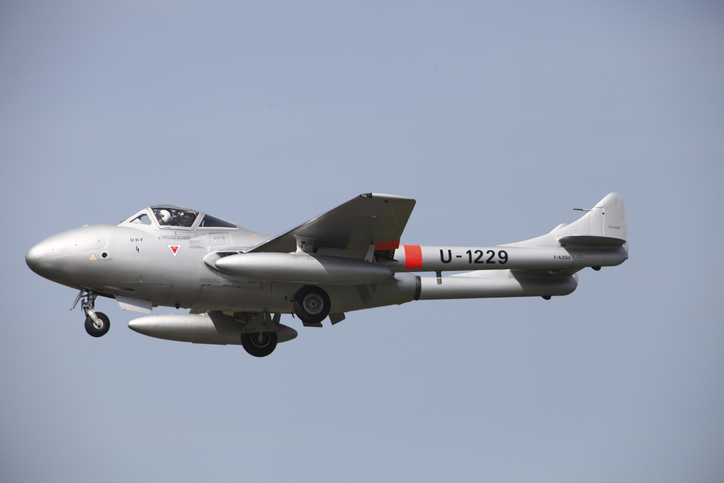
Two de Havilland Venoms were sent up to investigate (Credit: Timm Ziegenthaler/Stocktrek Images via Getty Images)
Within minutes, the Suffolk UFO incident took an even stranger turn. Staff at RAF Bentwaters called their counterparts at RAF Lakenheath (around 40 miles northwest) to ask whether they’d seen anything similar on their radar screens. At approximately 11.10pm, Lakenheath radars found a stationary blip that suddenly shot off at 400 – 600 mph, stopped dead, then repeated the pattern. At the same time ground staff watched glowing objects in the sky, including two which appeared to merge.
According to the American version of the encounter, two de Havilland Venom interceptors were sent up. One of the Venoms locked on to the mysterious UFO, but the target swung behind it and followed for about ten minutes. Oddly, decades later, the aircrew’s recollection didn’t include such a pursuit. By 3.30am the last contact faded north out of range.
Scramble, Silence & Speculation
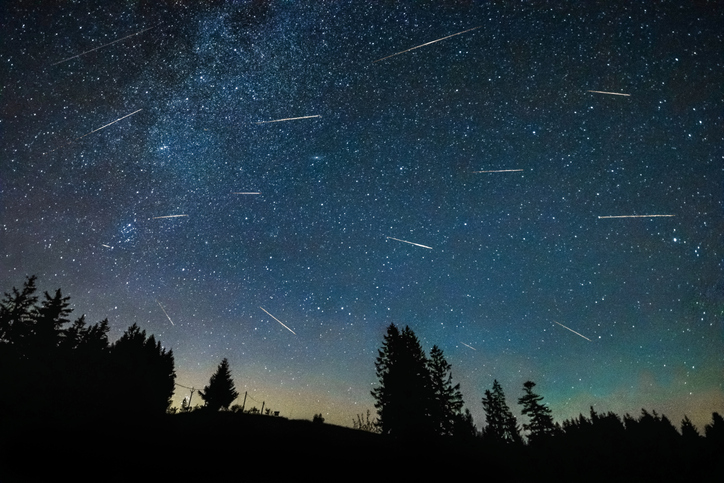
Were the radar blips due to the Perseid meteor shower? (Credit: Rostislav Soucek via Getty Images)
In the ops rooms, the immediate response was textbook Cold War procedure – controllers logged every blip, intelligence officers were notified, and the scrambled jets attempted to make contact with whatever was up there. All the information about the ongoing Lakenheath-Bentwaters Incident was fed up the chain of command, from tower and GCA operators to base intelligence and, ultimately, into USAF and RAF paperwork. It would eventually find its way into Project Blue Book, a US Air Force study on UFOs that ran from 1952 until 1969.
In the days that followed, a number of explanations were put forward in an attempt to make sense of what happened in the Suffolk skies. Some said the air and ground crews saw the planet Mars, others said the fast-moving radar blips were due to the Perseid meteor shower. Neither explanation quite matched up to the astonishing speeds and aggressive manoeuvres those on duty seemingly saw.
The Verdict from On High

The Lakenheath-Bentwaters mystery found its way to Colorado (Credit: PixelView Media via Getty Images)
After being recorded in Project Blue Book, the case of these strange ‘Suffolk aliens’ wound up on the desk of the University of Colorado’s Scientific Study of Unidentified Flying Objects, also known as the Condon Committee. In its 1968 report, the committee noted that although conventional or natural explanations couldn’t be ruled out, the probability that at least one genuine UFO was involved was “fairly high.” The conclusion focused on it being an unidentified object, rather than evidence of anything extraterrestrial.
Later Voices
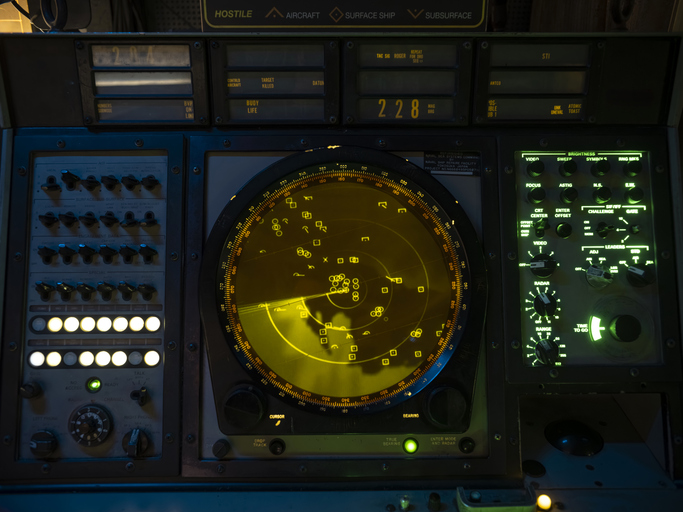
What did the radar operators see? (Credit: McKlin via Getty Images)
More than two decades after the RAF UFO encounter, the human side of the Lakenheath‑Bentwaters Incident came into sharper focus. In 1978, Flight Lieutenant Freddie Wimbledon, who had been the chief fighter controller on duty at RAF Neatishead (around 60 miles northeast of Lakenheath), publicly described the radar contact observed by his interception team while controlling a Venom that night. He described a target which behaved in ways no conventional aircraft should. In the years that followed, researchers tracked down other aircrew involved in the various sorties, including Flying Officers David Chambers, John Brady, Leslie Arthur, Grahame Scofield, Ian Fraser-Ker and Ivan Logan.
These first-hand witnesses fleshed out the details of what happened on the night of the Bentwaters UFO incident. They recalled details such as who was on radar, who was controlling the fighters, who actually flew – and in some cases added details about the objects’ apparent tactics, such as hovering, sudden bursts of speed and positioning behind the jets.
Memories inevitably differed in places, and there were discrepancies between what was recorded at the time, and what was subsequently stated. This included a statement which actually said no fighter chase had happened at all, no visual contacts occurred, and that the radar contact was actually a weather balloon.
However the general picture from these later interviews often reinforced the reports from the time – the fact that multiple trained observers, equipment and a perplexing sequence of events were decidedly out of the ordinary.
Can the Impossible Be Explained?

What flew over the Suffolk coast that night? (Credit: David Powley / 500px via Getty Images)
Since the 1950s, there’s been plenty of attempts to explain what happened that night, from the ordinary to the extraordinary. Perhaps the most prosaic theory is that the Suffolk UFO incident wasn’t a UFO at all, but might instead have been a combination of the planet Mars, bright stars, and meteors from the Perseid shower. On another tack, there’s the idea the incident could just have been technical anomalies and radar glitches.
Many though feel these arguments struggle to account for multiple independent radar and visual sightings at Bentwaters, Lakenheath and elsewhere.
Other theories include that the Lakenheath-Bentwaters Incident was actually the result of secret or experimental aircraft being tested. Further along the spectrum is the idea that at least one – if not more – of the targets was a genuine unidentified aerial phenomenon (or UAP, the modern name for UFOs), displaying performance and apparent tactical awareness far beyond any contemporary aircraft. Even the typically reserved Condon Committee admitted the possibility was “fairly high.”
Yet still, this USAF and RAF UFO encounter remains in the file marked ‘stubbornly ambiguous.’ It’s too well documented to dismiss out of hand, but too strange to comfortably explain.
The Truth Is Out There…
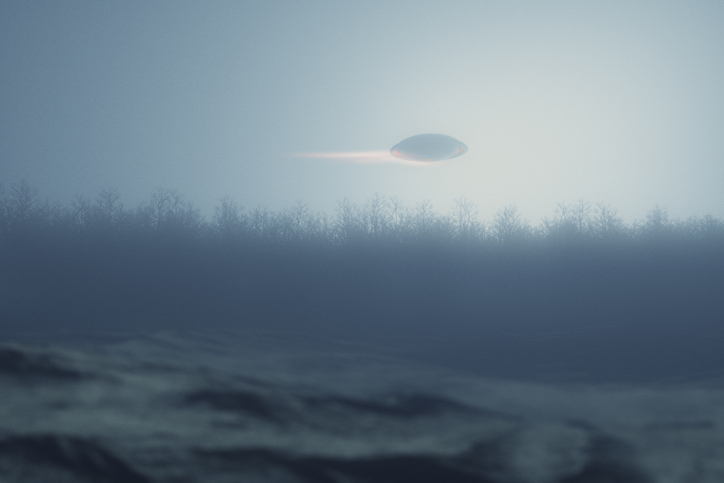
Will we ever know what really happened that day...? (Credit: gremlin via Getty Images)
Decades after these strange events, the Lakenheath-Bentwaters Incident refuses to give up its secrets. The question it leaves hanging over Suffolk’s flat fields and former airbases is as sharp as ever – is there a simple explanation for what happened, or was this the UK’s most credible UFO encounter?