Is Windsor Great Park haunted by the ghost of a horned huntsman riding a black horse and rattling chains? Throughout history, England’s countryside has inspired stories of supernatural spectres, from Black Shuck – the devil dog of East Anglian folklore – to the mythical Beast of Bodmin Moor, Spring-Heeled Jack, or Cambridgeshire’s Shug Monkey. Yet perhaps the scariest of all is Herne the Hunter, an antlered apparition said to haunt the woodland around Windsor.
Between the late sixteenth century and the nineteenth century, the Herne the Hunter mythology has described him appearing beneath the branches of an ancient oak tree, riding a ghostly horse, with a pack of spectral hounds at his side. Probably the first written mention of the story comes from The Merry Wives of Windsor by none other than William Shakespeare. Since then, the legend of Herne Hunter has become one of England’s most famous ghost stories.
So how did the legend of Herne the Hunter begin? Was he once a real keeper of Windsor Forest, or a local caught poaching? Could his antlers hint at legends of wild huntsmen from European folklore, or was Herne just a tall tale created by Shakespeare? And is there a connection between Robin Hood and Herne the Hunter?
Some say the ghost still rides through Windsor’s trees to this very day… So let’s follow the woodland trail, and try to hunt down the truth behind Herne the Hunter.
Windsor Forest & the Royal Hunting Ground
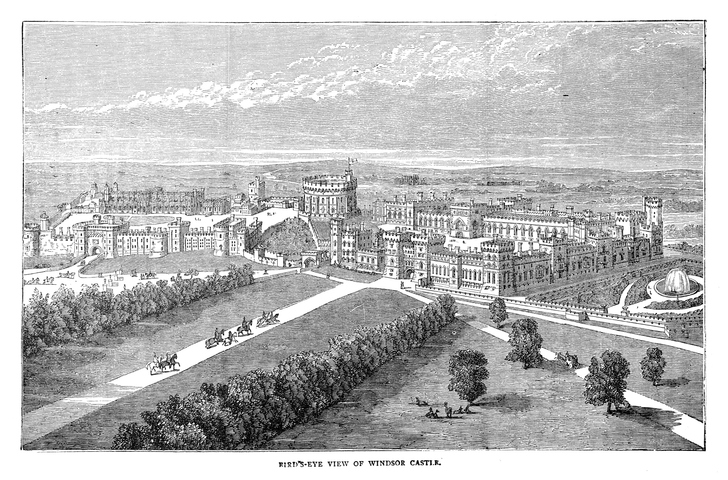
Windsor Castle (Credit: benoitb via Getty Images)
Centuries before the story of Herne the Hunter, Windsor was the epitome of royal ambition. The history of the area dates back over a thousand years. By the time of William the Conqueror, it had already become valuable royal land.
Part of Windsor Forest was gradually developed into Windsor Great Park, a royal hunting ground established from the eleventh century. Windsor Castle lies to its north, and was later connected to the heart of the Great Park by the Long Walk. Yet in a world of royal privilege, manicured lawns and ancient trees, there were whispered stories of shadowy figures moving through the woods after dark. It was here, according to legend, that Herne the Hunter first began his ghostly ride.
Shakespeare’s Herne Hunter: The First Written Evidence
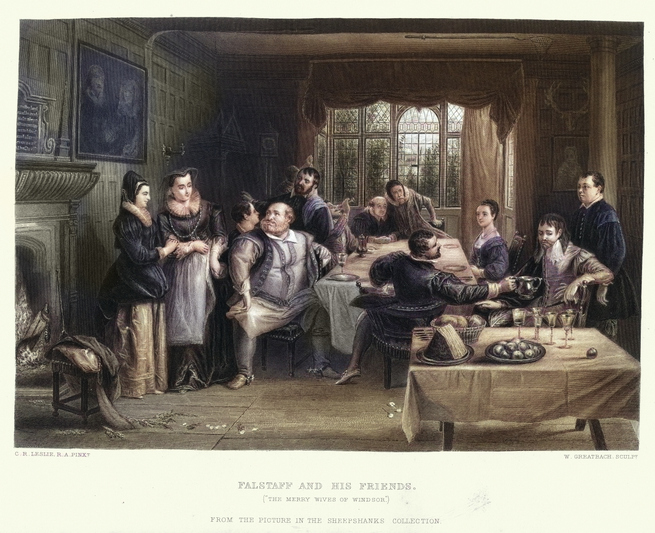
Falstaff and friends, from the Merry Wives of WIndsor (Credit: duncan1890 via Getty Images)
The first surviving written account of Herne the Hunter appears in Act IV, Scene IV of William Shakespeare’s The Merry Wives of Windsor, believed to have been written around 1597, though not published until 1602. Oddly, that first published version actually refers to the character as ‘Horne’ rather than ‘Herne’.
Whether Shakespeare invented the story or was drawing on local legend isn’t clear. He often used stories, folktales and other references that would’ve been familiar to his audience, so it’s possible that tales of a mysterious Windsor huntsman were already well known. However, no clear written mention of Herne has been found from before Shakespeare’s play.
Whatever the story’s origins, The Merry Wives of Windsor gave us the earliest recorded image of the character: a horned figure haunting the woods, rattling chains and appearing around an ancient oak.
There is an old tale goes, that Herne the Hunter
(sometime a keeper here in Windsor Forest)
Doth all the winter-time, at still midnight
Walk round about an oak, with great ragg’d horns;
And there he blasts the tree, and takes the cattle,
And makes milch-kine yield blood, and shakes a chain
In a most hideous and dreadful manner.
You have heard of such a spirit, and well you know
The superstitious idle-headed eld
Receiv’d, and did deliver to our age
This tale of Herne the Hunter for a truth.
Herne the Hunter’s Death & The Haunted Oak Tree
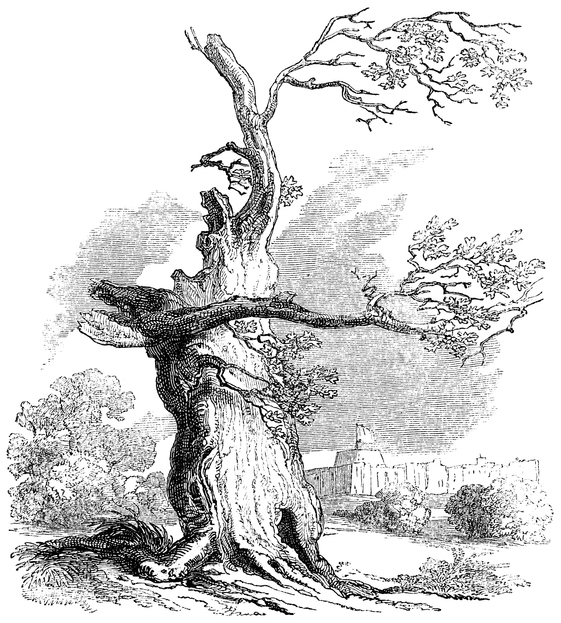
An 18th century illustration of the first Herne's Oak in Windsor Park (Credit: powerofforever via Getty Images)
In later versions of the tale, it got darker and more unnerving. According to one tradition, Herne Hunter was a keeper of Windsor Forest during the reign of Richard II. He was said to have been accused of a crime of some sort – usually said to have been poaching. Fearing public disgrace, he hanged himself from an oak tree within the parkland. At the time, there was a widespread belief that those who died by suicide could return as restless spirits. Herne’s Oak therefore became key to the legend, and the supposed focus of his ghostly appearances.
By the eighteenth century, a tree in Windsor Park had become identified as Herne’s Oak, although it was felled in 1796. In the 1830s, another tree in Home Park was claimed to be the true Herne’s Oak – a belief apparently shared by Queen Victoria – but it was blown down in August 1863. A replacement was planted soon afterwards, but even that tree was itself removed in 1906, after which yet another oak inherited the famous name. With so many incarnations, and so much time passing, the idea of a tree genuinely surviving as Herne’s Oak became more wrapped up in legend than reality.
Reported Sightings & Traditions
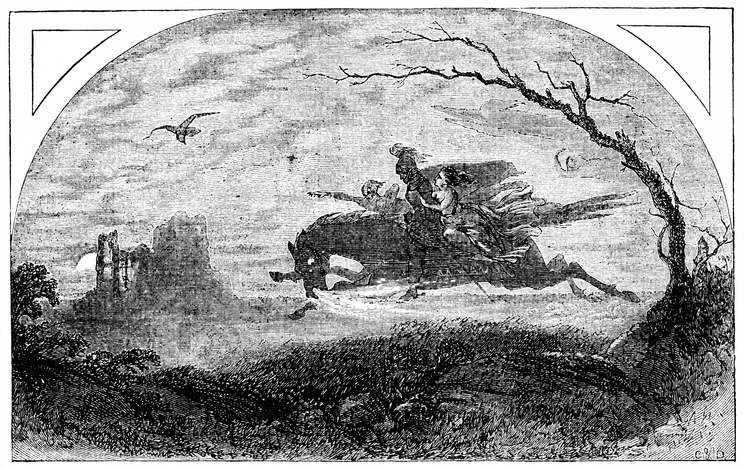
Herne was described as riding a black horse through Windsor Park (Credit: Christine_Kohler via Getty Images)
Over the centuries, the ghost of Herne the Hunter is said to have appeared as a tall, antlered figure riding a black horse through Windsor Great Park, sometimes with baying hounds, or the rattle of chains.
Other versions described a phosphorescent glow moving between the trees, or the sound of hunting horns and hooves in the darkness. Some claimed the ghost’s appearance was an omen of disaster, while in other versions Herne could be seen only when a reigning monarch was gravely ill or shortly before a national disaster.
Herne - God of the The Wild Hunt
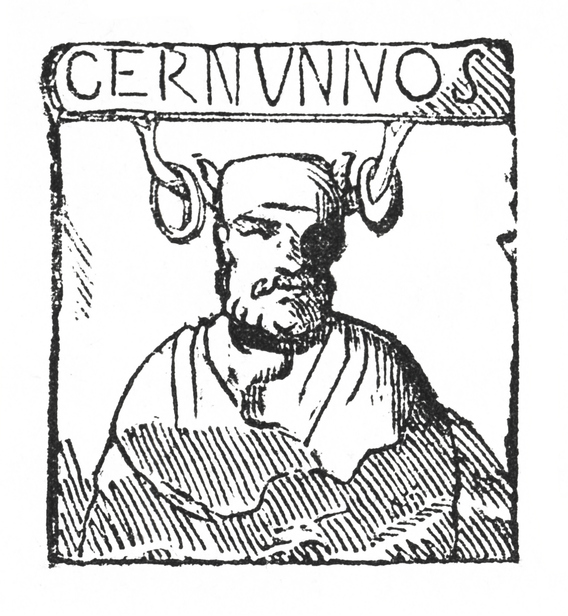
Cernunnos, from Celtic and Gallo-Roman folklore (Credit: NSA Digital Archive via Getty Images)
Later writers began to associate Herne with the earlier European traditions of the Wild Hunt. In these stories, spectral riders, ghostly hunters and phantom hounds thunder across the sky or through forests and darkened landscapes. To witness the Hunt was often considered an omen of war, plague, death (royal or otherwise) or another impending catastrophe.
Over time, Herne the Hunter was portrayed as the leader of one of these folkloric Wild Hunts chasing prey through the forest. Some stories also linked him with older woodland figures, including the Green Man and pagan hunting deities. Herne the Hunter’s antlers and the woodland setting were even compared to ancient horned figures such as Cernunnos, an ancient Celtic and Gallo-Roman deity whose name can be interpreted as ‘the horned one’.
Despite the continuation of the legend though, there have been few relatively recent encounters of Herne. One such tale occurred in 1962 when a group of schoolboys from Eton were said to have found a hunting horn in the forest. One of the boys blew it, supposedly heard a reply, and saw Herne and his men riding towards them. In 1976, a guardsman on duty at Windsor Castle is said to have claimed a statue in the Italian Garden grew horns and came to life. But despite these incidents, encounters with Herne remained few and far between.
Robin Hood and Herne the Hunter
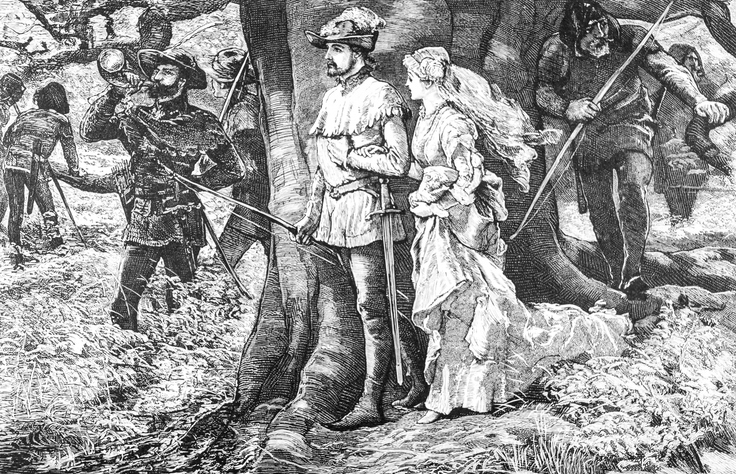
Robin Hood and Maid Marian (Credit: Thomas Faull via Getty Images)
In another twist on the Herne the Hunter tale, he’s sometimes linked with Robin Hood, although the two figures come from separate forest folklore. The idea became popular through the 1984 television series Robin of Sherwood, which portrayed Herne as an antlered guardian of the forest who encourages Robin and his band of merry men to fight for good against evil.
Who was Herne Hunter? The Theories
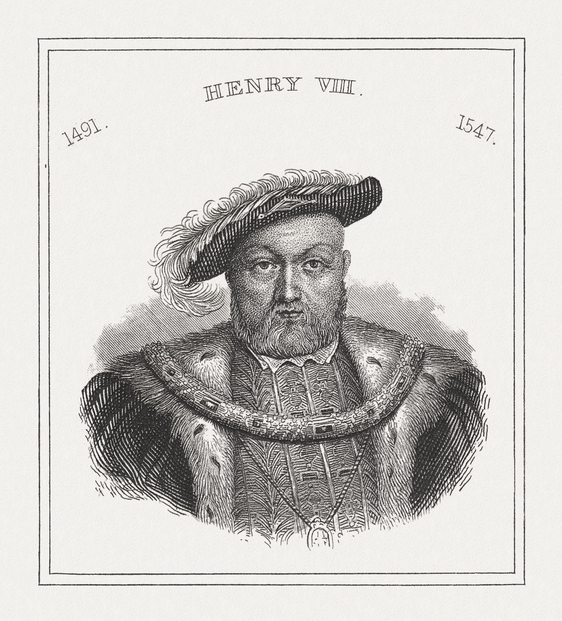
Was Herne actually Richard Horne, in the employ of King Henry VIII? (Credit: ZU_09 via Getty Images)
If Herne the Hunter was once a real person – and that’s a big ‘if’ – his identity has been lost over centuries of storytelling. As we’ve mentioned, one tradition describes him as a keeper of Windsor Forest during the reign of Richard II, while another places him in the Tudor period and claims he was a yeoman named Richard Horne, caught poaching in the forest during the reign of Henry VIII, sometime between 1509 and 1547.
The latter theory was popularised by later writers, who connected Horne with a sixteenth-century record of a man accused of poaching – though it’s not clear if this Richard Horne became the ghost described by Shakespeare.
Most of the other theories are variations on the same theme, that the person in question was working in the forest and killed himself after being accused of a crime.
Hunting for Answers: The Legend of Herne the Hunter
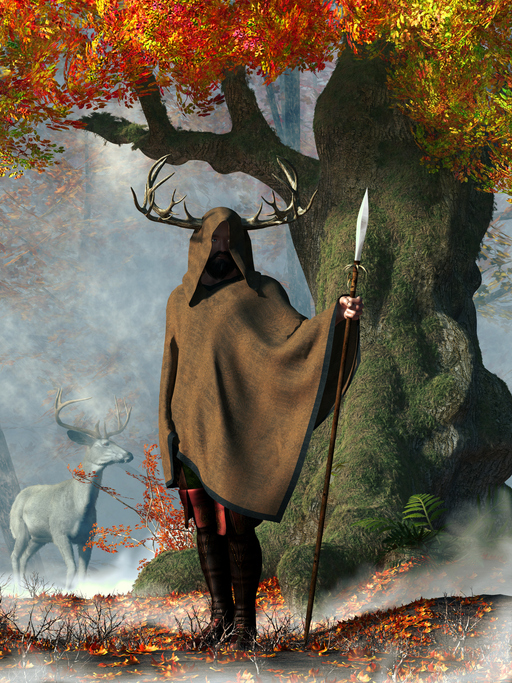
Who was Herne the Hunter? (Credit: Daniel Eskridge via Getty Images)
Whether the legend of Herne the Hunter grew from the bleak fate of a real forest keeper, the truth has been lost to history. The tale as we know it today is largely down to Shakespeare, and embellishments made over the following centuries. The tale of the tree, the suicide, the spectral hunt and ominous portents of royal doom. So, does the ghost of Herne the Hunter still ride through Windsor Great Park? Maybe, maybe not. What’s certain is that the legend itself has lived on, haunting the imagination long after the actors themselves were lost to history.