Newspapers have long been more than a source of news. Over the last two centuries, they’ve also been the stage for concocted discoveries, bizarre creatures, fictional interviews and elaborate stories, all designed to captivate, mislead and even terrify the public. From phantom islands to alien invasions, mermaids, and modern myths, media hoaxes have broken the line between fact and fiction. Yet with all these tall tales, perhaps the most famous of all was the 1835 Moon Hoax which told sensational stories of life on the moon.
So why were these stories created? Some were driven by the fierce competition between publications, others played on people’s fears, scientific curiosity or a public hunger for tales of the unknown. In an age before radio, television and the internet, a dramatic headline could travel rapidly. Once printed, even the most extraordinary claims carried an authority of truth.
Like the 1874 New York Zoo Escape, where the New York Herald reported a mass breakout from Central Park Zoo with animals on the rampage through the city, to the 1912 story of the Piltdown Man, hailed as a possible ‘missing link’ between apes and humans, the Great Moon Hoax proved how easily a wildly conceived story could gain credibility when wrapped in the language of science.
This is the scarcely believable story of the 1835 Moon Hoax.
The Newspaper That Sold The Moon

The Sun HQ (Credit: clu via Getty Images)
In 1830s New York, cheap daily newspapers had transformed the way news reached the public, bringing sensationalised reports of crimes, scandals, accidents and human interest to readers who could now buy a paper for just one cent. Among the most successful was The Sun, a newspaper introduced in 1833.
This particular publication very quickly understood the power of an attention-grabbing story. On 25 August 1835, The Sun announced what appeared to be one of the greatest scientific discoveries in all of history – evidence of life on the Moon.
According to a series of reports falsely attributed to the respected astronomer Sir John Herschel, a gigantic telescope incorporating a lens twenty-four feet in diameter and weighing nearly seven tons, had revealed lunar landscapes, exotic animals and strange winged creatures.
The claims sounded extraordinary, yet they were presented with the confidence of serious journalism.
Across six instalments published between 25 and 31 August, readers avidly followed the unfolding account as though it were a genuine dispatch from the frontier of astronomy. But behind the supposed discovery sat an elaborate fabrication that would become known as the Great Moon Hoax.
The Prelude to The Sun Moon Hoax
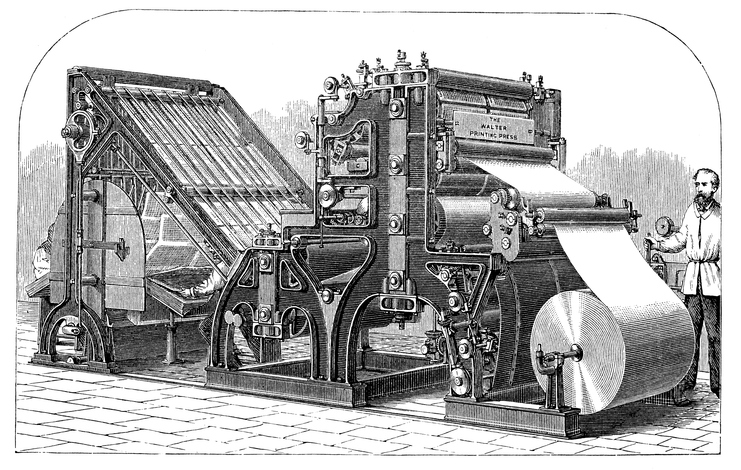
19th century presses could churn out thousands of copies quickly and cheaply (Credit: ilbusca via Getty Images)
The Sun was a four-page newspaper that sold for a cent, massively undercutting the established print press that sold for six cents. Crucially, it opened up the world of daily news to the wider public. Rather than concentrating on politics and commerce, The Sun told stories that were more targeted at the wider populace. It featured police-court reports, murders, suicides, accidents, deaths, divorces and other dramas from everyday life. It was a model that depended on selling big numbers, and by 1834, The Sun had reportedly achieved the largest circulation in the country.
In such a competitive new market, sensational stories were valuable, and stories of life on the moon were impossible to ignore.
The Moon in the 1830s
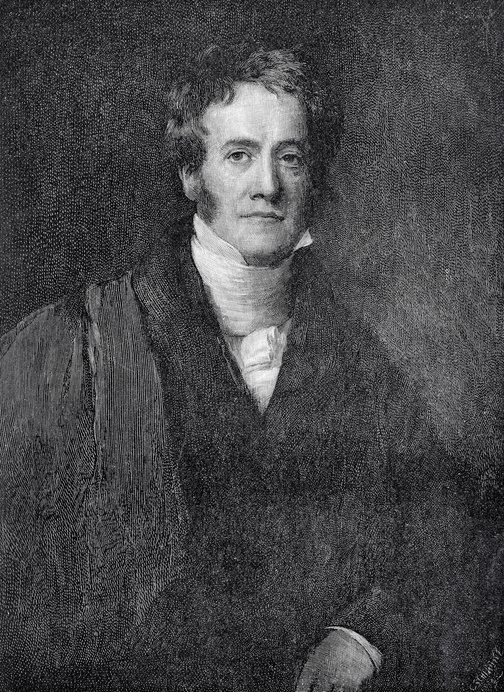
Sir John Herschel was one of the most distinguished astronomers of his age (Credit: clu via Getty Images)
Around this time, astronomy and popular science had fuelled growing speculation that the Moon and other worlds might be inhabited. Writers such as Reverend Thomas Dick encouraged readers to imagine life throughout space. He claimed in a book that the Moon had over four billion inhabitants, and the solar system was home to a population of twenty-one trillion. At the same time, Sir John Herschel was conducting a genuine astronomical expedition at the Cape of Good Hope, having arrived in South Africa in January 1834. Against this backdrop, The Sun’s claim that Herschel had used a powerful new telescope to observe life on the Moon seemed extraordinary, but not entirely impossible.
The Great Moon Hoax is Announced
The paper teased the Great Moon Hoax before the big reveal... (Credit: Sergey Pavlov via Getty Images)
On 21 August 1835, The Sun teased readers with news supposedly linked to a Scottish broadsheet newspaper called The Edinburgh Courant. Four days later, the first instalment appeared under the grand title “Great Astronomical Discoveries,” presented as an extract from a fictional supplement to the discontinued Edinburgh Journal of Science. The Scottish references, scientific language and promise of a revolutionary discovery gave the story an air of genuine authority, before readers had even encountered the details of the extraordinary claims.
The Six Lunar Discoveries
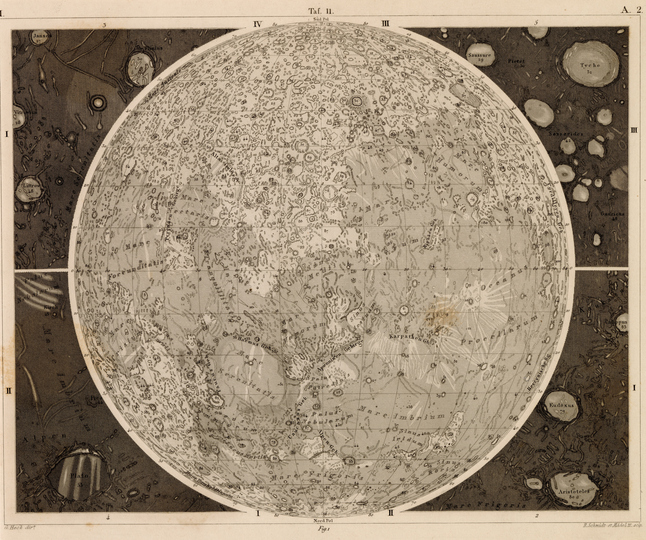
The Sun used lunar maps to convince readers (Credit: Tom Chalky - Digital Vintage Library via Getty Images)
Four days later on 25 August 1835, The Sun began publishing a six-part account of these supposed discoveries made by Sir John Herschel. The reports described an enormous telescope which was transported to the Cape of Good Hope in South Africa.
Using this supposed revolutionary device, images had apparently revealed lunar landscapes filled with lush forests, bountiful vegetation, rushing rivers, sandy beaches, huge amethyst crystals and exotic creatures, including bison-like animals, single-horned goats that played like kittens, long-beaked cranes, and unicorns.
Later installments of the 1835 moon hoax introduced bipedal, tail-less beavers who built huts and used fire, followed by the most sensational discovery of all – winged humanoids named Vespertilio-homo, which translates to ‘bat-man.’
The final articles described mysterious temple-like structures, social gatherings and an apparently peaceful society. The story also described an accidental observatory fire caused by the giant lens, but the equipment was repaired and observations later resumed. The sixth and final instalment appeared on 31 August.
The articles describing the stories of life on the moon were very clever. They used lunar maps, technical language and knowledge of optics. They moved from plausible landscapes to exotic animals, which gave readers time to accept each revelation before the next appeared. In an age when almost no-one outside the scientific community could independently verify scientific claims, the authority of Herschel’s name and the confident tone of these reports made fantasy appear true.
The Author Behind The Great Moon Hoax
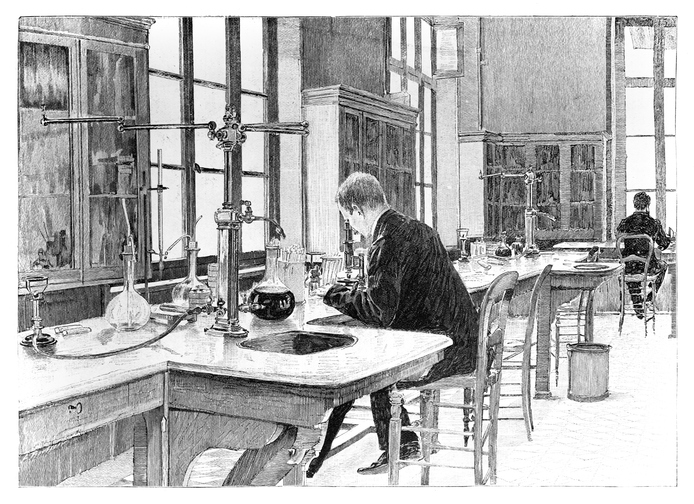
Dr Grant was a fictional scientist created to sell the hoax (Credit: LeoPatrizi via Getty Images)
The Sun moon hoax articles originally appeared anonymously but were supposedly based on the observations of a fictional scientist named Dr Andrew Grant, introduced as an associate of Sir John Herschel. In reality, the series is generally attributed to Richard Adams Locke, a writer and editor at The Sun who joined in the summer of 1835, when it was already one of America’s leading high-circulation penny newspapers. Locke created the story to parody the zeitgeist of over-the-top astronomical theories about life on other worlds, while also attracting attention to the newspaper. He publicly admitted to being the author of the 1835 moon hoax five years later in 1840, stating that he didn’t really expect readers to believe his articles were actually factual.
It’s also worth noting that Sir John Herschel was never involved with the story. He was conducting genuine astronomical research in South Africa, making his name – and the distance between him and New York – useful to the deception. The Edinburgh Journal of Science had also ceased publication, but again, it was a useful fact that was, at the time, almost uncheckable.
Public Reaction & Exposure

The Herald Building on Broadway and Sixth, home of the New York Herald (Credit: clu via Getty Images)
The Great Moon Hoax, which told of the most fantastical stories of life on the moon, quickly became a sensation. Other newspapers reprinted extracts from the reports, and readers followed each instalment with growing fascination. The Sun later claimed that its daily circulation had risen to around 19,000.
Not everyone accepted the story. On 31 August, James Gordon Bennett of the rival New York Herald condemned the reports as a hoax, publishing “The Astronomical Hoax Explained”, pointing out, among other things, that the alleged Edinburgh Journal of Science source was defunct. As rival American newspapers began to expose inconsistencies in the story, publications that had repeated the claims started to withdraw their support.
However, the episode itself produced little lasting public outrage, with many readers simply enjoying the spectacle, while The Sun benefited from the attention and increased sales. This lack of blow-back was seemingly an interesting precursor to similar trends seen in today’s social media fuelled world.
Eventually, on 16 September, The Sun acknowledged the suggestion that the articles were indeed a fabrication, but stopped short of an outright admission, or any apology or retraction.
The Strange Link to Edgar Allan Poe
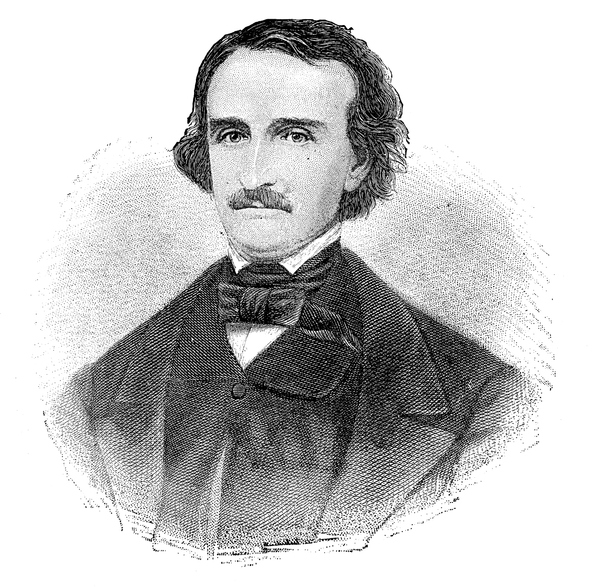
Edgar Allan Poe (Credit: ilbusca via Getty Images)
As well as becoming a famous story in itself, there was also a bizarre literary sidebar to the 1835 moon hoax. In June 1835, just weeks before The Sun’s articles, Edgar Allan Poe, a giant of world literature famous for his stories of mystery and the macabre, published “Hans Phaall, A Tale”, later known as “The Unparalleled Adventure of One Hans Pfaall,” a mock-scientific story about a balloon voyage to the Moon. Poe, reportedly frustrated that his own fictional experiment had been treated as literature, while Locke’s newspaper version attracted widespread attention as apparent fact, later questioned whether The Sun’s writer had borrowed ideas from his tale.
The episode may even have influenced Poe’s later “Balloon Hoax” of 1844 (also published in The Sun), which was another sensational account presented in the style of breaking news of a supposed flight over the Atlantic in just seventy-five hours in a gas-filled, steerable balloon. The story was retracted two days after it was published.
The Legacy of the 1835 Moon Hoax
Will humans ever live on the moon? (Credit: Roberto Machado Noa via Getty Images)
The Great Moon Hoax was exposed within just a few weeks, but its influence lasted far longer. It demonstrated the commercial power of sensationalist journalism, and showed how easily scientific language, a respected name and a compelling story could make fiction appear as fact.
Its legacy can still be seen in made-up discoveries, fictional experts, UFO reports, cryptid tales and the viral misinformation of the modern age. The technology may have changed, but the formula has stayed basically the same – an extraordinary claim, seemingly convincing detail packed with scientific jargon, and audiences encouraged to share before there’s time to question or fact-check.
Ultimately, the Great Moon Hoax helped to power a golden rule of less-scrupulous journalism: never let the truth get in the way of a good story!