The Copiale cipher is an encrypted manuscript bound in gold and green brocade. Long dismissed as a curiosity languishing in an archive, for more than two centuries it remained undeciphered. Despite dozens of theories and investigations, the Copiale codex remained stubbornly unsolved, until a breakthrough in 2011 finally cracked its code.
So what does the Copiale manuscript actually say? Is it the ritual handbook of a secret society? Does it conceal the rites of an occult order linked to the Freemasons, or something far more sinister? Could it be a coded manifesto of political subversion, or nothing more than a record of initiation ceremonies and hierarchies?
How did a document so meticulously crafted manage to baffle every attempt at decryption for so long? Like the enduring mysteries of the Voynich Manuscript, the Rohonc Codex, and the Dorabella Cipher, the Copiale cipher earned its place among the world’s most beguiling unsolved puzzles – until now.
We’ll leave no symbol unturned as we discover the Copiale enigma.
What is the Copiale Cipher?
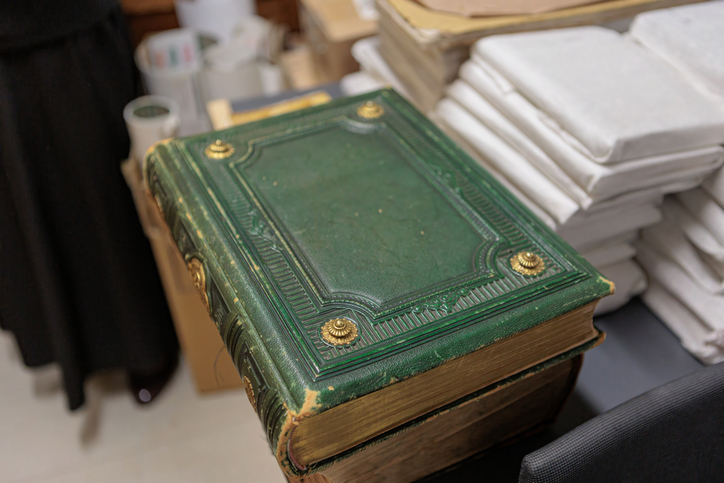
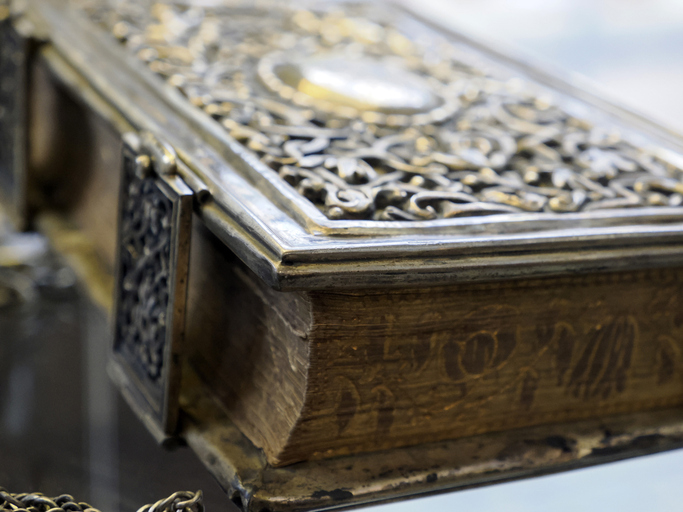
The Copiale Cipher is bound in brocade of green and gold (Credit: Rokas91 via Getty Images)
Bound in a beautiful brocade of gold and green, the Copiale book is a 105-page manuscript containing roughly 75,000 intricately handwritten characters. The pages are made from very high quality paper and filled with a dense stream of text – no word spacing, no illustrations, and no chapter breaks.
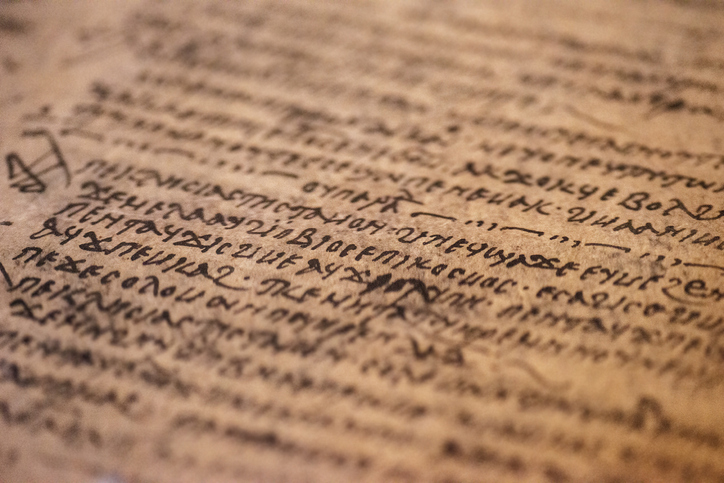
The content includes around a hundred unique symbols, including Roman and Greek letters, diacritics (a mark added to a letter, like French accents), alchemical signs, zodiac glyphs, and a creepy eye-shaped logogram (a single symbol that represents an entire word, like the ‘&’ or ‘£’ symbols).
The handwriting in the Copiale codex is incredibly neat, with paragraphs indented and some lines centred or justified left and right, yet the cipher’s homophonic nature – multiple symbols encoding the same letter – means that it’s fiendishly complex.
Only adding to the enigma is the fact that there are two phrases which aren’t encrypted at all. One says ‘Philipp 1866’ which may be the mark of one of the book’s previous owners, and the other says ‘Copiales 3’, which remains unsolved but gave the book its name.
The Origin of the Copiale Cipher: From Wolfenbüttel to East Berlin
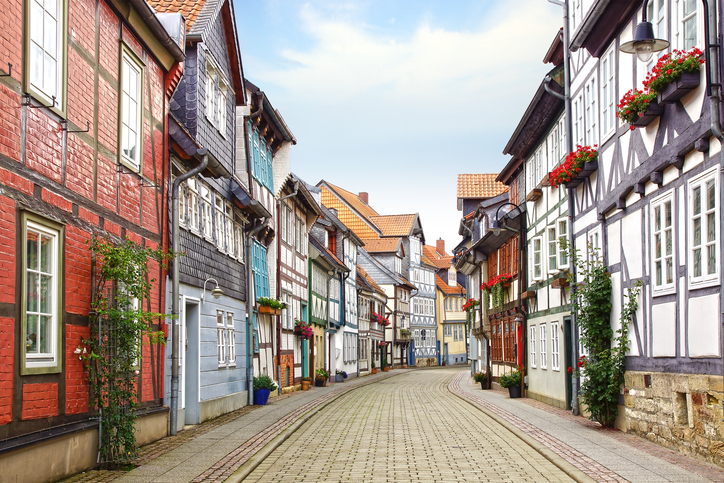
The book may have been written in the ancient German town of Wolfenbüttel (Credit: vidalidali via Getty Images)
The origin of the Copiale cipher remained a secret for centuries. At first, experts thought it dated from between 1760 and 1780 based on analysis of the paper, the ink and the book’s binding. However on closer inspection of the watermarks and historical content it seems the book was probably created earlier, sometime in the 1730s or 1740s.
The Copiale manuscript may have been written in the northern German town of Wolfenbüttel, around eighty kilometres southeast of Hanover, and a parallel manuscript is still held at the Niedersächsisches Landesarchiv, the Lower Saxony State Archive.
The modern journey of the Copiale book began in or around 1970 and was believed to have started in the East Berlin Academy, then part of the German Democratic Republic, otherwise known as East Germany. For decades it sat on a dusty shelf in obscurity and it was said to have occasionally been looked at by scientists from the German Academy of Sciences in the 1970s, although the official documents aren’t clear on who looked at the book, and when. At some point, most likely in the 1980s, the Copiale codex fell into private ownership.
The Oculist Order: Keeping an Eye on Proceedings
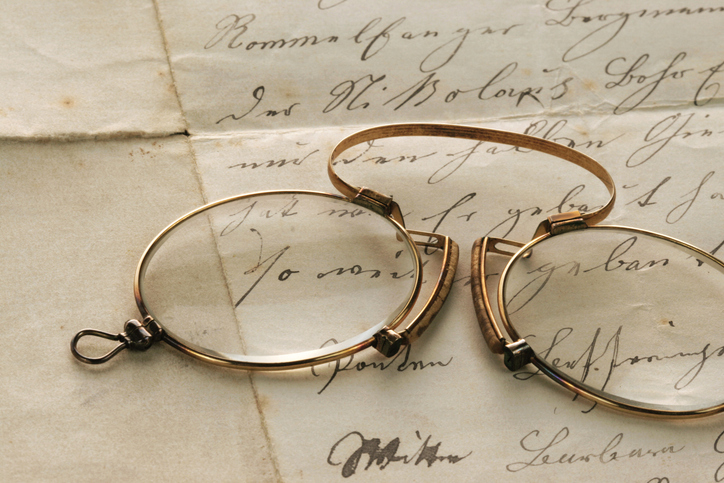
The Oculisten used pince-nez in their symbolism (Credit: Bernhard Lux via Getty Images)
The creators of the Copiale cipher were members of a little-known German secret society called the Order of Oculists, or Oculisten. Self-styled as the “Hocherleuchtete” – ‘Highly Illuminated or Highly Enlightened’ – the Oculists likely emerged in the late 1730s or early 1740s. Led by Friedrich August von Veltheim, their name was derived from the Latin oculus (“eye”) and reflected their fascination with vision, perception, and the symbolism of enlightenment. They were not, as once mistakenly believed, a guild of eye surgeons, although their public-facing identity, statutes and surviving instruments made genuine ophthalmological claims.
It’s thought one of their aims was to map and document the secret rituals of Freemasonry, compiling initiation ceremonies, hierarchical degrees, and coded symbolism into the Copiale book. Their work also reveals a society deeply engaged with the intellectual activity of eighteenth century Germany, blending Masonic tradition and esoteric elements with alchemical signs, zodiac glyphs, and mystical logograms into a complex ceremonial framework.
One scholar argues that the text’s declared aim was to expose or undermine Masonic secrecy. Others have proposed that the exposure may have been a cover for transmitting Masonry.
It’s also been suggested that the Oculisten was formed to bypass a constitution by Pope Clement XII that condemned Masonic societies and prohibited Catholics from joining them. Their symbolism was predominantly eye-related, including using models of eyes, pince-nez, a cataract needle and spectacles in their regalia and seals.
Cold War Curiosity to Computational Breakthrough
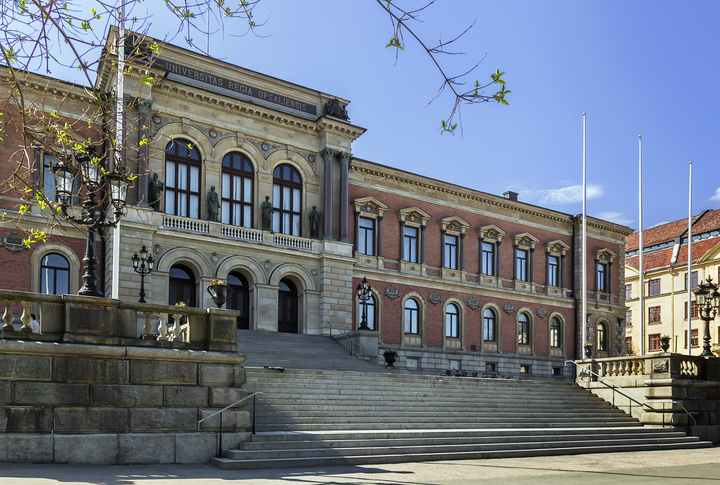
Uppsala University was founded in 1477 (Credit: Borisb17 via Getty Images)
Unsurprisingly given the complexity of the cipher, any attempts to crack the Copiale enigma in the 1970s were met with brick walls, and it was just under three decades later when the real research began.
In 1998, Dr. Christiane Schaefer, a linguist from the University of Uppsala in Sweden received photocopies of the Copiale manuscript and attempted linguistic and frequency analysis. However, it wasn’t until 2011 that the project to decipher the Copiale book got started in earnest. That year, a team comprising one of the world’s leading experts in machine translation, Dr. Kevin Knight from the Information Sciences Institute at the University of Southern California, and two linguists from the University of Uppsala, Dr. Beáta Megyesi and Schaefer, started looking more deeply into the Copiale cipher.
Their first step was to transcribe the first sixteen pages, comprising 10,840 characters, into a machine-readable format, isolating the (approximately) ninety unique cipher symbols for analysis (the full 75,000 character text was transcribed later). Using statistical machine translation techniques – similar to those behind Google Translate – they compared the encrypted text against around forty languages. The computations were slow, the first attempts failed, and German received only a very slight numerical preference. The researchers then selected German partly because of the manuscript’s location and the spelling of ‘Philipp.’
The team’s key insight into the Copiale manuscript was realising that the unaccented Roman letters were word spaces, and that the capital Roman letters at the beginnings of paragraphs appear decorative and meaningless. The true message lay in the abstract symbols, with accented or Greek characters encoding the actual text.
Further discoveries revealed that a colon indicated the doubling of a preceding consonant, and that certain symbols functioned as logograms – stand-ins for entire words like ‘society’, ‘lodge’ or ‘master.’
Unlocking the Code
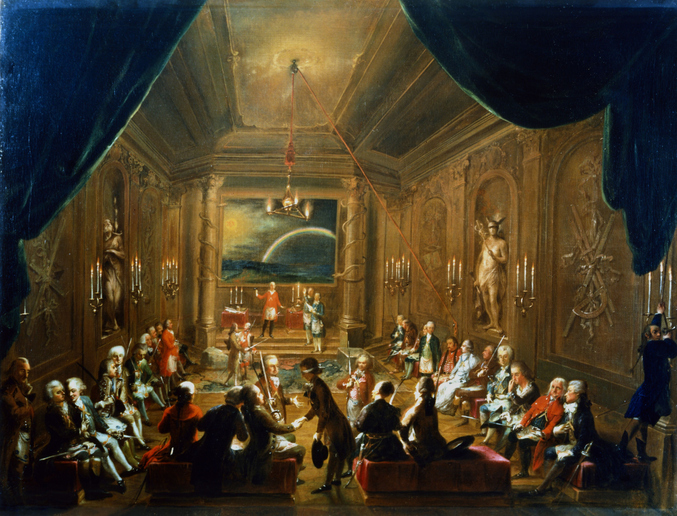
Illustration of 18th century secret-society culture (Credit: Photos.com via Getty Images)
Within months, the Copiale cipher began to give up its secrets, revealing phrases such as ‘Ceremonies of Initiation’ and ‘Secret Section’ – the first glimpse into the private world of the Oculists. Eventually, the work of Knight, Megyesi, and Schaefer revealed a manual divided into sections covering the Oculists’ initiation rites, Masonic ceremonies and the customs of other fraternal orders.
For new members, the ritual began with a seemingly blank sheet of paper. The candidate was asked to read it, given spectacles when he failed, and then subjected to a mock eye operation involving the plucking of one eyebrow hair. After this theatrical ordeal, the blank page was replaced by a text that may have explained the society’s teachings. Other passages describe blindfolds, solemn oaths, secret signs and death imagery including coffins and nooses.
What first appeared to be the makings of some sort of occult manifesto was ultimately something more revealing – a meticulously coded record of ritual, hierarchy, political arguments about liberty and tyranny, and eighteenth century secret-society culture.
The Unanswered Questions
Questions about the Copiale cipher still need answers... (Credit: wakila via Getty Images)
The amazing work of Knight, Megyesi, and Schaefer revealed the manuscript’s hidden contents, but it didn’t solve every mystery surrounding the Copiale book.
On its flyleaf, the words ‘Philipp 1866’ appear in plain text, apparently marking a former owner, but who Philipp was, and why he possessed the manuscript, remains unknown. Perhaps he was a bookseller, a collector, or even a member of the Oculisten.
As for the phrase ‘Copiales 3’, one of the more plausible interpretations is that it could be an accounting note for copying work. One account of the text suggests it could say ‘Copiales 3 Rth’ and historical German administrative vocabulary supports the general idea. Forms such as Kopialien and Copialgebühren were used for copying expenses or scribal fees, so perhaps it was a copy of the book that cost three Reichsthalers, an early-modern silver coin denomination introduced in the 1560s.
Yet for both, the quest continues. Other questions also remain open. How large the Oculist Order really was, who its members were, and why its rituals needed to be encoded so elaborately. The Copiale cipher has been broken, but its wider historical story remains incomplete.
The Copiale Cipher: Signed, Sealed, Deciphered (Almost…)
Will we ever unlock the secrets of the Copiale cipher? (Credit: izanbar via Getty Images)
For more than 260 years, the Copiale enigma hid the rituals, beliefs and political ideas of a mysterious eighteenth century society. Its eventual decryption transformed an apparently impenetrable manuscript into rare historical insight – and demonstrated how modern computational techniques, combined with cryptographic, linguistic and philological methods can illuminate long-buried secrets.