The seemingly endless world of the internet is home to countless bafflingly cryptic mysteries that have defied explanation, but few phenomena have captured the imagination quite like the Cicada 3301 puzzle. First posted in 2012, the single cryptic message was accompanied by a challenge that hinted at something far deeper than just a fun game.
Those who attempted to solve the Cicada puzzle found themselves drawn into a world of complex ciphers, hidden messages, and obscure references to ancient numerology, medieval poetry, obscure cyberpunk literature and classical music.
It wasn’t the first time the digital world had been gripped by an unsolved enigma. Mysteries like the enigmatic Markovian Parallax Denigrate, the Unfavorable Semicircle YouTube channel (that uploaded tens of thousands of videos with seemingly no purpose), and the still-unsolved portions of the A858 Reddit puzzle, have all left internet sleuths searching for answers, but Cicada 3301 felt different. It was active, evolving, and seemingly selective to whom it revealed itself.
Who – or what – was behind Cicada 3301? What was its true purpose? Was it a recruitment tool for intelligence agencies, a secretive collective of cryptographers, or something else? And why did so many who claimed to follow the trail fall silent?
This is the bizarre story of the 3301 Cicada puzzle, the internet’s most elegant and enduring rabbit hole.
The First Message - January 2012

The messages pointed to genuine coordinates in cities including Seattle (Credit: Joel W. Rogers via Getty Images)
On January 4, 2012, an anonymous image appeared on the messageboard website 4chan. In white text on a black background, it said –
Hello. We are looking for highly intelligent individuals. To find them, we have devised a test.
There is a message hidden in this image.
Find it, and it will lead you on the road to finding us. We look forward to meeting the few that will make it all the way through.
Good luck.
3301
What followed was anything but ordinary. Those who examined the image uncovered layers of steganography (the science of hiding messages, data or information inside digital files), revealing further instructions that led to increasingly complex cryptographic challenges. Clues pointed to obscure literary works, including William Blake’s eighteenth century The Marriage of Heaven and Hell, The Mabinogion, a collection of twelfth and thirteenth century Welsh prose tales, and William Gibson’s Agrippa (A Book of the Dead), an electronic poem from 1992. They also pointed to advanced encryption methods, and, unexpectedly, real-world GPS coordinates in cities including Paris, Warsaw, Seoul, Sydney and Seattle.
From there, the puzzle eventually pointed to a hidden address on Tor, (a network that enables anonymous communication) pulling participants from the open internet into more secluded and secretive digital spaces. Within days, people around the world were collaborating online to decode each fragment of the Cicada 3301 puzzle, and they soon became convinced they were chasing something far stranger than a game.
The Second Message - January 2013

Cicada 3301 led 'players' all over the world (Credit: Longhua Liao via Getty Images)
A year after the first message, a new message from Cicada 3301 appeared on 4chan’s /b/ messageboard on January 4, 2013.
Hello again. Our search for intelligent individuals now continues.
The first clue is hidden within this image.
Find it, and it will lead you on the road to finding us. We look forward to meeting the few that will make it all the way through.
Good luck
3301
This message reinforced the same cryptic tone of the first, but this 3301 Cicada puzzle was longer, denser, and appeared more deliberately disorienting. The puzzles leaned harder into advanced cryptography, mathematics, and computer programming, and they were combined with references to esoteric and counterculture texts, including Aleister Crowley’s 1904 Liber AL vel Legis (‘The Book of the Law’) and Robert Anton Wilson’s The New Inquisition, first published in 1986.
As participants worked through the layers, the hunt again spilled into the physical world. Clues led to a series of GPS coordinates in cities including Annapolis, Columbus, Little Rock, and Portland, all in the USA, as well as Okinawa in Japan, and Moscow, where the ‘players’ found posters and QR codes taped to lampposts, street signs and telephone poles.
Each element of the second Cicada puzzle fed back into the digital world, and like the first message a year earlier, directed people to a hidden service on Tor. Again, like the first clue, the path closed abruptly, quietly and without fanfare. Those who claimed to have completed the 2013 puzzle reported that the final stages were accessible only to a select few. The rest had to hope that another message would appear in January 2014.
The Third Message - January 2014
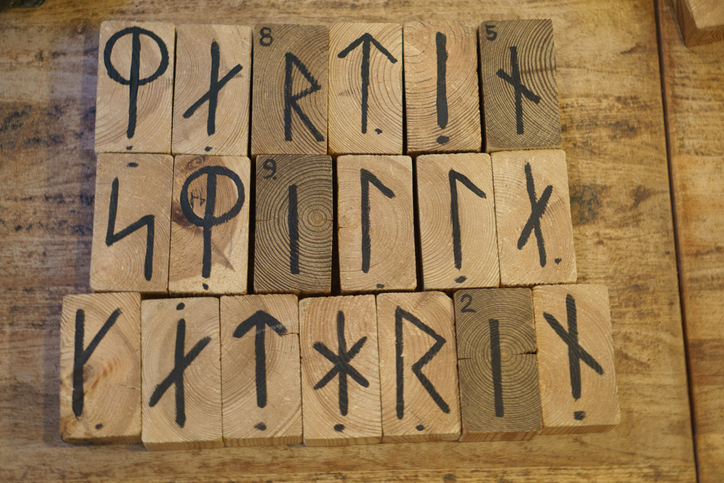
The creators of Cicada 3301 introduced runic characters into the third puzzle (Credit: Martin Koebsch via Getty Images)
Sure enough, on January 4, 2014 (some claim the 5th or 6th), a third – and what is believed to be final – Cicada 3301 puzzle appeared not on 4chan but on a Twitter feed used during the 2013 puzzle. After a year of silence, the account suddenly posted a link to an image on Imgur, an image-sharing platform.
Hello.
Epiphany is upon you. Your pilgrimage has begun. Enlightenment awaits.
Good luck.
3301
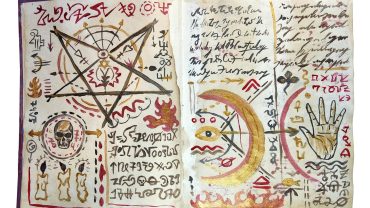
The message carried the same cryptic tone but structure was more opaque, the path through the clues far less forgiving, and the early stages seemed designed to get people to go out on their own rather than encouraging them to collaborate. It also introduced Liber Primus, or ‘First Book’, a bizarre tome written in runic characters (reportedly by the creators of the Cicada 3301 puzzle) of which only nineteen of the book’s seventy-five pages have been deciphered.
Despite much effort, it’s thought the 2014 puzzle has never been conclusively solved. Fragments were decoded, theories proposed, and certain stages were mapped, but no individual or group has ever presented verifiable proof of reaching the final layer. More than a decade later, the third Cicada 3301 challenge remains an unfinished riddle that may hint at a deliberate decision to leave the door open…
The Methods Behind the Mystery
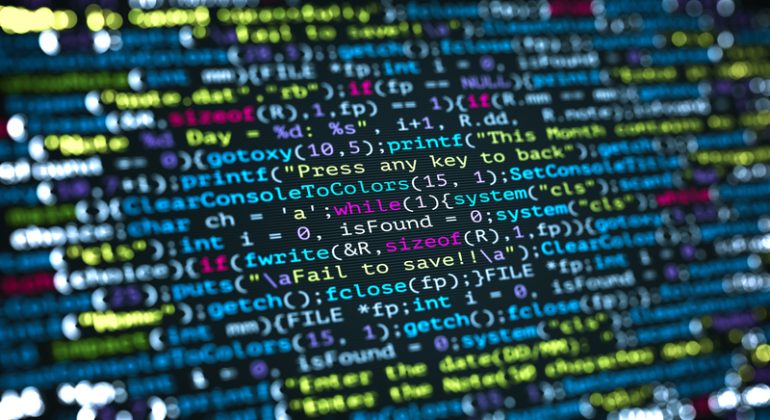
Players needed knowledge of complex computer and cipher codes (Credit: Peach_iStock via Getty Images)
What set Cicada 3301 apart was not just its secrecy, but the incredible amount of skills it demanded. Solvers had to move easily between cryptography, steganography, obscure literature, and even computer forensics. Early clues were hidden inside images, others required decoding book ciphers tied to specific texts, as well as knowledge of techniques such as Caesar shifts, Vigenère ciphers, and base conversions. Others moved into complex RSA encryption used to secure the transmission of data, and hash functions that convert inputs into fixed-length strings of characters.
Beyond the technical, the 3301 puzzle encouraged participants to think like detectives, linguists, and historians all at once. Navigation of the dark web was also required, with several stages leading to hidden Tor services that acted as gateways to deeper layers. Cicada 3301 was testing adaptability, discipline, and the willingness to disappear into the rabbit hole for as long as it took.
The Story of the Solvers
Few claimed to have been directly contacted by Cicada 3301 (Credit: Thana Prasongsin via Getty Images)
Although thousands of people collaborated publicly on the Cicada 3301 puzzles, only a few claimed to have completed enough stages to receive direct contact from the organisers. Swedish computer-security researcher Joel Eriksson published a detailed account of his progress through the 2012 puzzle, while Marcus Wanner and a solver known online as Tekknolagi later described receiving private messages and gaining access to invitation-only forums hosted through Tor. These accounts provide rare glimpses into what may have happened beyond the public puzzles, although Cicada never released a list of successful participants.
According to several reported ‘solvers’, those who progressed furthest were questioned about subjects including freedom of information, online privacy, censorship and secure communication. Some said they were invited to collaborate on private projects, while others eventually withdrew or lost contact with the group. Several participants later discussed their experiences publicly, but none has produced conclusive evidence identifying Cicada 3301’s organisers or establishing the ultimate purpose of the puzzles.
The Silence and the Statements
The Cicada mission was framed around online privacy (Credit: Richard Drury via Getty Images)
After the third puzzle in January 2014, Cicada 3301 went quiet for a while. No new verified puzzles appeared, despite occasional hoaxes and copycat challenges that circulated online, and any claims of further activity were met with scepticism unless they could be cryptographically authenticated.
In the years that followed, a few statements attributed to the creators of the Cicada puzzle surfaced in archived forums and pastebin posts. In those messages, the group distanced itself from illegal activity, reportedly framing its mission instead around privacy, cryptography, and intellectual freedom. They are said to have described themselves as advocates for secure communication and individual autonomy, and called the puzzles a ‘recruitment contest’ rather than anything more sinister.
The silence after 2014, combined with these cryptic declarations, only deepened the mystery. Cicada 3301 had made its point, then vanished, leaving behind a trail of unsolved riddles and more questions than answers.
The Theories Behind Cicada 3301
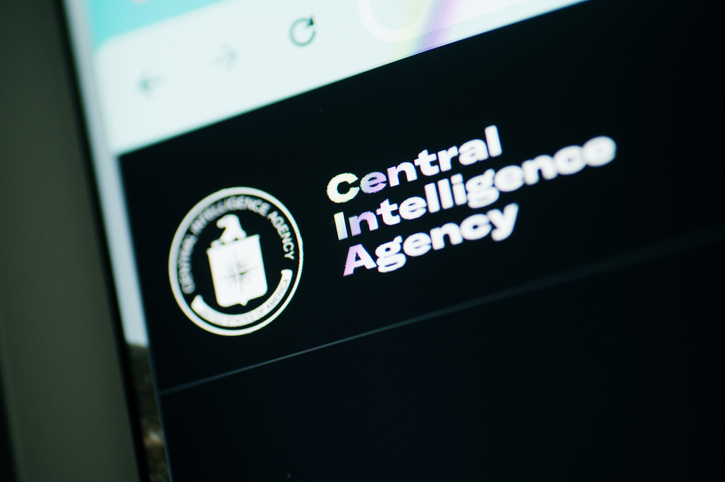
Was Cicada 3301 a recruiting tool for the CIA? (Credit: MarioGuti via Getty Images)
Over the years, a whole host of theories has emerged to explain who – or what – Cicada 3301 might be. The most persistent suggestion is that it served as a recruitment tool for an intelligence agency, such as the CIA, NSA, or GCHQ, using the puzzles to identify candidates with exceptional problem-solving and cryptographic skills. The British government did a similar thing with newspaper crosswords for recruitment at Bletchley Park in the 1940s.
Others argue it was the work of a private cybersecurity collective or a cypherpunk group advocating for privacy and digital freedom.
Could it have been an elaborate alternative reality game (ARG), or even a social experiment, designed to test collaboration, information security and the spread of online myths? Despite a decade or more of speculation, no-one has anything concrete about who they are and what the end goal was. The identity of Cicada 3301 remains as baffling as the puzzles themselves.
Cicada 3301: A Most Elegant Enigma

Cicada 3301 was a most elegant online enigma (Credit: Jorg Greuel via Getty Images)
The Cicada 3301 puzzle remains one of the internet’s most compelling and meticulously crafted mysteries. Those who claimed to reach the end didn’t divulge anything more, and the group behind the puzzles never revealed its true identity or intentions. Perhaps some doors are meant to stay closed…