Long before beauty filters smoothed a single selfie or Photoshop opened its first layer, photographers were already reshaping reality: cropping negatives, blending exposures, painting over prints, and vanishing inconvenient details with the flick of a blade. In fact, photo editing is nearly as old as photography itself; only the tools have changed.
So how did we get from darkrooms thick with chemical fumes to the algorithms tucked inside your phone, quietly polishing every picture you take? Grab your negatives and step into the darkroom – it’s time to bring the whole story into focus.
The Dark(room) Ages
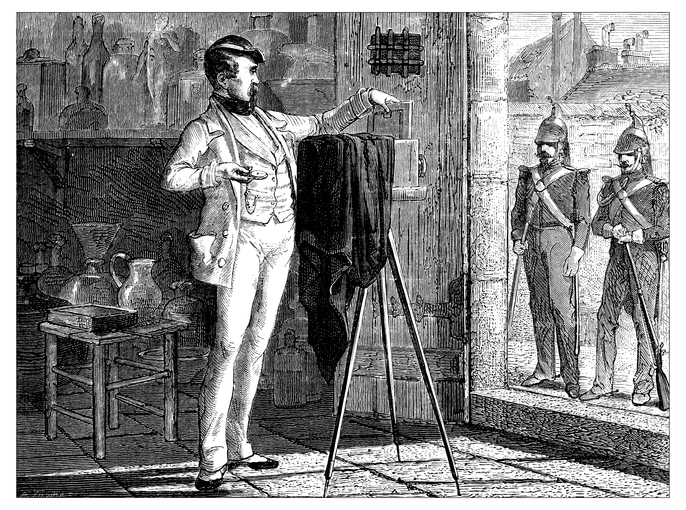
An illustration of early photography (Credit: ilbusca via Getty Images)
The histories of photography and photo editing are inextricably intertwined. The earliest surviving camera photograph, Nicéphore Niépce’s View from the Window at Le Gras, dates from around 1827. Yet even in these earliest years, the boundary between capture and alteration was already beginning to blur. Within little more than a decade, photographers were deliberately altering images as well as capturing them.
That swift evolution was no coincidence. Early photo development was a multi-stage chemical process, each of which offered an opportunity to alter the final product. This could be by retouching the negative, modifying the print or controlling how much light reached selected areas during printing. Photo editing, therefore, was not a digital-age addition to photography. The two grew together.
Pencils, Brushes and Blades
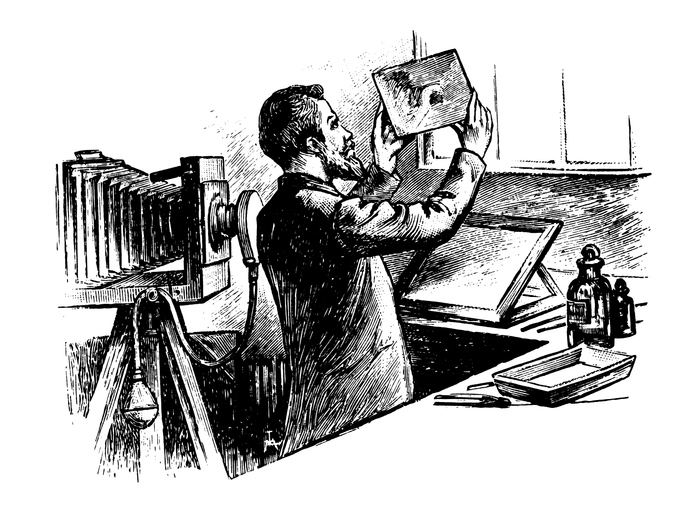
A 19th century photographer with retouching tools (Credit: NSA Digital Archive via Getty Images)
So what could those early image-makers actually change, and how did they do it? Armed with little more than pencils, brushes, dyes, paint and small blades, photo editing professionals, often known as retouchers, achieved remarkably varied results: softening faces and harsh shadows, restoring lost detail, cropping pictures, colouring clothing, clearing backgrounds and removing people or objects entirely.
Some altered the negative itself, adding marks to control the light reaching the paper. Others drew or painted on the finished print, or altered it by scraping and bleaching. Every adjustment was made by hand, often under magnification. It was slow, painstaking work, where a single slip could destroy an image.
Combos and Composites
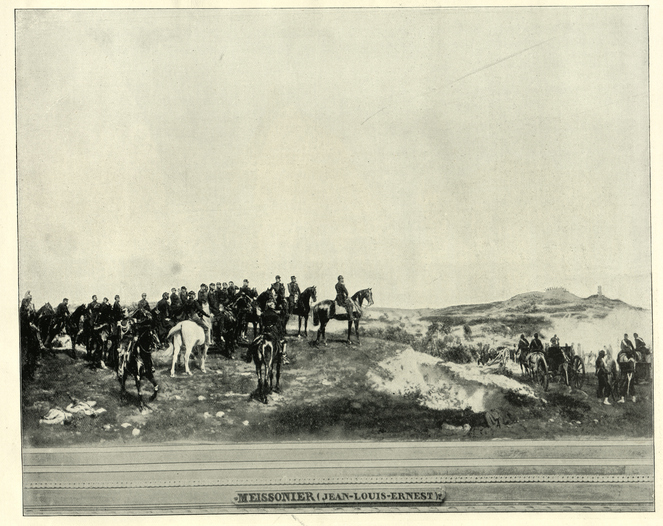
A photograph of Napoleon III at the Battle of Solferino in 1859 (Credit: duncan1890 via Getty Images)
By the 1850s, retouchers had learned to build a single photograph from several different negatives. Known as combination printing, the technique involved exposing selected sections of two or more negatives onto one sheet of photographic paper.
There were practical advantages – combining separate exposures for a bright sky and a darker landscape, say, to achieve a better-balanced result. But the method could also conjure elaborate compositions impossible to capture in one photograph. Artist Oscar Rejlander showed just how ambitious it could become with The Two Ways of Life in 1857, assembling the enormous finished picture from more than 30 negatives. Think layers, only with considerably more chemistry.
Double Exposures, Scissors and Glue
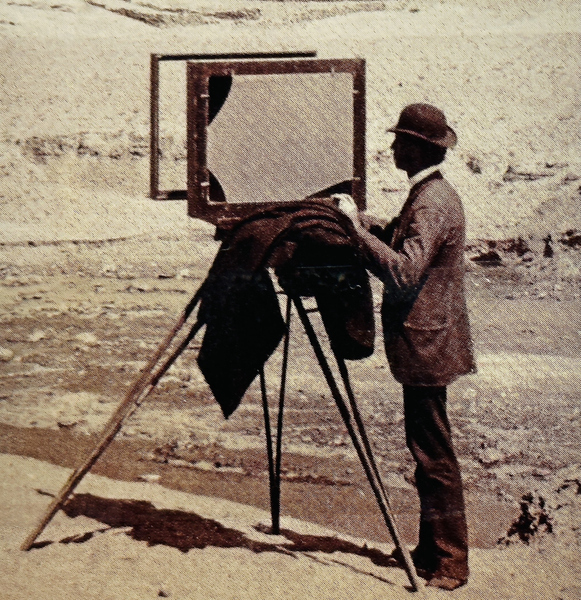
19th century outdoor photography (Credit: clu via Getty Images)
Not every composite demanded elaborate darkroom wizardry. During the 1860s and 1870s, photographic studios also reached for the simplest editing toolkit imaginable: scissors and glue.
Individual figures could be photographed separately, cut from their prints and pasted onto a painted or drawn background. The completed collage was then photographed again, producing a fresh negative that smoothed the separate pieces into one seamless image. Canadian photographer William Notman took the idea to spectacular proportions with his 1870 Skating Carnival, constructed from around 150 individual portraits. Double exposures offered another route: by 1861, two exposures could be made on the same plate, placing separate subjects within one frame.
Enter the Airbrush
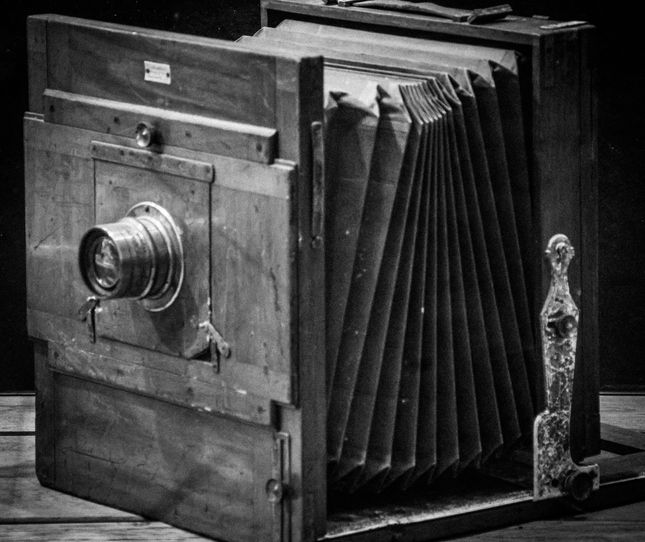
Early 20th century camera (Credit: Rolf Wittke via Getty Images)
As photographic finishing became more sophisticated, new specialist tools arrived. In 1876, Francis Edgar Stanley patented an atomiser designed for fine photographic adjustments. It was an early form of the airbrush. Instead of the harder edges left by an ordinary paintbrush, it sprayed a controlled mist of ink, watercolour or another liquid colour, letting retouchers soften skin tones, tidy backgrounds and make small corrections with impressive subtlety.
Chemical techniques developed during this period as well. In 1883, Ernest Howard Farmer introduced Farmer’s Reducer, which could lighten an overly dense negative or selectively brighten parts of a print. Photo editing was becoming a whole toolbox of techniques.
The Bigger Picture
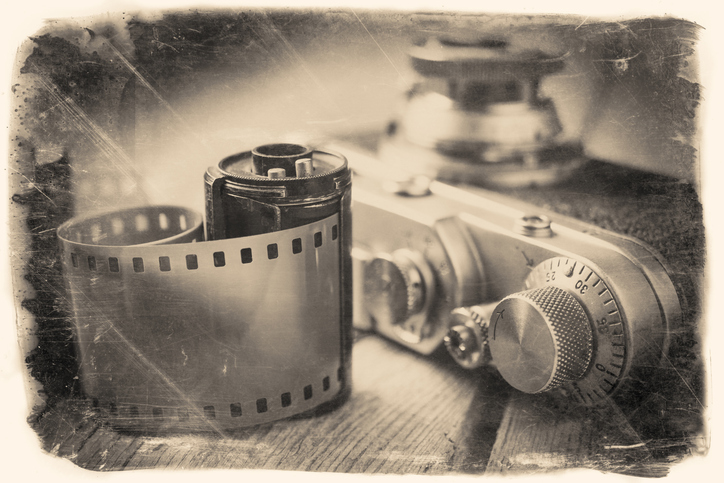
Old photo negatives (Credit: ChamilleWhite via Getty Images)
As the 19th century made way for the 20th, technology expanded that toolbox again. The photographic enlarger projected a negative onto light-sensitive paper, allowing an image to be enlarged, reduced or cropped before printing.
Two techniques soon became darkroom staples. ‘Dodging’ involved briefly blocking light from part of the paper, leaving that area lighter; ‘burning’ did the reverse, adding extra exposure to darken selected areas. Masks helped photographers blend portions of separate negatives. By around 1920, photographers such as Alfred Buckham were creating sophisticated composites using multiple negatives alongside dodging, burning, painting and scraping – everything the darkroom could offer, all in one frame.
When Pics Became Pixels
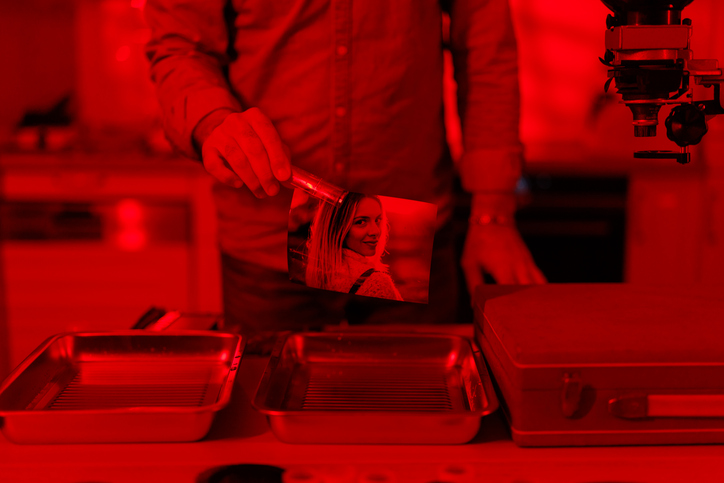
Photographer developing photos in a darkroom (Credit: bojanstory via Getty Images)
The next great shift began not in a studio but a laboratory. In 1957, a team led by Russell Kirsch at the US National Bureau of Standards scanned a photograph into a computer as a grid measuring 176 by 176 pixels. It was a modest little image, but the principle was enormous: once a photograph could be represented as numerical information, software could potentially measure, copy and alter its individual parts.
By the early 1980s, electronic image-editing systems were reaching television, publishing and advertising. The Quantel Paintbox, launched in 1981, let operators rework images with a pressure-sensitive pen, tablet and screen. Brushes and paste-ups were acquiring electronic equivalents.
Photoshop Enters the Picture
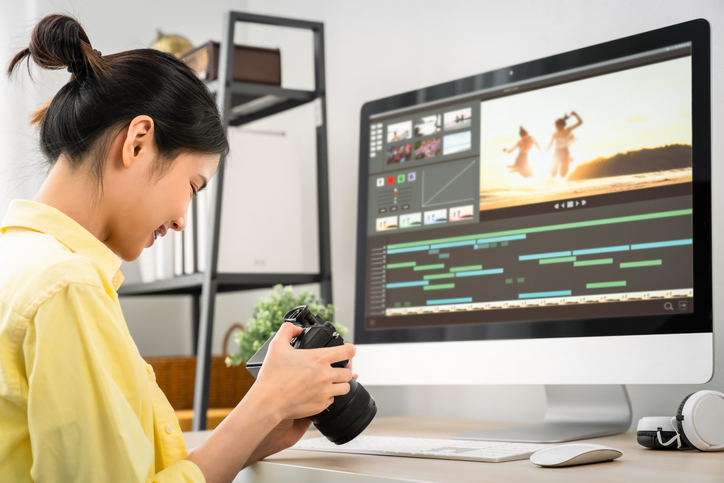
The age of digital photo editing came alive in the 1990s (Credit: Sitthiphong via Getty Images)
Then, in 1990, two syllables changed image editing forever: Photo. Shop.
Brothers Thomas and John Knoll had spent the late 1980s developing software for displaying and manipulating digital images. Pitching the idea to Adobe, it was released Photoshop 1.0 on 19 February 1990, handing professional photographers and designers powerful new ways to alter digital pictures. Techniques that once required darkrooms, chemicals, blades, brushes and considerable manual skill could now happen on screen: images could be selected, copied, recoloured, blended, sharpened and combined, with the original left safely intact.
The Camera Becomes the Editor
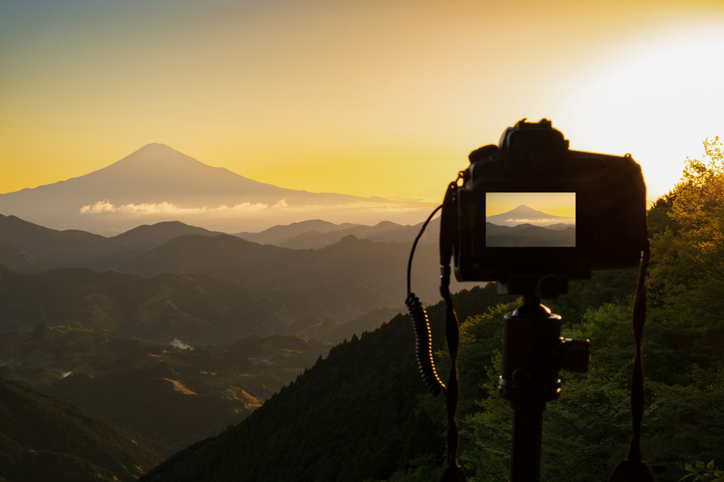
Digital cameras allowed you to edit on the go (Credit: TravelCouples via Getty Images)
By the late 1990s, the spread of digital cameras meant that negatives were seldom part of the process: photographs arrived on computers as digital files. But even bigger shifts occurred in the following decades. First, with the proliferation of camera phones, and then when those phone cameras – and the apps which sat within them – incorporated editing tools.
Fast forward to today and phones use computational photography: software processes information from the camera sensor, sometimes combining several exposures, to produce the final image. Night modes merge dim frames into one brighter photograph; portrait modes identify a person and blur the background; other systems balance bright skies against shadowy faces. This has led to an interesting question, if software edits and updates the finished picture the instant the shutter is pressed, where does taking a photograph end and editing it begin?
AI Picks Up the Editing Brush
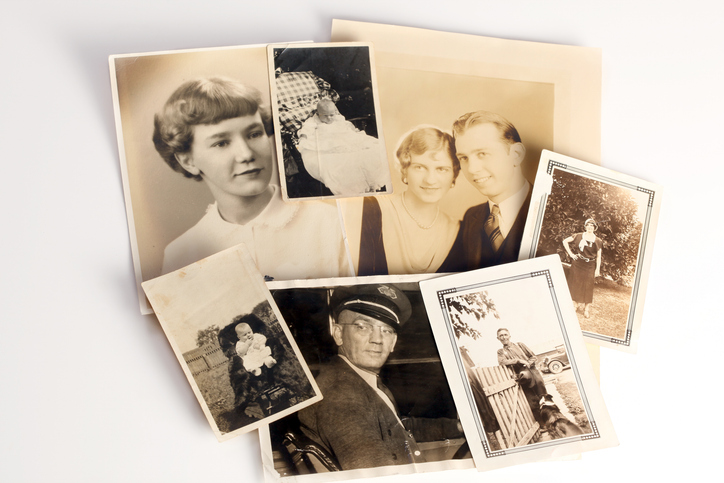
AI allows you to bring old photographs to life (Credit: Imagesbybarbara via Getty Images)
With the 2020s in full swing, artificial intelligence has pushed that question further still. Editing software can now recognise faces, skies and unwanted objects, selecting them without an editor tracing a single edge. It can sharpen blurred details, restore old photographs, balance colour and lighting, or pluck a passer-by from the background. Indeed, Generative AI goes beyond simply changing what the camera has captured. Instead it can create entirely new pixels that were never recorded – extending a scene, replacing an object, or filling an empty space.
And that’s without even mentioning text to image technology. This game-changing functionality can create completely new digital imagery from a text prompt alone – leading to visuals that can look every bit as genuine as a real photo, but having no connection to the real world or any genuine event. It’s an impressive turn of technology, but one that has left many feeling deeply unsettled by the implications of such a powerful tool.
A Picture Worth a Thousand Edits
Say 'Cheese!' (Credit: PatriciaEnciso via Getty Images)
From painted negatives and Victorian combination prints to airbrushing, software, filters and generative AI, photo editing has changed almost beyond recognition. Yet its basic purpose has remained surprisingly constant: to update, improve, correct or make an image look different from the scene originally captured. The tools became quicker. The results became slicker. The darkroom became an algorithm. But photography’s complicated relationship with reality? That has been developing almost as long as photography itself.