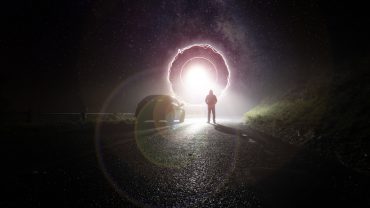
Alaska is a vast wilderness of ice, silence, and endless night skies. It’s also home to some of America’s most unsettling UFO mysteries. But this isn’t a story about distant lights glimpsed from the ground or trying to make sense of a grainy video, it’s about a routine cargo flight in November 1986, when a seasoned crew experienced an encounter that would challenge radar, credibility, and explanation. This is the mystery of flight 1628.
Often described as one of the most credible – and controversial – UFO sightings in aviation history, the flight 1628 case stands apart for the experience of its witnesses, the involvement of air traffic control, and the unsettling consistency of what was reported in the skies over Alaska. Decades later, it remains a subject of debate, and fascination, with plenty of unanswered questions.
Did the crew witness a rare atmospheric phenomenon, or something more structured and deliberate? Were the radar anomalies simply misread signals, or evidence of an object that shouldn’t have been there at all? And how did an ordinary cargo run for Captain Kenju Terauchi and his crew become one of the most talked-about UFO encounters in aviation history?
To find out, we’re heading back to the night skies over Alaska in 1986, where a routine journey turned into something far from ordinary. The Japan Airlines UFO sighting is cloaked in mystery, so please fasten your seatbelts and put your tray tables in the upright position, this could be a bumpy ride…
16-17 November 1986
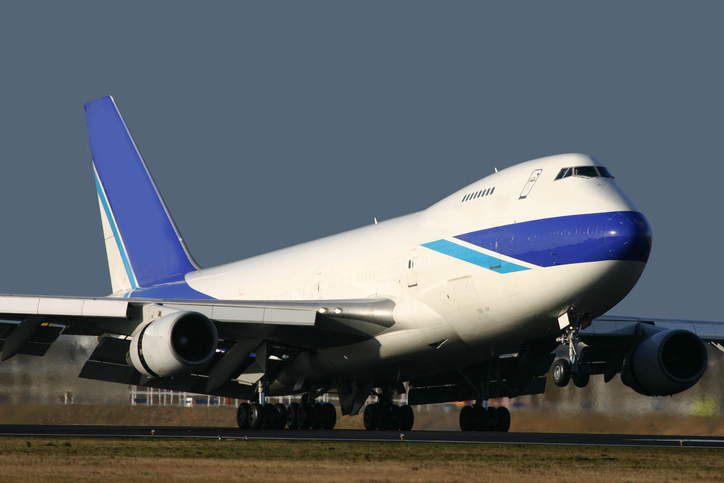
A Boeing 747 cargo plane, similar to JAL 1628 (Credit: RamonBerk via Getty Images)
On November 16, 1986, Japan Air Lines flight 1628 set out on what should have been a routine journey across the North Atlantic. The Boeing 747-200F cargo plane departed from Charles de Gaulle airport in Paris, and after a scheduled stop at Keflavik International Airport in Iceland, it was due to stop again in Anchorage, Alaska, before continuing westward on the long journey over the North Pacific toward its final destination – Narita International Airport, around 60 kilometres east of central Tokyo in Chiba Prefecture.
On board the plane, which was believed to be carrying a shipment of French wine, were three crew – Captain Kenju Terauchi, a highly experienced pilot with thousands of flying hours to his name, along with his co-pilot Takanori Tamefuji, and flight engineer Yoshio Tsukuda.
After landing and then taking off from Keflavik in Iceland, the plane was cruising at 35,000 feet along a well-established polar route frequently used by international cargo flights. Conditions that evening were stable, with clear skies stretching across the vast, frozen wilderness of Alaska almost seven miles below. Until flight 1628 crossed into Alaskan airspace, the flight was uneventful, another long-haul operation progressing exactly as planned.
But somewhere over the remote expanse of eastern Alaska, that routine would begin to unravel. What started as a quiet leg of a transcontinental flight was about to become one of the most debated aviation encounters in modern history.
The First Sighting
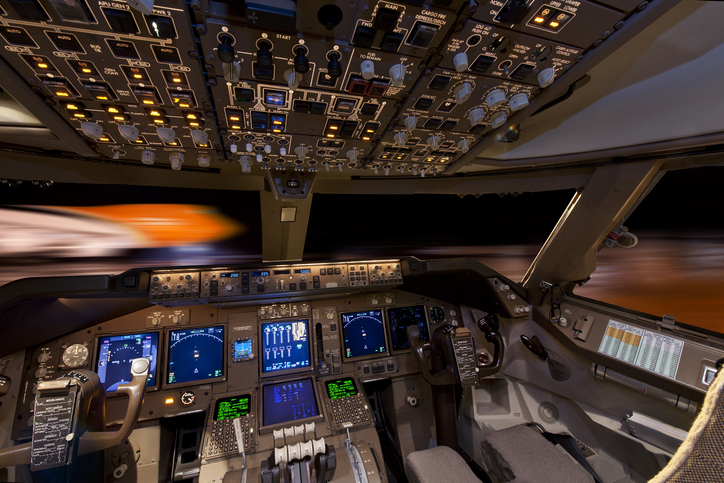
What did Captain Terauchi see out of his cockpit windows? (Credit: Thierry Dosogne via Getty Images)
Captain Terauchi first noticed something unusual ahead of flight 1628 as they were high in the skies over Alaska. Initially, it appeared as distant lights hovering against the dark sky. Such sights were not entirely unheard of, and they were usually dismissed as other aircraft or celestial bodies seen at unusual angles.
According to the crew, the objects seemed to maintain their position ahead of their plane. They said that whatever was near them moved with a strange precision, at times appearing to match the 747’s speed and direction. As the seconds passed, the lights grew brighter and more distinct, drawing closer in a way they found difficult to explain in their later debriefing.
The mystery of flight 1628 was about to fly into unexplained territory.
Closing In

The lights were so bright it was hard to maintain focus (Credit: Roberto Moiola/Sysaworld via Getty Images)
As the flight continued on its intended path, the objects appeared to close the gap. According to Captain Kenju Terauchi, the lights moved closer to his plane, pacing it at short range and adjusting their movements in near-perfect sync with the 747. However, according to a later FAA (Federal Aviation Administration) interview, at no time did the crew see a craft, only lights.
The crew described the lights as intensely bright, in fact so bright at times it was difficult to maintain visual focus. These glowing forms seemed to hover and dart, and for several minutes, the objects remained alongside the plane. Then came the most extraordinary claim.
Beyond the smaller lights, Terauchi reported seeing a much larger object appear in the distance – an enormous, dark shape, in his words ‘twice the size of an aircraft carrier’ that he later referred to as the ‘mothership.’
Voices on the Radio
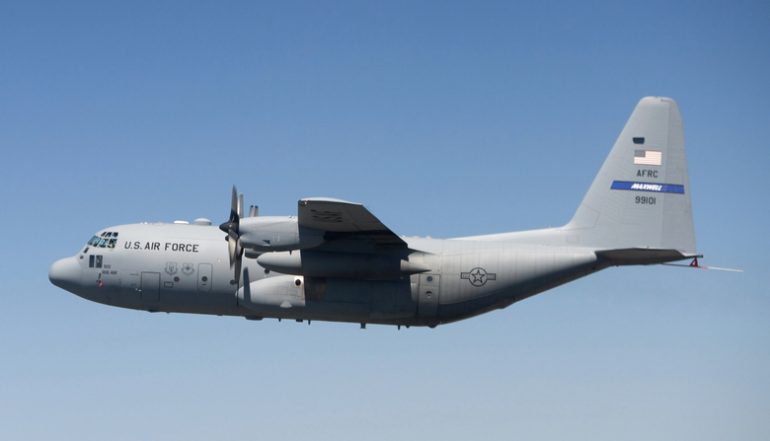
The USAF C-130 reported nothing on radar or visually in the area (Credit: Stocktrek Images via Getty Images)
As the Japan Air Lines incident intensified, Captain Terauchi radioed air traffic control. He reported the presence of unidentified traffic ahead of the aircraft and requested confirmation of any nearby flights. The response from the Anchorage Air Route Traffic Control Center (ARTCC) was immediate and measured – there were no known aircraft in the vicinity. They advised him to take evasive action. The captain requested a descent and the controller approved these course deviations. He decreased his altitude from FL350 to FL310 (Flight Level 35,000 feet to Flight Level 31,000 feet) and flew a wide 360 degree turn. On the radio the captain said that he’d lost sight of the objects, but in a later interview, he said that they had stayed with him.
Terauchi continued to describe what he was seeing, at one point asking directly whether military activity could explain the objects. Controllers, now alert to the unusual situation, began checking with nearby facilities, including military radar systems. For a moment, there appeared to be some corroboration – ground radar intermittently picked up returns in the general area of flight 1628, though the signals were inconsistent and dismissed as ‘clutter’.
Two other planes in the vicinity of flight 1628 – a United Airlines commercial plane and a US Air Force C-130 cargo plane – reported nothing on radar or visually that gave them any cause for concern.
Captain Kenju Terauchi claimed that the three objects followed them for hundreds of miles and as the Japan Air Lines flight made its way to Anchorage, the mystery of flight 1628 took on new levels of bafflement.
The Immediate Aftermath
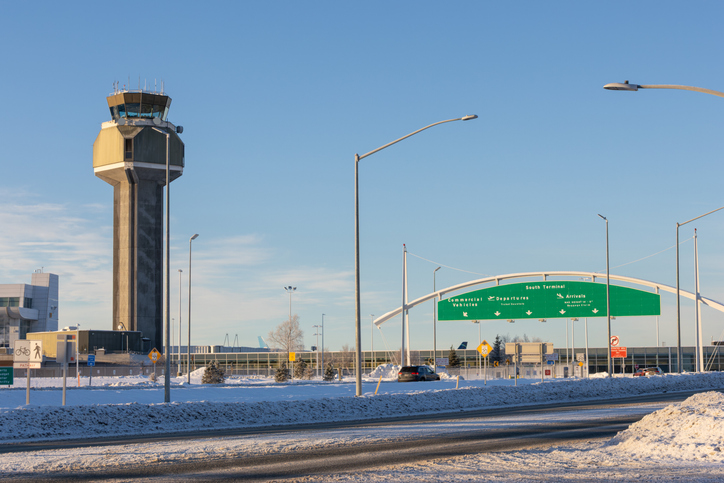
Flight 1628 landed safely at Anchorage International Airport (Credit: Serhii Horban via Getty Images)
As flight 1628 began its descent into Anchorage, the objects were no longer visible. The aircraft touched down safely and without incident, which brought to an end a flight that was anything but routine. Yet for the crew, the experience was far from over.
On the ground, Captain Kenju Terauchi and his team were debriefed by officials. What had been reported over the radio was now recounted in greater detail – distances, movements, light patterns, and the presence of the object Terauchi had described as the “mothership.” The crew remained broadly consistent in their retelling of the bizarre Japan Air Lines incident, with each reinforcing the others’ descriptions of what they’d allegedly seen. However neither the co-pilot nor the engineer corroborated Terauchi’s assessment of a giant ‘mothership.’
The Prevailing Theories
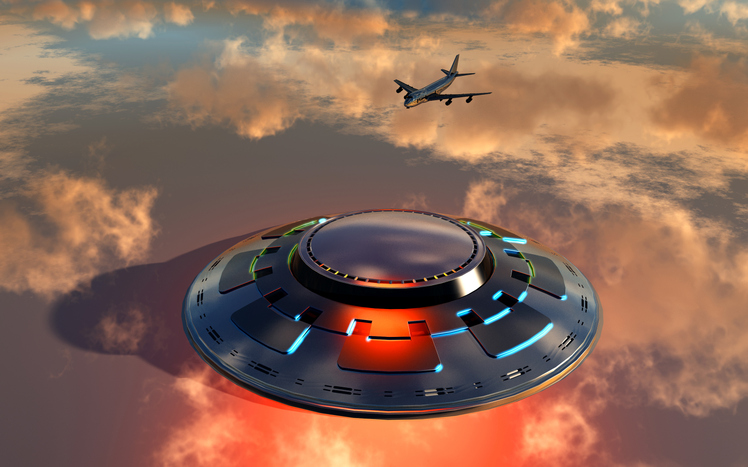
What did they see in the skies above Alaska? (Credit: Mark Stevenson via Getty Images)
From aircraft lights and radar anomalies to the possibility of a classified military test or something truly out-of-this-world, the mystery of flight 1628 quickly became a case where every explanation raised more questions than answers.
Mainstream Explanations
The most straightforward explanation was that the crew of flight 1628 saw the lights of another aircraft at an odd angle, perhaps reflecting off the windscreen or a metallic part of the cockpit.
One Air Force assessment reportedly suggested the radar contact could have been “random clutter or weather interference.” The avionics editor of Aviation Week & Space Technology magazine and UFO investigator Phillip Klass said that both Jupiter and Mars were visible in the sky that night, and Jupiter was low on the horizon, which could have made it appear roughly level with the aircraft and seem to maintain position as the plane moved. Perhaps, then, they saw planets and not UFOs?
Military Manoeuvres
Because the crew reported unusual manoeuvres and radar activity, some argued the objects could have been a classified aircraft or a military operation not disclosed to civilian controllers. In addition, the fact that air traffic control checked with military facilities helped fuel theories that the encounter may have involved sensitive activity in the area.
Aliens?
The interpretation often favoured by UFO enthusiasts is that Kenju Terauchi, Takanori Tamefuji, and Yoshio Tsukuda saw something unsettlingly real that couldn’t be explained by conventional aviation, weather, or planetary alignment.
However, two prominent members of the ‘UFO sceptic’ community weren’t so sure. Freelance writer Robert Sheaffer said of the mystery of flight 1628 that despite it being one of ‘the most celebrated cases in recent UFO literature, it turns out there wasn’t much to read’, and science writer Brian Dunning said ‘there was nothing extraordinary or unusual on that evening’ and it was ‘just another unevidenced aerial anecdote.’
Flight 1628: Flying to Conclusions
Flight 1628 - a routine flight that became anything but... (Credit: kokouu via Getty Images)
What made this Japan Airlines UFO story so compelling was not just the reported sighting itself, but the way it seemed to gather layers of credibility around it – an experienced crew, live radio calls, and radar attention that made the incident harder to dismiss. Even now four decades later, that combination is what keeps the case alive – part aviation mystery, part close encounter, and part reminder that some stories in the sky refuse to give us a clear explanation.