On the desolate fringes of China’s Qinghai Province, near the remote slopes of an escarpment known as Mount Baigong, a network of strange, pipe-like structures appears to pierce the rock, some leading into caves, others stretching toward a saltwater lake. Discovered in the 1990s, these formations known as the Baigong Pipes have baffled researchers and sparked a wave of speculation ever since.
To some, the so-called Baigong Pipes are more than unusual mineral deposits. Alternative theorists have pointed to their seemingly manufactured appearance as evidence of ancient engineering – perhaps the remnants of a long-lost civilisation, or even the work of visitors from beyond our world. Others however, dismiss such speculation and firmly believe them to be a natural formation.
Whether the result of geology, or out-of-place artefacts that have no business being there, the Baigong Pipes pose a tantalising question – how did such structured, metallic-looking tubes emerge in such an inhospitable and ancient landscape?
Where are the Baigong Pipes?
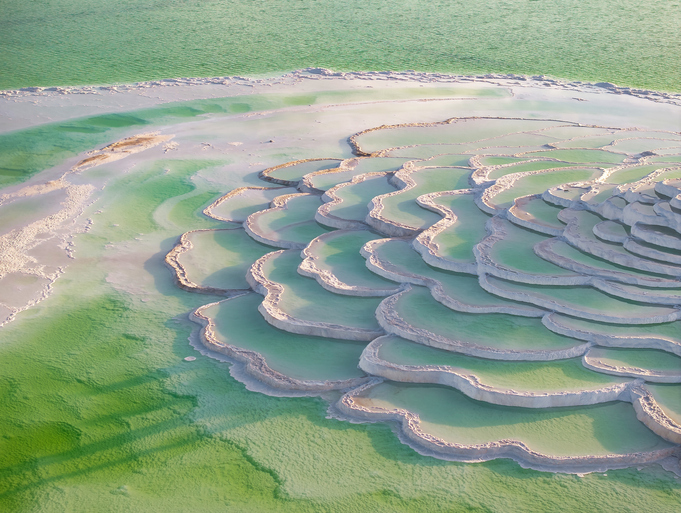
Salt pools of Dachaidan Emerald Lake in Qinghai Province, China (Credit: Ratnakorn Piyasirisorost via Getty Images)
More than 1,300 miles west of Beijing on the remote northeastern edge of the Haixi Mongol and Tibetan Autonomous Prefecture in China’s Qinghai Province, Mount Baigong is found alongside Tuosu Lake. It’s here, in a cave complex with three triangular openings, that the Baigong Pipes were discovered – thin, cylindrical metallic-like formations embedded in the rock, some of them protruding from the cave walls while others appear scattered across the surrounding terrain.
These perplexing pipes vary in size, from narrow, needle-like tubes just a few millimetres across to larger formations around forty centimetres in diameter. Some extend deep into the rock, while others lie exposed, weathered by time and the harsh desert climate. Their rusted, metallic appearance has fuelled speculation for three decades, but as yet, no-one’s quite sure what they are, or how they got there.
What are the Baigong Pipes Made Of?
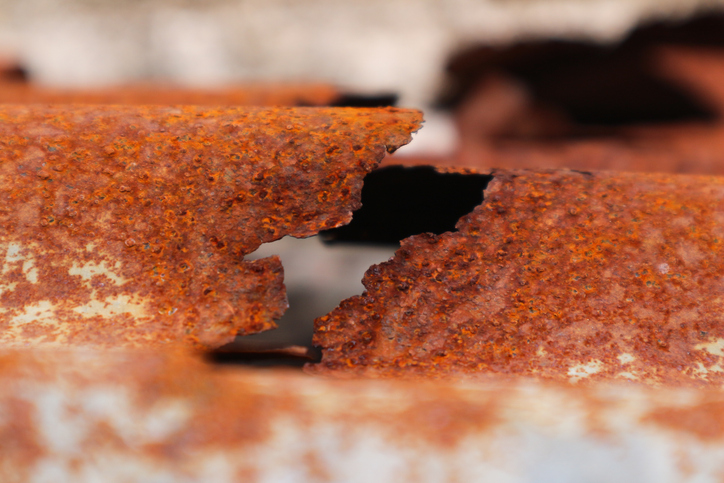
As much as 30% of the Baigong Pipes are oxidised iron (Credit: ahmad ridha ashari via Getty Images)
Since they were first discovered, the Baigong Pipes (also known as Delingha Pipes after the closest town) have often been described as ‘metallic’. Indeed, scraps taken to a local smeltery threw up preliminary findings suggesting the material included around 30% ferric oxide (oxidised iron), plus large amounts of other common minerals such as silicon dioxide and calcium oxide, while roughly 8% of the sample wasn’t able to be identified in that test.
Structurally, the formations are just as intriguing. Some are narrow and tube-like, while others are irregular, cracked, or partially collapsed, which makes them seem more like mineralised channels than precision-made pipes. In other words, at first glance they look engineered, but on closer inspection, there’s room for uncertainty.
It’s this tension between appearance and evidence that sits at the heart of the story in this most remote part of China. Mystery pipes that will remain as such, evidence of a long-lost technology or an ancient or extraterrestrial civilisation, or natural geological structures?
Discovery & Early Claims
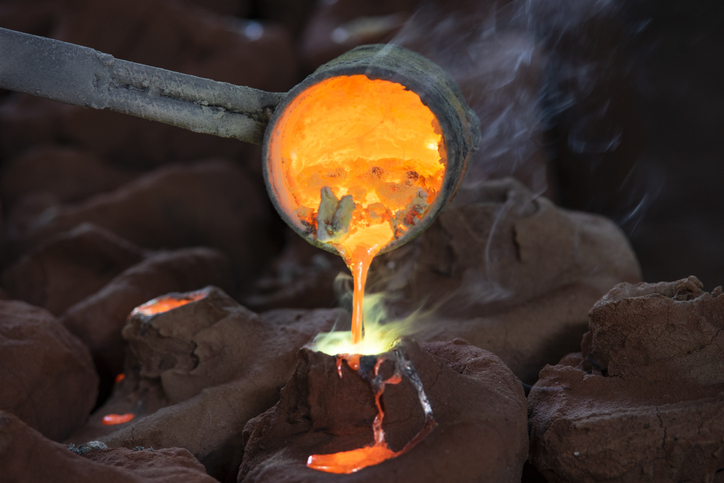
Thermoluminescence tests if the pipes were exposed to extreme heat (Credit: Prapass Pulsub via Getty Images)
These Baigong iron pipes entered the public imagination through a tangled web of competing stories, each adding a little more intrigue and confusion to an already curious find. One version of the story says that they were discovered in 1996 by a Chinese travel writer (sometimes credited as an archaeologist) named Bai Yu, while another credits their discovery to a group of American scientists searching for dinosaur fossils.
What happened next transformed an odd local anomaly into a modern mystery. Samples of the Baigong Pipes were reportedly taken away for analysis, including thermoluminescence testing, which measures accumulated radiation since a crystalline material was last exposed to sunlight or extreme heat, and this may include metallurgical smelting. Early claims suggested the pipes were extremely ancient – around 150,000 years old – however modern archaeological evidence shows that Homo sapiens only began inhabiting this region roughly 40,000 – 30,000 years ago.
Since these numbers don’t add up, theories began to emerge suggesting the pipes must have been engineered by either an advanced prehistoric society, or aliens.
Media Coverage and Public Reaction
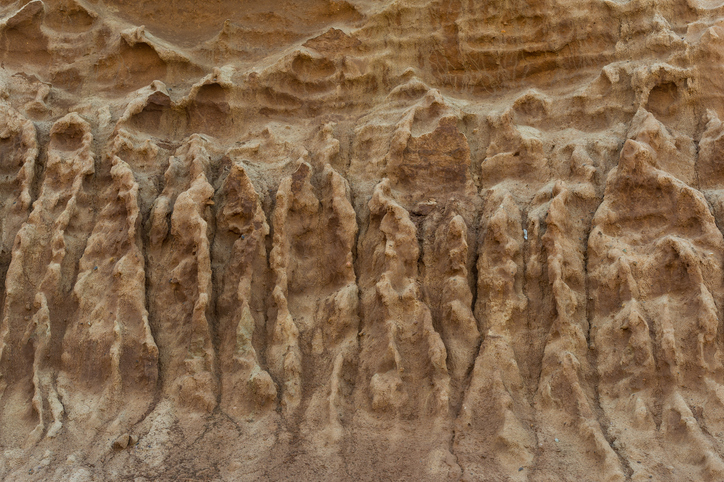
Examples of fossilised tree roots (Credit: TammyJerry6465 via Getty Images)
Once the story reached the press (some years later than their reported discovery), the Baigong or Delingha Pipes quickly shifted from a local curiosity to a mystery with international appeal. It’s believed in 2002 a local official told the story to journalists from China’s state news agency, the Xinhua News Agency, and an article appeared in the Henan Dahe Bao, the ‘Henan Great River News.’
In 2003, Xinmin Weekly reportedly stated that atomic emission spectroscopy detected organic matter of plant origin in the formations, and tree-ring-like patterns were seen in sections of the rock, supporting the fossilised tree or root-cast explanation.
As the story of these bizarre Baigong ‘alien’ pipes made the news, a host of theories and claims began to emerge. The pipes were increasingly framed as evidence of something hidden or even impossible, with theories covering everything from scientific caution to the promise of something otherworldly.
Scientific Studies & Expert Views
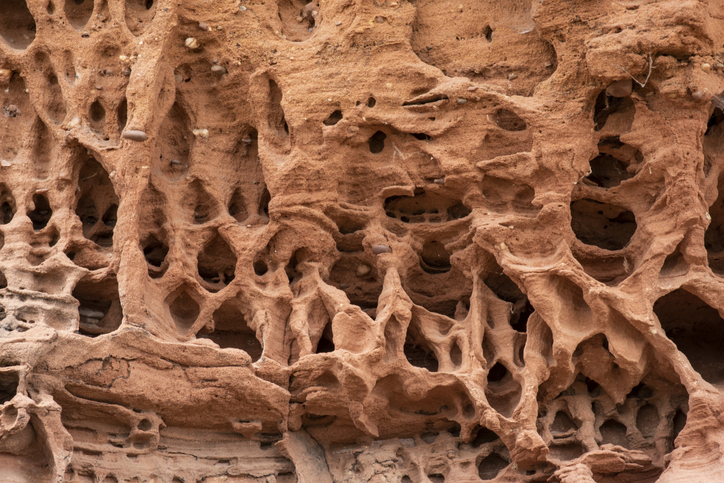
Erosion can produce stunning shapes that look human-made (Credit: imageBROKER/HJ.Janda via Getty Images)
As the Baigong Pipes attracted more attention, the same question kept popping up – were they really pipes at all, or simply natural formations seen through the lens of sensationalism? Expert examinations tended to favour geological explanations, pointing to mineralisation, erosion, and other natural processes that can produce surprisingly regular shapes in rock. Others thought the ET angle was worth looking into.
A useful comparison has often been drawn with similar formations in Louisiana, studied in the 1990s by Joann Mossa and Brian Schumacher, which showed how pipe-like structures can form naturally in sedimentary environments. That parallel matters because it suggests the Baigong Pipes may look engineered without actually being artificial.
The Prevailing Theories
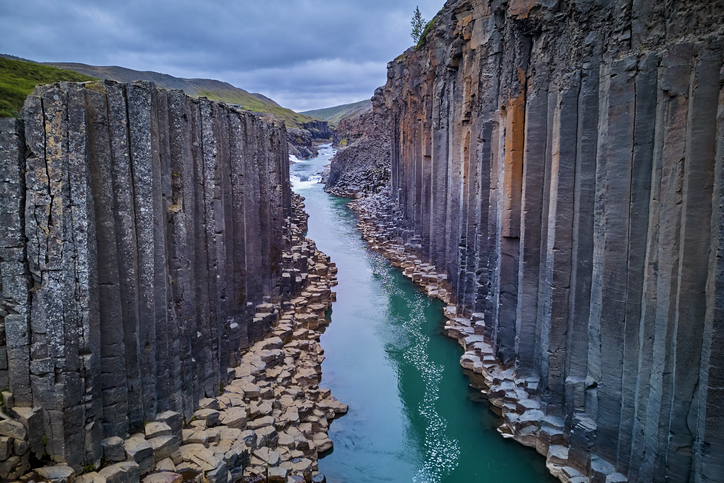
Are the Baigong Pipes mineral deposits formed over millennia? (Credit: Tuul & Bruno Morandi via Getty Images)
Scientifically speaking, there are several competing explanations. The most grounded theories point to natural geology – mineral deposits, fossilised root structures, erosion, or sedimentary processes which created shapes resembling manmade tubing.
From there, the speculation takes on a life of its own – literally and metaphorically. Some writers and alternative theorists have treated the pipes as evidence of a long-lost civilisation, or even as the remains of technology left behind by visitors from elsewhere in the universe, although even in these interpretations it remains unclear what the Baigong Pipes might have actually been used for.
A Pipe Dream, or Proof of Alien Contact?

Like the pyramids, have we been left to solve a bizarre archaeological puzzle? (Credit: Anton Petrus via Getty Images)
So what are the Baigong Pipes? A geological oddity, an archaeological puzzle, or a modern myth? The strongest evidence points to them being natural formations, however strange they may look. Yet the mystery bubbles onwards as the formations are so strikingly unusual: these pipe-like shapes really do look, at first glance, as though they might have been made by machines. And if that were true, it would raise an even bigger question – who, so far back in time, could possibly have possessed the knowledge and technology to leave them there?