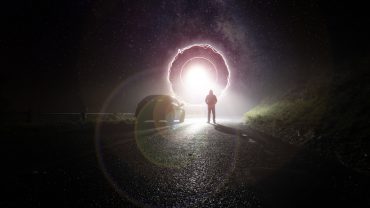
Is it possible that the jungles of Papua New Guinea are hiding a creature that remains, so far, unknown to science? There are dozens of stories of elusive cryptids that many believe to be real, from Canada’s Ogopogo lake monster and Argentina’s Nahuelito, to the legendary Himalayan Yeti and the terrifying Mongolian Death Worm, but few are as unsettling as the Ropen, a creature said to haunt the night skies of Papua New Guinea.
The supposed creature has been described as a winged figure, flying silently through the darkness while emitting a strange, almost bioluminescent light. What became known as the Ropen, has been a tale of both fascination and debate, drawing the attention of cryptozoologists, paleontologists, sceptics, and locals alike.
Could it be a surviving relic from the age of dinosaurs, the pterodactyl of New Guinea? A rare animal misidentified in the dark, or a myth shaped by generations of storytelling? And in a world where there’s very little territory that’s truly undiscovered, how could such a creature remain hidden? Feather you believe it or not, the Ropen mystery refuses to be grounded.
The Home of the Ropen Dinosaur Legend
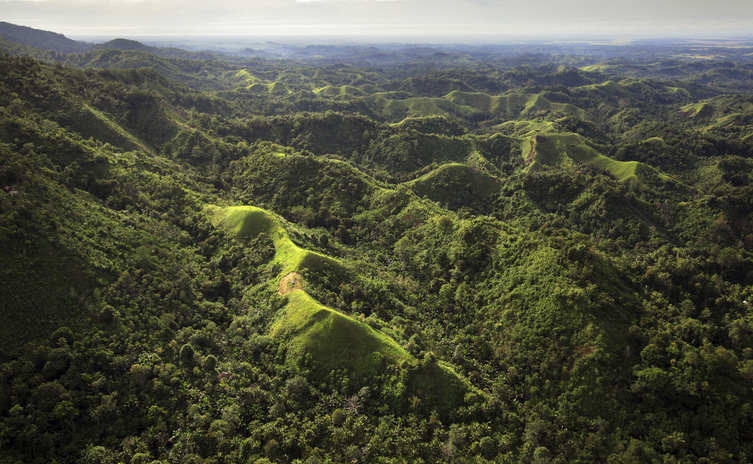
The Papua New Guinea Highlands (Credit: Timothy Allen via Getty Images)
Papua New Guinea is one of the world’s most rugged and remote countries. Comprising the eastern half of the island of New Guinea and hundreds of offshore islands, at its closest point it’s only around 150 kilometres from the Cape York Peninsula in Queensland, Australia.
The landscape is dominated by soaring peaks, vast tracts of untouched rainforest, steep valleys, and fast-flowing rivers. Volcanic activity, landslides and earthquakes are common, and some parts of the country are only accessible by air or water. Indeed, a number of highland communities had no regular contact with the outside world until the latter half of the twentieth century, and it’s believed a handful of isolated groups may still exist today. It’s also said to be the world’s most linguistically-diverse nation, with well over 800 known spoken languages, and it’s from these languages, or at least some of them, that the story of the Ropen was born.
What’s in a Name?
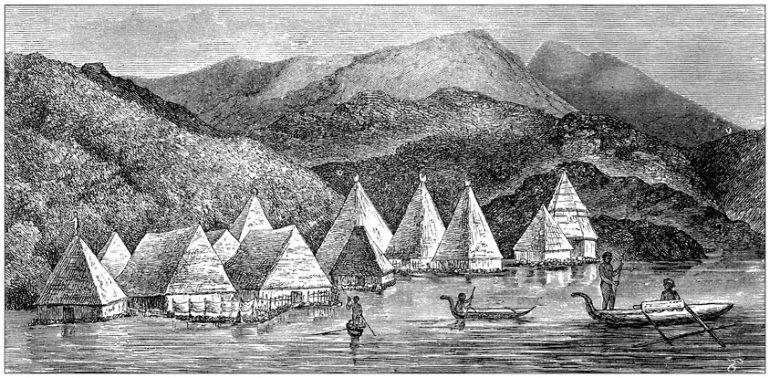
The name may have come from one of the island's Indigenous tribes (Credit: ilbusca via Getty Images)
The name Ropen most likely comes from one of the 800 or more local Papua New Guinean languages and dialects, although accounts vary on its precise meaning and linguistic origin. In many tellings, it’s treated as a word tied to the creature’s eerie, glowing presence at night, with the name helping to distinguish it from other creatures of local tradition. Some have suggested the translation may be close to something like ‘demon flyer’ or ‘shining demon’, while others have said locals call it ‘Indava’, or ‘bird that flies at night and brings messages of death.’
The truth is, no-one really knows why it’s called Ropen, which only deepens the mystery…
Early Encounters & Witness Descriptions
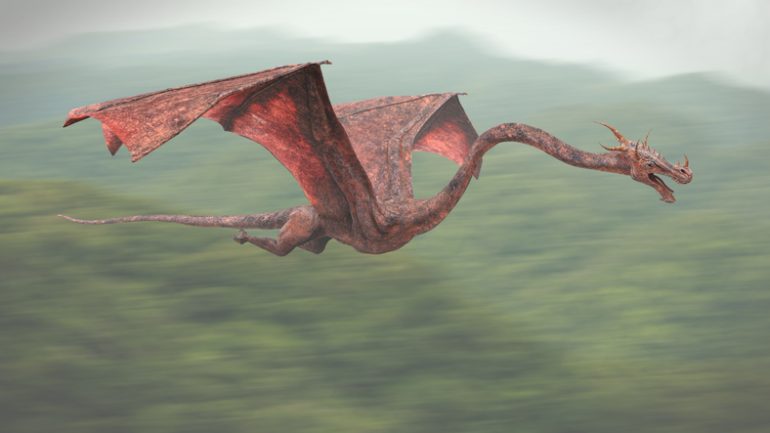
Ropen was described as a huge, winged figure (Credit: dottedhippo via Getty Images)
The story of the so-called pterodactyl of New Guinea, began to take shape in the second half of the twentieth century as it was carried by missionaries, travellers and amateur investigators who ventured into Papua New Guinea’s more remote regions.
In these versions, Ropen wasn’t a vague swamp beast like the Congo River Basin’s mokele-mbembe, or a mythical forest spirit like the tikbalang from Philippine folklore, but something far more extraordinary. It was described as a large, winged figure (some say it had a wingspan of anything up to ten metres across) seen after dark, gliding above the water with a faint or even brilliant glow. Some witnesses claimed it had the silhouette of a pterosaur, with a long tail, pointed wings and a huge body, far bigger than any known flying bird. Others focused less on its shape than on the light itself, which seemed to pulse or shine as it moved through the night sky.
One of the earliest claimed sightings of something strange in the Papua New Guinea sky was by entomologist Evelyn Cheesman, the first female Insect House Curator at London Zoo in 1920, and whose solo expeditions across the South Pacific garnered over 70,000 specimens now housed in the collections of the Natural History Museum. She wrote in her 1935 book The Two Roads of Papua that she saw unusual lights moving across the sky.
Over the years there have been other stories of ‘living pterosaurs’, such as Zambia’s kongamato (‘breaker of boats’), the Texas ‘Big Bird’, or the Indigenous American ‘Thunderbirds‘ that literally cause the skies to roar with their wingbeats. The Ropen dinosaur is another.
What had once been a tale rooted in oral traditions became a mystery framed by comparison with prehistoric reptiles and unexplained aerial phenomena. Whether anyone had actually seen a real creature, or had misidentified an animal or bird, remains up for debate. In any case, these accounts were compelling enough to keep the tale of the Ropen firmly alive.
The Hunt for The Ropen

People came to find Ropen, but the island's geography made the search difficult (Credit: Marc Dozier via Getty Images)
The Ropen’s late twentieth century leap from local legend to intriguing mystery soon drew in people determined to prove the creature was more than a myth. Researchers, self-styled cryptozoologists, and curious observers, began travelling to Papua New Guinea in the hope of finding evidence to settle the question once and for all.
Their efforts were often shaped by anecdotal reports, second-hand sightings and interviews with locals who claimed to have seen a large, glowing creature moving through the night sky, sometimes with a diamond-shaped tail, a mouth similar to that of a crocodile, and ridges or bumps that ran down the back of its body. In some cases, investigators claimed to have gathered testimony that seemed to support the legend of the New Guinea pterosaur. In others, they came away with nothing more than confusion and hearsay.
Hunting for anything at night when you’re not entirely certain what you’re looking for is hard, but throw in the mountains, dense forests and fast-flowing rivers, and any sort of investigation becomes virtually impossible. As a result, the searches often produced more questions than answers, the fundamental one being – what, if anything, is out there?
The Prevailing Theories
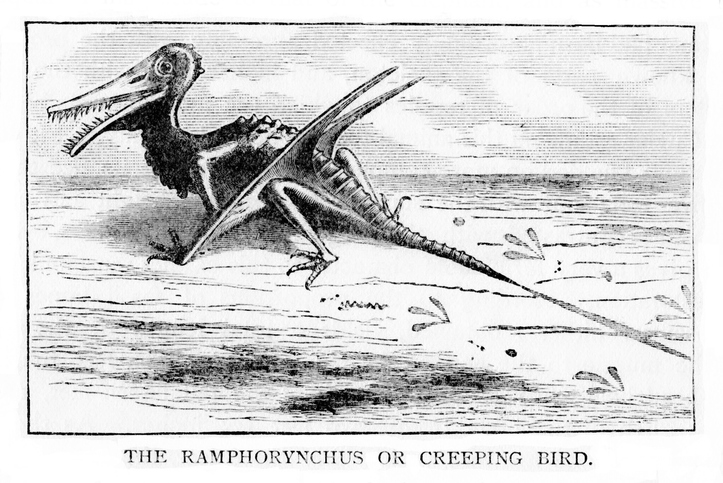
Is PNG home to Rhamphorhynchus, a supposedly-extinct pterosaur? (Credit: Christine_Kohler via Getty Images)
There’s a host of theories surrounding the Ropen, ranging from those based in science to more speculative ideas. Some try to explain the mystery through known animals, natural phenomena or misidentification, while others reach further into the world of prehistoric survival and cryptid speculation.
A Misidentified Animal
The most straightforward explanation is that the Ropen was never a single extraordinary creature, but a misidentification of one or more known animals such as the island’s nocturnal birds, fruit bats, or other large airborne creatures such as flying foxes and the male frigatebird, which has a very distinctive bright red pouch under its neck that inflates to attract females. Any one of these creatures could easily appear strange at a distance, in unfamiliar terrain.
The Glowing Light?
Central to the Ropen dinosaur legend is the creature’s reported light. Some have suggested this is likely to be the result of factors such as bioluminescence, reflected moonlight, fireflies, or even the effect of witnessing movement through haze, cloud or atmospheric conditions that distort perception after dark.
A Surviving Pterosaur
For those that believe in the Ropen legend, the most dramatic theory is that it could be a living pterosaur, sometimes called the New Guinea pterodactyl, that managed to survive unnoticed in a remote corner of the South Pacific. Past descriptions link it to the supposedly-extinct Rhamphorhynchus, a species of pterosaur with a diamond-shaped tail. While this theory is clearly exciting, many argue it runs into obvious scientific problems – including the absence of physical evidence and the difficulty of explaining how such a creature could survive undetected for so long.
Folklore
Along the same lines as the misidentification theory, it’s more than possible that no Ropen exists, apart from in the imaginations of the original storytellers. It may have started as a parable, perhaps warning of the dangers of being out at night in such harsh terrain, and then it may have taken on a life of its own through modern retellings describing it in terms of flying reptiles and monster lore.
Not Quite a Ropen & Shut Case…
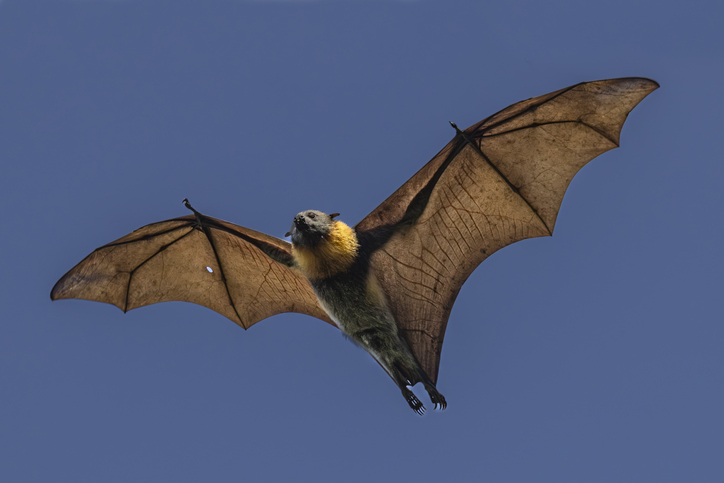
Cryptid, pterosaur, or flying fox? What is the Ropen? The hunt continues... (Credit: Ken Griffiths via Getty Images)
Ultimately, the Ropen sits in that strange gap between story and science, belief and doubt. Each theory could be used to explain part of the mystery, but none can fully square the circle. Whether it’s a misunderstood animal, a product of generations of storytelling, or something stranger, the answers are still up in the air…