Could Okanagan Lake in British Columbia be home to a giant creature that’s unknown to science? Across history, people have told stories of elusive cryptids which sit somewhere between folklore and fact, from Mapinguari – said to roam the Amazonian jungle – Michigan’s nightmarish Dogman, France’s legendary Beast of Gevaudan, and Black Shuck, the devil dog of England. And indeed Canada also has its own legendary beast – Ogopogo, a shadowy serpent said to lurk beneath the waters of Okanagan Lake.
For generations, witnesses have described seeing a serpentine-like creature in the lake. Described by some as the Canadian Nessie, Ogopogo has become the subject of endless speculation, drawing in believers, sceptics and curious tourists hoping for a glimpse of what lurks beneath the surface.
But how did the legend of the Ogopogo lake monster begin? Could it be a surviving prehistoric animal, some sort of dormant dinosaur that somehow survived extinction sixty-five million years ago? Maybe it’s a case of mistaken identity or even an elaborate joke? And does the story still hold water? Let’s find out.
The Home of the Ogopogo Legend

A stunning view of Okanagan Lake (Credit: Amy Mitchell via Getty Images)
Okanagan Lake is in the western Canadian province of British Columbia, around 400 kilometres east of Vancouver. The lake itself is around 135 kilometres long and stretches through a broad valley shaped by ancient glacial activity. In places it’s five kilometres wide and has a depth of more than 230 metres. It’s one of the province’s most prominent inland waterways, where tourism, boating, fishing, swimming, and other watersports are popular pursuits.
What’s in a Name?
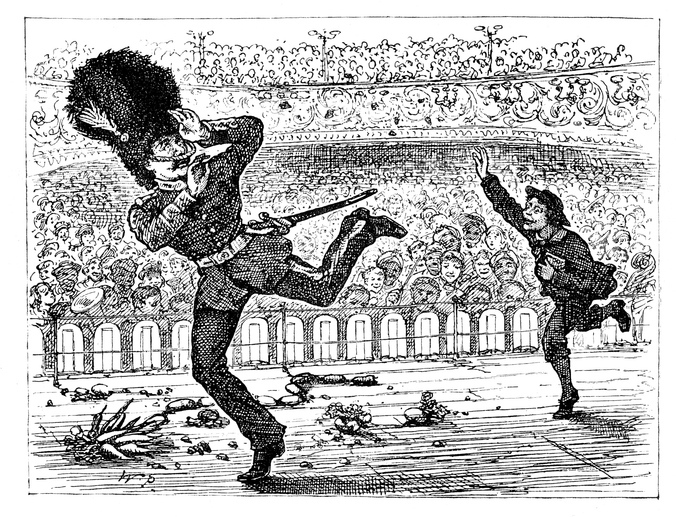
Ogopogo probably came from an early 20th century Music Hall or Vaudeville act (Credit: duncan1890 via Getty Images)
The earliest Indigenous name, Naitaka, is associated with First Nations oral traditions from the region, and reflects much older legends of a mysterious creature living in the lake. The modern name though has more to do with pop culture, and the name Ogopogo probably came from a 1920s music-hall song which was attached to the lake’s monster myth: “His mother was an earwig, his father was a whale, a little bit of head, and hardly any tail, and Ogopogo was his name.”
The Naitaka Tradition

Okanagan Valley, home to Indigenous peoples for thousands of years (Credit: laughingmango via Getty Images)
Long before European explorers reached the Okanagan Valley, the lake and the surrounding Northwest Plateau were (and remain to this day) home to Indigenous peoples, including the Syilx Okanagan people who have been in the area for at least 9,000 years, and likely many more.
Their oral traditions preserved not only practical knowledge of the region, but also accounts of powerful beings believed to inhabit the lake. Among these stories was n’ha-a-itk, or Naitaka, the name commonly associated with the lake spirit in local tradition. The word roughly means ‘water god’, ‘water demon’ or ‘sacred spirit of the water’.
In the nineteenth and twentieth centuries, when later writers and European settlers began recording reports of strange shapes in the lake, they were linked to this far older tradition which had already existed for thousands of years.
The Legend Grows
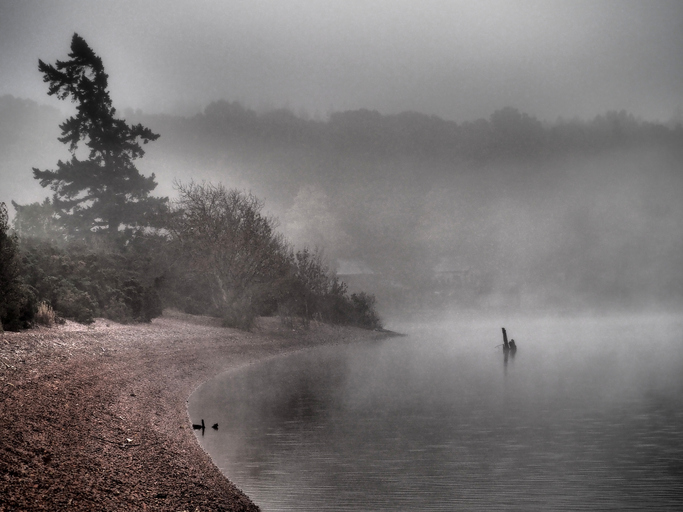
What - if anything - lives under the murky waters of Lagarfljót lake (Credit: Ludovic Debono via Getty Images)
The first widely cited written account came from Canadian writer and pioneer Susan Allison, who, with her husband, became one of the first non-native people to live in the area. She described seeing an unusual creature in 1872 and helped bring the lake’s mystery into the written record.
Her account of what became known affectionately as the Canadian Nessie gave later writers a starting point, and by the early twentieth century reports of strange activity on Okanagan Lake became more widespread. These early tales often described a long, dark body moving just below or above the surface, sometimes with humps, a head, or a tail, visible briefly before it disappeared.
Perhaps the most well-known sighting was in 1968 by Art Folden. He was driving along Highway 97 when he noticed something in the water. He stopped his car, and began to film what he thought might be Ogopogo, around 100 metres from the shoreline. He said it was “something large and lifelike”. Later digital analysis of Folden’s footage suggested it was a real animal but that its size had been greatly overestimated, and that it was probably a waterfowl or beaver too far away to identify. It was no more conclusive than that.
In 1980, a busload of day-trippers from Vancouver visited the lake, and at the beach at Kelowna, one of the tourists reportedly captured around ten seconds of footage on an 8mm camera of what he believed to be the Ogopogo lake monster. When the footage was looked at in closer detail, it was thought that all he really caught on camera was two energetic otters.
There have been several other recorded sightings of Canada’s Loch Ness Monster, including two in 1989. One man said he saw an animal around 11 – 12 metres long, travelling approximately 40 km/h, which in his own words “had five sleek jet-black humps.” Another alleged sighting from father and son Clem and Ken Chaplin claimed they saw a four or five-metre long serpent-like creature just over twenty metres from their canoe that slapped its tail so hard on the water, they said it was “enough to kill a man if it had hit him”.
And there are more. One from July 1992 from someone claiming to have videotaped “something or some things” just under the water’s surface (which was concluded to have been debris from a fallen tree). Another was from 2008 when a couple photographed two humps emerging from the water, and a phone video from 2011 depicted two dark-ish objects which were most likely logs.
A fifteen-metre long giant snake was described in 2018 and, in 2024 a sighting was dismissed as ‘odd waves’. So far, none have settled the question conclusively.
Some Ogopogo claims drew interest from local authorities, journalists, and amateur investigators, while others were quickly dismissed as misidentification, wake patterns, floating debris, or the reflection of light on the water.
The Hunt for Ogopogo

The search for Ogopogo goes on... (Credit: kmatija via Getty Images)
The search for the Ogopogo lake monster has attracted many fans and investigators over the years, from curious local enthusiasts and amateur cryptozoologists to journalists, documentary filmmakers, and scientists. As the legend got increasingly popular, efforts to find evidence of the Canadian Nessie became more organised, with people using boats, cameras, sonar equipment, and even aerial observation in the hope of capturing a definitive sighting.
Despite the attention, the results have remained inconclusive. Television programmes, internet and local research efforts have kept the story alive, but even in the era of high-quality camera-phones in everyone’s pocket, the Ogopogo mystery remains a topic of fierce debate.
The Prevailing Theories
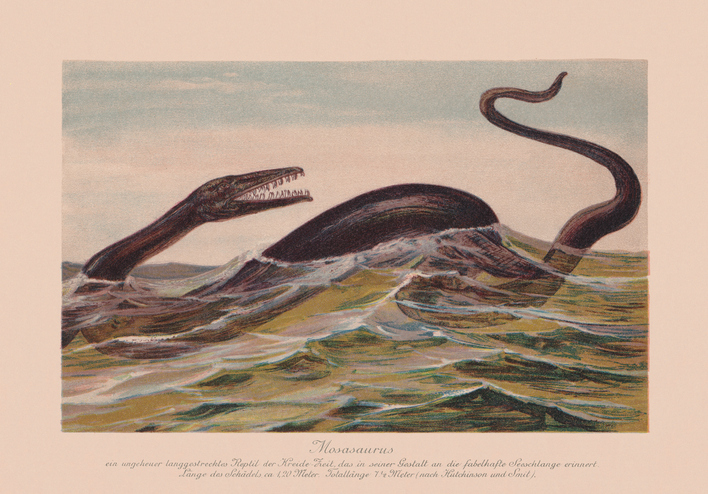
An artist's impression of a Mosasaurus. Does it live in Okanagan Lake? (Credit: ZU_09 via Getty Images)
Theories surrounding the existence of Canada’s Loch Ness Monster range from the plausible and probable, to the outlandish. The most likely explanations are that sightings of Ogopogo are nothing more than floating logs, groups of swimming animals, unusual wave patterns, or simple mistakes made while viewing the lake from a distance. To the untrained eye, brief glimpses are notoriously hard to pin down with any degree of accuracy, especially when light, wind, and water movement all change the appearance of the surface.
More speculative ideas though have proved harder to dismiss entirely, at least in popular culture. Some have suggested Naitaka could be something unknown, perhaps a large aquatic animal somehow overlooked by science, or even a surviving species of dinosaur or ancient creature. Is it Ichthyotitan, which may be the largest marine reptile ever discovered, measuring 25 – 32 metres in length? Could it be Shastasaurus, described as a massive suction-feeding sea dragon similar to the Plesiosaur? How about Mosasaurus, a predatory lizard known as the T-Rex of the ocean, or Basilosaurus, a type of early whale said to be around twenty metres long?
There are also those who consider Ogopogo to be a figure from folklore, or even a parable, warning against the dangers of the water. In this sense, the mystery endures because no single explanation has ever fully been able to replace any other.
Why the Legend Still Matters
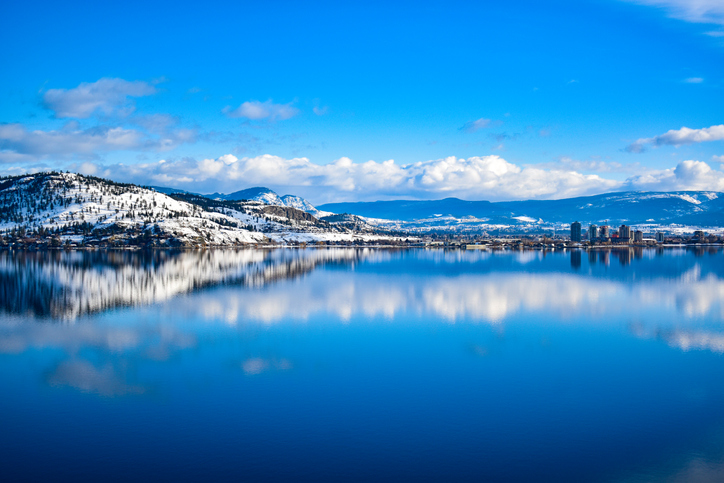
What lurks beneath the blue waters of Okanagan Lake? (Credit: mlh photography via Getty Images)
The Ogopogo lake monster remains one of Canada’s best-known cryptid legends. Whether the creature is – or was – ever actually real remains uncertain. Yet what isn’t in doubt is the popularity of the legend itself, as those who wander the shores of the lake still stare at its murky waters, wondering what may be lurking just below the surface…