History is full of curious cryptids who straddled the line between reality and myth. Creatures such as the Yeti, said to roam the remote peaks of the Himalayas, Arkansas’ Boggy Creek Monster, El Chupacabra from Puerto Rican legend, and Mokele-Mbembe, Africa’s hidden dinosaur. South America has produced many such legends, but none quite like Nahuelito, the mysterious creature said to haunt the depths of Lake Nahuel Huapi on Argentina’s western border with Chile.
For more than a century, witnesses have spoken of a serpentine shape breaking the surface – huge, dark, and very much alive. Like Scotland’s Loch Ness Monster, Nahuelito blurs the boundary between folklore and fact, drawing scientists, sceptics, and storytellers into its wake.
So what is the truth behind the legend? Could Nahuelito be a surviving relic, a type of prehistoric Patagonian plesiosaur, an elaborate hoax, or a collective myth spun from the lake’s unfathomable depths?
Read on as we dive into the tale of the lake monster in Argentina, the country’s most captivating aquatic mystery, where it’s possible the waters conceal more than reflections of the mountains which surround it.
Beneath Patagonian Waters: Where the Legend Was Born

Lake Nahuel Huapi from Victoria Island, Bariloche (Credit: Maximoangel via Getty Images)
High in Argentina’s Andean foothills lies Lake Nahuel Huapi, a vast, deep-blue expanse fringed by the forests of northern Patagonia. The lake itself is around 540 square kilometres and has a maximum depth of around 460 metres. On its southern shore is the city of Bariloche, and to the northwest lies the town of Villa La Angostura. The lake is popular with kayakers, and one of Argentina’s most beautiful locations.
Its name, from the indigenous Mapuche language, roughly translates to ‘Island of the Jaguar,’ and is home to a number of different species of trout, the kelp gull, and the blue-eyed cormorant. Yet another, more elusive inhabitant is said to dwell here as well. Locals call it Nahuelito, or ‘little jaguar’.
The Guardian Spirit
Long before European explorers arrived, the region’s earliest inhabitants, the Tehuelche people, may have told stories of a giant aquatic being that lurked beneath the lake’s surface. The dark, deep depths of Nahuel Huapi Lake in Argentina seemed the perfect home for such a creature.
When Portuguese and Spanish sailors began exploring South America’s southern lakes in the sixteenth and seventeenth centuries, they returned with tales of serpentine shapes rising from the water, of wakes with no visible cause, and of eerie sounds echoing across the lake’s surface. The stories from the Tehuelche people and from the conquistadors became intertwined over time, which eventually gave birth to the modern legend of Nahuelito, the enigmatic lake monster in Argentina, that has, so far, defied explanation.
The Monster of 1897: When the Myth Went Modern
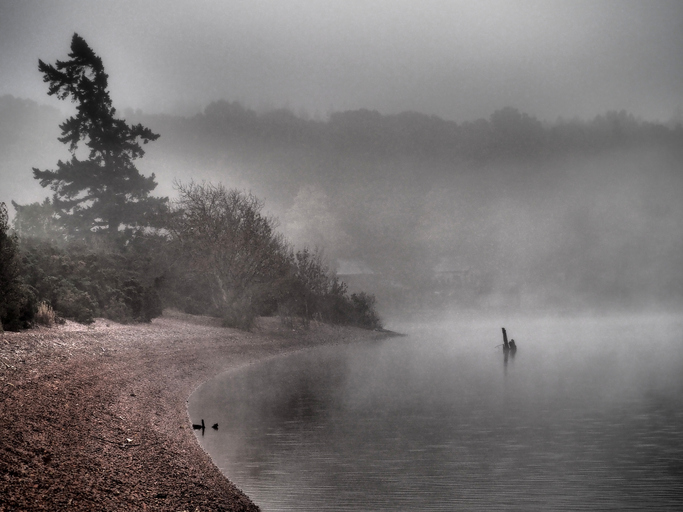
What - if anything - lives under the murky waters of Lagarfljót lake (Credit: Ludovic Debono via Getty Images)
By the late nineteenth century, Lake Nahuel Huapi had become a frontier outpost where loggers, missionaries, and traders shared and swapped age‑old Indigenous stories. Against this shifting landscape, the legend of Nahuelito suddenly stepped out of folklore. In 1897, Dr. Clemente Onelli – the director of the Buenos Aires Zoo from 1904 – began to receive reports of a strange creature living in Patagonia’s lakes.
One of the most talked about accounts came in 1910 from George Garret, an Englishman working close to the lake whose testimony would lend a new sense of credibility to the mystery of Argentina’s nessie. He described a long, humped form cutting through the lake. He claimed to have seen this creature from around 400 metres away, with the visible part around five to seven metres long and rising two metres from the water’s surface.
For reasons unknown, Garret’s story was only made public twelve years later, in 1922 when he told it to the Toronto Globe. In the same year, Dr. Onelli funded an expedition to find what was described as the Patagonian plesiosaur, but nothing turned up.
As with the Loch Ness Monster, as photography spread, so did grainy images that claimed to show something unusual breaking the surface – shapes just vague enough to provoke debate rather than settle it. With each retelling, Nahuelito edged further into the modern imagination, transforming from a whispered legend into a fully fledged mystery of the new century.
In The Navy
In 1960, the Nahuelito story briefly crossed from rumour into supposed officialdom when the Argentine Navy were said to have become involved. While it hasn’t been confirmed one way or another, the story goes that during naval exercises, crews reported tracking an unidentified underwater object (some say it was a remote-controlled submarine) that seemed to move against currents and at varying depths. For around eighteen days, according to later retellings, they attempted to monitor and pursue whatever was appearing on their instruments, but no definitive contact was ever made with Nahuelito, and the incident eventually faded into the background.
Into The Depths: Searching for Evidence

Sonar and echolocation have - so far - yielded nothing... (Credit: eugenesergeev via Getty Images)
As the reputation of the Patagonian plesiosaur grew, so too did the desire to swap stories for evidence. Amateur investigators, local researchers, and visiting television crews have all turned their attention to Lake Nahuel Huapi, hoping that technology might reveal what the naked eye or a tourist’s camera lens hasn’t yet been able to. Sonar scans have swept sections of the lake, cameras have probed the shallows, and boats have traced careful grids over the water’s surface.
So far, their efforts have produced plenty of intrigue but no proof. A handful of unexplained sonar blips, odd wakes filmed at a distance, and ambiguous underwater shapes have all been held up as potential clues, only to dissolve under scrutiny. Sceptics argue that the lake’s depth, shifting thermoclines, and submerged debris are enough to confound even modern instruments. Believers counter that the very elusiveness of hard data is part of the mystery – that if something unusual does inhabit Nahuel Huapi, it has the perfect hiding place. For now, each new foray into the depths ends the same way – with more questions than answers.
Legend of the Lake
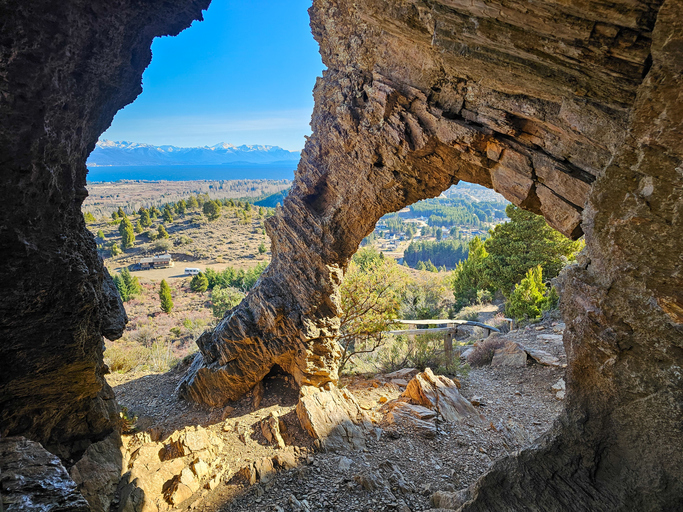
Lake Nahuel Huapi is a jewel of Patagonia (Credit: Joss Fernando Souza Vieira via Getty Images)
Today, the lake monster in Argentina’s Lake Nahuel Huapi is very much part of local myth and legend. Cafés serve up monster‑themed treats, souvenir shops sell all manner of lake‑beast mascots, and boat tours sometimes nod playfully to the creature said to glide beneath the waves. For locals, Nahuelito is a familiar presence – a touch of mystery that sits comfortably alongside hiking trails and ski slopes. The legend of Nahuelito has also become a powerful draw for visitors, who arrive with cameras ready, hoping to glimpse a ripple that defies logic.
What Lies Beneath: Theories & Speculation
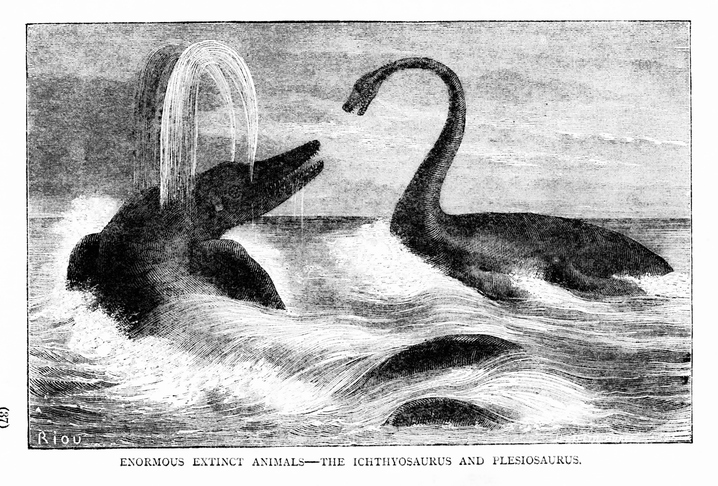
Is Nahuelito a prehistoric reptile that somehow escaped extinction? (Credit: Christine_Kohler via Getty Images)
Over the years, theories about Nahuelito have multiplied almost as quickly as the sightings themselves. Those inclined toward natural explanations point first to the lake’s known inhabitants – large trout, otters, or even the occasional swimming deer, all of which can look strange or unnatural in low light or rough water. Wind, waves, and sudden weather changes can sculpt the surface into strange shapes, while drifting logs or submerged debris can mimic a monster if that’s what the eye decides it wants to see.
Some however suggest that the truth behind the lake ‘monster’ in Argentina could be an unknown species of giant eel or fish, a relic population that has somehow escaped scientific classification. There are also a few enthusiasts that have called it the Patagonian plesiosaur, the idea being that it could be a surviving prehistoric reptile that somehow slipped through the cracks of extinction.
It may also be an elaborate hoax using carefully staged photographs or embellished tales designed to attract attention, tourism, or simple notoriety. But one that has lasted well over a century, with stories dating back millennia? Maybe. There was also a wonderfully farfetched rumour that the creature was created as a result of botched nuclear experiments in the 1950s at Huemul Island, just outside Bariloche.
Nahuelito: Patagonian Parable or Dormant Dinosaur?
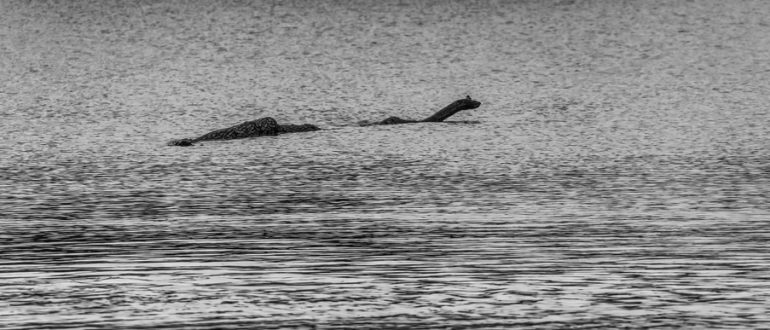
What lies beneath...? (Credit: Gabdulvachit Konurov via Getty Images)
Between misidentification, mystery animals, and imaginative invention, the myth of Nahuelito comes with many possible explanations. Ultimately, Nahuelito remains what it has always been – a shadow on the water and a story in the mind.