History’s full of discoveries. Large ones. Small ones. Buried ones. Even ones that re-write the story of time itself. But what about the things we haven’t found? Somewhere between forgotten vaults, sunken ships, secret chambers, and the occasional tall tale, are extraordinary objects that seemingly vanished into thin air. Priceless pieces, coveted treasures, and tantalising relics have remained out of reach, with no guarantee they’ll ever resurface.
So were these absent artefacts spirited away, swallowed by time, or lost for good? Here are seven famous missing things that still have the world scratching its head. Let’s follow the clues.
The Amber Room: The Room That Vanished

The Amber Room was taken from Catherine Palace near St Petersburg (Credit: Vladislav Zolotov via Getty Images)
Imagine misplacing an entire room. Not the furniture, paintings or keys, but the room itself. The Amber Room at Catherine Palace near St Petersburg was a spectacular creation decorated with intricate amber panels, gilding and mirrors, a dazzling showpiece that survived generations of royalty.
Then came the Second World War. German forces actually dismantled the room itself, and transported its panels to Königsberg, where they were displayed before disappearing as the conflict drew to a close. Were they destroyed during bombing raids, hidden underground or transported elsewhere? Nobody’s established the answer. Although a painstaking reconstruction opened in 2003, most of the original Amber Room remains missing. That’s quite some decorating mystery.
The Irish Crown Jewels: A Royal Robbery

The Irish Crown Jewels were stolen from Dublin Castle (Credit: german-images via Getty Images)
In July 1907, officials at Dublin Castle made an alarming discovery. The Irish Crown Jewels had disappeared from their supposedly secure storage, just days before a visit by King Edward VII. Awkward timing, to put it mildly.
The heist was particularly baffling because the safe showed no obvious signs of forced entry, fuelling suspicions of an inside job. Investigations, accusations and scandal followed, but nobody was conclusively identified as the regal robber. More than a century later, the jewels remain missing, their whereabouts one of Ireland’s most bizarre mysteries.
The Just Judges: The Painting That Never Came Home

An engraving of the famous Ghent Altarpiece (Credit: mikroman6 via Getty Images)
On 11 April 1934, two painted panels were discovered missing from the magnificent Ghent Altarpiece in Belgium’s St Bavo’s Cathedral. One depicted St John the Baptist. The other, known as The Just Judges, became the centrepiece of an extraordinary mystery. A ransom demand followed, and the St John panel was eventually returned. The Just Judges, however, remained stubbornly absent.
The plot thickened when a man named Arsène Goedertier reportedly confessed on his deathbed that he knew where the missing panel was hidden. Unfortunately, he died without revealing its location. Despite countless searches, investigations and theories, the original remains missing, replaced on the altarpiece by a copy. Somewhere out there, perhaps, this masterpiece may still be waiting to come home.
Peking Man: The Fossils That Wandered Away

A sculpture at the site of the discovery of Peking Man in Zhoukoudian (Credit: Theo Clark via Getty Images)
Not every priceless historical object is made from gold or covered in jewels. Some are made from bone, and tell stories considerably older than civilisation itself. During the 1920s and 1930s, excavations at Zhoukoudian near Beijing uncovered remarkable fossils belonging to Homo erectus, an ancient human relative. Known collectively as Peking Man, these remains transformed scientific understanding of early human evolution.
In 1941, amid the turmoil of the Second World War, a major collection was packed for transportation to safety. It never arrived. Theories abound from wartime theft to accidental destruction or burial, but no clear answer has ever emerged. Fortunately, detailed records and casts survived, preserving this vital scientific evidence even as the original fossils remain among archaeology’s most extraordinary missing treasures.
The Honjo Masamune: Japan's Legendary Lost Sword
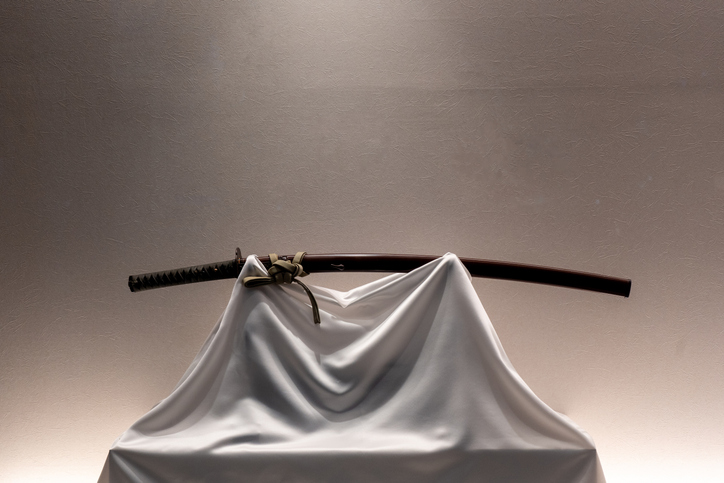
What happened to the Honjo Masamune? (Credit: Brian Kennedy via Getty Images)
For centuries, the Honjo Masamune was considered one of Japan’s greatest swords. Forged by the celebrated swordsmith Goro Nyudo Masamune around the turn of the fourteenth century, it eventually became a treasured possession of the Tokugawa shoguns. Its reputation rested not just on its extraordinary craftsmanship, but on its place within centuries of Japanese political and military history.
It survived wars, upheaval and changing rulers. Then came 1945. Following Japan’s surrender in the Second World War, the blade was handed over through a Tokyo police station as part of the collection of weapons under Allied occupation. After that, the trail of the Honjo Masamune went cold. Was it destroyed, taken overseas or quietly absorbed into a private collection? Nobody knows. One of Japan’s most celebrated swords simply disappeared into history.
The Jules Rimet Trophy: Football's Greatest Own Goal
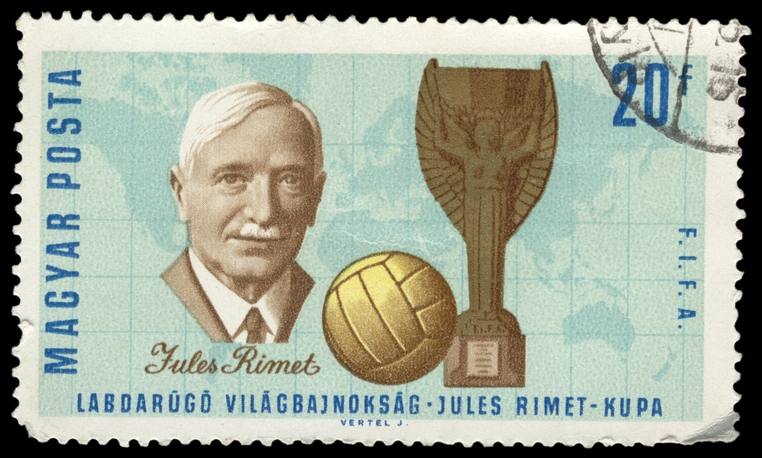
Jules Rimet & his eponymous trophy (Credit: derausdo via Getty Images)
Football’s original World Cup trophy has a history worthy of a detective novel, with two thefts and two very different endings. First stolen in London in 1966, the trophy was famously recovered by a dog named Pickles, who found it wrapped in newspaper beneath a hedge. Crisis averted, and football’s most coveted prize was back where it belonged. But the trophy’s luck eventually ran out.
After Brazil won its third World Cup in 1970, it was awarded permanent ownership. In December 1983, thieves stole it from the Brazilian Football Confederation’s headquarters in Rio de Janeiro. Unlike the 1966 episode, there was no miraculous canine-led recovery. It’s widely believed the trophy was melted down, although that’s never been conclusively proven. A spectacularly unfortunate full-time result.
Vermeer's The Concert: The Empty Frame Mystery

Works by Rembrandt were stolen, and remain missing... (Credit: Thomas Faull via Getty Images)
On 18 March 1990, two men dressed as police officers entered Boston’s Isabella Stewart Gardner Museum, overpowered the security guards and carried out one of history’s most notorious art heists. Thirteen artworks disappeared, including The Concert, a rare masterpiece by Dutch painter Johannes Vermeer. The robbers also made off with works by Rembrandt and Manet, leaving behind empty frames and an enormous unanswered question: where had everything gone?
Despite decades of investigation, the stolen collection remains aloof. The museum continues to display empty frames as reminders of the theft and offers a substantial reward for information leading to the artworks’ recovery. Somewhere, perhaps, one of the world’s most valuable missing paintings is still waiting to be recognised.
How Do Priceless Treasures Simply Disappear?
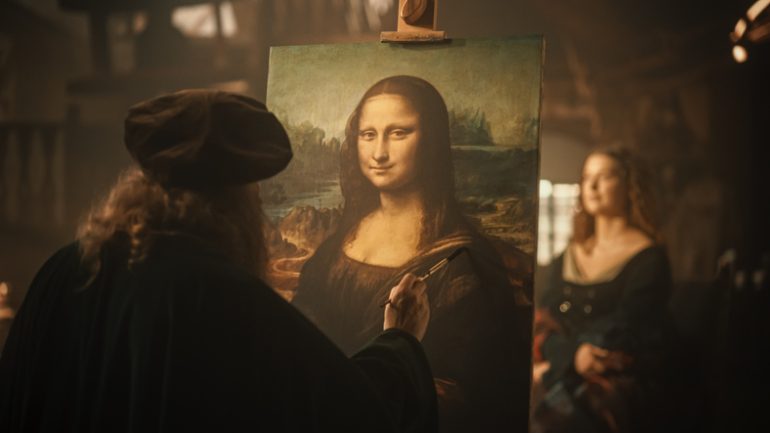
The Mona Lisa was stolen in 1911, and recovered two years later (Credit: gorodenkoff via Getty Images)
You might imagine that famous objects would be almost impossible to lose. Yet history’s repeatedly demonstrated otherwise. Wars scatter collections, destroy records and move objects across borders. Thieves can conceal valuable artefacts for generations, while poorly documented transfers leave investigators chasing phantom names, dates and destinations.
And then there’s the challenge of telling genuine leads from wishful thinking. Every rumoured sighting of a lost masterpiece or long-forgotten treasure brings enormous excitement, but proving an object’s identity is another matter entirely. The result is historical detective work in which even the smallest clue might unlock a mystery decades, or centuries, in the making.
Lost, But Not Forgotten

There is very little people won't attempt to steal... (Credit: Andrew Holt via Getty Images)
From missing masterpieces and royal regalia to ancient fossils and a World Cup trophy, history’s lost-property is remarkable not just for what disappeared, but for how little we sometimes know about what happened next. Some may be hidden in forgotten collections. Others might have been destroyed long ago. And a few could still be waiting in the most unlikely places, just waiting to be discovered once more.