On 21 October 1805, twenty-seven British warships sailed into battle against thirty-three French and Spanish vessels off the coast of Spain. By the time the guns fell silent, the Royal Navy had secured one of the most celebrated victories in British military history.
That’s the familiar story of the Battle of Trafalgar. But beyond the famous commanders, thundering broadsides and heroic last words lies a rather more peculiar collection of stories. From acts of extraordinary bravery to misunderstandings, misfortunes and one particularly ambitious use of brandy, here are some of Trafalgar’s strangest tales.
Nelson Threw Out the Naval Rulebook
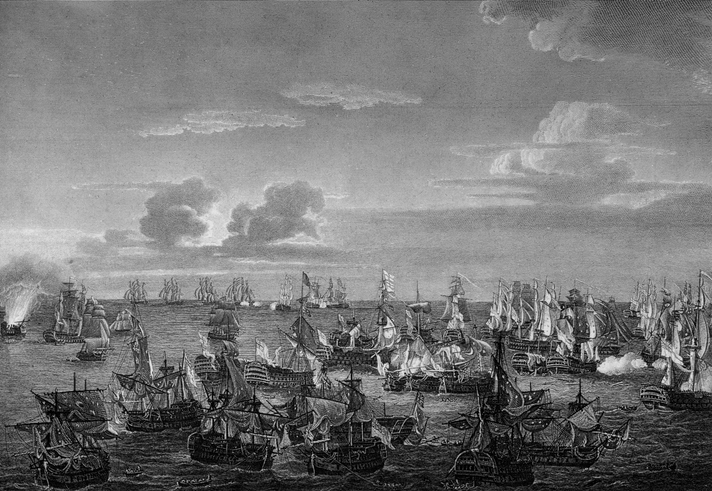
An engraved illustration image of the Battle of Trafalgar (Credit: TonyBaggett via Getty Images)
In the early nineteenth century, naval battles generally followed a well-established pattern. Two opposing fleets formed long, parallel lines and exchanged devastating attacks, or “broadsides,” until one side gained the upper hand. It was conventional, relatively predictable, and exactly the sort of encounter Nelson wanted to avoid.
Outnumbered by thirty-three ships to twenty-seven, the British admiral had a different idea. Rather than matching the French and Spanish line, he would send his fleet forward in two columns, cutting through the enemy formation at right angles. Once the line was broken, the British could isolate its centre and rear, surrounding individual vessels before neighbouring ships could come to their assistance.
It was an audacious plan, and not without considerable risk. Approaching head-on meant that British ships would be exposed to enemy broadsides before their own guns could fire effectively. Nelson was gambling that his better-trained crews would make the difference once the fleets became entangled in close combat.
The gamble worked. The enemy formation was broken, and the ensuing chaos played directly into British hands. But getting close enough to put the plan into action proved rather more difficult than Nelson had anticipated.
The Battle That Almost Ground to a Halt
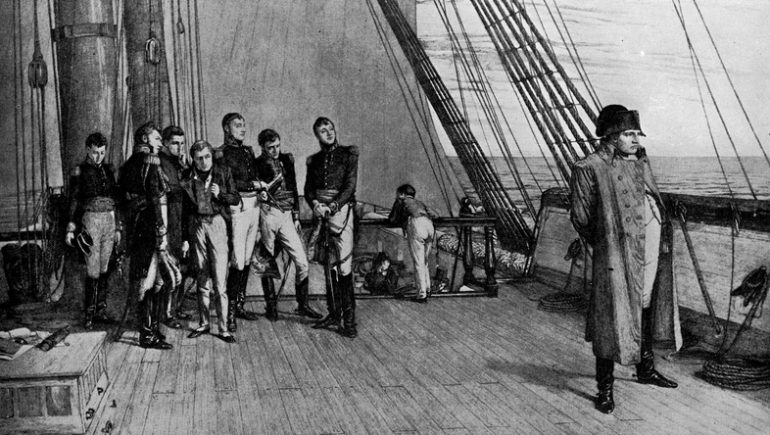
Napoleon Bonaparte, Lord Nelson's arch-enemy (Credit: powerofforever via Getty Images)
Nelson had devised an aggressive attack designed to overwhelm his opponents. Unfortunately, nobody had consulted the wind. As the British fleet advanced towards the Franco-Spanish line, the breeze dropped to almost nothing. So, instead of surging towards the enemy at speed, Nelson’s ships crept forward at little more than walking pace. For vessels facing dozens of heavily armed warships, this was a particularly unpleasant predicament.
The British crews could do little but endure the incoming cannon fire as they slowly closed the distance. Their most powerful broadside guns were largely useless until they could turn their ships so the guns were pointing at the enemy, or “bring them to bear,” leaving the sailors exposed during an agonising approach.
Yet amid the mounting tension, there was an unexpectedly ordinary detail. Many British sailors ate an early lunch as they prepared for battle. With one of history’s most famous naval encounters about to begin, there was apparently still time for a meal. It was an oddly normal moment before the extraordinary events, and one of the many reminders that life aboard a warship could be a strange mix of day-to-day routine and mortal danger.
The Ship That Saved Nelson's Victory
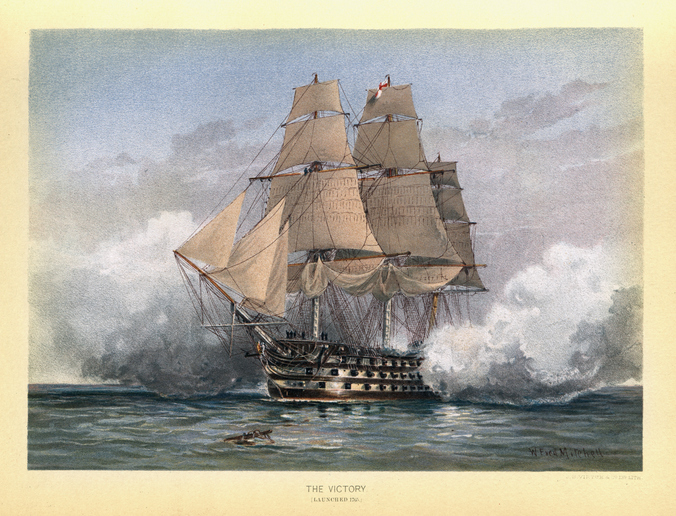
HMS Victory, Lord Nelson's flagship at the Battle of Trafalgar (Credit: duncan1890 via Getty Images)
For a vessel bearing such a triumphant name, HMS Victory came alarmingly close to disaster during the battle. As the fighting intensified, the French warship Redoutable drew alongside Nelson’s flagship. Under Captain Jean-Jacques Lucas, the French crew had undergone extensive training in musketry and boarding tactics, making them formidable opponents in close-quarters fighting. With the two ships locked together, French sailors prepared to board Victory. The British flagship was in serious danger of being overwhelmed, and the consequences could have been disastrous.
Fortunately, HMS Temeraire was close at hand. Commanded by Captain Eliab Harvey, Temeraire came to Victory’s aid, pouring devastating cannon fire into Redoutable and helping to frustrate the French boarding attempt. And because one enemy warship apparently wasn’t enough, Temeraire also found herself fighting another French vessel, Fougueux.
What followed was a ferocious struggle involving four entangled ships, collapsing masts, musket fire and boarding parties. Both Redoutable and Fougueux eventually surrendered, and Victory survived thanks in no small part to Temeraire’s intervention. The ship’s actions would earn her a distinguished place in naval history, although her final journey, more than three decades later, would become almost as famous.
The Most Polite Failed Capture in Naval History?
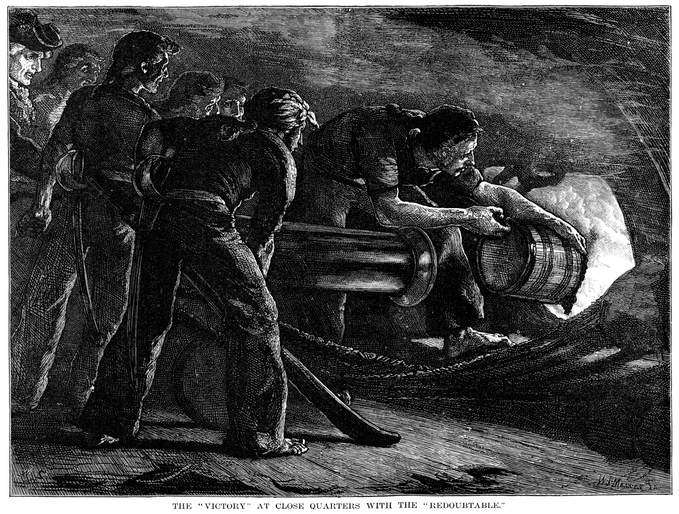
British gunners at Trafalgar (Credit: duncan1890 via Getty Images)
There were plenty of misunderstandings during the smoke-filled confusion of Trafalgar. Few, however, can have been quite as awkward as the encounter between HMS Africa and the enormous Spanish warship Santísima Trinidad. Captain Henry Digby of the Africa believed that Santísima Trinidad had surrendered. Naturally, he decided to claim his prize, sending Lieutenant John Smith aboard the Spanish vessel to take possession.
There was just one small problem. The Spaniards hadn’t surrendered at all. They were still very much involved in the battle. Smith had effectively walked aboard an enemy warship, and announced he was there to accept a surrender nobody had agreed to.
Under the circumstances, things could have ended very badly indeed for poor Lieutenant Smith.
However, in an act of true magnanimity the Spanish officers didn’t have their men attack Smith. Instead, it’s reported that they simply explained the misunderstanding to the British Lieutenant and, having clarified the situation, they allowed him to leave unharmed.
Smith returned to his own ship, and the opposing crews resumed trying to destroy one another. Considering the ferocity of the fighting, it was an extraordinary display of courtesy and generosity. Apparently, even amid the cannon fire and carnage of Trafalgar, there was still room for good manners.
Trafalgar's Youngest and Oldest Fighters
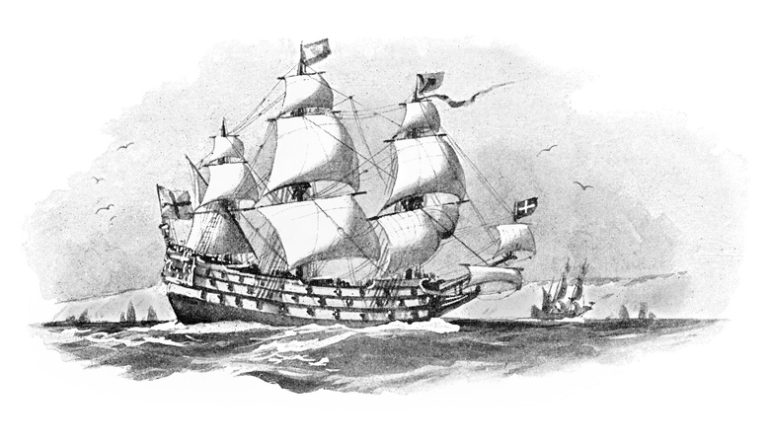
HMS Royal Sovereign, Admiral Collingwood's flagship at the Battle of Trafalgar (Credit: mikroman6 via Getty Images)
The British sailors who fought at Trafalgar were hardly a uniform collection of experienced, battle-hardened crews. In fact, the ages of some participants would seem astonishing by modern standards. Probably the youngest was Thomas Wilcott, an eight-year-old serving as a third-class boy aboard HMS Neptune. Eight. An age when most children today are navigating primary school, rather than serving aboard a wooden warship exchanging cannon fire with an enemy fleet. At the opposite end of the spectrum was John Adams, aged sixty-eight, who served aboard HMS Royal Sovereign. An extraordinary sixty years separated the two, yet both were present during one of the fiercest naval engagements of the Napoleonic Wars.
The Woman Trafalgar Forgot
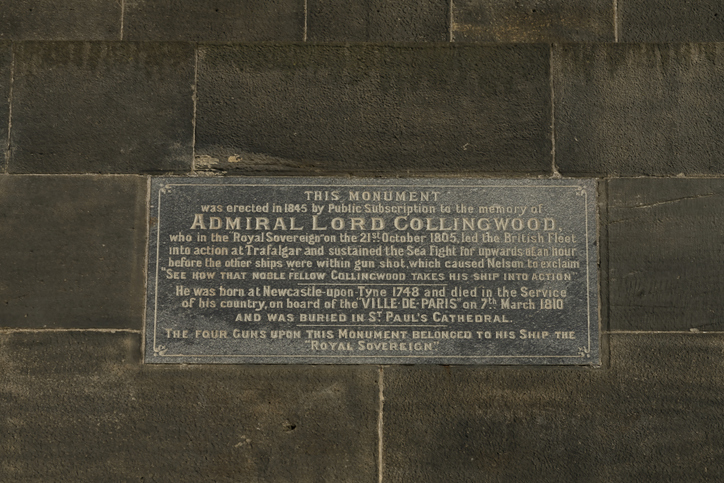
Collingwood became famous, but Jane Townshend was unfairly forgotten (Credit: Alphotographic via Getty Images)
Not everyone who served at Trafalgar received recognition. Take the remarkable case of Jane Townshend. Townshend was aboard HMS Defiance during the battle, making her an unusual and largely overlooked figure in the history of the Royal Navy. Decades later, she applied for a campaign medal recognising her involvement. Importantly, her claim had the backing of her former captain, who supported her application. Nevertheless, the request was rejected.
While the names of Nelson, Collingwood and other senior commanders became firmly established in the national memory, Townshend’s experience tells a different story. Her unsuccessful application reveals just how unevenly the recognition of military service could be distributed. It also raises an interesting question: how many other people who witnessed or contributed to Britain’s great naval victories have all but disappeared from history?
Winning the Battle Was Only Half the Trouble
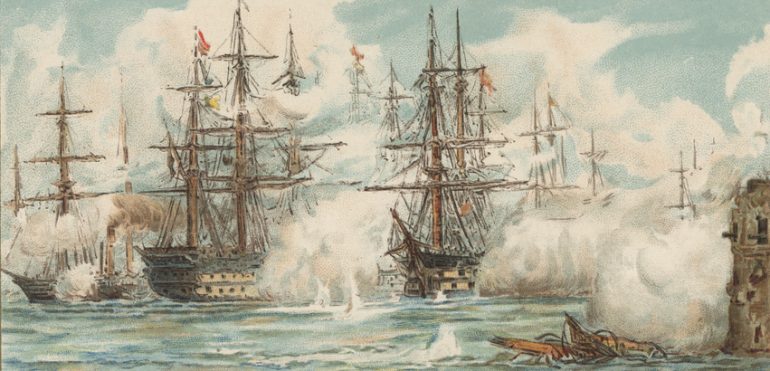
Many ships in Nelson's fleet were badly damaged (Credit: RockingStock via Getty Images)
By the end of 21 October, the British had won a decisive victory. But the surviving crews were about to discover that defeating the French and Spanish fleets was one thing. Surviving the weather was quite another.
In the days following Trafalgar, a violent storm swept across the waters off the Spanish coast, battering ships already badly damaged by hours of cannon fire. Many vessels had lost their masts and rigging, leaving them almost impossible to control. Others were taking on water, while captured French and Spanish ships presented a particularly difficult problem. British crews were attempting to keep the captured ships afloat, manage thousands of prisoners and prevent the helpless vessels from being driven onto the coast. The result was a second catastrophe unfolding in the wake of the first.
Ships that had survived the battle were wrecked or abandoned, while sailors who had escaped enemy fire found themselves at the mercy of towering seas. According to some estimates, the storm and its aftermath caused almost as many deaths as the fighting itself. It was a cruel twist. Britain had won one of the greatest victories in its naval history, only for the weather to threaten much of what remained of the battered fleets.
When Enemies Became Rescuers
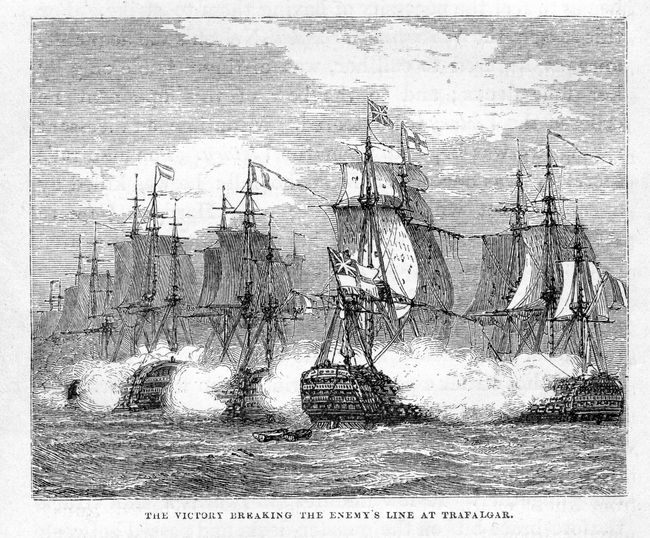
Despite the brutality of battle, there were remarkable acts of humanity (Credit: duncan1890 via Getty Images)
For all the brutality of Trafalgar, the days that followed also produced remarkable acts of humanity. As the storm intensified, British sailors risked their lives by taking small boats into the treacherous seas to rescue French and Spanish prisoners trapped aboard sinking vessels. These were the same men they’d been fighting only hours earlier. Yet with ships breaking apart and crews facing almost certain death, the immediate priority became saving whoever could be reached.
Some vessels were barely afloat by the time their occupants escaped. Rescue parties had to contend with violent waves, damaged ships and the constant danger of their own boats being overwhelmed. And the generosity was not entirely one-sided. When British survivors were washed ashore along the Spanish coast, local civilians helped them, with accounts describing gratitude for the efforts made to save Spanish sailors.
It was an extraordinary reversal of circumstances. Men who had recently been trying to sink one another’s ships were now relying on their former enemies for survival. War had made them opponents. The storm gave them rather more pressing concerns.
Getting Out of a Pickle
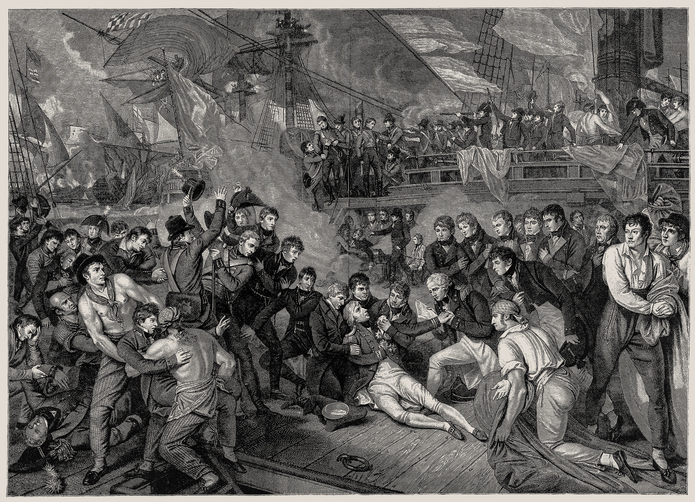
The Pickle carried the news of Nelson's death back to Britain (Credit: Nastasic via Getty Images)
Amid the great ships of the line and their towering masts, one of Trafalgar’s most memorable vessels was something of a minnow. Her name? HM Schooner Pickle. At roughly one-seventeenth the volume of Nelson’s flagship Victory, Pickle was tiny compared with the mighty warships dominating the battle. But what she lacked in size, she more than made up for in usefulness.
During the desperate rescue operations after Trafalgar, the little schooner helped save sailors from the storm-battered wrecks. With the larger ships severely damaged and struggling to remain afloat, smaller vessels such as Pickle played a crucial role.
Then came an even more significant assignment. For it was the diminutive Pickle which was entrusted with carrying news of the British victory, and Nelson’s death, back to Britain. After battling the rough seas, she finally reached Falmouth on 4 November 1805.
It was an extraordinary responsibility for such a small vessel. While enormous warships had decided the battle, it fell to a humble schooner with a distinctly unheroic name to bring home the news.
An unlikely messenger for one of Britain’s most important naval victories.
HMS Victory Needed a Lift Home
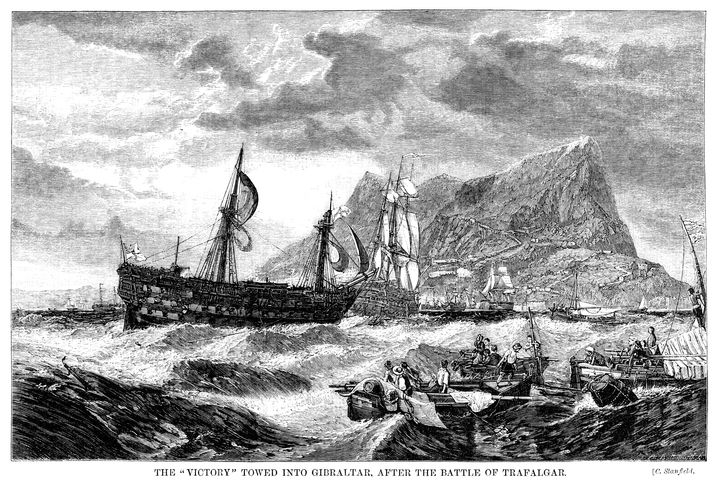
A damaged HMS Victory being towed into Gibraltar (Credit: whitemay via Getty Images)
Having narrowly avoided capture during the fighting, Nelson’s flagship still faced the considerable challenge of getting home. HMS Victory had emerged from Trafalgar in a dreadful condition. Her masts and rigging were badly damaged, her hull had suffered heavily, and scores of her crew were dead or wounded. The ship that had led Britain’s triumphant attack could scarcely sail under her own power. Instead, Victory had to be towed to Gibraltar, where she arrived on 28 October 1805 for repairs.
And her long association with brushes against disaster didn’t end there. In the decades that followed, the ageing warship repeatedly faced the prospect of being broken up. In 1854, she survived sinking in Portsmouth Harbour before being raised again, while further threats and near-disasters marked her existence into the early twentieth century.
For a ship that became perhaps the most recognisable symbol of British naval success, Victory has spent a remarkable amount of time trying to avoid catastrophe. Her name was certainly appropriate. Getting to keep it was another matter.
Nelson's Final Voyage in a Barrel of Brandy
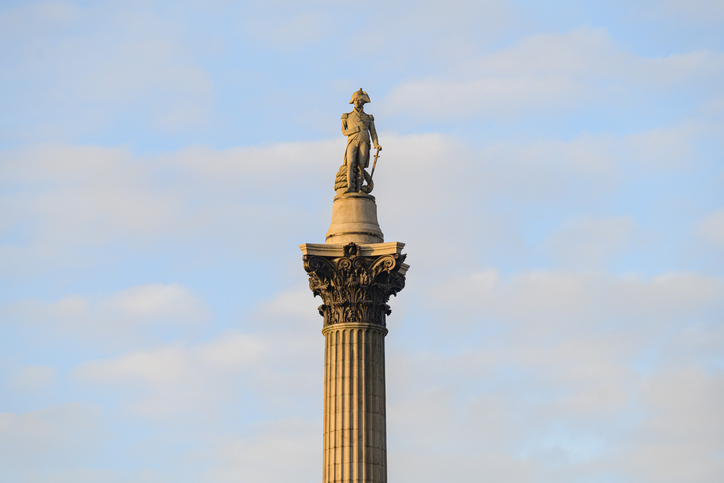
Nelson was deservedly granted a state funeral (Credit: JohnnyGreig via Getty Images)
Of all the unusual stories surrounding Trafalgar, few are quite as macabre as the arrangements made for Nelson’s final journey. After the admiral died aboard Victory, the ship’s surgeon, William Beatty, faced a rather delicate problem. Nelson’s body needed to be preserved during the long voyage back to Britain, but conventional refrigeration was, of course, out of the question. The solution was practical, if somewhat unsettling. Nelson’s remains were placed inside a large cask filled with brandy.
It was certainly an unconventional way for Britain’s greatest naval hero to make his final voyage, and the arrangement soon became the subject of an enduring piece of naval folklore. According to the tale, sailors secretly drank the alcohol surrounding Nelson’s body, helping themselves to the contents of the cask during the journey home. This macabre story probably belongs more to maritime myth than historical fact, though what is certain is that Nelson’s remains eventually reached Britain and the admiral received an elaborate state funeral in January 1806.
The Fighting Temeraire's Final Curtain
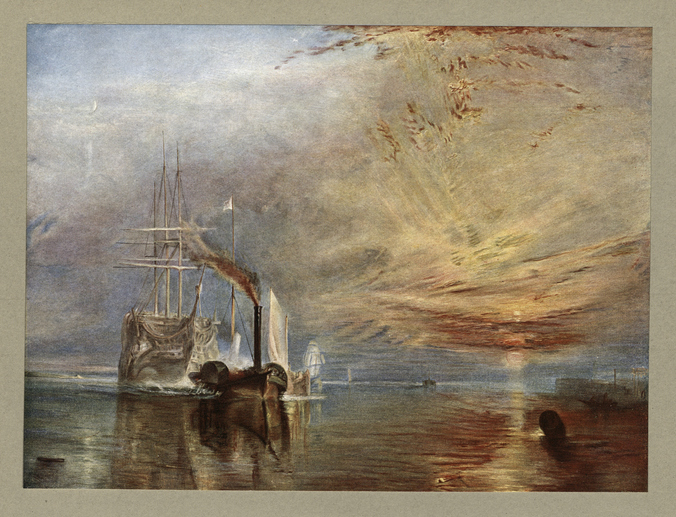
The Fighting Temeraire, by JMW Turner (Credit: duncan1890 via Getty Images)
Remember HMS Temeraire, the warship whose intervention helped save Victory from the French? Her extraordinary story didn’t end with Trafalgar. Having earned a reputation for her actions against Redoutable and Fougueux, Temeraire continued to serve the Royal Navy in various capacities for decades.
But by 1838, her fighting days were long behind her. The once-formidable warship was sold for breaking up, and the ageing vessel was towed along the River Thames towards Rotherhithe, where she would be dismantled. It was a melancholy final journey for a ship that had once helped decide the fate of nations. And it caught the imagination of one of Britain’s greatest painters.
J. M. W. Turner immortalised the scene in his celebrated painting The Fighting Temeraire, depicting the magnificent old sailing ship being pulled towards her final destination by a small steam tug. The contrast was unmistakable. Here was a veteran of the age of sail, once among the most powerful fighting machines afloat, being led away by the technology that would eventually help make such vessels obsolete.
Turner’s painting became one of the most recognisable images in British art, capturing both the ship’s extraordinary history, and the passing of an entire era of maritime technology. Temeraire had survived one of history’s fiercest naval battles. In the end, it was the march of time that brought her story to a close.
Trafalgar's Strangest Victory
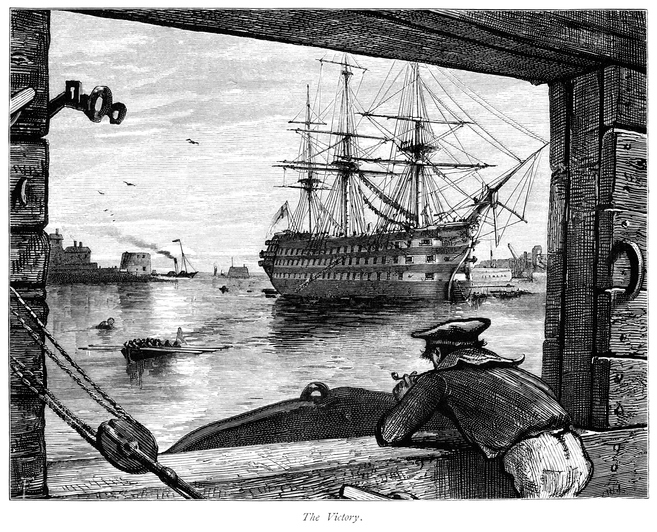
The legendary HMS Victory at Portsmouth (Credit: whitemay via Getty Images)
For all its carefully planned tactics, Trafalgar was a battle shaped as much by carnage, courage, confusion and sheer luck as by the decisions of its commanders. More than two centuries later, the great ships, monuments and works of art still remember the famous encounter. Yet sometimes it’s the smallest details, the strangest stories, and the most unlikely characters that tell us the most about the momentous events.