Ask four people to plan the holiday of a lifetime and you’ll probably get a cacophony of different answers. Ask four AI assistants, and things become rather more interesting. We gave ChatGPT, Mistral, DeepSeek and Claude the same challenge: build the ultimate seven-stop world tour, starting and finishing in Europe.
There was room for ancient wonders, extraordinary landscapes and memorable meals, with generous time and money to play with. What came back? Fjords, food markets, mountain trails and a few geographical hiccups.
So, where did the machines send us, and which journey would we actually want to take?
The Brief: An Entire Planet in Seven Stops

The Colosseum, Rome (Credit: Anton Aleksenko via Getty Images)
Choosing seven destinations sounds straightforward until you remember how much world there actually is. Every place needed to earn its position, contributing something different to a journey that jumbled together an array of cities, scenery, history, culture and food.
We also asked for a logical route – not travelling forward and back at random and spending most of the trip in a cramped plane watching B-list movies. The route had to avoid unnecessary detours and tangents, and deliver a balance between hectic destinations to blow the mind and somewhere a little more picturesque to catch our breath.
This wasn’t supposed to become seven beaches or an extended queue outside famous museums. With budget and travel time generously supplied, the challenge was deciding what deserved a place. Apparently, even artificial intelligence finds some landmarks difficult to resist.
ChatGPT: From Icelandic Geysers to Roman Gelato
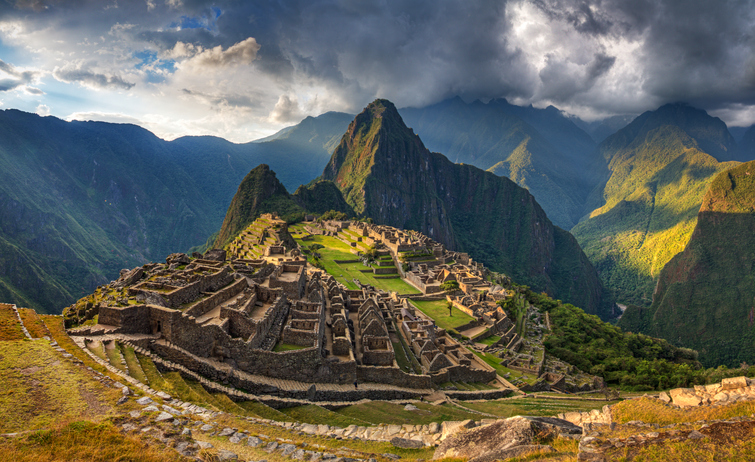
The Inca terraces of Machu Picchu in Peru (Credit: traumlichtfabrik via Getty Images)
The route: Reykjavík → New York → Machu Picchu → Kyoto → Queenstown and Milford Sound → Cape Town → Rome.
ChatGPT opened with Iceland’s geothermal landscapes before exchanging wide horizons for Manhattan’s crowded skyline. From there, Inca terraces gave way to Kyoto’s shrines, followed by New Zealand’s mountains and waterfalls. Cape Town brought coastline, Table Mountain and nearby winelands, before Rome supplied the final helping of history. And pasta, naturally.
This was a particularly varied answer, with each stop trying to feature something different. Overall, it’s clear the plan was trying to deliver all the big hitters, not hidden gems. This was a list of iconic travel destinations that focused on tried and trusted famous locations. Not a bad attempt necessarily, but felt a little like taking seven different holidays and shoving them in the same backpack.
Questionable Choices: The leap from Peru to Japan and then down to New Zealand did, however, make the Pacific leg look rather ambitious…
Mistral: The Familiar Favourites
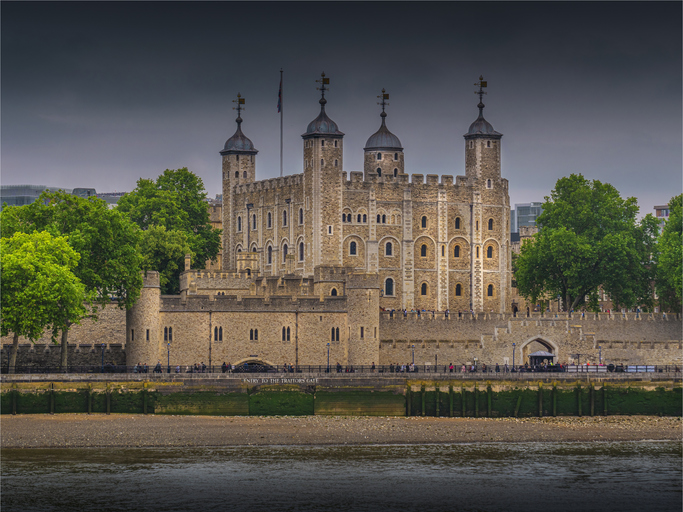
The Tower of London (Credit: Southern Lightscapes-Australia via Getty Images)
The route: London → Marrakech → Kyoto → Queenstown → Cusco and Machu Picchu → New York → Santorini.
Mistral began close to home, with London’s royal landmarks, museums and theatre. Marrakech then replaced afternoon tea with souks, gardens and palace courtyards, before Kyoto introduced temples and traditional culture. Its middle stretch paired Queenstown’s adventure activities with Peru’s Inca heritage, followed by Broadway and Central Park. Finally, Santorini offered caldera views, island wines and a chance to stop moving. Familiar choices? Certainly. But their sequence had appeal: city bustle, cultural exploration, outdoor adventure and a scenic finish.
While this itinerary seemed determined to send us home with a full camera roll, overall it felt like the safest travel plan of the four. There’s not much here that would really push the boundaries or bring that unique sense of discovery, but equally there’s very little you’d be disappointed by if you found yourself toddling around the destination. It’s a greatest-hits compilation: famous cities, famous sights, some spectacular scenery. Perhaps a little predictable, but there’s something to be said for not overthinking it…
Questionable Choices: The actual route was a little less convincing than the destinations themselves. Flying from Kyoto to New Zealand, then across the Pacific to Peru and onwards to New York creates a fairly hefty zig-zag around the globe.
Claude: Mountains, Monuments and More Mountains
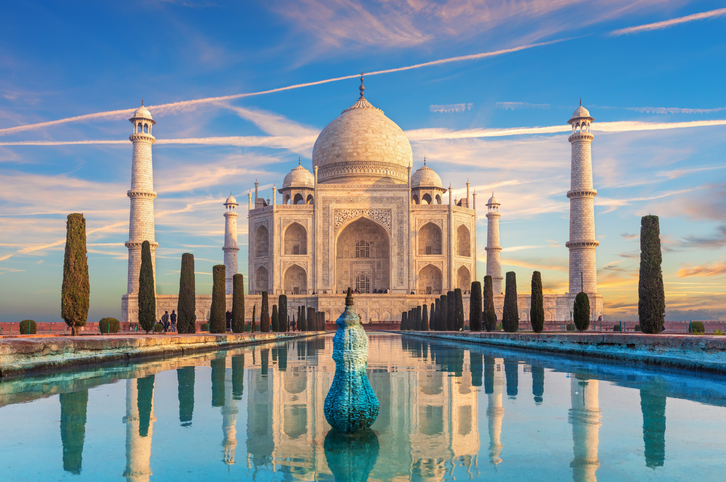
The Taj Mahal in Agra, India (Credit: Anton Aleksenko via Getty Images)
The route: Istanbul → Egypt → Rajasthan and Agra → Nepal → New Zealand’s South Island → Cusco, the Sacred Valley and Machu Picchu → Iceland.
Claude went big. Istanbul’s imperial landmarks led to the pyramids and Nile, then India’s palaces and the Taj Mahal. Nepal introduced Himalayan trekking before New Zealand added fjords and adventure sports. Peru continued the combination of mountains and archaeology, while Iceland closed proceedings with glaciers, waterfalls and geothermal scenery.
This was pretty ambitious, which we like. It’s certainly the trip most likely to require a decent pair of walking boots. Claude clearly went for more of a ‘theme’ holiday: dramatic landscapes, ancient civilisations and places that lean towards mountains, big scenery and a good trek. Relaxing, it’s not.
Questionable Choices: Claude probably stretched the rules a little by trying to bundle lots of things into single ‘stops’ – Cairo, Giza and Luxor; Rajasthan and Agra; Cusco, the Sacred Valley and Machu Picchu. Technically seven stops, perhaps. But maybe a little cheaty.
DeepSeek: Following Its Appetite

Sunset at Turtle Bay, Oahu (Credit: Chiara Salvadori via Getty Images)
The route: Marrakech → Istanbul → Delhi and Agra → Bangkok → Tokyo → Honolulu and Oahu → Lisbon.
DeepSeek’s answer had a particularly strong appetite. Its itinerary wandered from Moroccan food stalls to Turkish meze, Delhi’s parathas, Bangkok’s street food and Japanese dining, eventually reaching Lisbon’s custard tarts. Along the way came the Taj Mahal, Tokyo’s Shibuya Crossing and Hawaiian volcanic scenery, with Oahu providing the main opportunity to swap crowded streets for beaches and laid-back vibe.
In reality though, this felt less world tour and more like someone with a friend who’s an Asian-Pacific travel specialist with a random good deal on a Marrakech hotel for good measure. South America disappeared completely, as did most of Africa, while Australasia never got a look in. Portugal at the end seemed like a perfectly random afterthought.
Questionable Choices: Hawaii to Lisbon is quite the ambitious finale: around 8,000 miles and probably the best part of 20 hours on a plane, with no direct flight. That’s less a final hop and more another holiday in itself.
The Places AI Couldn’t Leave Out

Breidavik Church in Iceland (Credit: Noppawat Tom Charoensinphon via Getty Images)
Across the four answers, certain destinations kept reappearing. ChatGPT, Mistral and Claude all included New Zealand and Machu Picchu, making fjords and Inca stonework something of an unofficial double act.
Japan also featured in three responses: Kyoto for ChatGPT and Mistral, Tokyo for DeepSeek. Although as locations, they’re pretty different: Kyoto supplies shrines, gardens and tradition; Tokyo brings fast-living, fabulous food and fancy fashion. Iceland appeared twice too, opening ChatGPT’s trip and closing Claude’s.
These double- and triple-ups probably show that, in this small experiment at least, the assistants often parrot each other. A mountain backdrop was good. A mountain backdrop with archaeology? Better still.
More Than a Collection of Postcards
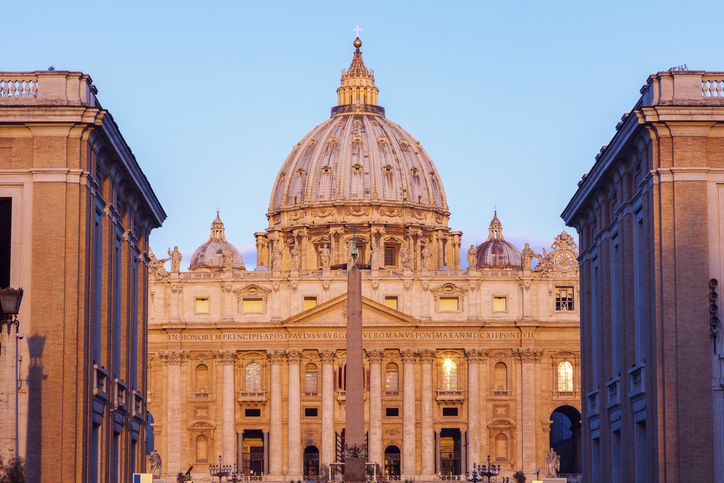
St. Peter's Basilica, Vatican City (Credit: benkrut via Getty Images)
Somewhat reassuringly, the most appealing ideas of these AI-generated itineraries often came between the headline attractions. Claude suggested a Turkish breakfast and dal bhat in Nepal; DeepSeek made room for a riad courtyard in Marrakech and a cooking class in Thailand.
ChatGPT’s Rome included neighbourhood wandering, while Mistral ended with Santorini’s wines as well as its views. These touches matter because a world tour needs to bring something a little unique rather than a package holiday on steroids.
Map Reading Issues?
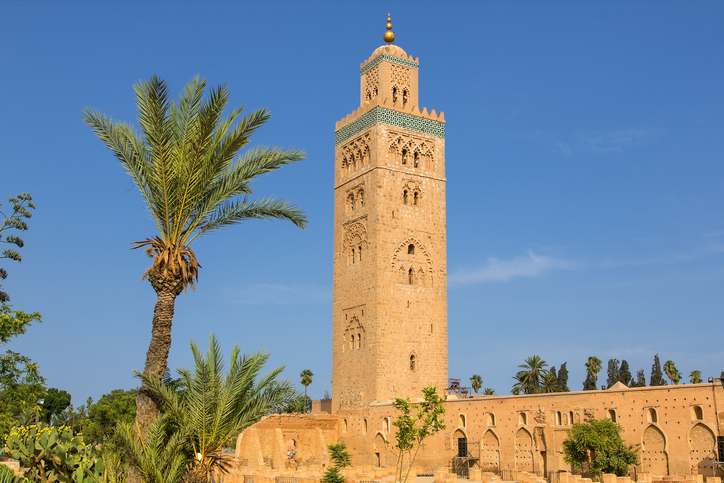
Koutoubia Mosque, Marrakech, Morocco (Credit: Sylvain Sonnet via Getty Images)
All good holidays have people staring blankly at maps before confidently striding off in the wrong direction, and these travel plans were no different. DeepSeek described its journey as westward, although its sequence from Marrakech through Istanbul, India, Thailand and Japan heads broadly east. It also insisted that the tour started in Europe.
Mistral, meanwhile, claimed four continents despite choosing destinations across six. Likewise, arrows between destinations don’t always deliver convenient flights. Little regard was given to whether these plans were in any way practical and their neat presentation wasn’t proof that connections would be equally neat.
Which Tour Would We Choose?
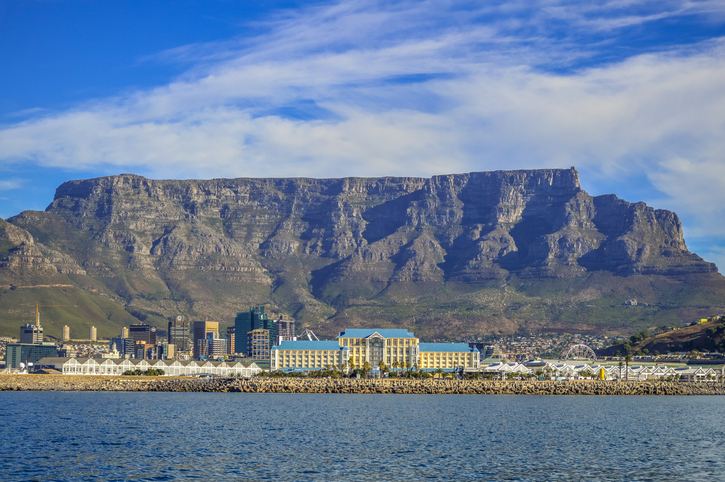
Table Mountain in Cape Town, South Africa (Credit: Shams via Getty Images)
For our brief, ChatGPT’s answer gets the editorial nod for variety. Volcanic Iceland, New York’s bustle, Andean archaeology, Kyoto’s shrines, New Zealand’s wilderness, Cape Town and Rome. That feels like a satisfying succession of changes.
Mistral offers a strong alternative, particularly for anyone wanting a gentler island finale. Claude’s route is tempting for travellers drawn to trekking, while DeepSeek’s would appeal to those who plan lunch before anything else. There’s no objective winner here, and this doesn’t really tell us whether any of them would make a decent travel agent. But they could probably produce a nice brochure.
Around the World, With a Little Human Help
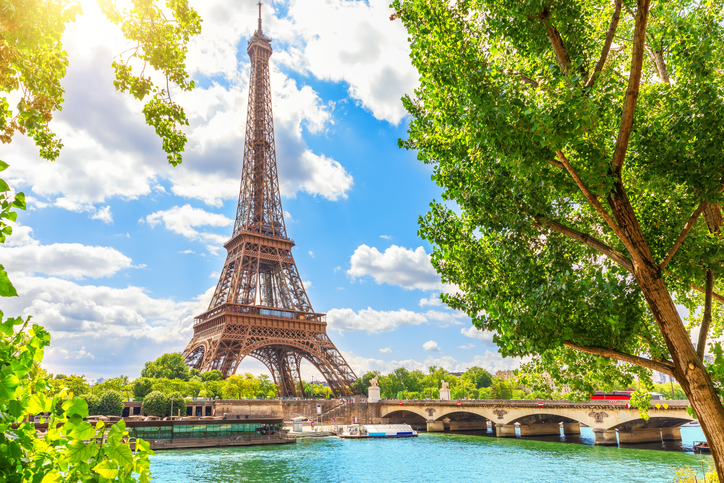
The Eiffel Tower, Paris, France (Credit: Anton Aleksenko via Getty Images)
So, did AI find the ultimate world tour? It found several ambitious options, plus a reminder that even a computer can misread a map. You could happily borrow ideas from all four. As for handing over the entire journey? Probably still needs a little homosapien intervention. And a compass.