Fame has a habit of opening doors. For some famous figures, however, the preferred response was to close them again, lock them firmly, and keep the outside world at arm’s length. Across literature, film, art and business, a surprising number of celebrated names became known almost as much for their absence as their achievements.
Some withdrew because of illness or overwhelming attention. Others simply valued privacy above publicity. A few became so elusive that rumour rushed in to fill the silence. From shuttered bedrooms to remote country homes, these are the famous figures who mastered the art of disappearing.
Emily Dickinson: The Poet Who Shut the Door
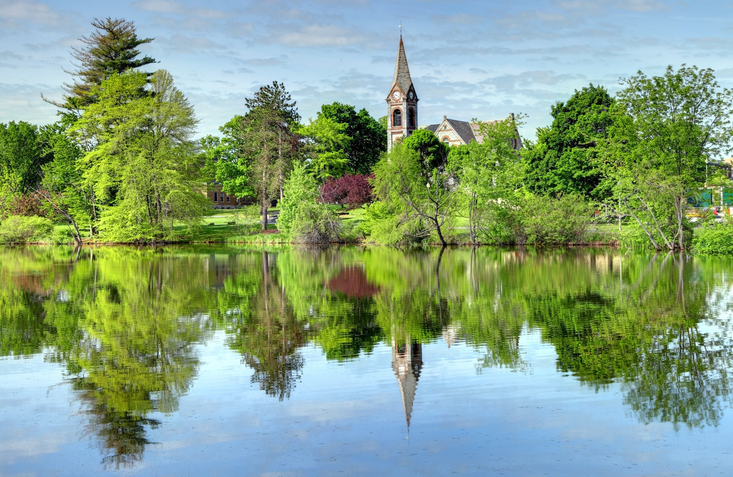
Emily Dickinson spent much of her life in Amherst, Massachusetts (Credit: DenisTangneyJr via Getty Images)
Emily Dickinson spent most of her life in Amherst, Massachusetts, but as she grew older, her world became increasingly concentrated around the family home. She rarely ventured beyond its grounds, and visitors could sometimes find themselves conversing with the poet from another room rather than face to face.
Yet isolation didn’t mean silence. Dickinson maintained friendships through an enormous correspondence and produced nearly 1,800 poems, most unpublished during her lifetime. Her retreat has since become inseparable from her legend: the brilliant poet, quietly observing life from a distance. The image has been romanticised over time, but the privacy itself was very real.
Henry Cavendish: Science Without the Small Talk
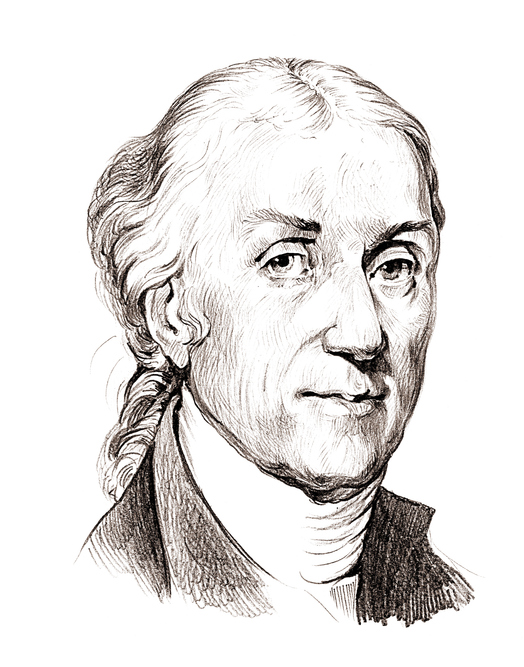
Henry Cavendish (1731 - 1810) (Credit: denisk0 via Getty Images)
English scientist Henry Cavendish had one rather considerable problem with society: he apparently preferred avoiding it whenever possible. Born in 1731, the wealthy physicist and chemist became renowned for discoveries including his work on hydrogen and his extraordinarily accurate experiment measuring the Earth’s density. Social interaction, however, was another matter entirely.
Cavendish was profoundly shy and uncomfortable around people, although he remained active in scientific organisations including the Royal Society. His reputation for withdrawal became almost as remarkable as his experiments. It’s an intriguing contradiction: a man devoted to discovering how the physical universe worked while apparently having rather less enthusiasm for chatting to the people inhabiting it.
Marcel Proust: Life Inside a Cork-Lined Room
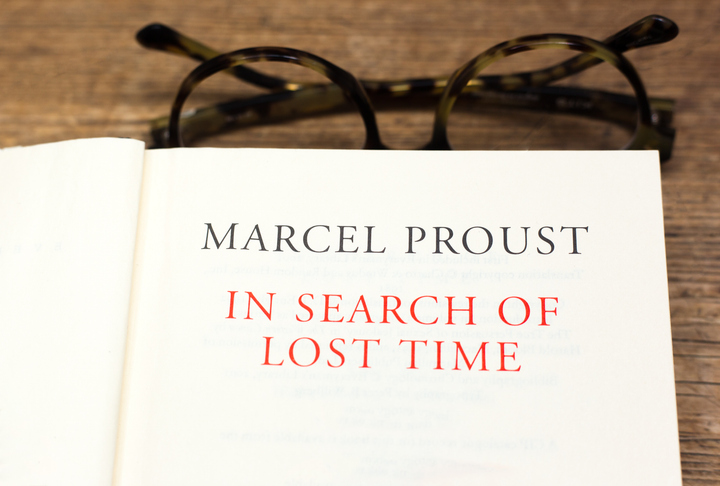
Marcel Proust, In Search of Lost Time (Credit: JannHuizenga via Getty Images)
Marcel Proust turned staying indoors into literary history. The French author suffered seriously from asthma and increasingly spent his time inside, sleeping during the day and working through the night. His bedroom was protected from outside noise with cork tiles, while windows could be sealed to reduce exposure to pollen.
From bed, Proust worked on In Search of Lost Time, his monumental exploration of memory, society, desire, and the strange ways the past remains inside us. While physically withdrawing from contemporary Paris, he built an enormous fictional universe from remembered people, places and conversations. As his outside world shrank; the one on his pages expanded.
Greta Garbo: Hollywood’s Great Disappearing Act
Garbo's privacy was almost as legendary as her screen performances (Credit: seamartini via Getty Images)
Greta Garbo became one of Hollywood’s biggest stars before doing something almost unimaginable: she simply stopped. After making her final film in 1941, aged just 36, Garbo retired from acting and spent the remaining decades of her life largely outside the entertainment industry.
Her privacy became almost as famous as her films. Yet the familiar image of Garbo as a total hermit needs a little adjustment. She continued walking around New York and maintained friendships; what she largely rejected was publicity, interviews, and Hollywood’s relentless appetite for access. She didn’t necessarily want no contact with other people. She just wanted privacy. Unfortunately, being mysterious only made everyone more curious and left a vacuum for rumour and conjecture to fill.
J.D. Salinger: Catcher in the Hideaway
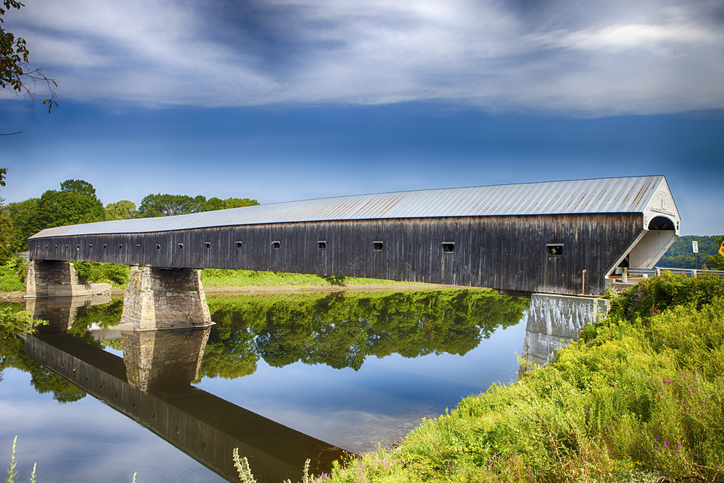
JD Salinger settled in the solitude of Cornish, NH (Credit: traveler1116 via Getty Images)
When The Catcher in the Rye became a sensation in 1951, J.D. Salinger received the sort of attention most writers can only dream about. Yet for the writer himself, he increasingly regarded it as more of a nightmare.
Salinger settled in Cornish, New Hampshire, and gradually withdrew from the literary publicity machine. His final published work appeared in The New Yorker in 1965, but he continued writing privately for decades afterwards. His son Matt has described a disciplined routine in which Salinger rose early and worked in a studio near the family home. For a writer famous for describing alienation, disappearing from public view became an unusually fitting choice.
Howard Hughes: The Billionaire Behind Sealed Doors

Howard Hughes spent four years inside his Las Vegas hotel suite (Credit: Jorg Greuel via Getty Images)
Howard Hughes had once been the opposite of hidden. He was an aviation pioneer, businessman, film producer, record-breaking pilot and celebrity whose glamorous relationships constantly attracted attention. Then came an extraordinary transformation. He simply withdrew from the world.
By the time Hughes reached Las Vegas in 1966, he’d already spent years in isolation. He moved into the Desert Inn and remained inside his suite for four years without once leaving it, conducting enormous business deals from behind closed curtains and sealed doors.
His seclusion was bound up with chronic pain, drug dependency, declining health and an extreme fear of germs. Astonishingly, Hughes could acquire hotels, casinos and huge stretches of property while barely encountering the city he was reshaping.
Huguette Clark: The Heiress Who Left Her Mansions Empty
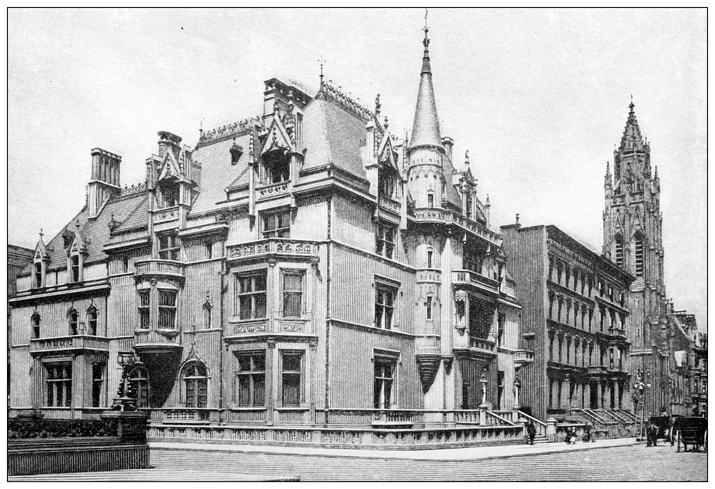
In her early years, Clark lived on Fifth Avenue in Manhattan (Credit: ilbusca via Getty Images)
If you owned magnificent homes in California, Connecticut, and New York, you might reasonably be expected to live in one of them. Huguette Clark took a different approach.
The daughter of immensely wealthy industrialist and politician William A. Clark, she became increasingly withdrawn after her mother died in 1963. Her properties remained meticulously maintained even when she barely used them. After entering a Manhattan hospital for treatment in 1991, Clark stayed in hospital accommodation for roughly two decades, despite recovering from the condition that originally brought her there.
When she died aged 104 in 2011, the mystery surrounding her enormous fortune, empty homes, and extraordinarily private existence suddenly became headline news – while the disputes over her estate that followed only intensified this fascination.
Harper Lee: Fame Without the Fuss
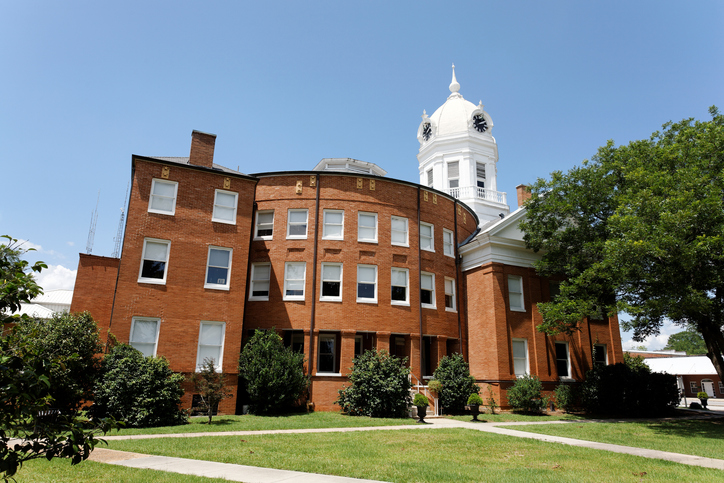
Old Monroe County Courthouse, the inspiration in TKAM (Credit: wellesenterprises via Getty Images)
When To Kill a Mockingbird appeared in 1960, Harper Lee found herself responsible for one of the most successful American novels of the century. She won the Pulitzer Prize, saw her book turned into an acclaimed film and then largely stepped away from the literary spotlight.
Lee divided her time between New York and her hometown of Monroeville, Alabama, rarely giving interviews and repeatedly resisting the role of celebrity author. For decades, readers wondered whether another book would ever appear.
That changed unexpectedly in 2015 with the publication of Go Set a Watchman, an earlier work from the 1950s that had gathered dust for decades. Even then, the questions surrounding Lee’s private life demonstrated just how thoroughly she had kept the public at a distance.
Thomas Pynchon: Literature’s Invisible Man
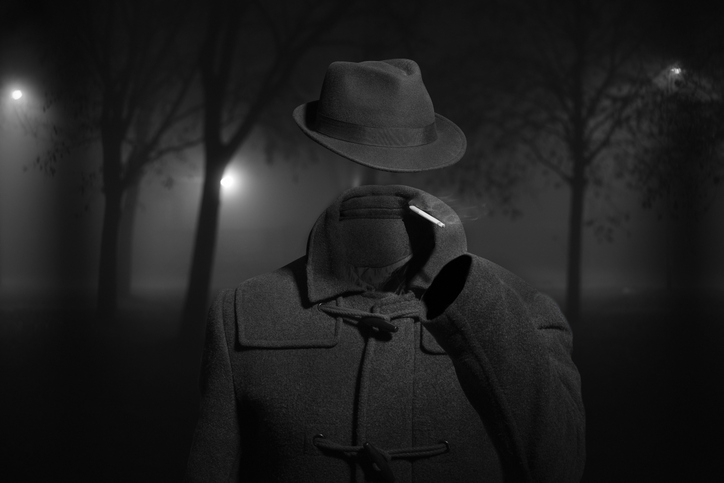
There are almost no published photographs of Thomas Pynchon (Credit: Roy-Ensink via Getty Images)
Thomas Pynchon achieved something unusual in modern publishing: enormous literary fame with remarkably little public visibility. Since the 1960s, the American novelist has avoided the usual machinery of author celebrity, rarely giving interviews and keeping photographs of himself out of circulation.
His absence naturally created its own mythology. Journalists tried to track him down. Readers speculated about his appearance, habits and whereabouts. Pynchon occasionally joined in the joke, most memorably voicing a cartoon version of himself in The Simpsons while the character wore a paper bag over his head.
For an author whose work focused on paranoia, hidden systems and unreliable information, becoming mysterious himself feels almost suspiciously appropriate.
Stanley Kubrick: The Recluse Who Defied Expectations
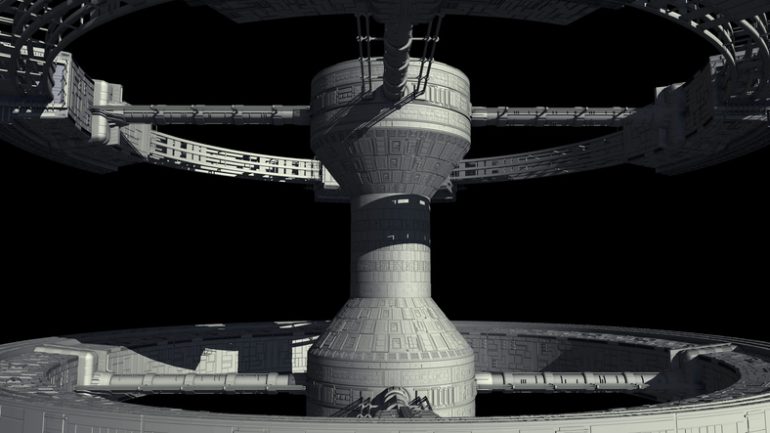
The space station from Kubrick's 2001: A Space Odyssey (Credit: Rhys Taylor/Stocktrek Images via Getty Images)
Stanley Kubrick acquired a reputation as cinema’s great hermit after moving to England and conducting much of his filmmaking from his Hertfordshire home. He avoided Hollywood’s social circuit, rarely gave interviews and could spend years developing a single film.
Yet the image of Kubrick as somebody completely cut off from humanity was never entirely accurate. He worked constantly, maintained long conversations with collaborators and used phones, faxes and couriers to manage productions from a distance.
What he really rejected was celebrity culture. Kubrick wanted enormous control over his work without all the premieres, parties and promotional fuss that usually accompanied it. Less disappearing from life, then, and more keeping the world firmly on his own terms.
Setsuko Hara: Japan’s Vanishing Screen Star
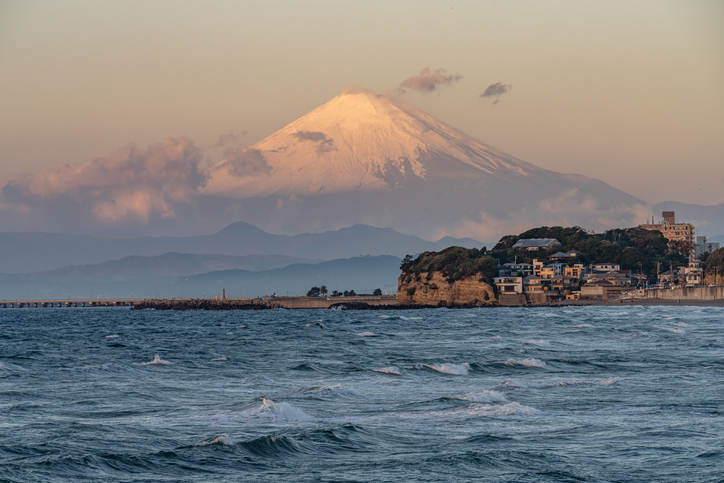
Hara lived quietly in the shadow of Mount Fuji in Kamakura (Credit: Taro Hama @ e-kamakura via Getty Images)
Setsuko Hara was one of the defining faces of Japanese cinema, particularly celebrated for her work with director Yasujirō Ozu. Then, in 1963, shortly after Ozu’s death, the 43-year-old actress announced her retirement. And that was essentially that. One of Japanese cinema’s most recognisable stars became famous for something increasingly rare: staying resolutely off-screen.
Hara withdrew from filmmaking and avoided the publicity that had surrounded her career, living quietly in Kamakura for decades. Her refusal to stage a comeback only deepened the fascination.
Alexander Grothendieck: The Mathematical Genius Who Disappeared
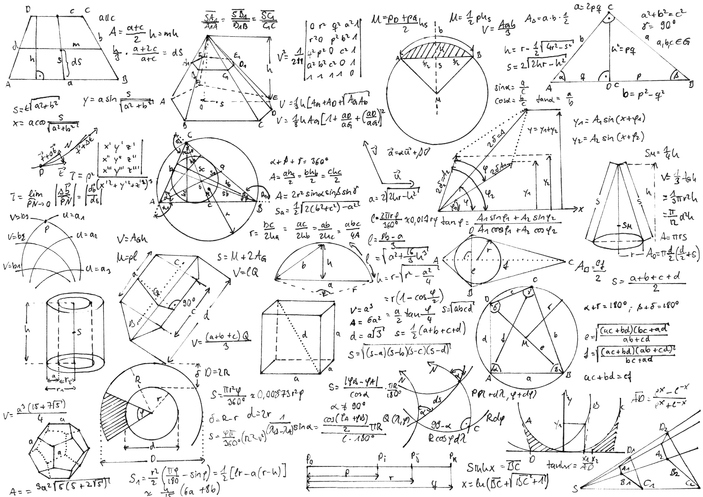
Grothendieck revolutionised the world of algebraic geometry (Credit: IngaNielsen via Getty Images)
Alexander Grothendieck was no ordinary mathematician. A revolutionary thinker whose work transformed algebraic geometry, he received the prestigious Fields Medal in 1966. Yet over the following decades, Grothendieck became increasingly disillusioned with academic institutions and gradually withdrew from professional mathematics.
In 1991, the retreat became dramatically more complete when he moved to a secluded location in the French Pyrenees and largely cut contact with colleagues, visitors and even family. One of the 20th century’s greatest mathematical minds had effectively subtracted himself from the world.
Bobbie Gentry: The Singer Who Left Without a Farewell
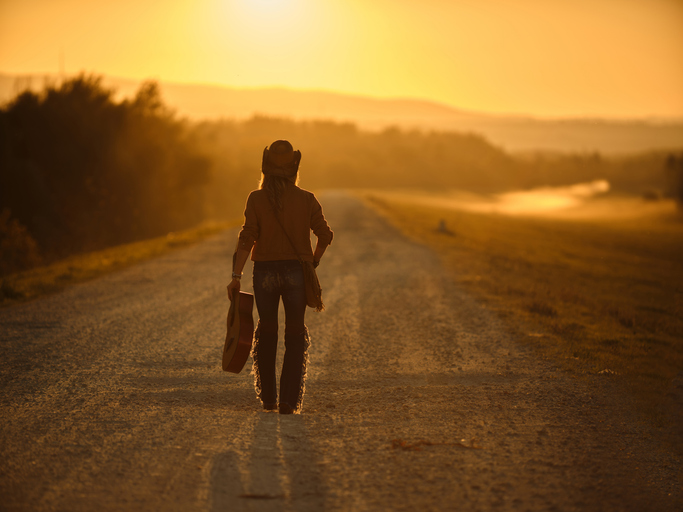
Bobbie Gentry quietly walked away from the music scene (Credit: skynesher via Getty Images)
Bobbie Gentry knew plenty about mystery. Her 1967 hit Ode to Billie Joe became famous for leaving listeners with unanswered questions. Decades later, Gentry herself did something similar. After a successful career encompassing records, television and elaborate Las Vegas shows, she quietly stepped away.
Her final known public performance came in 1981, followed by a last public appearance in 1982. There was no grand farewell tour or retirement announcement. Gentry simply stopped recording, performing and giving interviews, transforming one of country music’s brightest stars into one of its great disappearing acts.
Retreat, Reputation and the Recluse Myth
Retreating from public life didn’t mean retreating from life itself (Credit: Justin Paget via Getty Images)
There’s a temptation to bundle every private famous person under one dramatic label: recluse. But the story tends to be more complicated. Dickinson maintained rich correspondence. Cavendish participated in scientific institutions. Proust’s poor health impacted his life. Garbo walked New York and saw friends. Salinger kept writing. Hughes continued running businesses.
In other words, retreating from public life didn’t necessarily mean retreating from life itself. Sometimes seclusion protected work. Sometimes it gave someone more control of their daily lives. Sometimes it was caused by illness or distress. And sometimes the idea of the mysterious hermit was enthusiastically exaggerated by newspapers, biographers, and an audience fascinated by anyone who refused to be watched.