Is there a slithering serpent lurking beneath Iceland’s Lagarfljót lake? Tales of mysterious creatures have surfaced across the world’s lakes and rivers for centuries, from Canada’s Ogopogo lake monster and Argentina’s Nahuelito, to Mokele-Mbembe of the Congo River Basin. And Iceland has its own legendary beast known as the Lagarfljót worm, a serpent said to glide silently through the lake’s freezing depths.
Reports of Lagarfljótsormurinn, as it’s known in Icelandic, have been recorded since the fourteenth century. Often compared to Scotland’s famous Loch Ness Monster, the mystery of the Lagarfljot worm has become one of Iceland’s most enduring enigmas, capturing the imagination of locals and visitors alike for hundreds of years. Some describe it as longer than a bus. Others say it’s more than ninety metres long. One report even claimed it was twenty kilometres long!
But where did the legend of the Lagarfljót worm originate? Could it be the last remnant of a prehistoric dinosaur, a creature that somehow slipped through the cracks of extinction? Or is it the result of natural phenomena, optical illusions, or fireside fables? Could Lagarfljótsormurinn even be an elaborate hoax? And after all this time, is there really something in the water? Let’s dive beneath the surface of this Icelandic mystery.
Where the Legend Was Born: Lake Lagarfljót

Lagarfljot Lake in Eastern Iceland (Credit: Sasha64f via Getty Images)
Lagarfljót lake is in eastern Iceland, near the town of Egilsstaðir, and is one of the country’s largest bodies of freshwater. Formed by glacial activity, the lake stretches for approximately twenty-five kilometres and at its widest point is around 2,500 metres. It’s fed mainly by glacial rivers from Vatnajökull, which carry fine silt into the water, giving it a distinctive brownish, opaque appearance.
The surrounding landscape is home to forests as well as rolling hills and waterfalls, including Hengifoss, one of Iceland’s tallest. Due to the constant influx of glacial sediment, visibility in the lake is extremely limited, and surface conditions can shift quickly depending on weather and currents. These natural features have made Lagarfljót an environment where unusual movements in the water can be difficult to interpret, helping to shape its long-standing association with the mystery of the Lagarfljot worm.
The First Account: The 1345 Icelandic Annals

The Skálholts Annáll described a huge humped 'thing' (Credit: fergregory via Getty Images)
The earliest known reference associated with the Lagarfljót worm appears in the Icelandic annals (specifically the Skálholts Annáll) under the year 1345. Rather than describing the creature specifically as a worm or serpent, the entry describes a wonderful or remarkable thing seen in Lagarfljót. It was said to resemble islands or humps rising above the water, separated by hundreds of fathoms (a fathom is a unit of maritime length measuring about six feet), but no head or tail was seen.
Later reported sightings of the Lagarfljót worm, and later sources, describe a great serpent or lake monster more explicitly. Sometimes it’s called the Lagarfljot dragon, and this fourteenth century story would go on to form the foundation of the legend.
Mapping the Unknown: 16th & 17th Century References
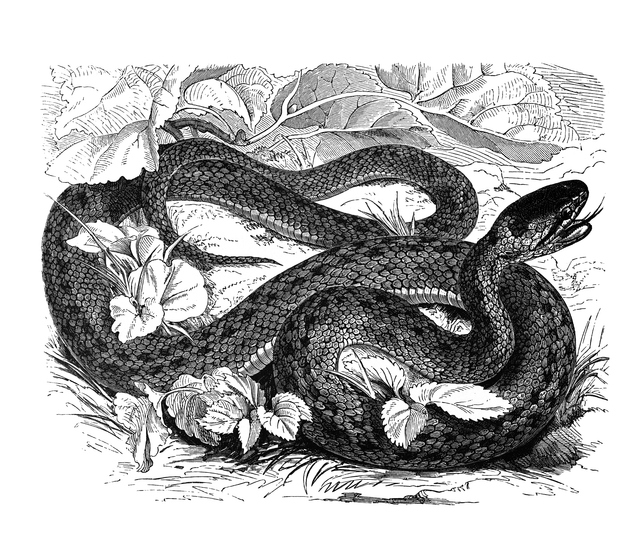
Was there 'a serpent of unusual size' in Lake Lagarfljot? (Credit: mikroman6 via Getty Images)
By the 1580s, this perplexing Icelandic river monster had moved beyond isolated accounts and into broader descriptions of Iceland itself. One of the most notable examples appears on a 1585 map attributed to Bishop Guðbrandur Þorláksson.
On the map, the creature is depicted directly within Lake Lagarfljót, where it says, in Latin, In hoc lacu est anguis insolitæ magnitudinis, noxius incolis. apparet cum memorabiles ingruunt mutationes, which translates to ‘In this lake there is a serpent of unusual size, harmful to the inhabitants and appears when some notable/memorable changes are impending’. This inclusion suggests Lagarfljótsormurinn was seen as something more than just a fireside tale.
Further references from Icelandic scholars and clergy would go on to reinforce this idea. Bishop Oddur Einarsson in the late 1580s, and Bishop Gísli Oddsson in the early part of the seventeenth century, both described such a creature in their works. Oddsson’s De mirabilibus Islandiae, a text dedicated to the wonders of Iceland, said the Lagarfljót worm made the river overflow and caused houses to shake.
The Story Takes Shape
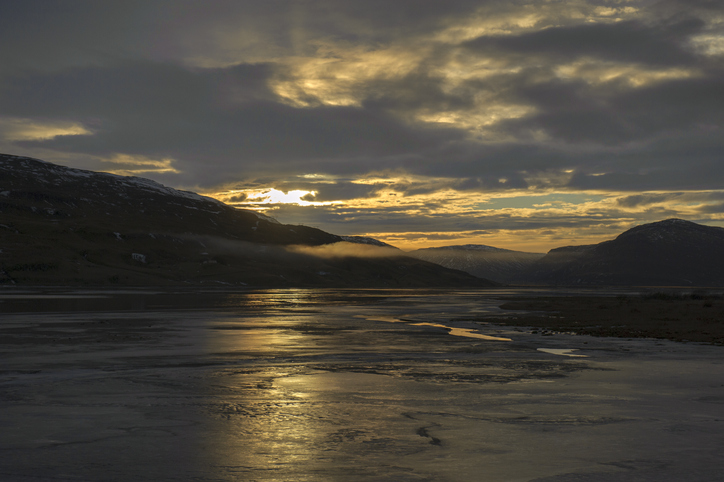
In the folk tale, the little girl released the worm into Lake Lagarfljot (Credit: Feifei Cui-Paoluzzo via Getty Images)
As the nineteenth century rolled around, the Lagarfljót dragon had moved from local curiosity into national folklore. This was in part due to the works of famous Icelandic author, librarian and museum director Jón Árnason, whose 1862 collection of Icelandic folktales preserved many of the country’s traditional stories.
In one of the tales he collected from a schoolgirl in 1845, it says a young girl placed a gold ring beneath a small worm, believing it would help the ring to grow in value. When she returned, the creature had grown so big it was uncontrollable and she released it into Lagarfljót lake where it continued to grow into the monstrous form described in the legend. The story says that the Lagarfljót worm was responsible for killing people and animals, and that its appearance was a notoriously bad omen.
The Modern Era: Sightings & Footage
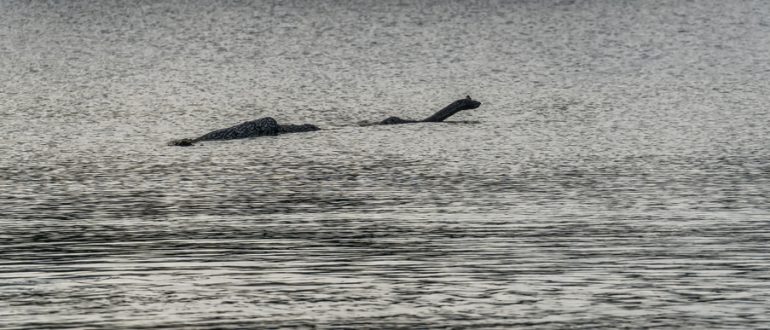
What did Hjörtur Kjerúlf really see? (Credit: Gabdulvachit Konurov via Getty Images)
Reports of the Lagarfljót worm only increased with time, carrying into the twentieth century with a number of more modern eyewitness accounts. In 1963, Sigurður Blöndal, then head of the Icelandic National Forest Service, reported a sighting, and in 1998, a teacher and a group of students from Hallormsstaðir School, close to the eastern shore of the lake, claimed to have seen something in the water.
But the two most well-known stories are a little more chilling.
In 1983, contractors laying telephone cables were undertaking depth measurements with a dummy cable. When they went to retrieve it from the water, it emerged damaged. One of the contractors stated: ‘This cable that was specially engineered so it wouldn’t kink was wound in several places and badly torn and damaged in 22 different places… I believe we dragged the cable directly over the belly of the beast. Unless it was through its mouth.”
The Famous Video
Nearly three decades later, in 2012, the mystery of the Lagarfljot worm gained international attention when a video filmed by local resident Hjörtur Kjerúlf appeared to show a long, serpent-like shape moving through the icy waters in one of the rivers that flows into Lagarfljót lake. The footage, which has been widely circulated online, sparked a debate among viewers and investigators that rages on today. Some argued it showed nothing more than a stationary object caught on an underwater rock or branch with the moving current creating the illusion of movement, while others saw it as one of the clearest visual records of the legendary Icelandic river monster to date, renewing interest in a centuries-old mystery.
Following the video’s release, a group of independent researchers examined it in an attempt to determine its authenticity. Analysts concluded the movement had a rational explanation, such as ice formations, fishing nets or submerged objects shifting in the current.
A municipal ‘truth commission’ set up by the local municipality also examined the footage of what may have been the Lagarfljótsormurinn, and believed the video itself was authentic. Yet despite centuries of speculation, the search for the Lagarfljot worm remains relatively informal, although it’s continued to attract occasional investigation and media attention.
The Prevailing Theories
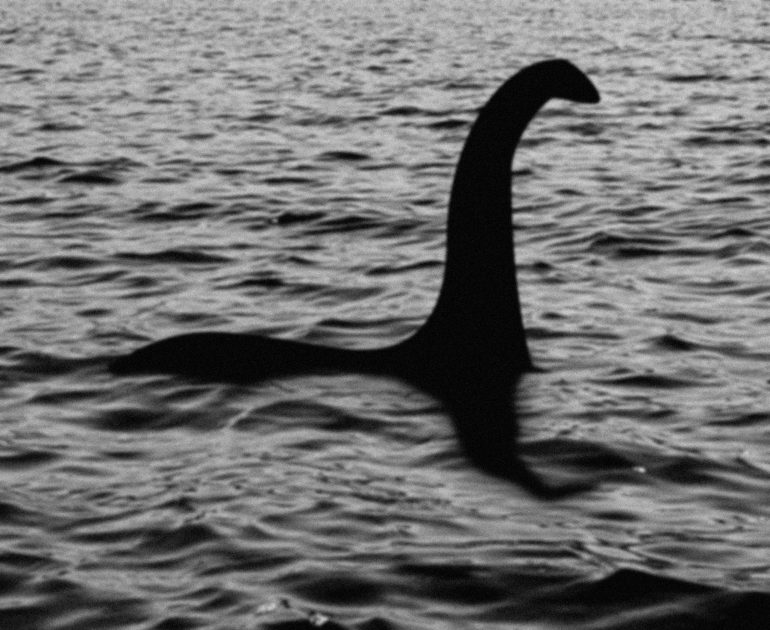
A copy of the famous Loch Ness hoax image (Credit: Matt84 via Getty Images)
As with many long-standing cryptid legends, the Lagarfljót worm has inspired a wide range of explanations, from the scientific to the highly speculative.
The most common theories take the view that it’s nothing more than a natural occurrence. The lake’s glacial origins mean it’s filled with fine sediment which reduces visibility and makes it difficult to accurately judge size and movement under the surface. The various sightings over the years may be the result of floating debris, such as logs, clusters of leaves or other organic material, ice formations, or even fishing nets dragging in the current.
Others think it could be misidentified animals, although there are no known species in that part of Iceland which match the size or slithering-type behaviour often described.
At the more speculative end are theories of undiscovered or surviving prehistoric creatures, echoing claims made about other monsters around the world, such as the Ropen of Papua New Guinea.
It’s equally possible that this Icelandic monster only ever existed in the imaginations of the original storytellers.
Yet as none of these explanations have been definitively proven, the lack of certainty has allowed the debate to rumble on.
The Lagarfljót Worm: An Enduring Enigma
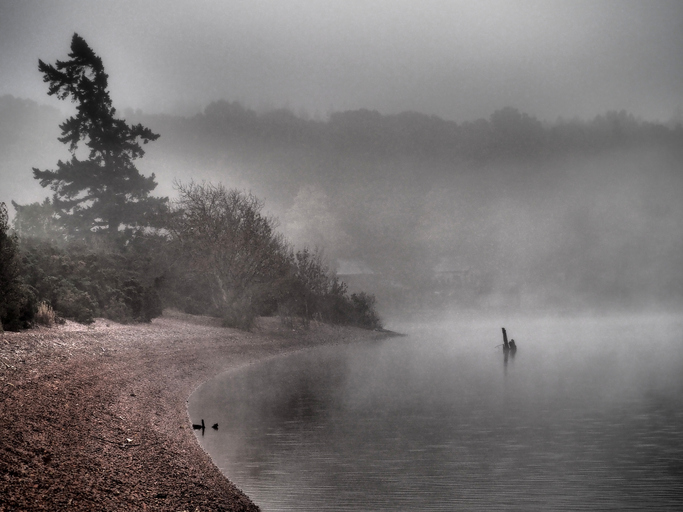
What - if anything - lives under the murky waters of Lagarfljót lake (Credit: Ludovic Debono via Getty Images)
From medieval annals to modern video footage, the mystery of the Lagarfljót worm has persisted for centuries. Whether it can be explained by natural phenomena, a trick of the water, or something more mysterious, the legend asks the same question it always has – what, if anything, moves beneath the surface of Lagarfljót lake?