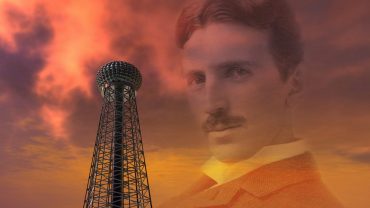
In his novel Nineteen Eighty-Four, George Orwell imagined a world of telescreens that watched citizens in their homes, microphones hidden in the countryside, and a regime that monitored every word and gesture. Published in 1949, his dystopia was a warning, not a forecast. Yet decades later, his imagery feels uncannily familiar. Cameras and microphones are now carried everywhere, movements and conversations leave digital trails, and surveillance has become woven into daily life.
So just how closely does the modern world mirror Orwell’s vision? Let’s review the predictions that came true, because Big Brother has more ways to watch than even his creator ever imagined…
Orwell’s Totalitarian Nightmare
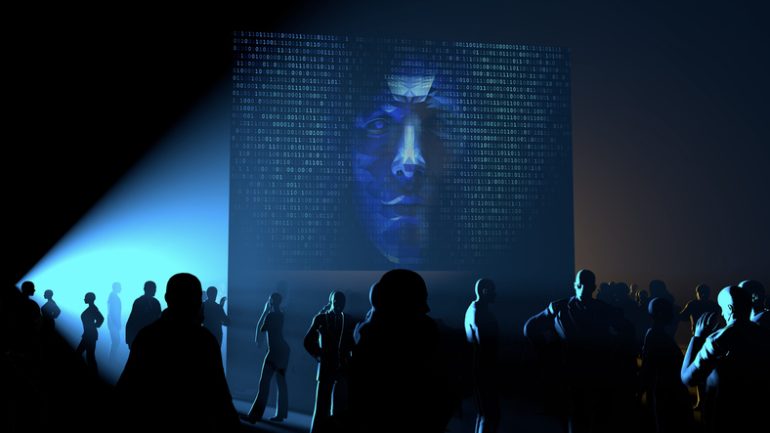
Big Brother is watching... (Credit: Devrimb via Getty Images)
Across his works, Orwell examined power, class, propaganda, truth, inequality and the corruption of political ideals. In Nineteen Eighty-Four, however, he illustrated with particular force how technology could become an instrument of surveillance and totalitarian control.
The novel is set in Oceania, an authoritarian state where the mysterious “Big Brother” appears to monitor every thought and action. It follows Winston Smith, a low-ranking Party worker who tries to resist. In this world, technology exists purely to reduce human freedom. Crucially, it’s indistinguishable from political control. With that in mind, let’s look at how far Oceania’s technology reflects the tech of today.
Telescreens: The Two-Way Screen
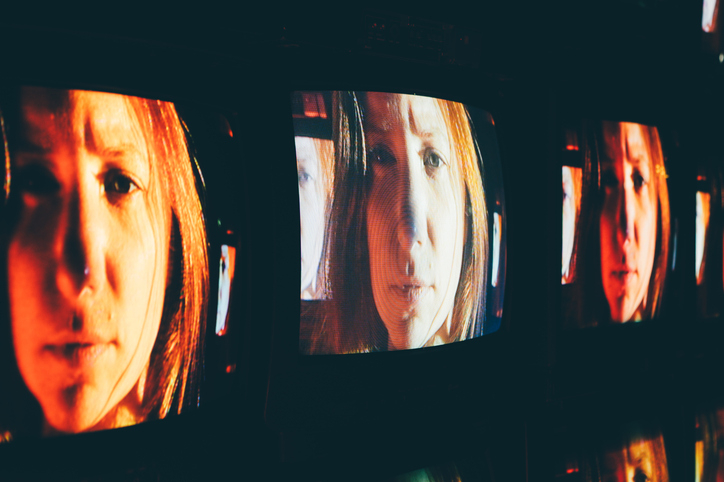
You see them, they see you... (Credit: Maria Korneeva via Getty Images)
Orwell’s most famous technological invention is the telescreen: part television, part loudspeaker, part surveillance device. It broadcasts propaganda while also receiving sound and images from people’s homes.
The resemblance to modern connected devices is clear. Phones, laptops, tablets, webcams, smart speakers, baby monitors, doorbells and video-call screens have made two-way domestic technology ordinary. We’re used to devices that show us things, hear us, film us and connect us to remote systems. The difference is in how they arrived. Orwell’s telescreen is compulsory, centralised and openly political. Our screens are varied, commercial and often chosen for convenience. Even so, Orwell’s basic idea has come true in a broader form: the screen is no longer just something we watch. It can watch back.
The Speakwrite and Voice Technology
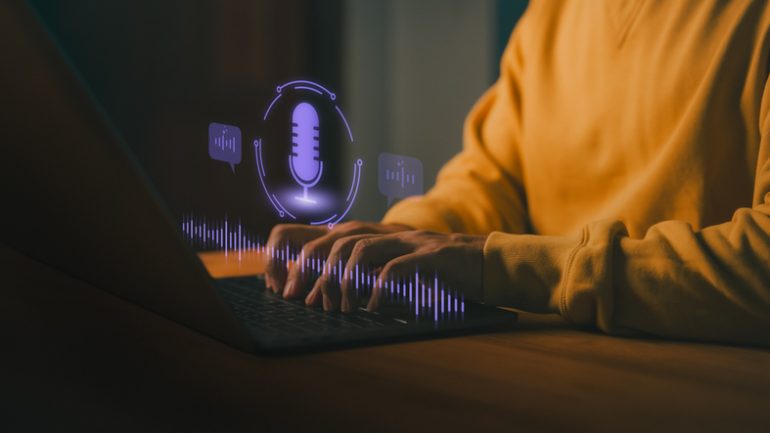
Speech-to-text software is increasingly common (Credit: jpkirakun via Getty Images)
At Winston’s desk sits another strikingly familiar device: the speakwrite. Instead of typing, he dictates into a machine that turns speech into text. In 1949, that was futuristic. Today, it sounds like a normal office tool.
Here, Orwell’s prediction is unusually neat. Voice dictation, automated transcription, captioning tools, smart assistants and speech-to-text software all work from the same basic idea: speech can become machine-readable language. Orwell didn’t foresee cloud processing, modern speech recognition or AI language models, but he saw the direction clearly. The keyboard would not remain the only way humans talked to machines. The darker twist is that Winston uses the speakwrite to rewrite the past. The device came true, but Orwell’s warning was really about who controls the words it produces.
The Versificator and Artificial Art
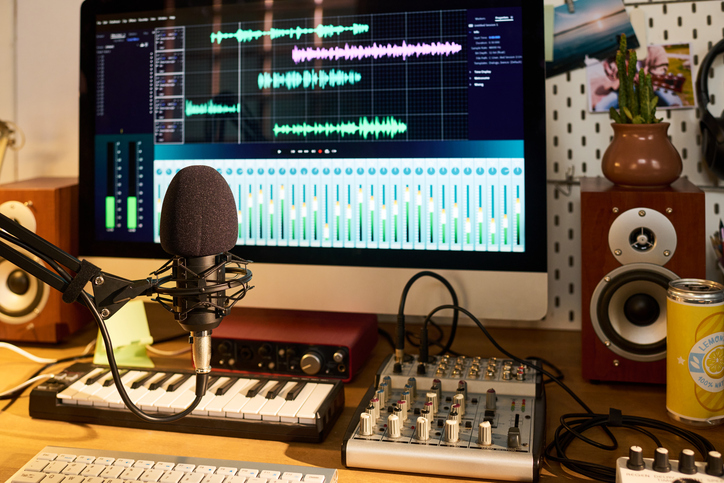
Music by machine (Credit: Pressmaster via Getty Images)
One of Orwell’s more overlooked inventions is the Versificator, a machine in Nineteen Eighty-Four that automatically produces popular songs for the masses. It belongs to a wider system where culture is mechanically generated to distract, entertain and serve the Party.
This isn’t a technical prediction of generative AI, but the similarity’s hard to ignore. Machines can now produce prose, songs, images, scripts, summaries and synthetic personalities at speed. The difference is that today’s tools aren’t simply state machines producing approved pulp. They can be useful, playful, strange, creative and controversial. Still, Orwell’s broader prediction holds: machines would not only distribute culture.
The Memory Hole and Digital Disappearance
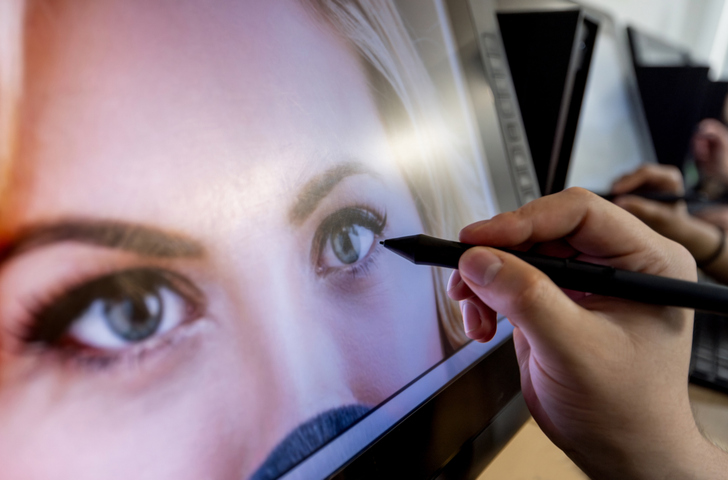
Manipulating images is common in today's society (Credit: andresr via Getty Images)
The memory hole is one of Orwell’s bleakest inventions: a chute into which inconvenient records vanish. Winston’s job is to alter old news reports, after which the originals are destroyed. In a paper world, that means physical disposal. In a digital world, the comparison is stranger.
Modern information can be copied, archived, screenshotted, leaked and recovered, which makes total erasure harder than Orwell imagined. Yet records can also be edited quietly, deleted remotely, buried by search results, hidden behind broken links or overwhelmed by false versions of events. The memory hole didn’t arrive as one sinister chute in the wall. It arrived as vanishing posts, revised captions, missing pages, altered databases, dead links and the uneasy feeling that something can be everywhere one day and difficult to find the next. Orwell didn’t predict the mechanics of digital record-keeping, but he did anticipate the danger of making the past adjustable.
Big Brother and the Age of Surveillance
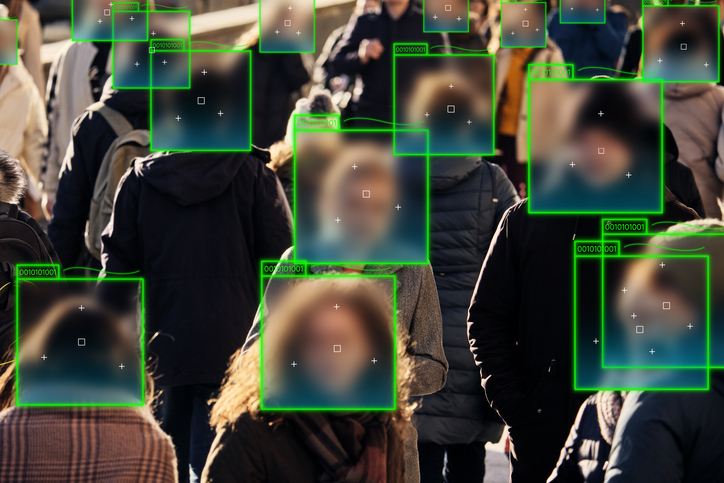
Every movement is recorded (Credit: gesrey via Getty Images)
Big Brother isn’t a technology. He’s a symbol of power and political control. In Nineteen Eighty-Four, that power works partly through technology, especially telescreens, but also through informants, patrols, propaganda and the threat of punishment.
This is where Orwell’s idea has become technological in modern life. CCTV, phone metadata, location tracking, facial recognition, online advertising profiles, workplace monitoring, smart devices and border databases all belong to today’s observation systems. The important difference is that there’s no single Big Brother. Watching now comes from states, companies, employers, platforms and networks of data brokers. We also carry much of the equipment ourselves, charge it nightly and use it to make life easier. Orwell imagined surveillance imposed from above. The modern version is more scattered, more commercial and more ordinary.
Newspeak, Algorithms and Shrinking Language

Hashtags make it easier to find what you're looking for (Credit: Laurence Dutton via Getty Images)
Newspeak is not a technology either. It’s Orwell’s invented language of control, designed to make certain thoughts harder by reducing the words available to express them. That exact project hasn’t come true in any official or universal sense. English has become more sprawling, technical, meme-filled, chaotic and inventive.
However, the idea has acquired a technological edge through platforms. Online life rewards compression: slogans, hashtags, captions, thumbnails, search-friendly phrasing and outrage-ready fragments. Algorithms often favour language that sparks quick reactions over careful thought. Political messaging can flatten complicated realities into repeatable lines. This isn’t Newspeak by government dictionary. It’s language shaped by speed, incentives, interfaces and attention. Orwell didn’t predict the hashtag, but he understood that controlling words can narrow the boundaries of argument.
The Verdict: Orwellian Enough?
Orwell finished Nineteen Eighty-Four in 1948 (Credit: Michael Derrer Fuchs via Getty Images)
So, did Orwell’s tech predictions come true? Yes, in many ways there were startlingly accurate. The telescreen became a wider family of connected screens, cameras and microphones. The speakwrite became everyday speech-to-text. The memory hole became the digital instability of records. The Versificator looks newly relevant in an age of machine-made culture. Other Orwellian ideas weren’t technologies in themselves, but they’ve become technological through modern systems. Big Brother became networked surveillance. Newspeak became a useful way to think about online language and polarised public debate.
Orwell wasn’t predicting gadgets with exact specifications. He was predicting relationships: between technology and power, convenience and surveillance, language and control, entertainment and persuasion. His machines didn’t always arrive exactly as written. But the modern world has certainly delivered technology and capability that – in the wrong hands – could produce exactly the kind of dystopian nightmare he warned of.