Nikola Tesla’s name crackles with invention, ambition, and more than a little myth. Often cast as the misunderstood genius behind the modern electrical age, he dreamed up technologies which helped power cities, transmit signals, and reshape daily life.
But where does fact end and folklore begin? From alternating current to radio-controlled boats, we’re untangling the wires of Tesla’s extraordinary legacy to find out what he really invented, what he improved, and why his ideas still spark fascination today.
The AC Induction Motor
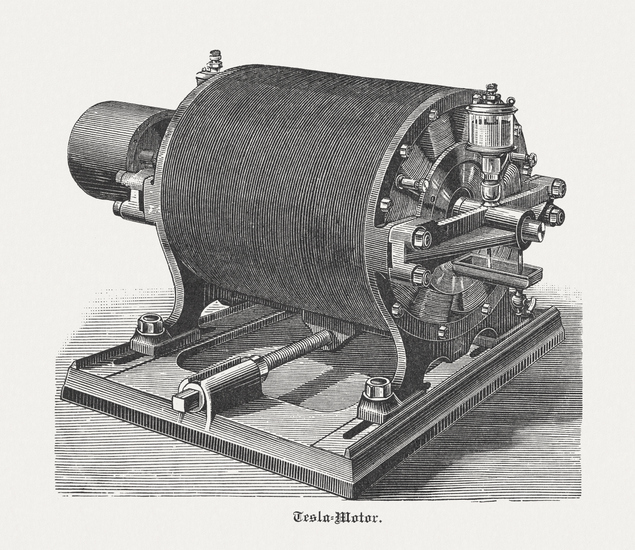
Tesla AC Induction Motor (Credit: ZU_09 via Getty Images)
Nikola Tesla’s AC induction motor is one of his most important inventions, and one of the great turning points in modern electrical technology. Before this, electric motors were often awkward, inefficient, and difficult to maintain. Tesla’s design used alternating current, or AC, to create motion without the same clumsy mechanical parts found in many earlier motors.
At the time, Thomas Edison promoted direct current, or DC, which worked well over short distances but was harder to transmit efficiently over long ones. AC, by contrast, could be transformed to high voltages for long-distance transmission, then reduced again for safer local use.
George Westinghouse backed Tesla’s AC patents and used them as a technological foundation in the so-called “War of the Currents”. Tesla’s system eventually helped AC win that battle, making widespread electric power far more practical.
The impact was enormous. Tesla’s motor helped prove that AC could power homes, factories, and cities, not just lamps. It could drive machines, support industry, and make electric power useful in everyday life. In fact, the basic principle behind Tesla’s induction motor is still used today in countless devices, from washing machines and fans to pumps and factory equipment.
Polyphase AC Power Systems

Tesla's inventions have helped to power entire cities (Credit: Azim Khan Ronnie / 500px via Getty Images)
Tesla’s AC induction motor was part of a wider polyphase alternating-current system. In simple terms, polyphase AC uses multiple alternating currents, offset from one another, to create smoother power transmission and motor operation.
This mattered because electricity needed to do more than light a bulb. It had to travel long distances, run machines, and serve cities at scale. Tesla built on existing work in AC and electrical distribution, but his motor and system designs helped solve a crucial problem: how to make AC useful for both long-distance power delivery and practical mechanical work.
That changed everything. Instead of electricity being limited to local lighting networks, Tesla’s ideas helped point the way towards modern power systems capable of running whole cities, industries, and everyday machines.
The Tesla Coil
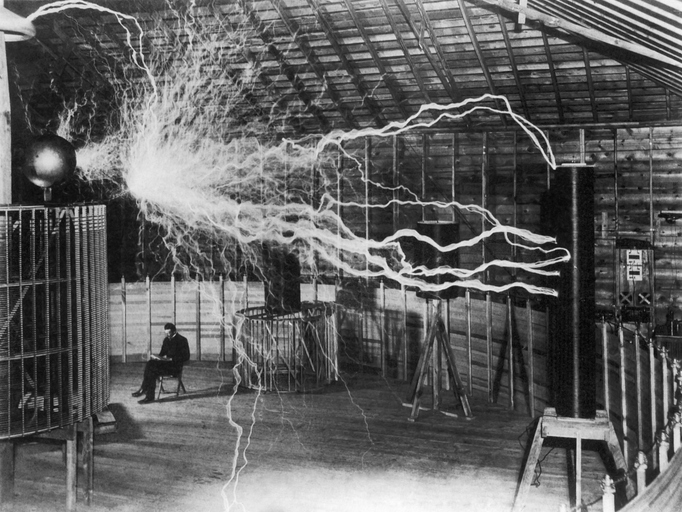
The famous image of the Tesla Coil (Credit: Vernon Lewis Gallery/Stocktrek Images via Getty Images)
In 1891, Tesla invented the Tesla coil, a high-voltage transformer circuit capable of producing dramatic electrical discharges. It could create spectacular bursts of electricity and transmit electrical energy through the air over short distances.
Tesla hoped his coil might one day help make wireless electricity part of everyday life. That dream never fully came true, at least not in the grand form he imagined. However, the coil still had a lasting impact. It influenced later experiments in radio, wireless power, high-frequency electricity, and electrical engineering.
Today, Tesla coils are more likely to appear in science museums, classrooms, and theatrical demonstrations than in everyday electrical systems. Even so, with their crackling arcs and unmistakable spectacle, they remain one of the most recognisable inventions attached to his name.
Remote Control

Everything at the click of a button... (Credit: bagi1998 via Getty Images)
In 1898, Tesla demonstrated a radio-controlled boat at Madison Square Garden. The small craft moved, stopped, and turned without any visible connection, stunning audiences who had never seen anything like it.
Tesla called the technology “telautomatics”. Today, the idea feels ordinary because remote control is everywhere, from TVs, drones, toys, robotics and industrial systems, to military equipment and space exploration. At the time, though, it was startlingly futuristic.
The Tesla Turbine
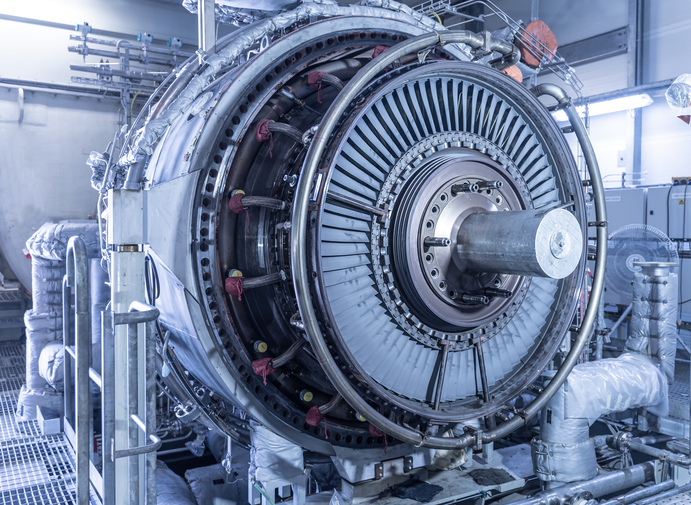
The bladeless turbine was a good idea but not practical (Credit: Vithun Khamsong via Getty Images)
Tesla also invented a bladeless turbine. Instead of conventional blades, it used smooth discs and the boundary-layer effect, where fluid drags along nearby surfaces as it flows.
The idea was clever, but it never replaced mainstream turbines. Materials, efficiency challenges, and engineering limits held it back. Still, the Tesla turbine remains a fascinating example of his unusual way of thinking: where others saw blades, Tesla saw flow, friction, and surfaces.
The Tesla Valve

A hydroelectric plant in Serbia utilising the Tesla valve (Credit: Miodrag Kitanovic via Getty Images)
Patented in 1920, the Tesla valve is a fixed valve with no moving parts. It allows fluid to flow more easily in one direction than the other, using internal geometry rather than flaps, hinges, or gates.
For decades, it was more curiosity than common component. However, modern researchers still study it as a kind of fluidic diode. It’s a quiet invention, but an elegant one.
Why Tesla Gets Credited With So Much

Did Tesla invent neon lights? (Credit: CHUNYIP WONG via Getty Images)
Part of the confusion around Tesla comes from the difference between inventing something outright and contributing to the technology that makes it possible. After all, invention is rarely tidy. Some people create a finished device. Others discover a principle, file a crucial patent, build a working demonstration, improve an existing system, or make an idea practical at scale. Tesla did all of those things at different points in his career.
That’s why the question “Did Tesla invent radio?” or “Did Tesla invent neon lights?” can be difficult to answer with a simple yes or no. In many cases, Tesla didn’t invent the final commercial technology by himself. However, he contributed ideas, experiments, and electrical methods that helped those technologies develop.
The myths often go too far, turning Tesla into a lone genius who invented almost everything, discovered aliens and even created a death ray. Conversely, the correction can go too far the other way, making him sound merely adjacent to other people’s breakthroughs. The more accurate view sits between those extremes. Tesla invented several important technologies himself, and also helped make several others possible.
Tesla and Radio
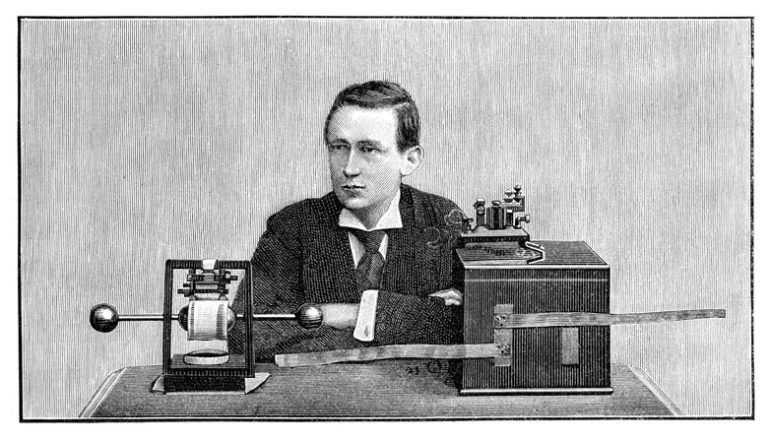
Marconi with an early radio transmitter (Credit: Grafissimo via Getty Images)
Tesla didn’t invent radio as a finished commercial system. However, he made important contributions to wireless signalling and radio transmission.
In the 1890s, he developed and patented tuned electrical circuits, high-frequency oscillators, and methods for sending signals without wires. Guglielmo Marconi later built a successful radio system and became widely known as radio’s inventor, though his work overlapped with Tesla’s patents.
In 1943, the US Supreme Court invalidated key Marconi patent claims, strengthening Tesla’s place in radio history. Therefore, Tesla’s role was not that he single-handedly invented radio as we know it, but that he helped develop some of the principles and patented technologies behind it.
Tesla and Wireless Power
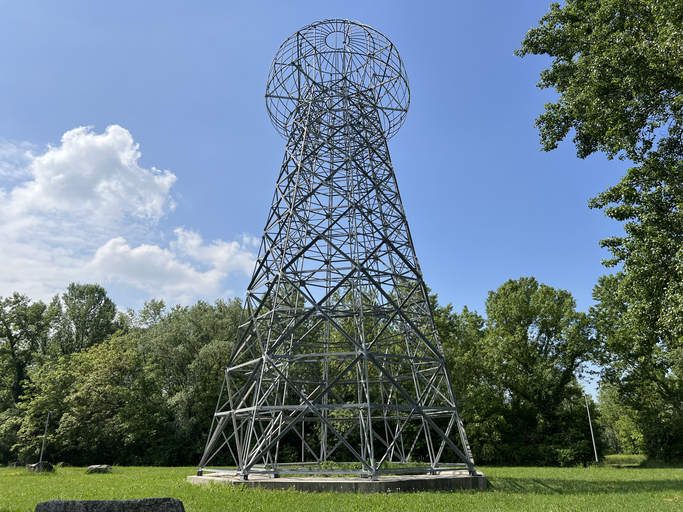
A replica of Tesla's Wardenclyffe Tower in Croatia (Credit: Vito Krpan via Getty Images)
Tesla was fascinated by transmitting energy without wires. His work with high-frequency electricity, resonance, and the Tesla coil all fed into that ambition.
His most famous attempt was Wardenclyffe Tower, a wireless transmission station on Long Island. Tesla hoped it could support wireless communication and perhaps even global wireless power. The project ran out of funding and was never completed as he imagined.
Modern wireless charging and near-field energy transfer do not descend from Tesla in a straight line. Even so, they belong to a technological world he helped anticipate.
Tesla and Lighting
Tesla's work was instrumental in the development of neon lights (Credit: Carol Yepes via Getty Images)
Tesla didn’t invent the light bulb. That achievement is usually linked to inventors such as Thomas Edison, Joseph Swan, and several others.
However, Tesla did important work with high-frequency lighting, gas-discharge lamps, and glowing tubes. His demonstrations included lamps lit without conventional wires and tubes that foreshadowed later neon and fluorescent lighting.
So, “invented” is too blunt a word here. Tesla didn’t create the commercial neon sign or the modern fluorescent lamp, but he explored the electrical behaviour which helped make those technologies possible.
Tesla and Robotics

He was an early proponent of robotics (Credit: weerapatkiatdumrong via Getty Images)
Tesla’s radio-controlled boat was more than a spectacle. It was an early glimpse of robotics, automation, and remotely operated machines. Some observers reportedly thought the boat was guided by magic, hidden wires, or even a trained animal inside. Tesla understood it differently: as a machine responding to wireless commands. Tesla therefore may not have invented robotics as a complete field, but his “telautomaton” was a remarkable early step.
So, What Did Tesla Actually Invent?
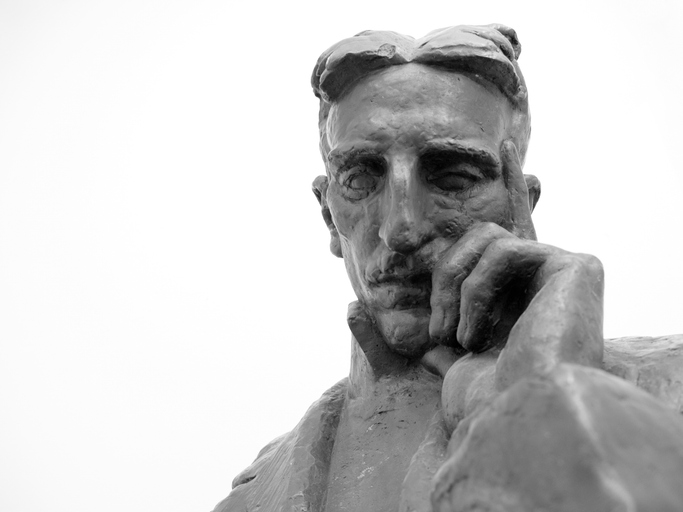
A statue of Nikola Tesla in his home town of Smiljan, Croatia (Credit: davorko via Getty Images)
Tesla actually invented, patented, or helped pioneer a remarkable list: the AC induction motor, polyphase AC power systems, the Tesla coil, radio-control technology, high-frequency electrical systems, wireless transmission concepts, a bladeless turbine, and the Tesla valve. He also made important contributions to radio, electrical lighting, wireless control, automation, and the wider electrical infrastructure of the modern world.
What he didn’t do was invent everything later attached to his name. He didn’t invent alternating current itself. He didn’t invent the light bulb. And he didn’t single-handedly create the modern power grid, radio, radar, smartphones, the internet, X-rays, or “free energy”.
But that doesn’t make his real achievements smaller. In fact, it makes them easier to see. The mythic Tesla may throw lightning from mountaintops. The real Tesla did something better. He helped make electricity move, turn, signal, glow, and work. And that, without any exaggeration, was more than enough.