Few engineering feats in modern history have captured the imagination quite like the Channel Tunnel. Often known simply as the Chunnel, this extraordinary link between England and France runs for around 50 kilometres, the majority of it lying beneath the sea between Folkestone and Calais. It’s a structure that quite literally changed how Britain connects with mainland Europe, while also standing as one of the most ambitious and technically demanding construction projects ever completed.
So, how was the Channel Tunnel built, and what makes it such a marvel of modern engineering? Here are 10 facts that reveal just how remarkable the Channel Tunnel’s construction really was.
1. It took longer to plan than to build
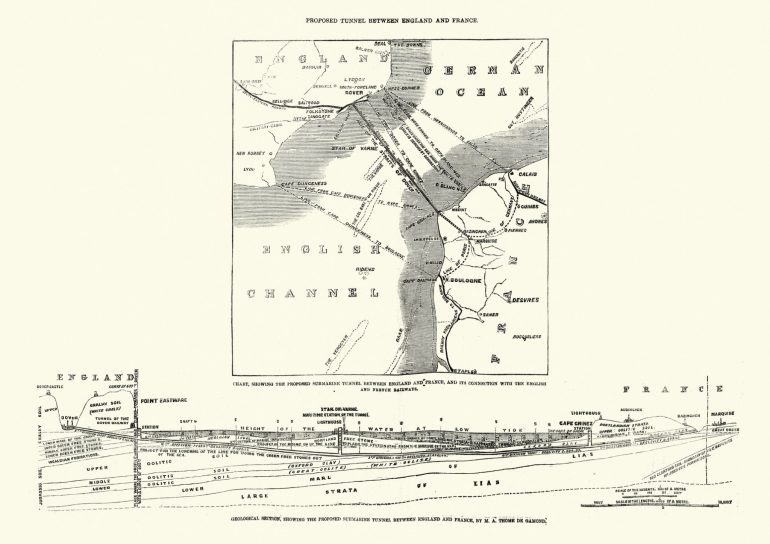
Victorian plans for a channel tunnel between England and France (Credit: duncan1890 via Getty Images)
Proposals for a fixed link between Britain and France date back to 1802, when French engineer Albert Mathieu submitted plans to Napoleon Bonaparte. Various schemes followed across the 19th and 20th centuries, including a serious attempt in 1974 that was abandoned for financial and political reasons. Work on the tunnel as it exists today did not begin until 1988, nearly 190 years after the idea was first formally proposed. It was completed in 1993, with the official opening held on 6 May 1994 by Queen Elizabeth II and French President François Mitterrand.
2. Boring machines the size of houses did most of the work
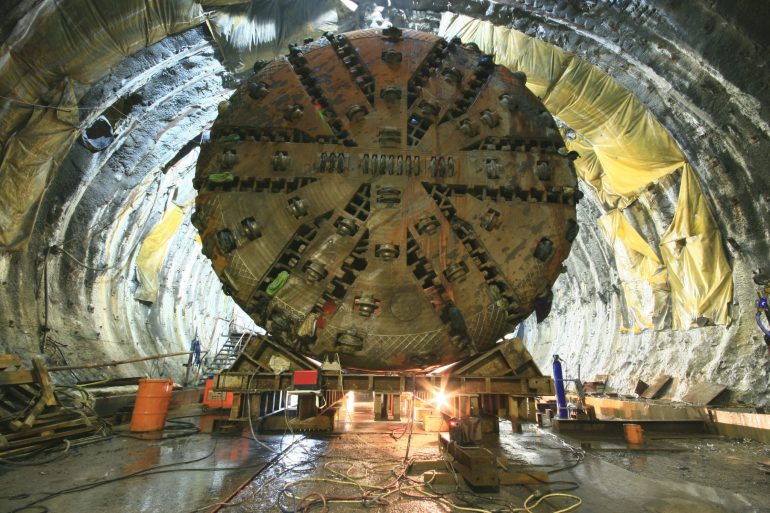
The colossal size of a tunnel boring machine (Credit: PixHouse via Getty Images)
Eleven tunnel boring machines (TBMs) were used to excavate the tunnel, with five digging from the French side and six from the UK. Each machine was approximately 8.36 metres in diameter and over 200 metres – roughly two football fields end to end – in length.
Named after female figures including a number of women’s names submitted by workers’ families, the machines cut through the chalk marl beneath the seabed at an average rate of around 25 metres per day. They were so big that several of them were turned on their sides and buried in place once they’d completed their work.
3. There are actually three tunnels
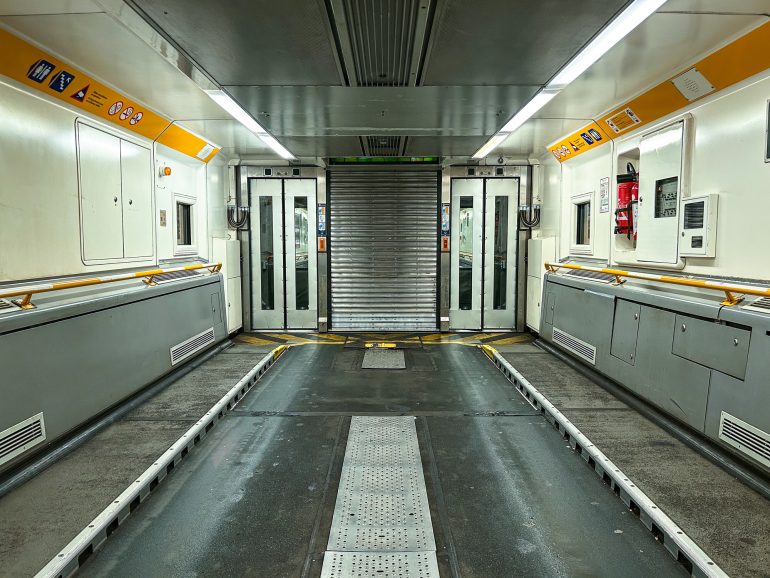
There are three tunnels under the channel (Credit: Alex Walker via Getty Images)
The Channel Tunnel is made up of three parallel tunnels rather than a single bore. Two are rail tunnels, carrying passenger trains in opposite directions, while a third, smaller service tunnel runs between them. This central tunnel provides access for maintenance, emergency evacuation, and ventilation, with cross-passages linking all three tunnels at regular intervals.
4. Two teams dug toward each other from opposite sides
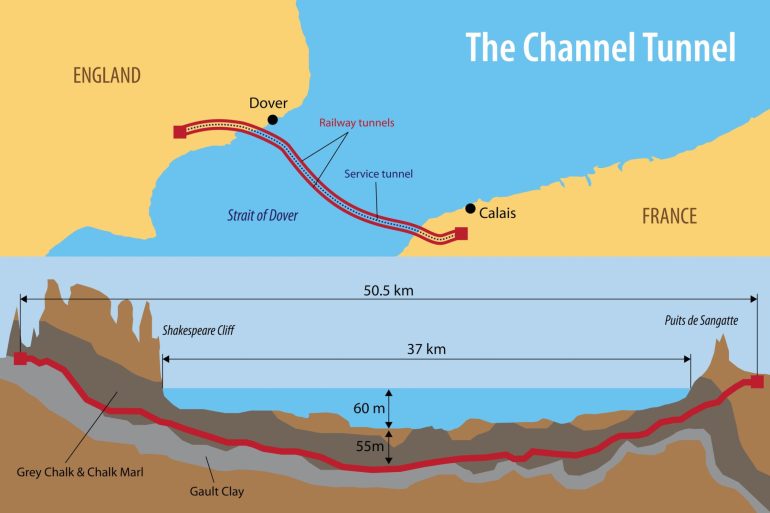
The tunnels were dug with astonishing precision (Credit: Dimitrios Karamitros via Getty Images)
Construction began simultaneously in England and France, with crews working outward from each coastline toward the middle of the Channel. Using GPS, laser guidance systems, and gyroscopic instruments, the teams had to meet with extraordinary precision. When the service tunnel breakthrough occurred on 1 December 1990, the two halves were misaligned by just 35.8 centimetres horizontally and 58 centimetres vertically — a remarkable result over a distance of roughly 38 kilometres.
5. The tunnel runs mostly through chalk
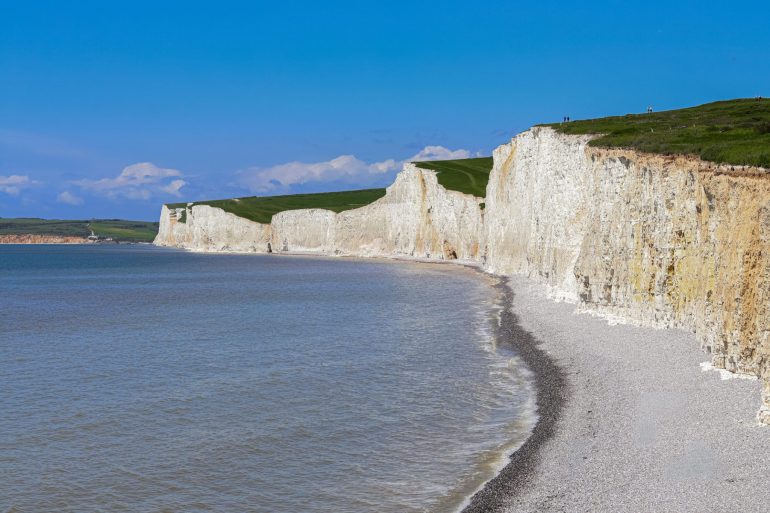
The Channel Tunnels run through layers of chalk (Credit: anneleven / 500px via Getty Images)
The route was specifically chosen to run through a layer of chalk marl, a relatively soft and stable geological material that sat below the harder chalk above and clay below. This made it significantly easier to excavate than alternative routes through harder rock, reduced the risk of flooding, and allowed the TBMs to progress at pace. Engineers had studied the geology beneath the Channel for years before finalising the route.
6. More than 13,000 workers were employed at peak construction
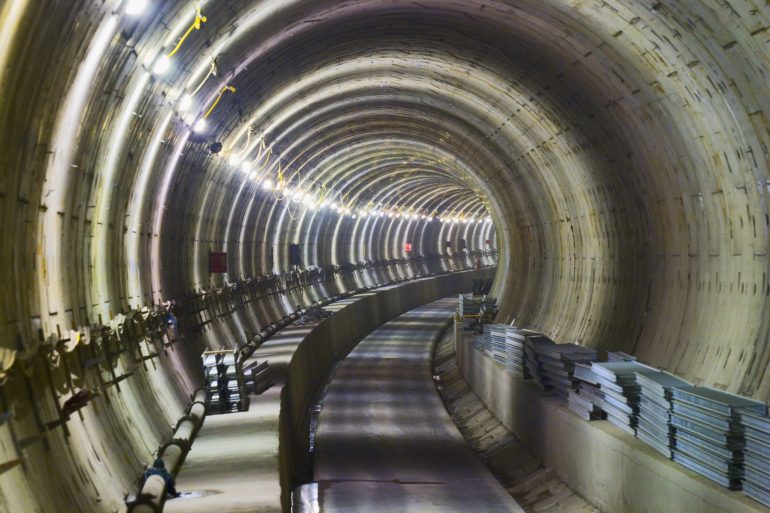
The Channel Tunnel Extension under construction (Credit: David Sailors via Getty Images)
At its busiest, the project employed around 13,000 workers across both sides of the Channel, approximately half in the UK and half in France. Over the course of construction, the workforce was drawn from across Europe. Ten workers were killed during the project, and their names are commemorated at the UK and French terminal sites.
7. The spoil created a new piece of England
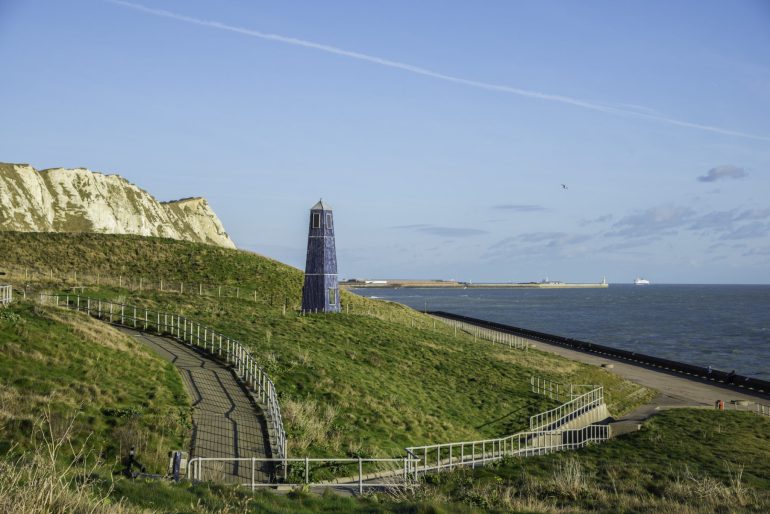
Samphire Hoe Country Park (Credit: Napattra Sritawatvia via Getty Images)
Excavating the tunnels produced approximately 5 million cubic metres of material. Rather than being dumped at sea, the spoil excavated from the English side was used to create Samphire Hoe, a 30-hectare nature reserve at the foot of the White Cliffs of Dover. Today it’s home to over 180 species of plants and a variety of wildlife, and is one of the largest man-made pieces of land added to England in modern times.
8. It cost more than twice the original estimate
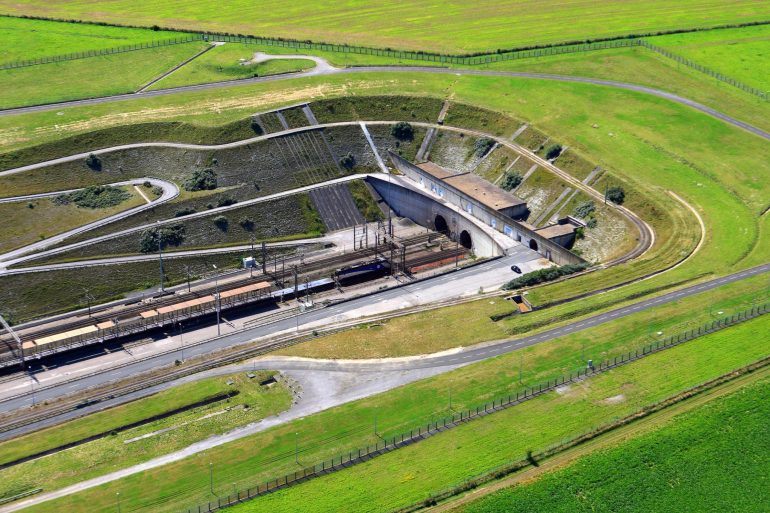
The project was staggeringly expensive (Credit: Philippe TURPIN via Getty Images)
The Channel Tunnel was privately financed rather than funded by governments. The original cost estimate of £4.8 billion eventually rose to approximately £10 billion by the time the tunnel opened in 1994. The financial strain during construction led to multiple refinancing negotiations between the project’s operators – Eurotunnel – and a consortium of more than 200 banks. The project’s cost overruns became a significant case study in large infrastructure finance.
9. The tunnel opened in two stages
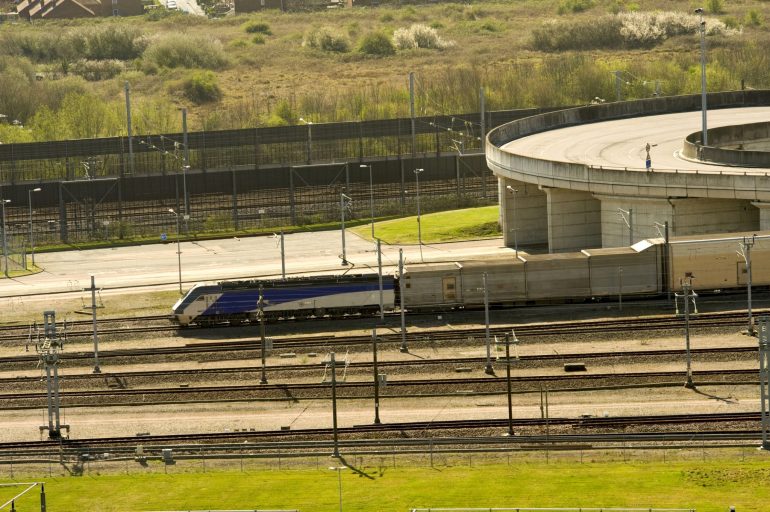
The freight shuttle service began operation in May 1994 (Credit: clubfoto via Getty Images)
The Channel Tunnel did not open to the public in a single event. The freight shuttle service began operation in May 1994, followed by ‘Le Shuttle’ vehicle-carrying service for cars and coaches in December of that year. Eurostar passenger train services between London, Paris, and Brussels began in November 1994. Full commercial operations across all services were not running until well into 1995.
10. It broke a world record
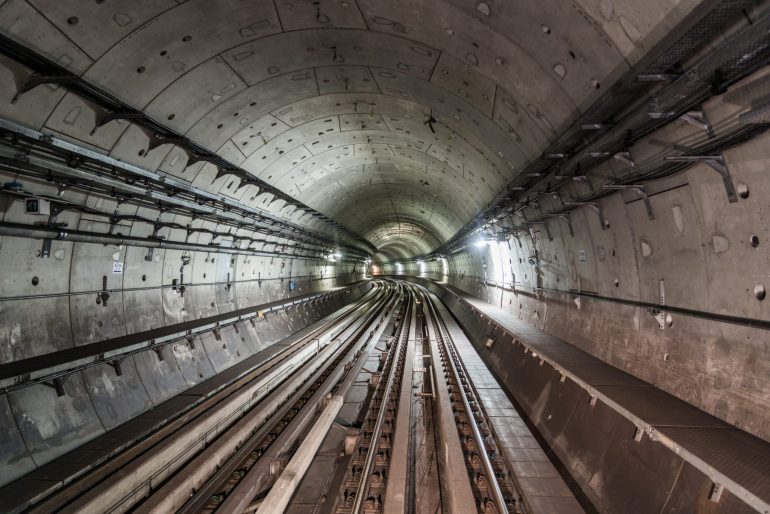
The Channel Tunnel is one of the world's longest rail tunnels (Credit: AerialPerspective Works via Getty Images)
With 37.9 of its 50km length under the English Channel, the Chunnel holds the record for the longest undersea section of any tunnel in the world. The deepest point of the tunnel sits approximately 75 metres below the seabed, and around 115 metres below sea level at its lowest point. And this isn’t its only global accolade. It’s also the world’s third longest rail tunnel and, in 1994, was recognised by the American Society of Civil Engineers as one of the seven modern wonders of the world.
The End of the Line
Next stop, England (Credit: stocknshares via Getty Images)
The Channel Tunnel is far more than a fast way to cross from Kent to Calais. It’s the result of centuries of ambition, years of planning, and an astonishing level of engineering precision. From giant tunnel boring machines and carefully chosen geology to the creation of Samphire Hoe, every stage of the project tells a story. The Chunnel didn’t simply connect two countries beneath the sea; it proved what’s possible when bold ideas meet engineering might.