Copyright once felt fairly straightforward. A person wrote the book, painted the picture or composed music, and the law stepped in to help protect that original work. Now, however, artificial intelligence has muddied the waters. Machines can produce articles, artwork, songs and videos at remarkable speed, often by learning from huge collections of existing human-made material.
So, in an age of prompts, plagiarism fears, and synthetic creativity, who really owns what?
Before the Bots
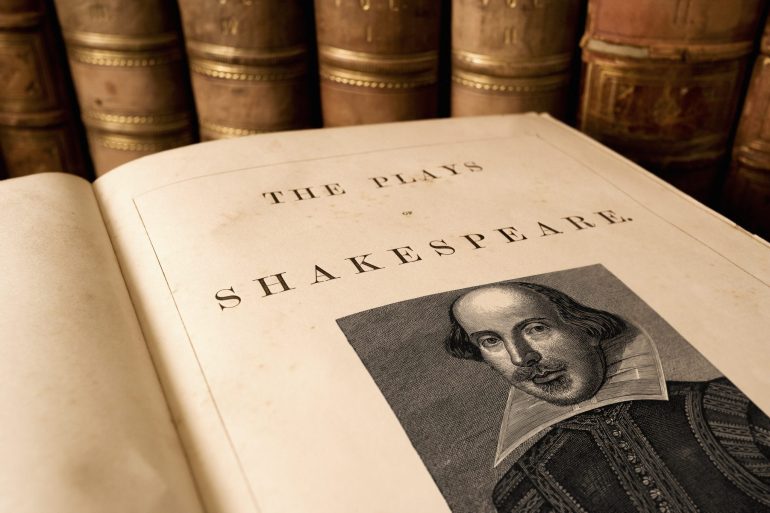
The Plays of Shakespeare (Credit: duncan1890 via Getty Images)
At its heart, copyright was designed around human creators. It gives people legal protection over original work, whether that means a novel, a documentary, a photograph or a piece of music. The basic bargain is simple enough: make something original, and you gain certain rights over how it’s copied, shared or adapted.
That system made sense in a world where creative work usually had a visible author. Even when disputes arose over imitation or influence, there was still a recognisable person, company or team at the centre of the argument. AI complicates that picture because it generates material without fitting neatly into a tidy little box of authorship.
How AI Learns from Existing Work

AI systems take in a staggering amount of data (Credit: imaginima via Getty Images)
Generative AI systems don’t pluck ideas from thin air. They’re trained on enormous datasets containing text, images, audio and video, much of it gathered from across the internet. In effect, they learn patterns by absorbing vast quantities of material that already exists.
That’s where copyright concerns begin. If an AI model has learned from novels, journalism, film scripts, paintings, or songs that were still under copyright, some argue this amounts to unauthorised use. Others say the system isn’t storing the works in a traditional sense, but learning from them much as a human might. The row, then, isn’t just about copying, but about what copying even means when a machine’s involved.
Inspiration, Imitation and Infringement

All creatives are influenced by what has come before (Credit: Nadzeya Haroshka via Getty Images)
Creative work has always borrowed from what came before. Artists influence artists, filmmakers reference older films, and musicians build on familiar sounds. Copyright law has long accepted that inspiration is part of culture. It generally steps in when similarity becomes too direct or substantial.
AI makes that line much harder to spot. A generated image might not be an exact duplicate of any one painting, yet still feel uncomfortably close to a living artist’s style. A song created by AI may not lift a melody note for note, but it might echo a performer’s sound so clearly that it raises eyebrows. In other words, the question is no longer just “Was this copied?” but also “How much resemblance is too much?”
Who Owns AI-Generated Content?

Ownership of AI-generated content is a legal grey area (Credit: Malte Mueller via Getty Images)
Then comes the awkward question of ownership. If a person types in a prompt and an AI tool produces a polished image, who owns it? The user? The company behind the software? Nobody at all?
This is one of the thorniest parts of the debate. Copyright law in many places has traditionally hinged on human authorship, which means fully machine-generated work may struggle to qualify for protection in the usual way. That leaves businesses, artists and publishers in a strange position. They may be able to use AI-produced content, yet still be uncertain about whether it can truly be owned, licensed or defended against claims or copying by others.
The Problem of Style Theft

Artists are feeling exposed to AI models that can imitate creative identity (Credit: AnnaStills via Getty Images)
One of the most emotional flashpoints in the AI copyright debate is style. Many artists are less worried about a single copied image than they are about systems trained to imitate the look and feel of their work. Illustrators, voice actors, writers and musicians have all raised concerns that their labour is being quietly absorbed into tools designed to reproduce something very close to their creative identity.
The trouble is that copyright doesn’t always protect style in itself. A person can’t usually claim ownership over a general aesthetic, tone or technique. Yet AI can mimic these things at such speed and scale that what once felt like influence now starts to feel more like industrialised imitation. That’s left many creators feeling exposed, even when the law remains frustratingly hazy.
Deepfakes, Voice Clones and Digital Doubles

Deepfakes and clones are of increasing concern, legally and culturally (Credit: SmileStudioAP via Getty Images)
The issue stretches beyond books and artwork. AI can also generate convincing imitations of real people, from cloned voices to fabricated video footage. Suddenly, copyright overlaps with publicity rights, performance rights and privacy concerns.
A synthetic voice that sounds exactly like a well-known actor may not just raise copyright issues. It may also touch on whether someone’s identity, likeness or performance has been exploited without permission. The result is a messy legal patchwork in which old rules are being asked to cope with very new tricks.
Can the Law Keep Up?

Copyright law is moving at astonishing speed (Credit: boonchai wedmakawand via Getty Images)
Copyright law has adapted to new technology before. Printing presses, photography, radio, television, home taping and the internet all forced legal systems to rethink how creative work could be protected. AI is simply the latest, and perhaps strangest, chapter in that story.
Even so, the speed of change has been startling. Legislators, courts and regulators are now trying to answer questions that barely existed a few years ago. Should AI companies be required to disclose training data? Should creators be able to opt out of having their work used and should this be set as opt-out by default? Should AI-generated content carry labels? And can copyright law still do the heavy lifting on its own, or will entirely new rules be needed?
Creativity After the Copyright Crunch

AI can be a great help with learning and creativity (Credit: Vanessa Nunes via Getty Images)
For some, AI is a useful creative assistant. It can help with early ideas, speed up repetitive tasks, and open the door to new ways of making images, text and sound. From that perspective, it’s simply the latest in a long line of tools that have changed how creative work gets made.
For others, however, AI doesn’t feel like a neutral tool at all. If these systems are trained on existing human-made work without clear consent, payment or credit, then the technology can look less like innovation and more like appropriation at scale. For many artists and writers, that’s the real sticking point.
That’s why the copyright debate has become so charged. Supporters argue that AI could expand creative possibilities, while critics counter that those possibilities shouldn’t come at the expense of the people whose work helped train the machine in the first place. Either way, copyright remains at the centre of the argument, because it’s the mechanism used to decide how creative labour is protected, rewarded and respected.
Copy, Right?

AI is very good, but will it ever replace true artistry? (Credit: gorodenkoff via Getty Images)
Copyright in the age of AI isn’t just a legal story. It’s also a cultural one. It asks what originality means when machines can remix human expression in seconds, and whether the rules built for painters, authors and composers still work when the newest “creator” is a line of code. The answers are still taking shape. Until then, one thing is clear: as artificial intelligence grows more capable, the battle over ownership, authorship and imitation is only just getting started.