In 1816, large parts of Europe and North America shivered waiting for a summer that never came. Frost bit into June harvests, rivers froze in July, and thunderous grey skies refused to clear. The crops failed, livestock perished, and hunger shadowed millions of people. The sun itself seemed to dim, as if a huge curtain had been drawn. This was the year that lost its summer.
From the streets of London to the farms of New England, terror took hold. Was this the beginning of another ice age? Some thought it was divine punishment. Or perhaps a cosmic event beyond human understanding. This wasn’t the age of twenty-four hour instant, as-it-happens news. Theories abounded, but whatever the cause it was clear that something had gone catastrophically, terribly, eerily wrong.
But behind the chill and the darkness was a story that began half a world away with the eruption of Mount Tambora in Indonesia a year earlier. It was a volcanic blast so immense it reshaped the climate, rewrote human history, and left the planet in the grip of a silent war with no enemy.
The lost summer of 1816 was baffling in the extreme. The forecast was gloomy, but the story itself, fascinating.
The Eruption of Mount Tambora
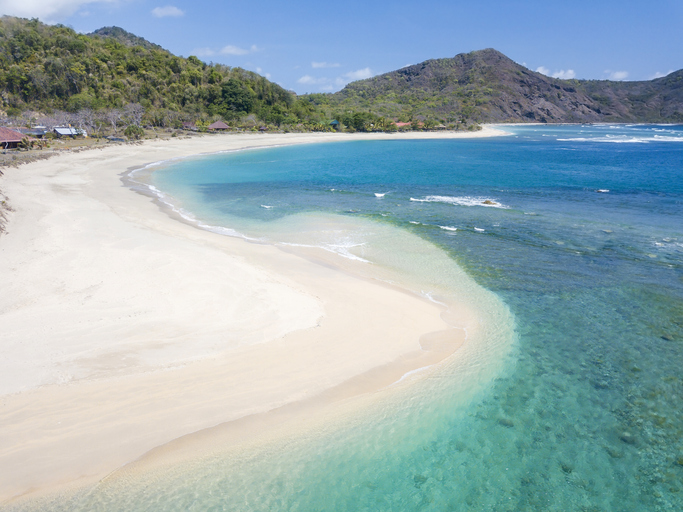
The beautiful Indonesian island of Sumbawa (Credit: Westend61 via Getty Images)
In April 1815, on the remote Indonesian island of Sumbawa, the Earth tore itself open. Mount Tambora, a towering stratovolcano (then) more than 4,300 metres high, had rumbled ominously for three years, until the evening of 5 April when it erupted with a fury unmatched in recorded human history. The detonation was so enormous, recent analysis suggests it may have been heard as far away as Vientiane, the capital of Laos, more than 3,300 kilometres away.
Over several days – with a climactic phase during the 10th and 11th of April – the mountain spewed fire, ash, and molten rock into the sky, its once-majestic peak collapsing in on itself to form a vast caldera more than six kilometres across. When the eruption of Mount Tambora finally died down, the volcano was almost 1,500 metres shorter, such was its destructive power.
As the science behind the eruption was studied, volcanologists and geologists have estimated that more than forty-one cubic kilometres of dense rock was expelled in the explosion, which equates to roughly 100 – 110 billion tonnes. Ash blanketed islands hundreds of miles away, and the sun vanished behind a veil of darkness that lasted for days. Perhaps as many as 60,000 people perished on Sumbawa and neighbouring islands, buried in pyroclastic flows or succumbing to famine and disease in the aftermath.
But the devastation was just beginning. Tambora’s true reach extended far beyond Indonesia to the very heights of the stratosphere – around 43,000 metres up – where fine volcanic particles began their slow, invisible drift around the world. Within a year, those particles would dim sunlight itself and bring on an astonishing climate collapse. Some called it ‘Poverty Year’ or ‘Eighteen Hundred and Froze to Death.’ But it’s more well-known as the Year Without a Summer.
The Distant Consequences
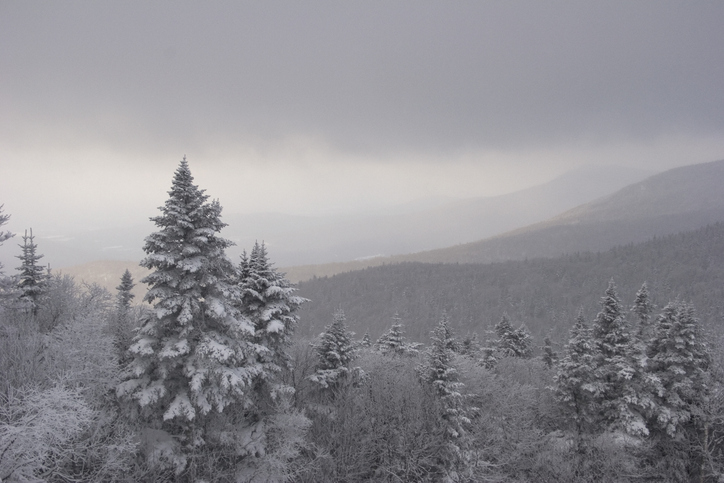
Snow fell over the hills of Vermont in July (Credit: Johannes Kroemer via Getty Images)
By the spring of 1816, farmers across the Northern Hemisphere were beginning to get unsettled. In New England, the sun shone dim and coppery through what locals called a ‘dry fog’ that no wind could disperse. Birds died, crops failed, frost struck in June, and snow fell on the hills of Vermont in early July. From Maine to Pennsylvania, families huddled around hearth fires long after winter should have ended, but they didn’t know why.
And Europe fared no better. In Switzerland and southern Germany, relentless rain drowned the fields, rivers overflowed, and harvests failed. Livestock died and famine spread. In France, grain prices soared beyond the reach of the poor. In Britain, hunger marches and protests broke out. Even as far south as Italy, ominous red sunsets lit the horizon – the reflection of volcanic particles high in the upper atmosphere.
No one yet realised that these miseries shared a common cause. The year that lost its summer had arrived.
The Human Cost
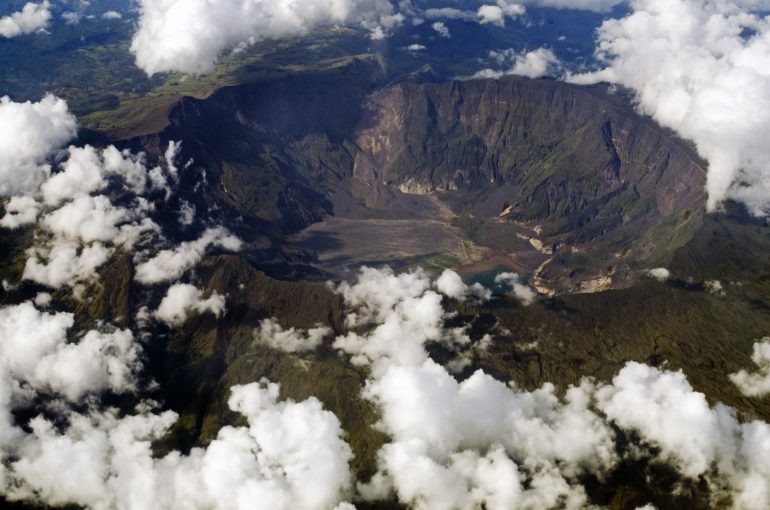
Mount Tambora (Credit: EyeEm Mobile GmbH via Getty Images)
For millions of people, the lost summer of 1816 was one of unthinkable hunger and hardship, but above all, fear. The temperature drop – global temperatures fell by around half a degree Celsius on average, with larger regional swings – was enough to shatter the fragile balance of rural life. In villages across Europe, entire harvests failed. Wheat, oats, and potatoes rotted in sodden fields or froze before they ripened. With food supplies vanishing, prices soared to unprecedented levels. Starving families boiled weeds for soup or stripped bark from trees to survive. In Ireland and Scotland, famine drove people to emigrate. In Germany and France, riots broke out as desperate crowds looted shops and grain stores.
In America, the story was just as grim. In the northeastern states, the ground froze solid in June, and farmers watched helplessly as frost covered their land. Livestock starved because there was no feed, and entire communities abandoned their farms in search of more forgiving climates to the west.
But the toll was measured in more than hunger alone. There’s no universally agreed number of deaths in Europe and North America but it could well be in the tens of thousands as the knock-on effects of the eruption of Mount Tambora took hold. Religious communities spoke of the end of days, and for almost a full year, half the world lived beneath a dimmed sun, uncertain if warmth, light, or hope would ever return.
Other Possible Contributors
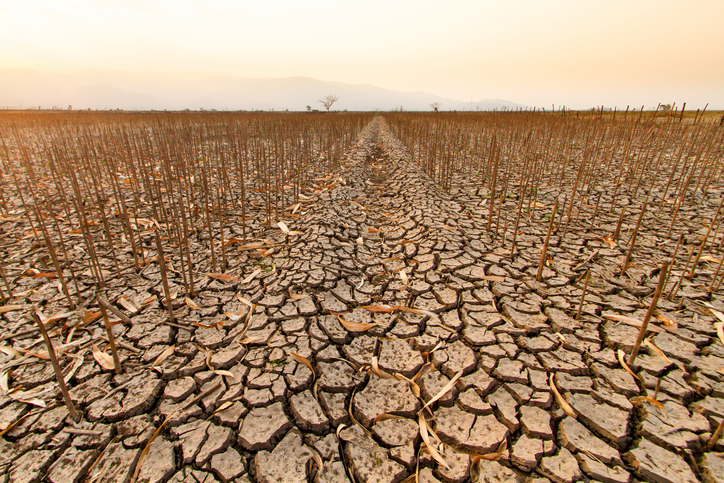
To many, the failed harvests felt like a biblical curse (Credit: piyaset via Getty Images)
Most historians and climate scientists view the year without a summer not as a single-cause disaster, but as ‘Tambora plus a number of amplifiers.’ The volcano blasted vast amounts of sulfate aerosols high into the stratosphere, scattering sunlight and cooling much of the Northern Hemisphere the following year. But this sudden chill struck a world already trending cold.
The early 1800s coincided with the Dalton Minimum – a lull in solar activity – and with the lingering chill of the Little Ice Age. Ice-core records even hint at another major, unidentified eruption around 1809 that may have pre-cooled the atmosphere before Tambora delivered the knockout blow. Once that debris was in play, the global climate system did what it always does – it turned minor unease into regional chaos. Changing wind and storm patterns meant that while some regions drowned under freezing rain and failed harvests, others experienced far milder effects, and this may well explain why the lost summer of 1816 felt like a biblical curse in some places, and a rough season in others.
For those who lived through it, none of this was visible. They saw only dim skies, ruined crops, and the spectre of hunger.
Theories & Mysteries
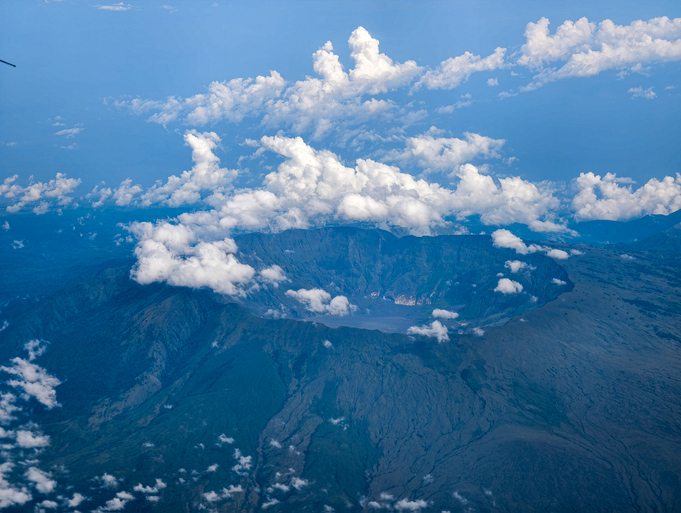
The caldera of Mount Tambora (Credit: Jimmy Tandjoeng via Getty Images)
Even as scientists now trace the year without a summer to the eruption of Mount Tambora, the mystery of 1816 endures in imagination and folklore. In its own century, explanations multiplied as quickly as the rumours they fed. Across America and Europe, preachers declared it an unmistakable sign of divine wrath, a final warning before apocalypse. Others believed the heavens themselves had shifted. Some blamed comet tails for hiding the sun, while newspapers speculated that vast dry fogs of cosmic dust had drifted into the upper air. Stories spread that the planet’s tilt had changed, or that vast underground fires were burning through the Earth’s crust.
In later generations, the myths of the year that lost its summer only deepened. Nineteenth‑century mystics wrote of secret cataclysms beneath the sea and lost continents rising up out of the Earth. Early science-fiction writers wondered if the planet had passed through a trail of comet debris, or if a solar malfunction had dimmed the light of day. Modern fringe theorists still revisit these tales, blending climate catastrophe with the cosmic and paranormal.
The truth, however, remains extraordinary enough – one volcanic blast, so powerful it was enough to darken skies across the world.
The Long Term Legacy
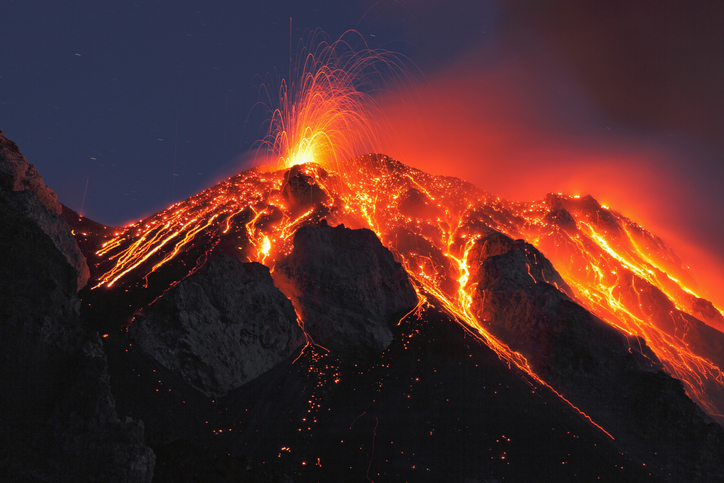
Are earth's natural fractures the cause of earthquake lights? (Credit: Westend61 via Getty Images)
The legacy of the year without summer extends far beyond the misery of 1816. For scientists, it provided one of the earliest glimpses into how volcanic eruptions can alter the planet’s climate on a global scale. Over the decades, researchers began piecing together evidence from diaries, crop records, and later, the frozen archives of ice cores, where each layer preserved microscopic traces of the aerosols the eruption of Mount Tambora had cast into the stratosphere.
Tambora’s eruption became a touchstone for understanding how sunlight, aerosols, and ocean currents interact to shape weather over months and years. Modern climate models often use 1816 as a historical dataset, measuring how volcanic forcing affects temperature, rainfall, and even monsoon behaviour. The event also offered a preview of how small temperature shifts can cascade into famine, migration, and societal strain – insights that now inform and shape research into future climate risks.
When the Sun Took a Holiday
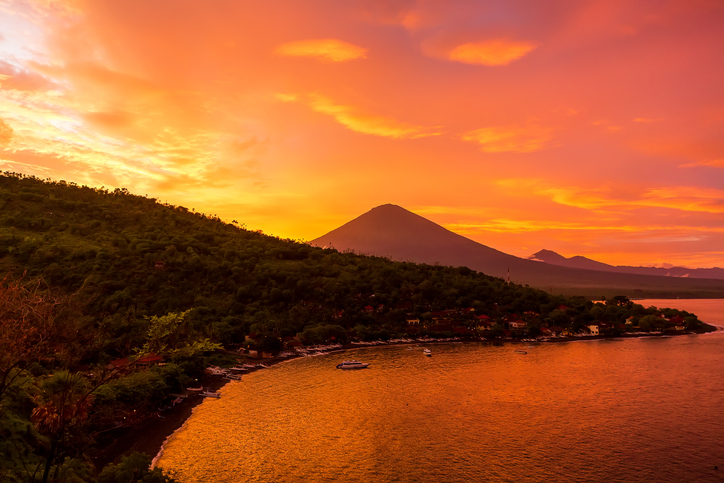
Sumbawa in Indonesia (Credit: Nuture via Getty Images)
What began as a thunderous eruption on a remote island rippled outward to darken skies and chill continents. For the people who lived through it, it was the year the sun seemed to vanish. For those who study it now, it remains proof that a single volcanic event can tilt the balance of the entire world.