August 31st was a night just like any other in the summer of 1944 in the small town of Mattoon, Illinois. The air was humid, radios crackled with news of the war, and families were settling into another unremarkable night in Middle America. But as the hour got late, something strange drifted through the quiet streets. A faint, sweet scent – followed by screams. ‘Anesthetic Prowler on Loose in Mattoon’ declared the local Mattoon Journal-Gazette… So what was the truth behind this bizarre occurrence?
Over the following weeks, dozens of Mattoon residents claimed they’d been sprayed with a mysterious gas that left them nauseous, dizzy, weak, and unable to move. Panic rippled through the town as reports flooded in of a shadowy figure seen darting down alleyways. Within days of the first reported attacks, the newspapers had a name for the culprit – The Mad Gasser of Mattoon.
Was a phantom anesthetist stalking the streets, armed with poison? Or was something more elusive at work – a case of mass hysteria born from wartime fear and sleepless nights? Police investigated, close neighbours watched each other, and the town’s calm turned to chaos.
Eight decades later, the mystery still lingers. Who – or what – was behind the Mattoon gas attacks that terrorised this sleepy Illinois town? And why, even after all these years, does the story of the Mad Gasser continue to take our breath away?
Daytime Peace, Nighttime Panic
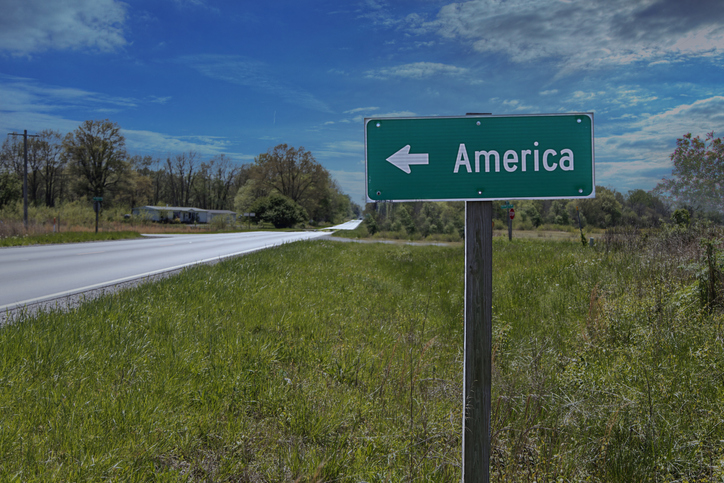
Mattoon, Illinois is the very essence of Middle America (Credit: larrybraunphotography.com via Getty Images)
In the late summer of 1944, the people of Mattoon, Illinois, were living much like any other small Midwestern town at the tail end of World War II. Many of the town’s populace were serving overseas, while those at home worked long hours in local factories supporting the war effort. The August nights were hot and still, with windows left open to catch what little breeze might pass through. It was a community used to a certain quiet – until that calm was abruptly broken.
On the night of August 31, a Mr Urban Raef of Grant Avenue woke up to a faint, sweet smell and soon experienced nausea, vomiting, and a burning sensation in his throat. His wife thought to go downstairs to check the gas cooker, but she was partially paralysed and couldn’t get out of bed. The episode – which may have been the first by the Mad Gasser – was brief and unsettling, but at the time, seemingly isolated.
The same night (some reports suggest the following morning), an unnamed mother woke to the sound of her daughter coughing, but like Mrs Raef, couldn’t get out of bed.
The following night, September 1, around 11 PM, Mrs. Aline Kearney was at home in Marshall Avenue (approximately three miles from Grant Avenue) while her husband Bert was working. She noticed a strong, sweet, ether-like smell drifting into the house. At first she assumed it was flowers from her garden, but within minutes she began to feel weakness in her legs and a sensation of partial paralysis that left her frightened and struggling to move.
When her husband returned, he also detected the unusual odour. As he checked the property, he reported seeing someone near a window, but the figure fled into the night before Bert could confront him. Was this the so-called Anesthetic Prowler?
Police were called and investigated the scene but found no physical evidence of gas or an intruder. The incident was reported in local newspapers the following day, becoming the first widely publicised case in what would soon be known as the mystery of the Mad Gasser of Mattoon.
As the Shock Spreads, Reports Multiply
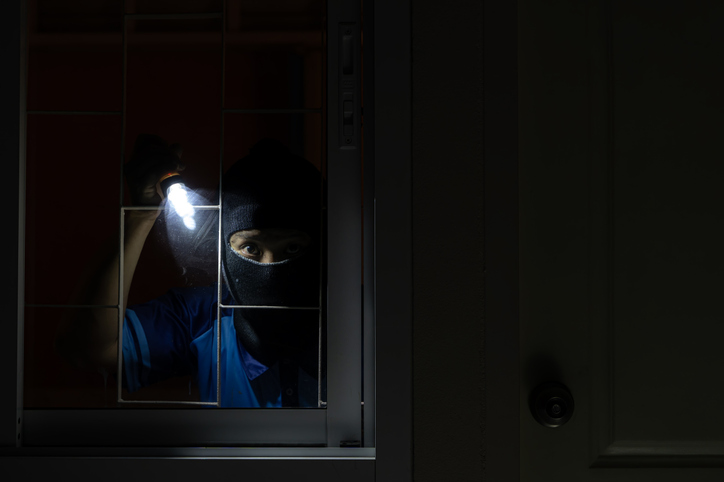
Was a Mattoon local targeting residents? (Credit: jittawit.21 via Getty Images)
In the immediate aftermath of the first of the reported Mattoon gas attacks, the Raef and Kearney families did what most people in a small town would do – they spoke to neighbours, relatives, and the local police. Word of a strange gas and sudden illness began to circulate across garden fences and front porches. At first, reactions were mixed. Some treated the reports of the bizarre phantom anesthetist as an odd but isolated curiosity, while others were immediately uneasy, especially with wartime anxieties already running high. The idea that someone – perhaps even someone known locally – might be targeting homes at night unsettled a community used to feeling relatively safe.
The police took statements from the alleged victims and checked the affected houses for obvious signs of forced entry or chemical residue. They didn’t initially have clear evidence of a crime, but the unusual nature of the complaints made them difficult to dismiss outright. Within days, the Journal-Gazette began to give the Mattoon gas attacks story more space, moving from short mentions to more detailed coverage of the alleged incidents, as well as the concern that was running through the community. As more residents came forward with similar accounts of this ‘Anesthetic Prowler’, the story gained momentum, and a classic feedback loop emerged – reports fed media interest, and media attention encouraged others to reinterpret strange smells or minor symptoms as possible signs of the same mysterious gas.
The Phantom Anesthetist: Searching for a Face
What was making Mattoon's petrified residents sick? (Credit: sarayut Thaneerat via Getty Images)
As more and more reports came in, a rough picture of the supposed Gasser of Mattoon began to take shape, but it was far from consistent. Some residents described seeing a tall, thin figure lurking near windows or moving quickly down alleys, sometimes said to be dressed in dark clothing. Others mentioned a person carrying what looked like a spray gun or a small device making a motorised buzzing sound, while many victims admitted they had not seen anyone at all, only smelled the strange odour and felt its effects. A few residents said they found footprints and tears in window screens, and one unnamed woman even claimed to have encountered a man in her bedroom who sprayed her with a mysterious substance.
The first piece of physical evidence was found by Carl and Beulah Cordes who lived on North 21st Street. A white cloth, described as slightly larger than a man’s handkerchief, was on their front porch. They later suggested it was placed there to knock out the family’s dog in order for an intruder to get into their house. Beulah picked it up and sniffed it and, so she said, she became ill, like she’d had an electric shock. Her face became swollen, she vomited, and she had a burning sensation in her mouth and throat. She also, like many other alleged victims, experienced partial paralysis.
An empty lipstick and a skeleton key were also said to have been found near the cloth, but after examination, the material was found to be clean of any type of drug or chemical that could explain Beulah Cordes’ symptoms.
One of the last victims, Bertha Burch, described the assailant as a woman dressed as a man, and claimed she found women’s footprints near her home. The lack of a clear, shared description made it difficult for police to identify a specific suspect, yet the idea of the Mad Gasser moving silently through the neighborhood took hold in local imagination.
The Strange Substance
Accounts of the ‘gas’ itself were just as varied as the descriptions of the Mad Gasser. Victims commonly spoke of a sweet or sickly smell, sometimes compared to cheap perfume or industrial chemicals, followed by symptoms such as nausea, dizziness, shortness of breath, or temporary paralysis in the legs. Those with chemical knowledge suggested it could have been chloropicrin, a poisonous gas with a sweet smell, but no evidence was ever found.
Without a captured suspect or a recovered device, the Gasser of Mattoon remained, at least officially, a shadow, present in stories and headlines, but elusive in real life.
A Town Under Siege
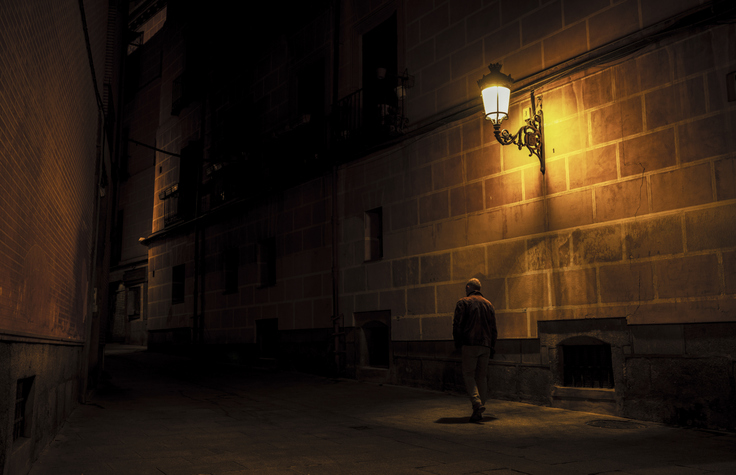
Who - or what - did people claim to have seen in Mattoon's dark alleys? (Credit: Sentir y Viajarvia Getty Images)
The main cluster of the Mattoon gas attacks lasted a little over two weeks, from August 31 to mid-September. During that window, local newspapers recorded a growing number of complaints, ranging from clear, detailed accounts of strange smells and physical symptoms to more ambiguous reports of unease or suspected prowlers.
At the height of the scare, armed vigilante groups hunting for the Mad Gasser patrolled the streets of Mattoon, and there was a very tentative list of possible suspects, including amateur chemists, or pranksters who let a practical joke get out of control. A local Boo Radley-type character was suspected of having a laboratory in his basement and interviewed, and police even resorted to contacting local psychiatric institutions for news of recently released patients. One woman who loaded her husband’s shotgun for safety was reported to have accidentally blown a section of her kitchen wall out.
Estimates of how many attacks occurred vary, depending on how strictly incidents were defined and which reports were considered credible. Some sources count around a dozen well-documented cases, while others, including more doubtful or second-hand stories, push the total closer to thirty or more. What’s clear is that, for a brief period, Mattoon experienced a concentrated wave of fear. Police increased patrols, residents armed themselves or stayed indoors, and people’s ordinary routines were unsettled by the possibility that the next knock at the door may not be a welcome guest.
The Prevailing Theories

Secret experiments? genuine assailant? Hysteria? No-one knows... (Credit: Jorgefontestad Getty Images)
Although the Mattoon gas attacks lasted just a few weeks, the debate over what really happened has stretched on for decades. Contemporary accounts and later analysis broadly cluster around four main explanations – mass hysteria, a real assailant, military or government experiments, and industrial or chemical leaks. Each theory attempts to reconcile the same set of facts – a flurry of reports over roughly two weeks, inconsistent physical evidence, and a community already under wartime strain.
Mass Hysteria
The mass hysteria explanation remains the most common. In this view, a small number of isolated incidents, amplified by newspaper coverage and wartime anxiety, primed residents to interpret ordinary smells, minor illnesses, or nighttime sounds as part of a larger pattern. Once the idea of a “Mad Gasser” took hold, more people came forward with similar stories, not necessarily through deceit, but through suggestion and fear. This would help explain why clear, verifiable physical traces were so scarce, and why the reports tapered off once police presence increased and the press started asking questions.
A Genuine Assailant
Was there a real phantom anesthetist? It’s a plausible argument, given the consistent symptoms such as nausea and dizziness in households, plus fleeting sightings of a tall figure with a spray device fleeing the scene of some of the attacks. Yet no arrests, weapons, or conclusive evidence ever materialised.
More Speculative Ideas
Over the years, clandestine military or government experiments have been considered as the cause of the Mattoon gas attacks, however there’s no documented evidence connecting Mattoon to any known program of this kind, and official records haven’t substantiated such claims.
Along similar lines, a chemical or industrial leak has been offered as a possible reason for the gas attacks. Some have suggested that the symptoms described by residents – nausea, dizziness, paralysis, vomiting and throat irritation – are compatible with exposure to certain fumes, yet there was no reported leak or malfunction of any kind in the local or wider area.
The Legacy of Fear: The Unsolved Mystery of the Mad Gasser

The debate remains alive and well on the internet and in podcasts (Credit: KinoMasterskaya Getty Images)
By mid-September 1944, reports of further Mattoon gas attacks had faded. Police patrols increased, windows closed against cooler nights, and media scepticism grew. No arrests were made, no device was found, and evidence like rags or footprints remained inconclusive. Daily life returned to wartime normal.
Today, the Mad Gasser affair represents what many see as a classic case of collective panic. It’s studied alongside other such strange events including the Tanganyika laughter epidemic in 1962 and the bizarre dancing plague in Strasbourg in 1518. Most experts attribute it to mass hysteria, collective delusion, or social contagion – a few odd incidents, fuelled by stress and headlines, that sparked widespread fear. Few still claim a real attacker was responsible, but that only keeps the debate alive in podcasts, folklore and beyond.