
Small but mighty, bees are among the planet’s most industrious workers. These winged wonders don’t just make honey; they help keep diets diverse, ecosystems thriving, and supermarket shelves stocked with everything from apples to almonds. Not bad for insects that can fit on a fingertip.
So, how do they do it? From built-in sensory superpowers to flowers that release pollen with a pop, we’re buzzing into the weird and wonderful world of bees to discover how these tiny creatures make such a mighty impact.
Let’s Start With the A, Bee, C’s
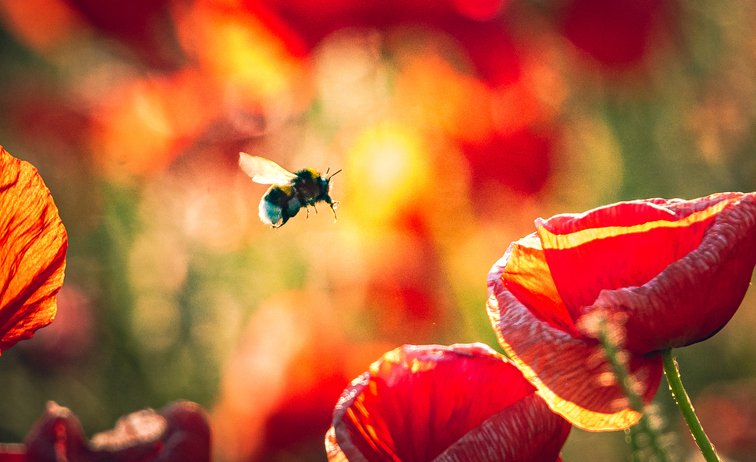
Target acquired... (Credit: ghostdom via Getty Images)
Bees are among the planet’s most remarkable survivors. The UK is home to more than 270 species, while worldwide there are at least 20,000 different kinds, with scientists still discovering more. Found on every continent except Antarctica, bees have spent around 120 million years adapting to an astonishing range of habitats, from chilly polar regions to dry, unforgiving deserts.
Flower Power
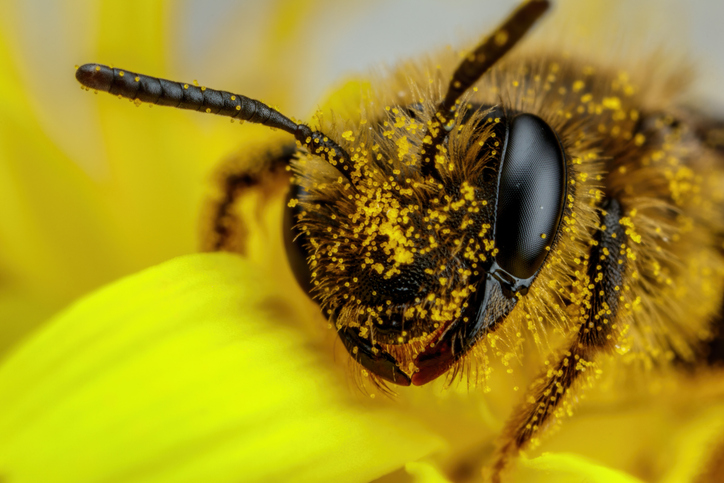
The art of pollination (Credit: John Kimbler / 500px via Getty Images)
Bees are best known for making honey, but their real superpower is pollination. As they visit flowers to collect nectar and pollen, grains of pollen cling to their fuzzy bodies and are carried from bloom to bloom. This helps plants produce fruits, seeds, and the next generation of flowers. In fact, many crops and wild plants rely on bees and other pollinators to keep things growing. It’s a beautifully messy partnership: the bee gets a meal, the flower gets a helping hand, and the world gets apples, berries, beans, and blossoms. In fact, roughly one in every three bites of food we eat depends on bees and other pollinators.
Without bees, the variety of food available would shrink and prices for certain products would climb. Almonds might vanish from our diets altogether; coffee would likely become rare and expensive; apples, avocados, onions, and many berries would all be hit hard, since they rely heavily on bees for pollination. In short, bees underpin a lot of what we eat today.
More Than Meets The Hive
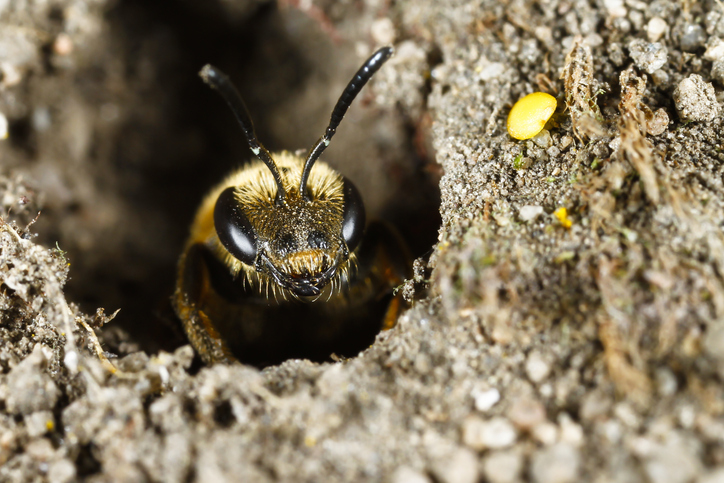
As easy as eye, bee, see... (Credit: by Brigitte Ramel via Getty Images)
Bees have two large black eyes, one on either side of the head, and they do a lot of heavy lifting. These are compound eyes, meaning each one is made from thousands of tiny lenses. Together, they help bees spot movement, recognise shapes and detect colour as they move from flower to flower. They also give bees an extraordinary field of view of more than 300 degrees, allowing them to take in over three-quarters of their surroundings at once.
But there is more to bees than meets the eye(s). Alongside those two obvious orbs, bees have a second set: three tiny dot-like eyes on top of the head, called ocelli. These do not form detailed pictures. Instead, they sense light and darkness, helping bees stay steady in flight, orient themselves and navigate. In other words, a bee is guided not by two eyes, but by five.
A Bee’s-Eye View
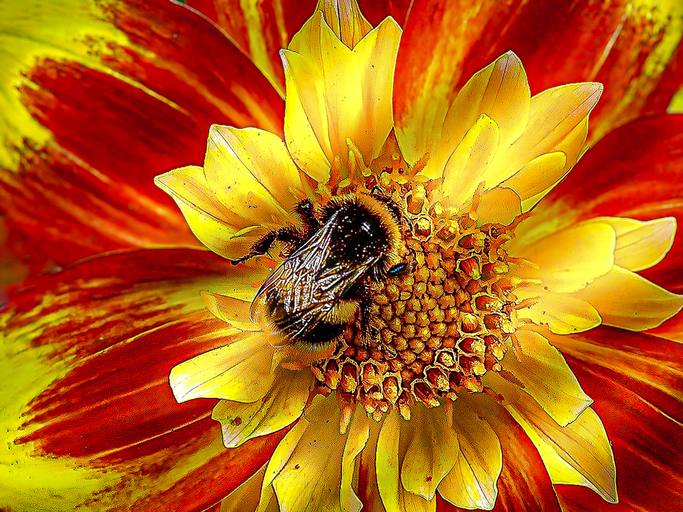
Bees can target the centre of a flower with ease (Credit: Rolf Wittke via Getty Images)
Bees see the world rather differently from humans and, frankly, with excellent taste. Studies suggest their favourite colours are purple, violet and blue, while red is effectively invisible to them. Even more fascinating, bees can see ultraviolet light, revealing hidden floral markings humans miss entirely. Many plants have evolved ultraviolet “bull’s eye” patterns that act like landing lights, guiding bees straight to the nectar-rich centre of the flower. It’s a clever bit of natural advertising. What’s more, bees can detect motion in as little as 1/300th of a second, around six times faster than humans, helping them zip between blooms with remarkable precision.
Bees Electric
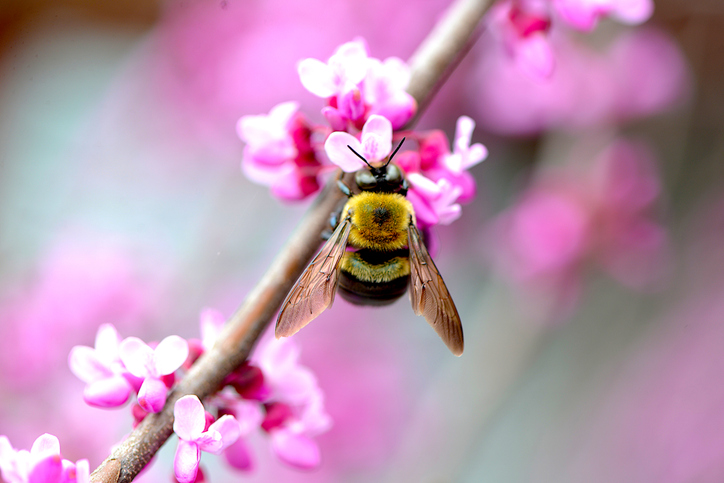
Bumblebees can build up an electric charge as they fly (Credit: Philippe Gerber via Getty Images)
As if ultraviolet patterns weren’t enough, some bees can also detect floral electric fields. Bumblebees, for example, build up a positive electrical charge as they fly, while flowers often carry weak electrical signals of their own. Research has shown that bumblebees can detect and learn from these floral electric fields, which may help them work out whether another insect has recently visited and taken the nectar. Their fuzzy bodies may play a role in sensing these subtle signals, turning bees into airborne static detectives. To us, a flower is colour and scent. To a bee, it may also be a flickering electrical message.
Shaking Their Honey Makers
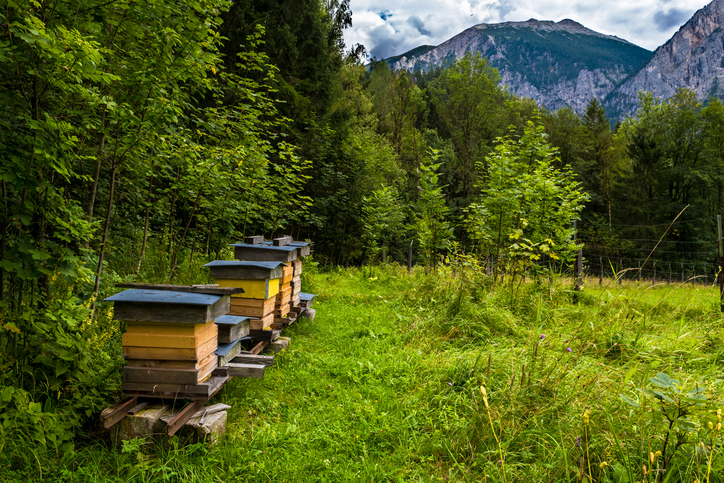
A hive of activity... (Credit: grafxart8888 via Getty Images)
Spotting a good flower is only half the job, the next trick is telling everyone else where it is. When a honey bee finds a rich food source, she doesn’t simply keep it to herself. Back at the hive, she performs the famous waggle dance: a figure-of-eight routine that tells other bees where to go. The angle of the waggle run signals the direction of the food relative to the sun, while the duration of the waggle indicates distance. It’s navigation by choreography, performed on the dark vertical surface of the honeycomb. Other workers gather round, read the moves, and set off with their own tiny flight plans. Who needs a map when you have rhythm?
The Smell of Success
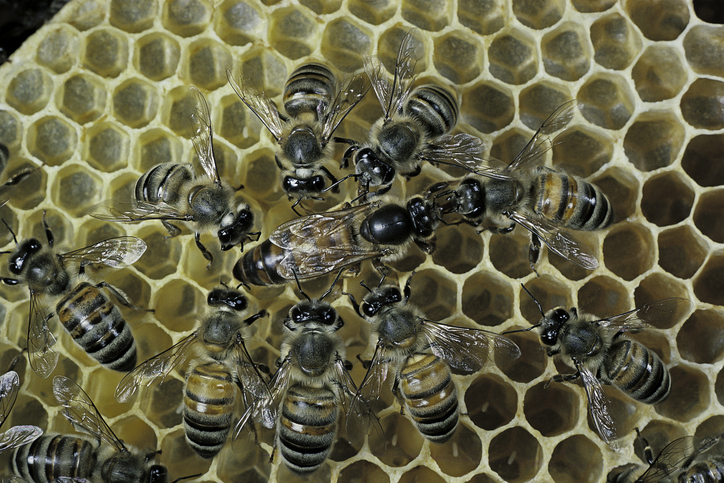
The queen bee rules the roost (Credit: Paul Starosta via Getty Images)
Bees may dance, buzz, and bump into one another, but much of hive life is also ruled by scent. Honey bee queens produce queen mandibular pheromone, a chemical blend that signals their presence and reproductive status to workers. Other pheromones help coordinate defence, foraging, and social order. In a colony of thousands, chemistry becomes command, announcement, reassurance, and alarm system. It’s a city run not by street signs or emails, but by invisible messages drifting from body to body. For such small creatures, bees have built one of nature’s most complex communication networks, and much of it happens right under our noses.
Exploding Tomato Pollen
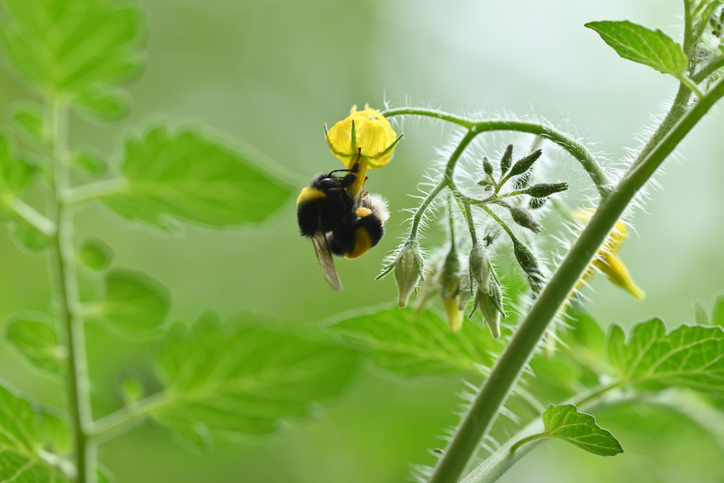
A bee wrestling with a tomato plant (Credit: Albert Fertl via Getty Images)
Bees don’t just find flowers; some have to work for what’s inside them. Tomatoes, aubergines, blueberries, cranberries, and other plants keep pollen tucked away inside specialised anthers with small openings. To unlock the prize, certain bees use buzz pollination, also known as floral sonication. A bumblebee grips the flower and vibrates its flight muscles, shaking the pollen loose in a sudden burst. In tomato flowers, this can send pollen shooting out like a microscopic explosion. Honey bees generally don’t perform this trick, which is one reason bumblebees are so valuable in greenhouse tomato production.
Built-In Baskets and Pollen Pants
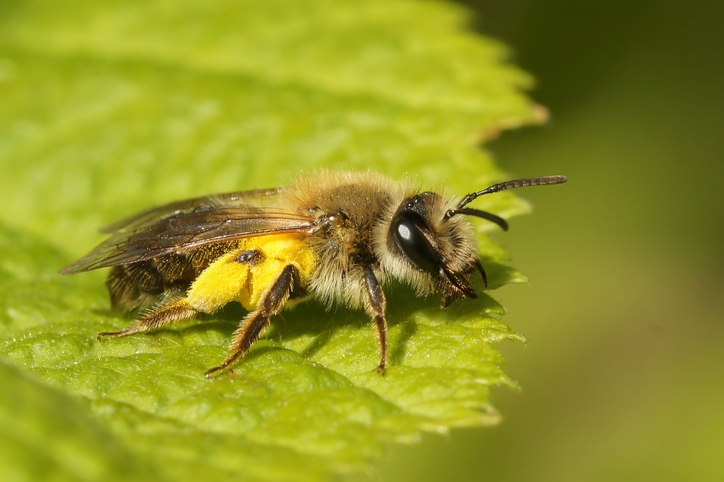
Golden saddlebags full of pollen (Credit: Wirestock via Getty Images)
Watch a bee returning from a flower-rich forage and you may spot what look like golden saddlebags on its hind legs. These are pollen loads, packed into structures often called pollen baskets. Bees collect pollen using the hairs on their bodies, then groom and press it into these leg-mounted carriers for the journey home. The result can look delightfully absurd: a tiny insect flying around in bright yellow trousers. Back at the hive or nest, pollen becomes protein-rich food for developing young. So those pollen pants are not just decorative, they’re a delivery system, pantry supply, and baby food run all in one.
Tiny Brains, Big Ideas
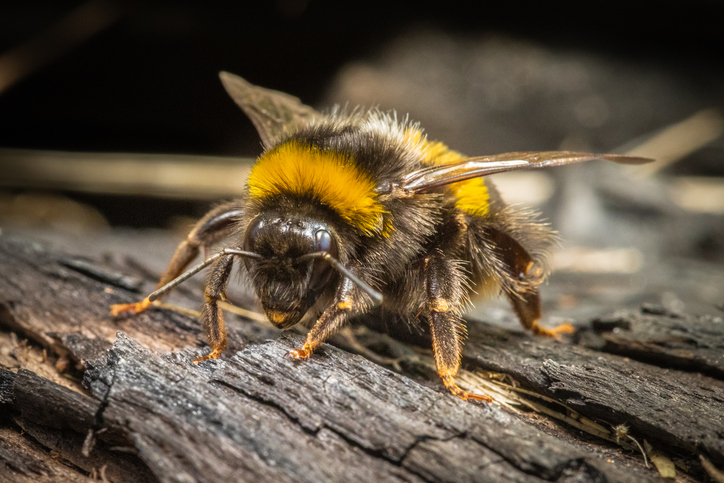
Bees are incredibly complex creatures (Credit: Alan Owen via Getty Images)
All of this – the dances, the chemistry, the navigation – raises an obvious question: how much is going on in those tiny heads? A bee brain is roughly the size of a sesame seed, but underestimating it would be a mistake. Studies have shown that honey bees can learn, remember, navigate, and even handle surprisingly complex numerical tasks. Research published in Science found that honey bees could order zero at the lower end of a numerical sequence, suggesting a form of “zero” understanding once thought to be limited to larger-brained animals. Other studies have explored bees recognising visual patterns, including face-like arrangements. None of this means bees are secretly doing algebra in the hive, but it does show that intelligence can come in very small, very efficient packages.
Home Alone
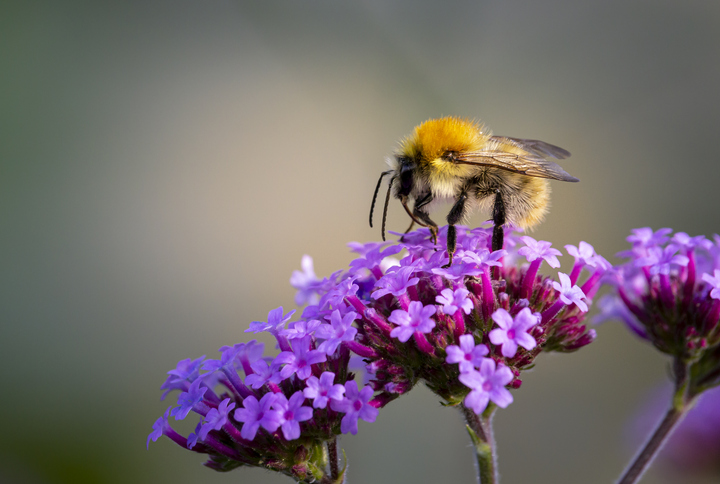
Most species of bee live solitary lives (Credit: Reinhard Bode / 500px via Getty Images)
When most people picture bees, they imagine a humming hive packed with workers, honey, and one very important queen. In fact, most bee species live nothing like this. The majority are solitary, meaning a single female builds her own nest, gathers food, lays her eggs, and leaves each youngster with a little packed lunch of pollen and nectar. There are no royal courts, no honey factories, and no buzzing city politics. Some nest in soil, others in hollow stems, wood, or tiny crevices. Honey bees may get the headlines, but they’re the exception. For many bees, home is less palace, more studio flat.
Winging It
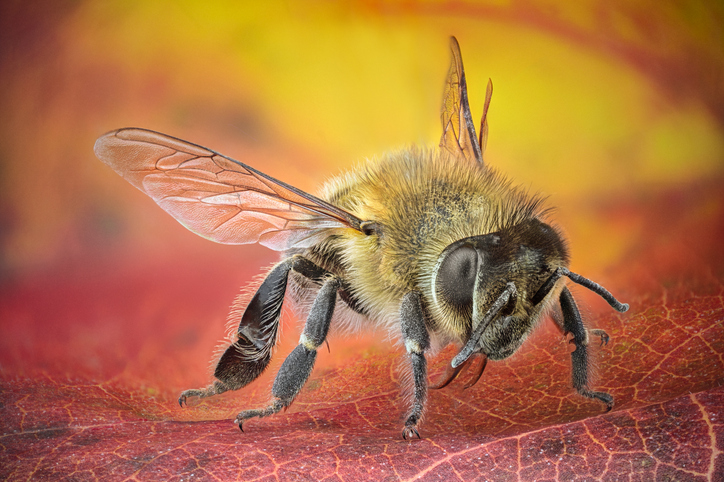
Two wings or four...? (Credit: Tsvetan Ganev-CECLII / 500px via Getty Images)
Bees may look as though they have one neat pair of wings, but they are actually flying with four. Each side has a larger forewing and a smaller hindwing, which hook together during flight using tiny comb-like structures called hamuli. Once linked, the two wings move almost as one, giving the bee better lift and control as it zips from flower to flower. When the bee lands, the wings can unhook and fold neatly back again, which is rather tidy for such a frantic-looking flyer. So yes, bees have four wings, they’re just very good at making them look like two.
The Bee-All and End-All
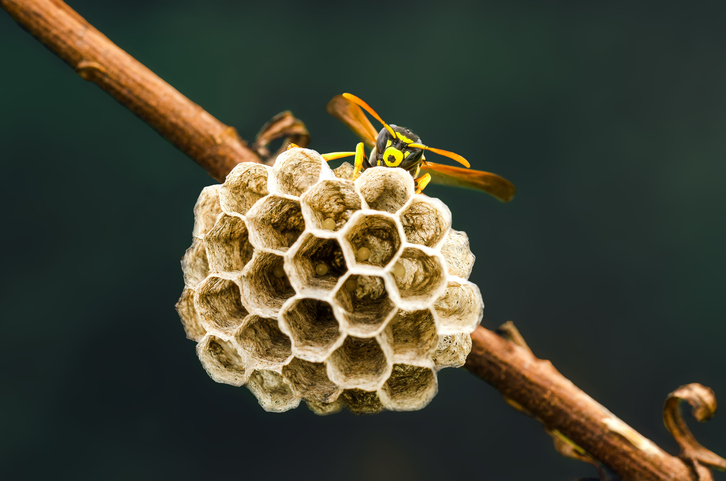
Bees are brilliant! (Credit: David Labat Seguin / 500px via Getty Images)
From five-eyed vision to floral electricity, from waggle dances to tomato-shaking buzzes, bees are far more extraordinary than their everyday garden appearances suggest. They are tiny specialists in navigation, communication, engineering, and food production, wrapped in fuzz and powered by multi-wings. So next time one bumbles past a flowerpot or vanishes into a foxglove, spare a thought for the astonishing toolkit at work. Behind that gentle hum is one of nature’s strangest, smartest, and most important little lives.