On Tuesday, 8 May 1945, Britain stepped out of the blackout and into the bunting. After years of ration books, air raid sirens, darkened windows, and anxious wireless updates, Victory in Europe Day brought something the country had been waiting for: permission to celebrate. And celebrate it did, with flags in the windows, dancing in the streets, crowds outside Buckingham Palace, and enough tea, sandwiches, and improvised merriment to fill every front garden from London to the smallest village green.
But VE Day was never one tidy national party. It was a patchwork of grand ceremony and small ad-hoc celebration, of church bells and dance halls, pub singalongs and pavement knees-ups, grand speeches and quiet remembrance. So, how did Britain mark the end of the war in Europe? From blackout curtains to street parties, we’re looking back at the sights, sounds, and spirit of VE Day.
What Was VE Day?
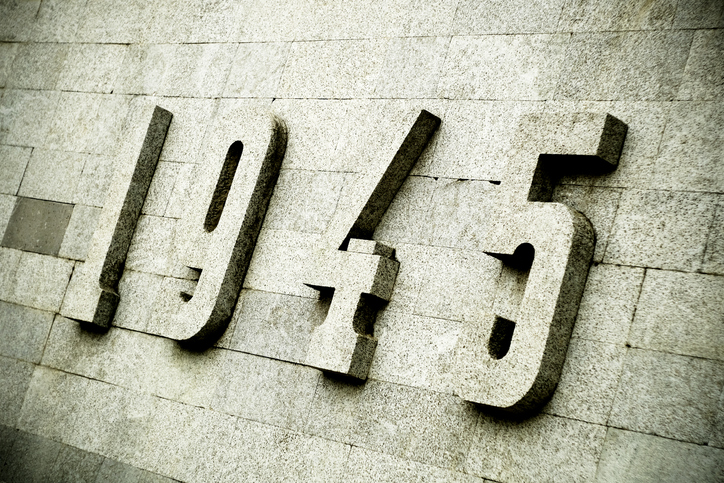
VE Day marks the acceptance of Germany's surrender at the end of WWII (Credit: Besiki Kavtaradze via Getty Images)
VE Day marked the formal acceptance of Germany’s surrender by the Allied forces and the end of the Second World War in Europe. In Britain, 8 May 1945 was declared a public holiday, giving people across the nation the chance to celebrate and take part in a day that quickly became historic.
The announcement had been expected, and many people were already listening closely for news. When confirmation came, the mood shifted almost instantly. Streets that had been shaped by wartime caution became places of overwhelming joy. For many, it wasn’t just the official victory that mattered, but the sense that normal life could begin edging back into view. Lights, crowds, noise, colour – all the things wartime Britain had learned to limit – returned with a flourish.
Britain Steps Out of the Blackout
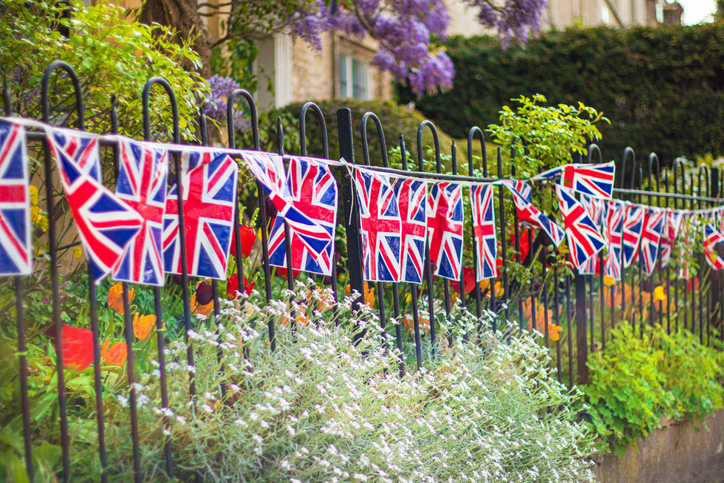
Bunting came out in towns and villages across the UK (Credit: Raylipscombe via Getty Images)
The blackout had been one of the most memorable features of wartime life. Windows were covered, streetlights dimmed or extinguished, and towns and cities took on an evening hush. Yet on VE Day, Britain was moving from darkness into light.
Even before nighttime fell, the change could be seen everywhere. Flags and streamers decorated streets. Shop windows were dressed for the occasion. Neighbours brought out chairs, tables, teapots, and as much food as could be gathered. Children played games, dressed up, sang songs, and ran races. Adults chatted over garden fences, danced to gramophones, and toasted the day.
In cities, the celebrations were huge and crowded. In smaller towns and villages, they were more intimate but no less spirited. A village green, a cul-de-sac, a school hall, or a churchyard could become the centre of the world for an afternoon.
Street Parties and Neighbourhood Cheer
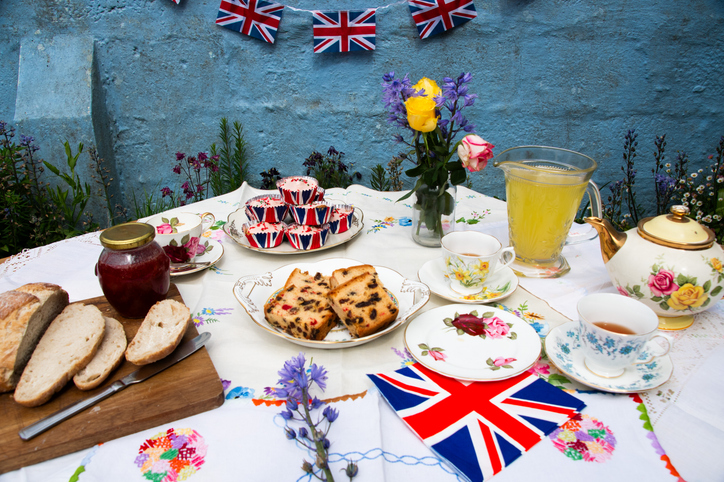
Cups of tea and bread and jam, a very British way to celebrate! (Credit: Debra Angel via Getty Images)
Street parties sprang up across Britain, often arranged quickly with whatever people had to hand. Tables were dragged outside and covered with cloth. Cups, plates, and chairs were borrowed. Food was still rationed, so the platters were pretty modest, but that hardly mattered. Sandwiches, cakes, jelly, tea, lemonade, and homemade treats were brought out to feed the masses. In fact, it was the make-do nature of these parties that gave them much of their character, the simple fact of people doing whatever they could to mark the occasion.
These local parties gave VE Day its warmth. They turned pavements into dining rooms and neighbours into hosts, guests, musicians and entertainers. It was national history lived at street level, with paper streamers overhead and a teapot never far away.
Crowds, Cheers, and Churchill’s Broadcast
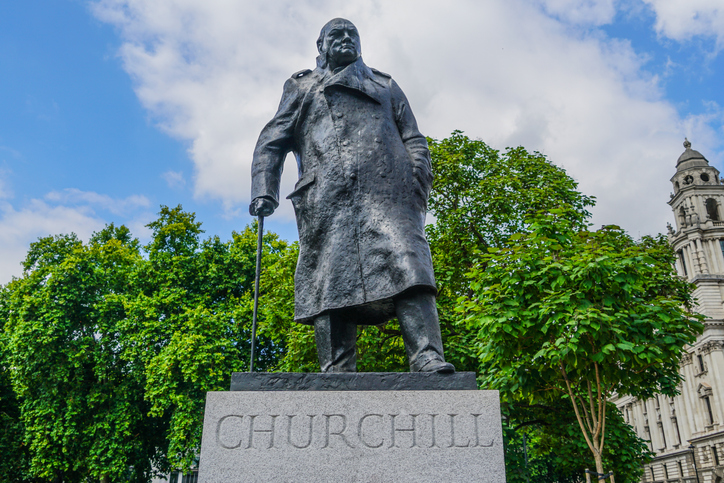
Millions gathered round their radios to listen to Winston Churchill (Credit: (c) HADI ZAHER via Getty Images)
Alongside these neighbourhood celebrations, public gatherings gave VE Day its great civic sweep. Winston Churchill’s broadcast became one of the defining moments of the day. At 3pm, people gathered around radios to hear him speak to the nation. His words gave the celebration its official shape, but the public had already supplied the feeling.
In London, crowds packed into Trafalgar Square, Whitehall, Piccadilly Circus, and the Mall. The capital became a sea of hats, flags, uniforms, and smiling faces. People climbed onto lamp posts, linked arms, sang songs, and cheered strangers as if they were old friends. Across the towns and cities, public spaces filled, bands played, bells rang, and people gathered wherever there was room to stand, sing, or dance.
The country didn’t celebrate in one moment, in just one grand place. It celebrated everywhere.
A Very British Bash
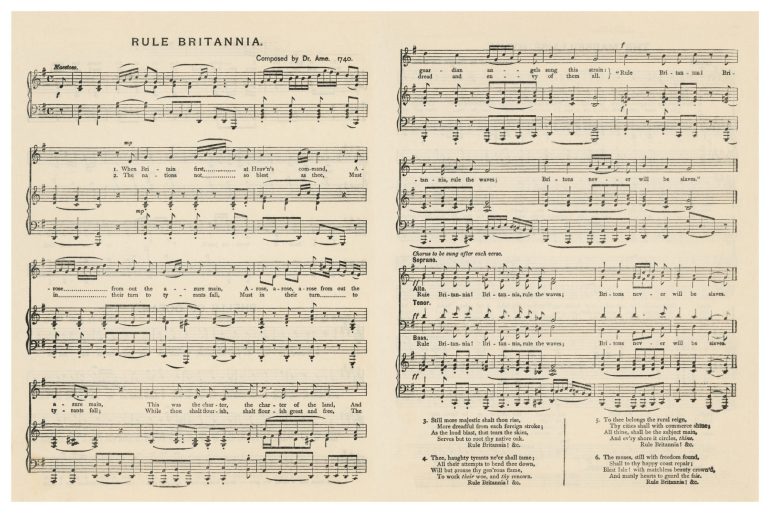
Rule Britannia was played on rickety pianos all over the UK! (Credit: mikroman6 via Getty Images)
VE Day saw an explosion of national joy, but it wasn’t a polished occasion. That was part of its charm. Some parties were carefully planned; others appeared almost by magic. Some people attended official services and civic events, while others celebrated with neighbours, colleagues, friends, or complete strangers.
There were flags and speeches, certainly, but also tea urns, paper streamers, borrowed pianos, chalked pavements, and children running between tables. It was national history lived at human scale.
The Royal Family on the Balcony
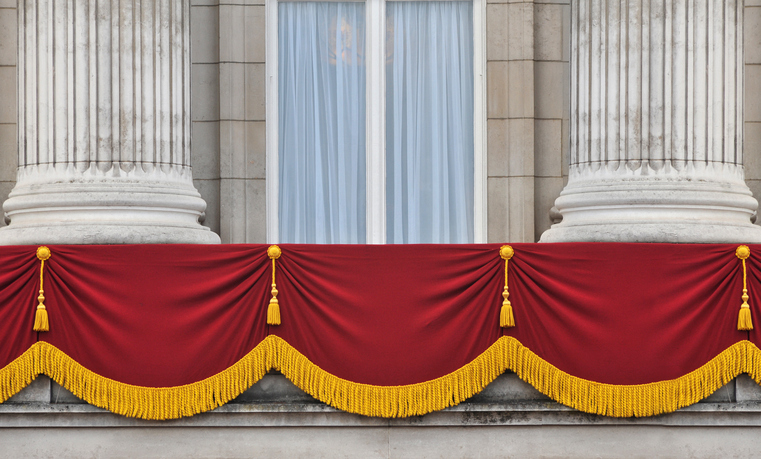
The Royal Family appeared on the famous balcony at Buckingham Palace (Credit: oversnap via Getty Images)
Buckingham Palace was the scene of one of VE Day’s best-known moments. Huge crowds gathered outside, calling for the Royal Family to appear. King George VI and Queen Elizabeth came out onto the balcony with Princess Elizabeth and Princess Margaret, joined at points by Winston Churchill. The balcony appearances gave the celebrations an iconic image, summing up the joy of the whole country. The palace became part of the entire nation’s day. Cheers rolled down the Mall, and the Royal Family returned to the balcony several times in response.
The Partying Princesses
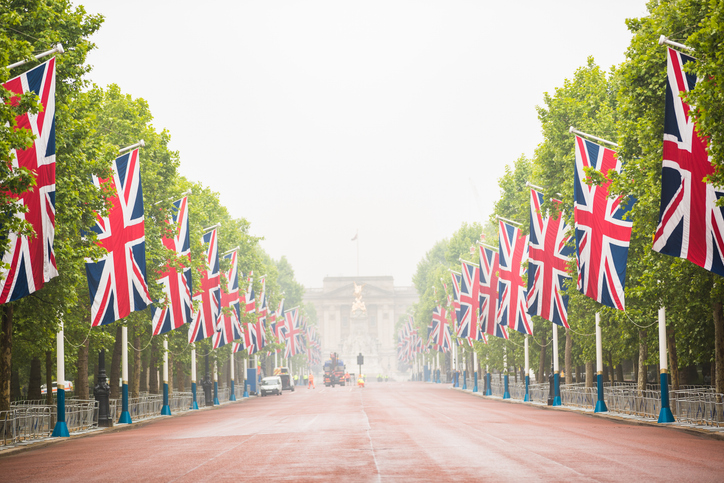
Princess Elizabeth and her sister Margaret slipped out to celebrate! (Credit: RistoArnaudov via Getty Images)
One of the most charming VE Day stories involves the future Queen Elizabeth II and Princess Margaret slipping out to join the public celebrations. Accompanied by guards and friends, the teen princesses mingled with the crowds anonymously, sharing in the dancing and excitement.
Music, Dancing, and Dancing Again
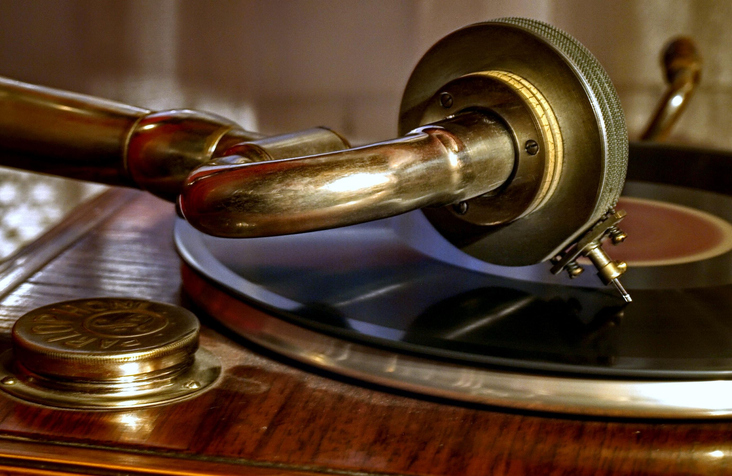
The sound of gramophone records was loud and lively! (Credit: 12345 via Getty Images)
If VE Day had a soundtrack, it was loud, lively, and gloriously varied. Music poured from radios, gramophones, pubs, dance halls, and outdoor gatherings. Popular wartime songs filled the air, while bands and musicians helped keep crowds moving.
Whether it was a quick foxtrot or a conga line, dancing broke out almost everywhere. People danced in streets, squares, hotel lobbies, village halls, and outside pubs. Some wore uniforms, some wore work clothes, some were dressed for the occasion, and some had probably just followed the nearest cheerful noise.
Bonfires, Bells, and Bright Lights
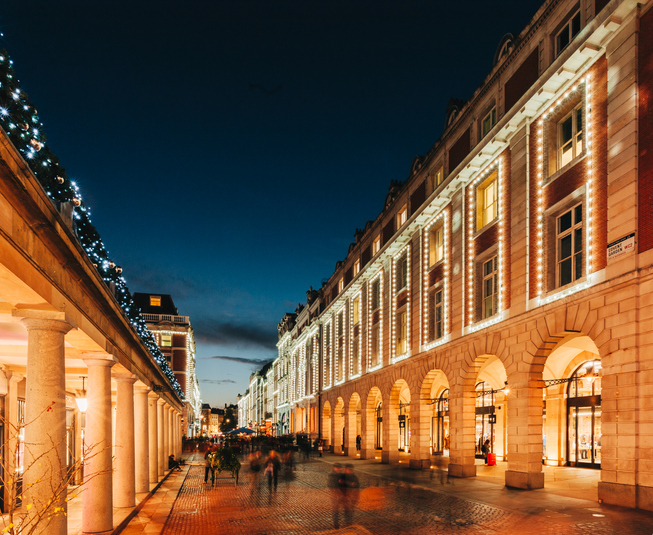
After years of darkness, London lit up bright! (Credit: Karl Hendon via Getty Images)
As evening arrived, VE Day took on a new glow. Bonfires were lit in many towns and villages and church bells rang out. In many places, buildings were lit up, giving people the rare pleasure of seeing familiar streets shine after years of wartime darkness. Town halls, landmarks, shopfronts, and homes became part of the display. Britain, quite literally, brightened up.
Beyond the Bunting
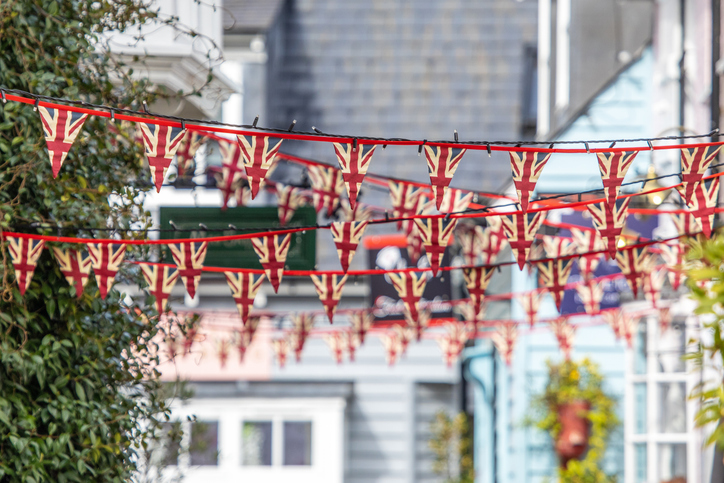
Bunting-strung streets were the order of the (VE) day! (Credit: chrisdorney via Getty Images)
From bunting-strung streets to crowded city squares, Britain marked the end of WWII in Europe with everything from Royal appearances and Churchill’s broadcast, to church bells, bonfires, and neighbourhood street parties. From blackout to street party, VE Day was celebrated in true British style, full of warmth, wit, and wonderfully improvised flair.