For centuries, the remote peaks of the Himalayas have whispered rumours of a mysterious, ape-like creature known as the Yeti, or abominable snowman – a curious creature reportedly seen through blizzards, leaving behind footprints seemingly too large for any known animal. Revered in folklore and feared by explorers, Yeti sightings occupy a strange space between myth and biology – part legend, part unsolved mystery, and perhaps something yet undiscovered.
History is crowded with tales of cryptids – elusive creatures that sit just beyond the reach of what mainstream science can easily explain. From lake monsters in Arkansas to jungle apes in the Congo, Puerto Rico’s El Chupacabra, and Mapinguari – the Amazon’s answer to Bigfoot – countless witnesses insist they’ve encountered them. So, when it comes to the legend of the Yeti, just what are people really seeing in the frozen wilderness of the Himalayas? Shadows, stories, or living relics of a prehistoric past? As new evidence emerges, the line between folklore and fact may be thinner than we think.
Grab your coat and hat, the story of these Yeti sightings is a chilling read…
Are the Yeti and Bigfoot the Same?
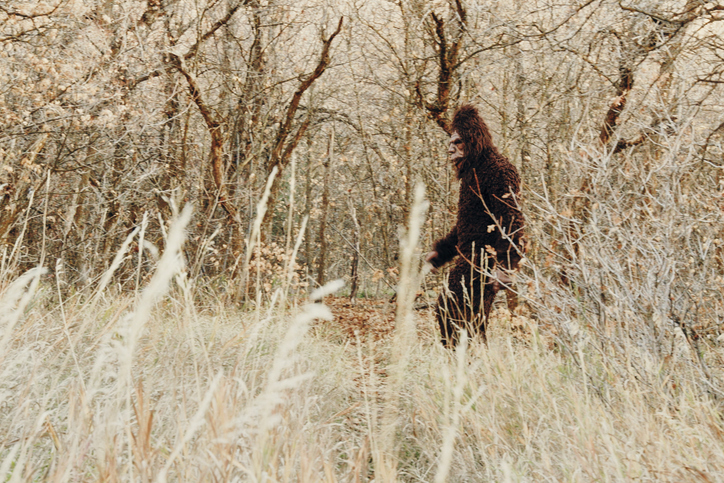
An artist's impression of a North American Sasquatch (Credit: O2O Creative via Getty Images)
They’re both towering, fur‑covered legends said to roam the edges of human civilisation – so are the Yeti and Bigfoot the same mysterious creature? Not quite. They’re often lumped together in pop culture, but they come from very different worlds.
The Yeti, otherwise known as the abominable snowman, supposedly stalks the icy Himalayas, steeped in local folklore and high‑altitude mystery. Bigfoot (or Sasquatch as it’s sometimes called) is the shaggy giant of North America’s forests – a creature rooted in legends and a long trail of modern sightings, including one of the most watched film reels in the history of moving pictures, the legendary Patterson-Gimlin video.
Yet the similarities are hard to ignore. Both are huge primate-like beings described as half‑human, half‑ape, both inspire fascination and scepticism in equal measure, and both have had their fair share of reported sightings.
Early Yeti Myths & Legends

The Pangboche Monastery, said to have been built by Lama Sangwa Dorje (Credit: Boy_Anupong via Getty Images)
The legend of the Yeti stretches back centuries, long before the creature entered Western imaginations. Over centuries, oral folklore began to mesh with written records and reports of Yeti sightings from early Himalayan travellers, and this created a loose but intriguing timeline of these ‘wild man’ encounters.
Pre-Buddhist Traditions
These stories describe a powerful, ape-like ‘glacier being’ or ‘wild man,’ sometimes worshipped as a hunting spirit and feared as a mountain-dwelling bogeyman making a whistling noise and carrying a heavy stone.
Earliest Historical References
Accounts suggest that by the third century BC, belief in a large, high-altitude wild man was widespread enough that one version of the legend says that Alexander the Great supposedly asked to see one when he reached the Indus Valley. Over the following centuries, Buddhist-era stories and local chronicles continued to reference snow-dwelling spirits and man-beasts in the high mountains.
One of the most often-told legends is that of Sangwa Dorje, a seventeenth century Sherpa Buddhist who was said to have devoted his life to meditation in remote caves near Pangboche in the Everest region. It is said he was cared for by a Yeti who brought him food, water, and firewood, and even became his Buddhist disciple, embodying compassion rather than terror.
But what of more modern encounters, do we have any recent evidence of real Yeti sightings?
Nineteenth Century Sightings of the Abominable Snowman

Lt. Col. Waddell said he saw large footprints in the Himalayas... (Credit: thianchai sitthikongsak via Getty Images)
In 1832, pioneering naturalist and ethnologist Brian Houghton Hodgson reported that his guides in northern Nepal saw a tall, bipedal, dark-haired creature fleeing upright across the snow. Hodgson believed it to be an orangutan, but the creature’s description fed perfectly into the emerging Yeti lore.
One of the earliest documented reports of Yeti footprints came from army officer Lieutenant Colonel Lawrence Waddell, an amateur archaeologist, world expert on Tibetan and Buddhist culture, and later Professor of Chemistry & Pathology at Calcutta Medical College. Some regard him as the blueprint for the fictional swashbuckling archaeologist Indiana Jones.
In his 1899 book Among the Himalayas, Waddell recorded having seen large, apelike footprints in the Himalayas several years earlier, as well as local stories of a bipedal creature, though he personally believed the tracks were made by a bear and remained sceptical of any true abominable snowman.
The Twentieth Century Explosion

Rod Baber made a call from the top of Everest (Credit: DanielPrudek via Getty Images)
The spate of more recent Yeti sightings started in the early twentieth century, growing from scattered reports into a full‑blown media and expedition mania.
From Folklore to Frontier
Between the 1920s and 1940s, Western climbers in the Himalayas, including Greek photographer Nikolaos Tombazi in 1925, British Army officer John Hunt in 1937, and mountaineer Conrad Cooke in 1944, began reporting strange tracks and ‘wild man’ stories, which fed early press references to what became known as the abominable snowman. These early rumours of Yeti sightings remained on the fringe of mountaineering reports, but they primed the public imagination for something more substantial.
The Story of Eric Shipton
On a Nepal-side reconnaissance of Mount Everest in autumn 1951, British mountaineer Eric Shipton and Dr Michael Ward were exploring the Menlung Basin at around 16,000 feet to scout a viable path to the summit. Somewhere on the route they discovered a line of large, bare footprints in fresh snow. Without any measuring tools, they photographed a single, especially clear print with an ice axe and Ward’s boot for scale, revealing a foot far wider than a human’s, with a heavy, low‑set big toe and splayed smaller toes. Was this finally proof of a real Yeti sighting?
This image was published and reprinted in countless publications and became the iconic Yeti photograph, described by researcher Daniel Taylor as the “Rosetta Stone” of Yeti lore because it transformed a regional legend into a global mystery and triggered a wave of dedicated Yeti expeditions.
Later analyses and insider accounts suggested possibilities ranging from an overprinted or melted human track to an outright hoax, and many mountaineers and historians now regard the photo as ambiguous at best rather than proof of the abominable snowman.
The 1950s and Beyond
From the 1950s to the end of the twentieth century, there were dozens of alleged real Yeti sightings, including by Sir Edmund Hilary and Sherpa Tenzing Norgay in 1953 who reported seeing footprints on their successful ascent of Everest. Both later distanced themselves from directly associating them with the Yeti.
A year later, the Daily Mail sponsored a high‑profile Himalayan “Abominable Snowman” expedition, and the leader, John Angelo Jackson, tracked and photographed footprints in the snow. Many were easily identifiable, but others sparked debate.
Other Yeti sightings, or at least reported sightings, included that of Polish Army lieutenant Sławomir Rawicz who claimed in a 1956 book that sixteen years previously, he was crossing the Himalayas when his path was blocked by two bipedal ‘animals’. Starting in 1957, perfectly-named Texas oil baron Tom Slick bankrolled several expeditions in an attempt to track the creature, and in 1960, Sir Edmund Hilary was part of an expedition tasked with finding and analysing physical evidence of the Yeti.
Between the 1970s and the 1990s, various hairs, bones and pelts from monasteries and expeditions were examined. Most turned out to be from known animals, especially bears, with no clear evidence of an unknown creature. Over time, interest in full-scale expeditions to find the Yeti cooled, though more science‑driven investigations flourished. Indeed, on discovery+, you can watch legendary adventurer Josh Gates’ own quest to find the abominable snowman in Expedition Unknown: Hunt for the Yeti.
Yeti Sightings by The Indian Army

Makalu Base Camp on the Nepal-China border (Credit: Purna Bahadur Mukhiya via Getty Images)
In April 2019, the debate was spectacularly reignited by a team of mountaineers from the Indian Army who photographed a single file of large footprints measuring around 81 x 38 centimetres (32 x 15 inches) found near Makalu Base Camp on the Nepal-China border. They posted the images on their official Twitter (now X) account to around six million followers saying the team ‘has sited mysterious footprints of mythical beast, Yeti’. Unsurprisingly, the tweet went viral with a mixture of intrigue, disbelief, humour and in some cases, ridicule.
Zoologists and trackers quickly suggested more mundane explanations, such as overlapping bear tracks or deformed human prints, and note that earlier DNA work on so-called ‘Yeti’ samples from the region overwhelmingly points to various species of local bears rather than a mythical creature steeped in thousands of years of folklore and legend.
The Most Prominent Theories
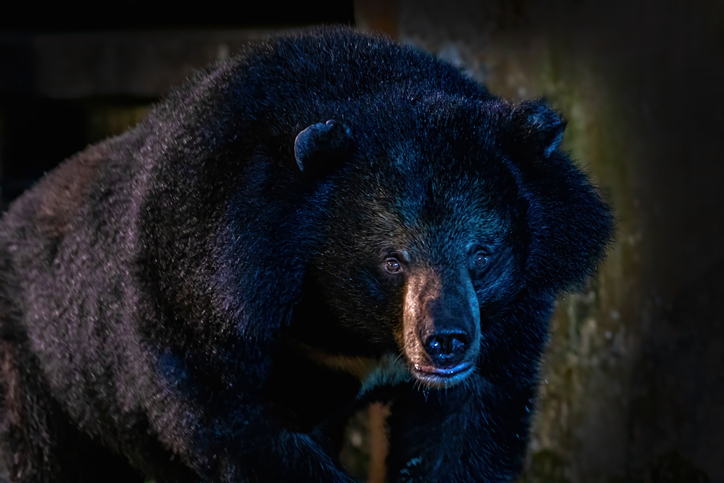
Is the Yeti a misidentified Asian Black Bear? (Credit: chuchart duangdaw via Getty Images)
Most researchers now think the abominable snowman is a mix of misidentified wildlife, vivid storytelling and a handful of unsolved reports. The main theories range from perfectly plausible to wildly speculative.
Grounded, Evidence-Based Ideas
DNA testing of hair, bone and skin samples from monasteries and expeditions shows they almost all come from Himalayan and Tibetan brown bears or Asian black bears, with one famous study of nine ‘Yeti’ samples finding eight were from bears and the ninth from a dog.
Some samples led researchers to suggest they may have come from an unknown or hybrid bear lineage in the high Himalaya, though later, more comprehensive work still points to regional brown bear and black bear lineages rather than a new primate.
Aside from scientific samples, more human and weather-based factors – including altitude sickness, fatigue, blowing snow storms and the appeal of local legends – could all have pushed people towards Yeti sightings in ambiguous tracks and fleeting shapes or shadows on a mountainside.
Many more mainstream observers also point to the idea that most Yeti sightings are simply the product of hoaxes and tall tales, designed to thrill (or attract) climbers, tourists and the media.
More Speculative Cryptid Theories
Classic cryptozoology proposes a population of large, bipedal apes or hominins in remote Himalayan valleys, like a high‑altitude cousin of Bigfoot, and sometimes referred to as ‘the missing link’. There is, however, no convincing physical evidence so far, and tested ‘Yeti relics’ don’t support this idea. Similarly, some writers have proposed that these so-called real Yeti sightings might be a remnant population of something like Gigantopithecus or another Ice Age ape. As yet though, nothing’s been proven.
Fringe Explanations
In some Himalayan traditions, the Yeti has magical powers, can paralyse people with a glance, or shifts between physical and spirit realms, making it effectively impossible to ‘catch’ or ‘see’ in scientific terms. Alongside these ideas, more otherworldly suggestions theorise that Yetis are in fact extraterrestrial visitors or interdimensional creatures.
Myth Take, or Mountain Truth?
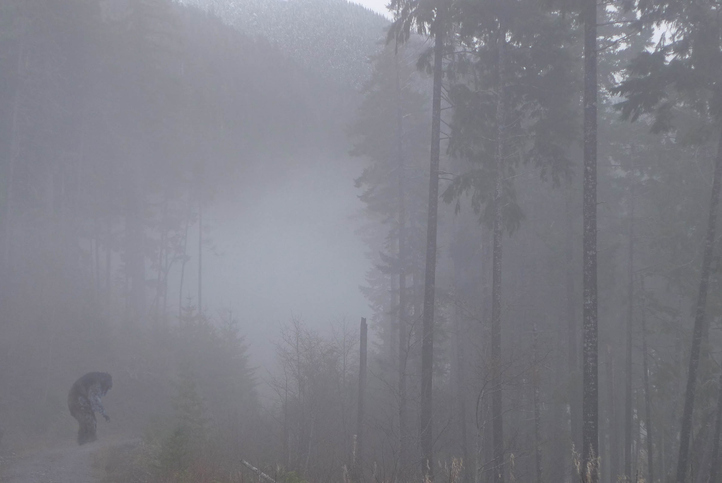
What lurks in the frozen Himalayas...? (Credit: mntnvision via Getty Images)
Yeti sightings remain exactly where they’ve always thrived – on the snowy borderland between science and story. DNA tests point firmly toward bears and other wildlife, yet strange tracks, spine‑tingling encounters and centuries of legend refuse to entirely melt away.