Everyone has heard of the Bermuda Triangle, an infamous 500,000 square mile patch of the North Atlantic Ocean haunted by tales of vanished ships and missing aircraft such as the infamous Flight 19. But it’s not the world’s only triangle where strange things have happened – nor is it the most chilling. Thousands of miles to the north, the Alaska Triangle stretches across some of Earth’s most unforgiving wilderness, a region where the frontier between harsh reality and haunting mystery fades into the shadows.
Since the early 1970s, some reports have suggested that there are as many as 20,000 missing persons in Alaska – a figure often repeated in connection with the Alaska Triangle. The remotest parts of the world are rife with stories of strange happenings, and these unexplained mysteries in Alaska are no different. Pilots, hikers, runners, hunters, and even politicians have mysteriously vanished off the face of the earth.
Is it the brutal weather, the inhospitable terrain or even wild animals which are responsible for these disappearances? Perhaps. Planes crash in bad weather, hikers get lost and hunters get killed, and with constant layers of snow covering the traces of the missing, it’s not outside the realms of possibility that these disappearances will forever remain unexplained or unresolved.
Yet for some, these disappearances point to more nefarious activity. So have there been alien abductions in Alaska? Is there something more sinister at play than geology or weather? Is it the work of the malevolent spirits of Tlingit legend known as the Kushtaka, shapeshifters said to lure the lost into the ice? Or is the answer more benign? Prepare for a wild flight of fact, fiction and folklore as we investigate the Alaska Triangle.
Where is the Alaska Triangle?
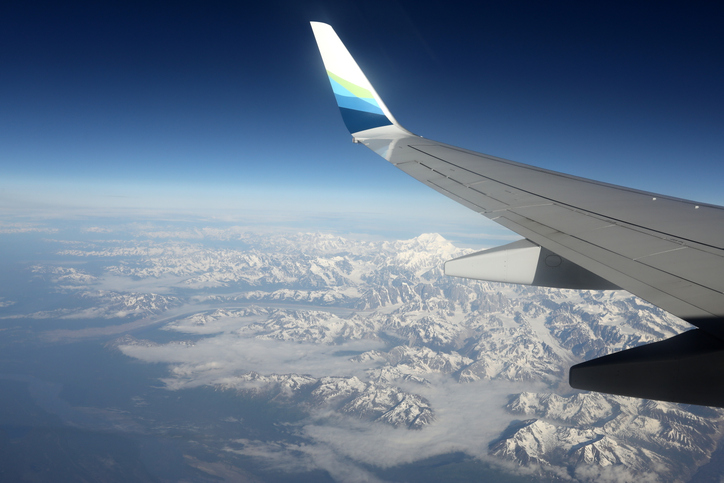
Alaska Air from Anchorage to Utqiagvik (Credit: Cagan Hakki Sekercioglu via Getty Images)
The area that’s home to so many unexplained mysteries in Alaska roughly connects the cities of Anchorage and Juneau in the south of the state, to Utqiagvik, the northernmost city in the United States.
Much of the Alaska Triangle consists of untouched frozen wilderness – 200,000 square miles of mountains, glaciers, and dense, tangled forests where temperatures can plummet below −40°C in winter and daylight can vanish for months.
With an area of more than 663,000 square miles and a population of just 740,000, there’s plenty of space for things to go wrong, but why are there so many missing persons in Alaska? It’s a mystery that so far has no answer. At least not one that most can agree on…
The Disappearance of Thomas Hale Boggs Sr.

Boggs was outspoken on the question of JFK (Credit: Medioimages/Photodisc via Getty Images)
The reason why the Alaska Triangle is so-called, and why it became known to the public, is because of the famous disappearance of Thomas Hale Boggs Sr. Known as Hale Boggs, he was one of the most powerful men in Washington – a long-serving Democratic congressman from Louisiana and at the time of his disappearance, he was House Majority Leader. He was also well known outside of political circles because he served on the Warren Commission which was set up to investigate the assassination of JFK.
In October 1972, Boggs was in Alaska to support fellow Democrat Nick Begich in a tight re-election campaign. On the 16th, Boggs and Begich, alongside Begich’s aide Russell Brown and pilot Don Jonz, set off from Anchorage to Juneau in a twin-engined Cessna 310. The flight plan covered roughly 570 miles, estimating a journey time of approximately three hours and 30 minutes, cruising at roughly 170 knots, and allowed for additional time to navigate around the notoriously volatile conditions along the Gulf of Alaska. Little did they know when they took off that they would be the lead characters in one of the most perplexing unexplained mysteries in Alaska.
The aircraft, tail number N1812H, took off into what is known as marginal weather – freezing rain, turbulence, and poor visibility – along the coastal mountain route. It never arrived.
What followed was one of the largest search operations in American history involving the Coast Guard, Army, Navy, Air Force, and Civil Air Patrol, as well as civilian fixed-wing aircraft and helicopters. The search-and-rescue mission was huge, involving around 50 civilian and 40 military aircraft. The official report from the National Transportation Safety Board states that by the time the air search was called off on November 24 after 39 days, at least 1,035 sorties had flown for a cumulative 3,602 hours, covering an area of approximately 325,755 square miles of what became known as the Alaska Triangle. No trace of wreckage or remains have ever been found.
Investigators later discovered the plane carried no functioning emergency locator transmitter, despite new state requirements that autumn. With no signal, no debris, and no witnesses, speculation about the disappearance quickly spiraled – from a tragic accident over rough terrain or icy seas to wild theories involving government cover-ups and sabotage linked to Boggs’s outspoken clashes with FBI Director J. Edgar Hoover and his doubts about the official version of what happened to JFK. Some even went as far to suggest an ice-cold Alaska UFO was responsible. To this day, the flight remains one of Alaska’s greatest aviation mysteries.
More Missing People in Alaska
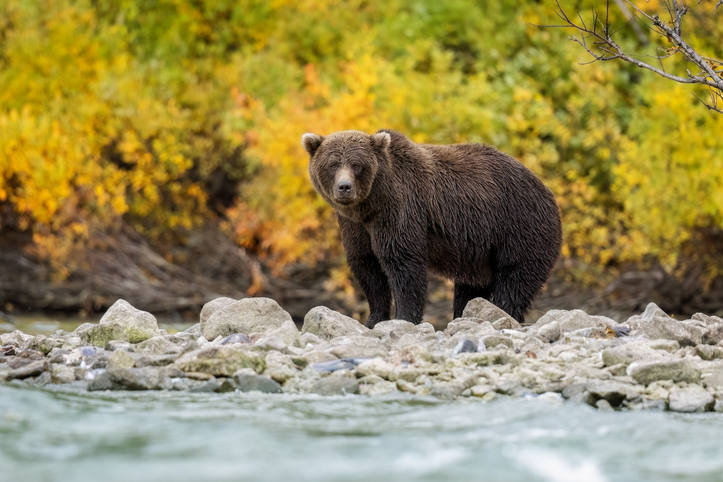
Was Gary Sotherden killed by a bear, or is his disappearance more sinister? (Credit: Scott Suriano via Getty Images)
Beyond the disappearance of Hale Boggs and Nick Begich, the Alaska Triangle has featured in many more mysteries. One of the earliest major incidents occurred in January 1950, when a US Air Force Douglas C‑54D Skymaster carrying 44 people vanished en route from Elmendorf Air Force Base in Anchorage to Great Falls in Montana. Despite one of the largest joint American-Canadian military search efforts in North American history, no aircraft debris was ever found. Some sources suggest witnesses near Snag in the Yukon reported hearing an explosion and seeing black smoke, but on closer inspection nothing turned up.
Other notable disappearances include 25‑year‑old New Yorker Gary Sotherden, who went missing in the mid‑1970s on a solo hunting expedition along Alaska’s Porcupine River. Decades later, in 2022, human remains matching his DNA were found, and while state troopers think he was probably killed by a bear, the official cause of death remains unknown.
The strange stories go on and on. Indeed, in 1986, the pilots of Japan Airlines flight 1628 reported three UFOs moving erratically and emitting strange bursts of light over the Alaskan skies. These reports led some to speculate that alien abductions in Alaska may well explain what had previously been unexplainable.
The Alaska Triangle Explained…?
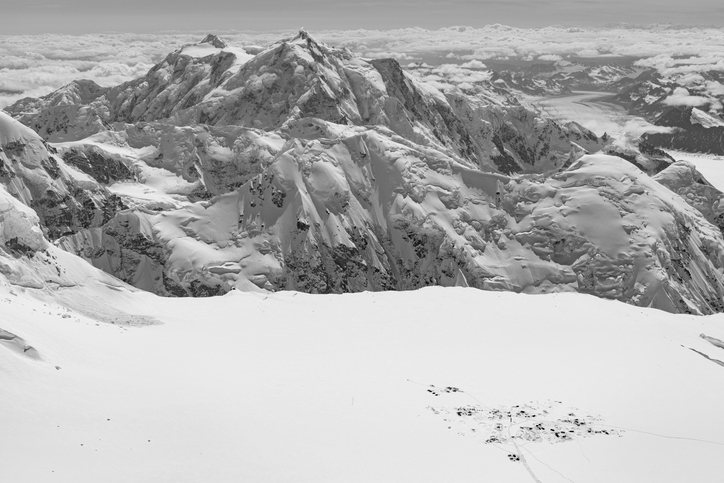
The wilds of Alaska has claimed hundreds of lives (Credit: Jacob Kupferman via Getty Images)
The unexplained mysteries in Alaska have spawned a range of theories – from scientific to supernatural. Here’s how they line up, from the most grounded explanations to the most bizarre.
Treacherous Terrain & Weather
The most plausible explanation is Alaska’s extreme geography. The region spans over 200,000 square miles of mountain ranges, glaciers, and tundra, areas where visibility often drops to zero and temperatures plunge below −40°C. Sudden storms, whiteouts, and unstable terrain make navigation treacherous, while shifting ice and snow can swallow wreckage permanently. Hundreds of disappearances likely stem from these natural causes.
Magnetic Anomalies
Some researchers point to unusual magnetic activity across Alaska. Some parts of the Alaska Triangle are believed to interfere with navigation instruments. Studies show that local magnetic declination – the difference between true north and magnetic north – can vary by up to 30 degrees in this region. In addition, geomagnetic disturbances caused by the aurora borealis (Northern Lights) may further disrupt compasses and electronic equipment, potentially leading pilots or hikers off course.
Energy Vortexes
One of the most persistent legends claims an enormous underground energy source, dubbed the Dark Pyramid, lies beneath the Triangle’s centre. Said to generate electromagnetic fields or vortexes, it’s supposed to disrupt both aircraft systems and human perception, leading to disorientation or disappearance. Supporters believe this vortex energy could even open localised portals, though no scientific evidence supports this theory.
The Legend of Kushtaka
The folklore of the Tlingit, an indigenous people of the Pacific Northwest of America, many of whom live in Alaska, includes the tale of the Kushtaka – a shape-shifting half-otter, half-human spirit believed to lure travellers away by mimicking voices of their friends and family. It’s said those who follow vanish into another realm or perish in the cold.
UFOs and Alien Abductions in Alaska
Alaska reports a greater number of UFO sightings when compared with other US states. Believers argue that alien craft use the area’s vast isolation as cover for abductions or experiments. Some point to vanished aircraft tracked on radar before suddenly blinking out, suggesting otherworldly causes. While interesting, there’s no evidence to suggest that the world of Alaska UFOs is real, however it does feed the often insatiable appetite for these types of mysteries.
Alaska Triangle: The Ultimate Cold Case
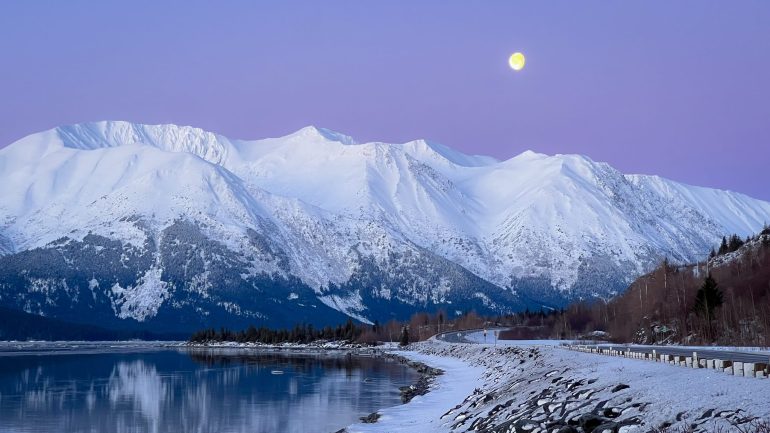
Is the Alaska Triangle real? (Credit: Sarita Williams Photography / 500px via Getty Images)
Like the Bermuda Triangle before it, the Alaska Triangle blurs the boundaries between science and legend. It’s a place where rational explanations collide with myth. Whether the cause lies in extreme weather, magnetic interference, or the darker imaginings of hidden vortexes and ancient spirits, there’s one absolute truth – Alaska’s wilderness doesn’t easily give up its secrets.
For search teams, rescuers, and families of the missing, the mystery offers very little comfort. The vastness of the land, the subarctic cold, and the near‑total isolation mean that even the smallest misstep can be fatal. Yet, for scientists, adventurers, and storytellers, the unexplained mysteries in Alaska are endlessly fascinating.