In 1901, two English academics on holiday in France found themselves drawn to the grandeur of Versailles. Charlotte Moberly and Eleanor Jourdain, the two protagonists in what became known as the Moberly-Jourdain Incident, expected gilded halls and manicured gardens, but what they claimed to have witnessed instead has baffled and bewildered researchers for over a century. Did they temporarily step back into the time of Marie Antoinette, perhaps to a pivotal day of the French Revolution, or did they fall prey to a strange psychological mirage?
This reported Versailles time travel tale has perplexed believers and sceptics alike. What really happened that afternoon? Were these wandering academics witnesses to a time slip into pre-revolutionary France, participants in a ghostly replay of the past, or unwitting victims of their own wildly vivid imaginations?
Read on to decide for yourself where history ends and mystery begins. This is the bizarre story of the Ghosts of Petit Trianon.
The Start of the Story of the Versailles Ghosts
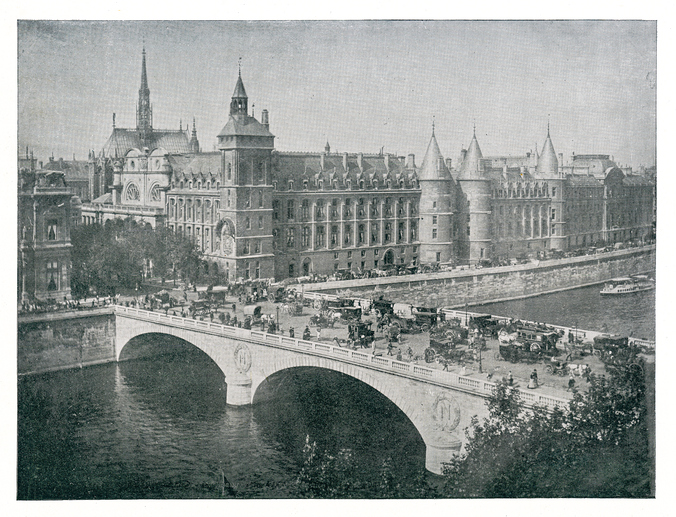
Paris at the start of the twentieth century (Credit: mikroman6 via Getty Images)
Charlotte Ann Elizabeth Moberly was born in Winchester in 1846. Her father was George Moberly, the headmaster of Winchester College and later, the Bishop of Salisbury. Her brother, Robert, was the first Principal of St. Stephen’s House, a theological college within the University of Oxford. Charlotte, a renowned academic, became the first Principal of St. Hugh’s College, a female-only college at Oxford founded in 1886 which accepted its first male students in its centenary year, 1986.
Elizabeth Frances Jourdain, born in Derbyshire in 1863, was the daughter of the vicar of Ashbourne and the granddaughter of Charles Clay, a famous surgeon known in some circles as the Father of Ovariotomy. Her sister Margaret was an authority on English furniture and her brother Philip was a mathematician and logician. She began her working career as secretary to Minnie Benson, the wife of Edward Benson, the Archbishop of Canterbury, and after a number of roles in education, Charlotte Moberly invited her to become her assistant at St Hugh’s.
The two didn’t know each other all that well, so it was decided they should take a trip to Paris, where Jourdain owned an apartment, to better acquaint themselves. Little did they know that when they got to Versailles, time travel, as well as tea and cake, was on the menu.
Educated, considered, and ahead of their time in any number of ways, the two seemed unlikely candidates for what became known as the Moberly-Jourdain Incident, a story so extraordinarily strange it blurred the line between history and haunting.
A Timeline of Events
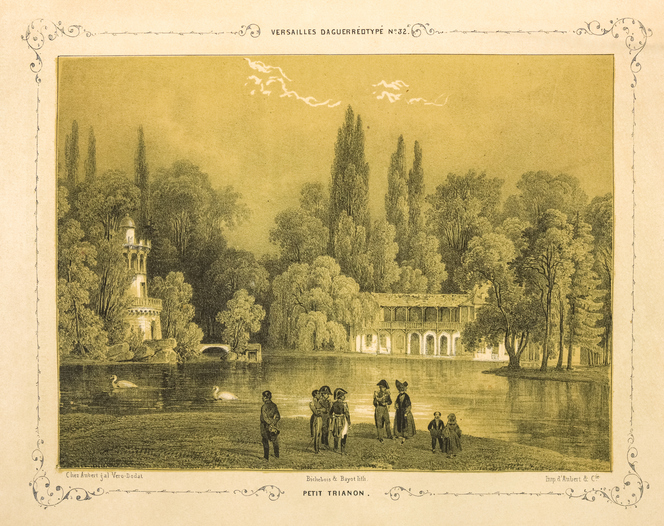
Petit Trianon, reproduced by Daguerreotype (Credit: PATSTOCK via Getty Images)
On 10 August 1901, Moberly and Jourdain took the train from Paris to the Palace of Versailles. They toured the site but were said to have found it rather uninspiring, so they chose to walk through the gardens toward the Petit Trianon, a neoclassical mansion in the grounds of Versailles built in the 1760s for King Louis XV. He was succeeded by his grandson, the 19-year old Louis XVI, in 1774, who gave the house to his 18-year old wife, Marie Antoinette.
As they walked, they missed the turning for the main avenue, Allée des Deux Trianons, wandered off their path, and became lost somewhere near the Grand Trianon. They claimed the atmosphere grew increasingly and penetratingly depressive as they proceeded.
What Did They Report?
Moberly noticed a woman shaking a white cloth out of a window, while Jourdain observed an old farmhouse with a plough outside. Both felt a sense of overwhelming dreariness and oppression, and encountered men described as palace gardeners in old-fashioned uniforms, who directed them further on their way.
As they went on, Jourdain saw a cottage with a woman handing a jug to a girl, describing it as a tableau vivant, like a living waxwork scene. Were these the Petit Trianon ghosts? Moberly didn’t see the cottage but felt the unnatural atmosphere deepen. The trees were flat and lifeless. They said there were no effects of light, shade or shadow.
They came across a man who appeared to be an attendant or official, offering unexpected help. Both women saw figures dressed in historical attire, including one they later identified, from research, as possibly the Comte de Vaudreuil, an influential nobleman at the court of Louis XVI who died in 1817, eighty-four years before the Moberly-Jourdain Incident occurred.
As they reached the Petit Trianon, Moberly saw (but interestingly, Jourdain didn’t) a pretty, fair-haired young woman in a summer dress and white hat sketching in the garden, whom she later became convinced was Marie Antoinette herself.
Let Them Eat Cake
They went inside Petit Trianon and the scene returned to 1901. The spell seemed to lift and the atmosphere returned to normal. They left the house, had afternoon tea at the Hôtel des Réservoirs, and then went back to Jourdain’s apartment.
The Aftermath
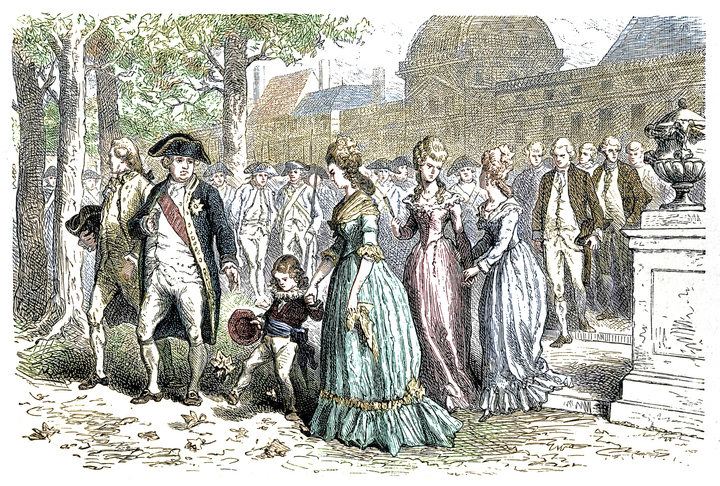
Marie Antoinette & King Louis XVI (Credit: Nastasic via Getty Images)
After leaving Versailles, time travel was on their minds, but they didn’t immediately discuss the incident, only broaching the topic a week or so later. Months afterwards, back in Oxford, they compared notes, wrote independent accounts, and began investigating historical records to match the details they remembered.
On several later visits they went back to see if they could find the Ghosts of Petit Trianon, but found themselves unable to retrace the route they had taken during their original experience. Landmarks that had seemed prominent on that day – such as the kiosk and the bridge – were nowhere to be found. The gardens, once oddly deserted, were now crowded with visitors. Key features, such as the layout of the gardens, appeared changed or entirely missing.
Despite these repeated attempts, they couldn’t find the strange path and its ghostly atmosphere, leaving them more perplexed than ever. And when reflecting on their experience, one question kept resurfacing: how could they remember details that seemed to match features on old plans of Versailles, even though those features had long since disappeared?
The Adventure
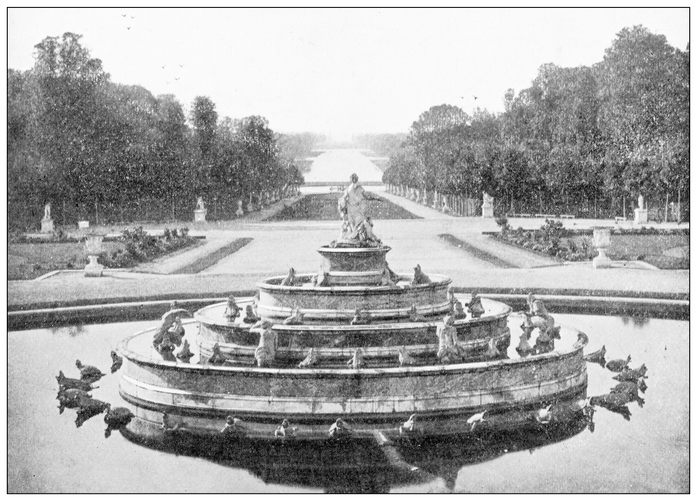
Are the Gardens of Versailles haunted? (Credit: ilbusca via Getty Images)
Convinced by their extraordinary experience that the grounds of Versailles were haunted, Moberly and Jourdain published their account in the book An Adventure in 1911 under the pseudonyms Elizabeth Morison (Moberly) and Frances Lamont (Jourdain).
The book details their eerie journey, and includes their personal accounts, timelines, and archival maps, all aimed at proving their encounter aligned with how Versailles was laid out in the late eighteenth century. It also claimed that they saw Marie Antionette drawing on the grass, 108 years after she was executed for high treason. Was she another of the Versailles ghosts?
Their descriptions were meticulously researched over a decade and were meant to, in their own words, “record exactly what happened as simply and fully as possible”.
When the book was released, it attracted immediate public attention, selling over 11,000 copies in its first two years and reissued in several editions. It sparked passionate debate leading readers and researchers to scrutinise its details, attempt to verify or debunk their claims, and fuelled further fascination that lasted decades. Some praised the book and regarded the Moberly-Jourdain Incident as proof of supernatural phenomena, others dismissed it as an illusion, hallucination, or an elaborate hoax.
The two women endured backlash and scepticism from academic and psychical circles, with critics highlighting inconsistencies and claiming their story grew more embellished over time. Nevertheless, the incident kept its grip on the public imagination, making Moberly and Jourdain both notorious and pioneering figures in the lore of later time-slip mysteries.
The Prevailing Theories
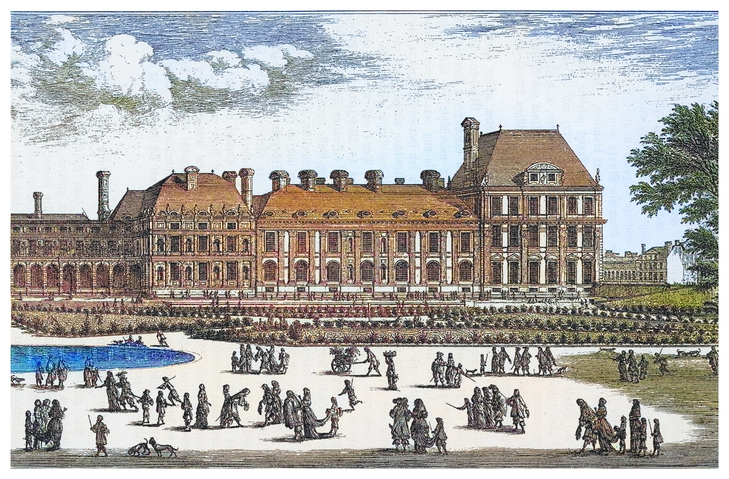
The Tuileries Palace in Paris (Credit: mikroman6 via Getty Images)
The Moberly-Jourdain Incident has inspired a number of theories, ranging from plausible psychological explanations to the outright bizarre.
Time Slip Phenomenon
Some believe Moberly and Jourdain genuinely experienced a time slip, momentarily stepping into the late eighteenth century due to a tear in the fabric of time or a temporary overlap of eras. Supporters of this theory point to their observations of buildings and features absent in the early twentieth century gardens of Versailles, but consistent with historical maps.
Haunting or Residual Energy
Another paranormal interpretation is that they encountered the Ghosts of Petit Trianon or a residual haunting – a psychic replay of past events, possibly tied to traumatic moments at Versailles. Moberly and Jourdain themselves speculated they might have entered the mindscape or memory of Marie Antoinette on the 10 August 1792, a day of great personal distress when armed revolutionaries in Paris stormed the Tuileries Palace, leading to the suspension of King Louis XVI’s authority, and setting the stage for the abolition of the monarchy and establishment of the French Republic six weeks later.
In addition, both claimed to have had other paranormal experiences. Some later sources attributed such episodes to Jourdain, with the best-known of these being a reported sighting of a ghostly French army at Malmaison in 1912 and Moberly’s claimed vision of the emperor Constantine at the Louvre.
Private Party or Tableau Vivant
A sceptical, more mundane explanation suggests the travelling academics may have stumbled upon an historical re-enactment, private costume party, or even actors hired for a tableau vivant, a still and silent group of people depicting a specific scene or incident. These events were known to be staged at Versailles by local aristocrats at the time.
Shared Hallucination or Psychological Phenomenon
Modern psychologists argue the incident could be the product of a shared delusion or folie à deux, where two closely connected people reinforce each other’s misperceptions. Their expectations, subconscious desires, and stress may have combined to produce vivid, matching false memories.
Research Artefacts and Misremembering
Critics point to the pair’s subsequent historical research, suggesting it may have unconsciously coloured and revised their recollections, filling in details that didn’t actually happen.
Personal Motivation
Some later writers proposed that the close relationship between the women made them susceptible to mutual suggestion or even an elaborate co-creation of an extraordinary story, although this idea has been criticised as highly speculative.
While none of these theories have been conclusively proven, the enduring fascination with the Moberly-Jourdain Incident lies in its ambiguity, and its uncanny blend of fact, imagination, and the unknown.
A Timely Mystery
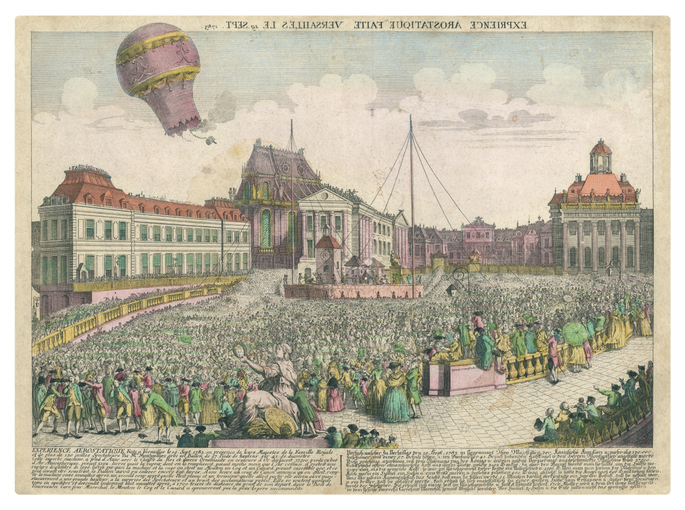
Versailles as it looked in the 1780s. Is this what Moberly and Jourdain saw? (Credit: PATSTOCK via Getty Images)
Does the past stay in the past? The Moberly-Jourdain Incident and the perplexing story of the Versailles ghosts remains an enigmatic mix of mystery, intrigue, and paranormal story. Whether they really slipped through time, glimpsed a haunting residual memory of Marie Antoinette, or shared a vivid psychological experience, their accounts of what happened – or didn’t happen – has yet to be conclusively explained. Jourdain died suddenly and in strange circumstances aged just 60 in 1924, Moberly thirteen years later aged 91 in 1937. Yet despite scepticism and ridicule, the story that led two wandering academics into a moment frozen between past and present continues to baffle, befuddle, and bewilder.