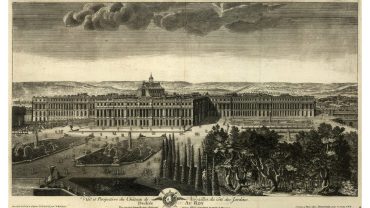
There’s little that the world can agree on, but at least most people agree what year it is, right? Yet there are some who think it’s not 2025 but actually 1728. This startling claim comes from the Phantom Time Hypothesis, a controversial theory first proposed by German writer and publisher Heribert Illig in 1991. He claims that a Pope and a Holy Roman Emperor fabricated almost three hundred years of history in order to place themselves at the symbolic year 1000 AD.
Despite being widely dismissed by historians and contradicted by astronomical records and dendrochronology – the scientific method of dating tree rings to the exact year they were formed – this phantom time theory captivates with its dramatic “what ifs.” Could time really have been tampered with on such a grand scale? What if the calendar we trust so implicitly is a giant historical illusion? And how would the discovery of such a deception change our understanding of history? Dare we consider the possibility that these so-called lost centuries of human experience might be nothing but phantom time?
This is the truly remarkable story of the Phantom Time Hypothesis.
What Is The Phantom Time Conspiracy?
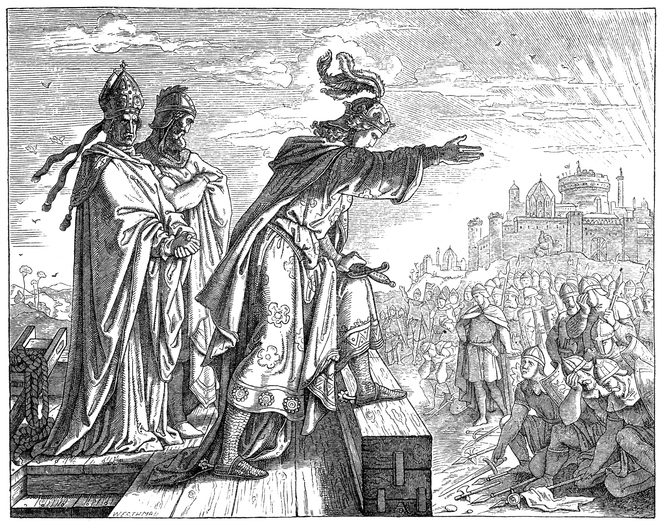
Holy Roman Emperor Otto III preaching in Rome (Credit: Nastasic via Getty Images)
Put simply, the phantom time hypothesis suggests that a conspiracy led by Holy Roman Emperor Otto III and Pope Sylvester II fabricated nearly three hundred years of history, between 614 AD and 911 AD, rewriting the calendar to place themselves at the symbolic year of 1000 AD.
According to claims by German amateur historian Heribert Illig, documents and historical evidence from this period of 297 years were forged or altered to create a false timeline. Otto III wanted the year 1000 to occur during his lifetime because it held great symbolic and political significance as a milestone year in Christian and imperial history. By aligning his reign with this year, he sought to legitimise his authority and present himself as the divinely chosen restorer of the Roman Empire. This ambition led to the claim that Otto, with the help of Pope Sylvester II, fabricated nearly three hundred years of history to ensure the year 1000 fell within his lifetime, granting him an immortal legacy and giving rise to this hypothesis of phantom time.
So What Didn’t Happen?
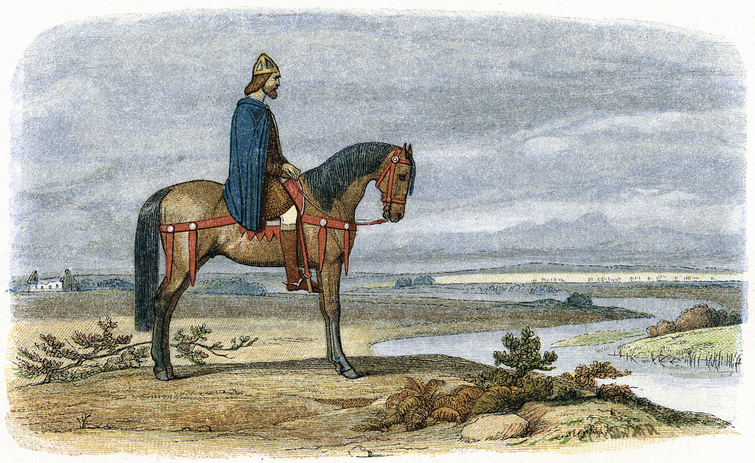
Was the life of Alfred the Great created, forged, or misdated? (Credit: Photos.com via Getty Images)
If, just for a moment, we entertain the idea that Illig’s Phantom Time Hypothesis is in fact correct, and everything we know about this period has somehow been made up, then almost three centuries of history between 614 and 911 AD dissolve like smoke.
In this phantom timeline, the lives of towering figures such as Charlemagne, founder of the Carolingian Empire, or Alfred the Great, would have had to be forged, or drastically misdated. This historical eraser also wipes out epoch-defining events such as the consolidation of Anglo‑Saxon kingdoms, wave after wave of Viking raids on the coasts of England and continental Europe, and the rise of China’s Tang dynasty. And that’s not even considering more than forty popes and seventeen Archbishops of Canterbury.
Who Is Heribert Illig?
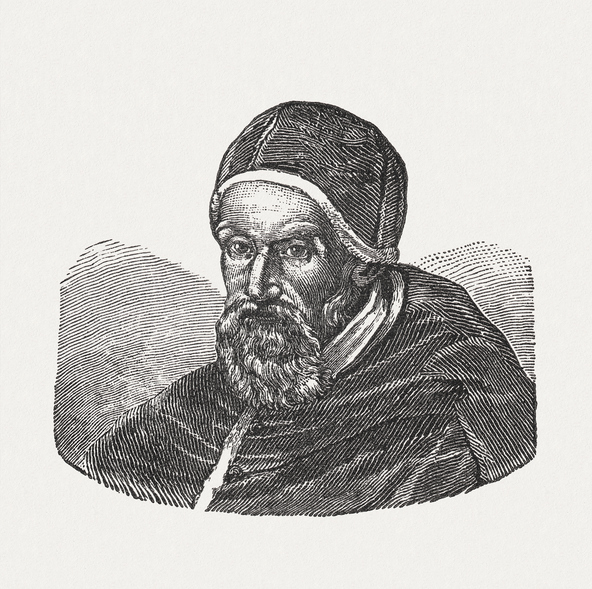
Pope Gregory VIII introduced the Gregorian Calendar in 1582 (Credit: ZU_09 via Getty Images)
Born in Bavaria in 1947, Heribert Illig is a German amateur pseudohistorian and author who proposed the phantom time theory in 1991. He works as a publisher and writer, often focusing on chronology, architecture, and alternative historical interpretations. He also founded a publishing house specialising in historical and pseudoscientific topics.
His most famous book is Das erfundene Mittelalter: Die größte Zeitfälschung der Geschichte (The Invented Middle Ages: The Greatest Time-Falsification in History), published in 1996, which became a bestseller in Germany and popularised the hypothesis of phantom time. Other books include Die veraltete Vorzeit (The Outdated Prehistory, 1988) and Bayern in der Phantomzeit (Bavaria in Phantom Time, co-authored with Gerhard Anwander).
His theory is based on a number of ideas, including –
- The scarcity of reliable archaeological records from these lost centuries.
- Inconsistencies in dendrochronology (tree-ring dating), archaeoastronomy, and building styles from the period. He points to the fact that Romanesque architecture exists from the tenth century, suggesting the Roman era was more recent that history would have us believe.
- The stagnation in art, literature and cultural development. While this may be partly true of Europe after the fall of the Western Roman Empire, civilisations like China, Persia and India, as well as the Byzantine Empire, flourished, as did the rise of the Islamic world across the Iberian Peninsula and much of the Middle East and North Africa.
- The fact that historians have an over-reliance on written sources, often penned years, decades or even centuries after the events they describe.
- The idea that when the Gregorian calendar was introduced in 1582 to replace the Julian calendar, astronomers and mathematicians working for Pope Gregory XIII determined that the calendar had drifted by about ten days compared to the actual solar year. Consequently, the reform corrected this by skipping ten days to realign the calendar with the seasons. However, Illig points to a supposed discrepancy, arguing that there should have been a difference of thirteen days instead of ten. From this, he concludes that roughly three centuries were falsely added to the Anno Domini (AD) timeline, meaning those years never actually existed.
- He suggested that medieval manuscripts were systematically forged and distributed to monasteries to embed the false timeline. That history was literally rewritten, adding in fictional events and people.
The Argument Against the Phantom Time Conspiracy

Was history rewritten, including the life of Charlemagne? (Credit: pictore via Getty Images)
The Phantom Time Hypothesis has been refuted by mainstream historians, archaeologists and scientists based on multiple lines of argument.
Astronomical Evidence
Historical records of celestial events such as solar eclipses, planetary positions, and comets align with the accepted timeline. Observations documented across different cultures, including in Europe, China, and the Middle East, match with modern astronomical calculations, disproving any lost centuries.
Archaeological and Dendrochronological Evidence
Dating methods such as radiocarbon analysis and tree-ring dating provide continuous and consistent timelines through the period in question. Archaeological finds from Europe and other regions correspond with the established chronology, offering no indication that almost three hundred years were invented or erased.
Global Historical Records
Evidence from civilisations across Africa, Asia, and the Americas confirms historical events and rulers during Illig’s hypothesis of phantom time. This global corroboration makes it virtually impossible that a widespread fabrication occurred only in Europe without the rest of the world knowing about it.
Cultural and Technological Continuity
The development and evolution of art, architecture, trade, and political institutions show a clear progression over centuries. In and around the period Illig targets, there was the spread of technologies such as the heavy plough and watermills, improvements in metallurgy, and the Carolingian intellectual renaissance, followed in later centuries by major expansions in long-distance trade and banking. This continuity would not be possible if much of what is referred to as the Dark Ages had been fabricated.
Alternative Chronology Theories
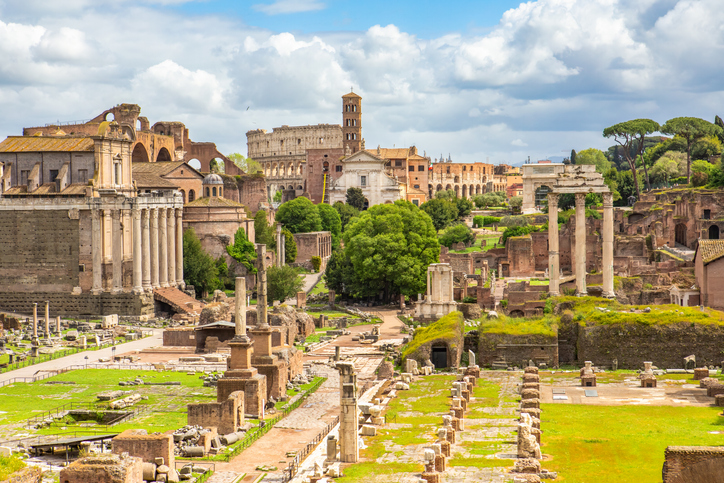
According to some, the history of ancient Rome is pure fiction... (Credit: Amith Nag Photography via Getty Images)
There are several other phantom time or alternative chronology theories besides Illig’s, each one proposing that large portions of history were invented, duplicated, or shifted.
Fomenko’s New Chronology
Anatoly Fomenko, a maths professor at Moscow State University, argues that nearly all history before 1600 is either fictional, heavily falsified or shifted, created to suit the interests of among others the Vatican and the Holy Roman Empire, and much of what we call ancient history actually happened in the Middle Ages. He postulates that ancient Rome, Greece, and biblical events are double-counts of medieval events – almost all of antiquity can be squeezed into the 1000 – 1500 AD range – and that Jesus lived in the twelfth century.
Topper’s Revised Chronology
German amateur historian Uwe Topper argues that major portions of ancient and early medieval history were invented in the Renaissance, especially Islamic and Roman chronologies and there are very few, if any, facts we can rely on from a historical standpoint before the start of the fifteenth century.
And there are more, many similar to Illig’s phantom time theory suggesting that the Middle Ages was centuries shorter than the history books tell us and ancient timelines were greatly inflated.
Making Up For Lost Time: The Phantom Time Hypothesis

The passage of time stands up to scrutiny (Credit: CHIH CHIEH HSIAO via Getty Images)
The hypothesis of phantom time is a genuinely fascinating idea, but for most people this idea ultimately unravels under the weight of historical, archaeological, and scientific evidence. Across diverse disciplines – from astronomy to dendrochronology, and through the enduring cultural and technological progress of the early Middle Ages – the continuity of history stands firm.