Deep within the ancient rock formations of South Africa’s pyrophyllite mines, excavations have uncovered something that defies simple explanation – small, metallic spheres embedded in stone more than three billion years old. Known as the Klerksdorp spheres or Klerksdorp balls, these oddball orbs have puzzled geologists and fired the imagination of mystery-seekers since their discovery in the 1930s.
To some UFO researchers and ancient astronaut theorists, these so-called Klerksdorp alien spheres are not simply quirks of nature. Instead they see the spheres as physical proof of an advanced civilisation that walked the Earth long before humans, or of visitors from the very furthest reaches of the cosmos who left traces of their technology behind.
Whether geological oddities or out-of-place artefacts, the Klerksdorp spheres throw up a singular profound question – how could objects so precise exist in rock so ancient? Let’s dig deep into this rock-solid mystery.
What is the Klerksdorp Spheres Mystery?
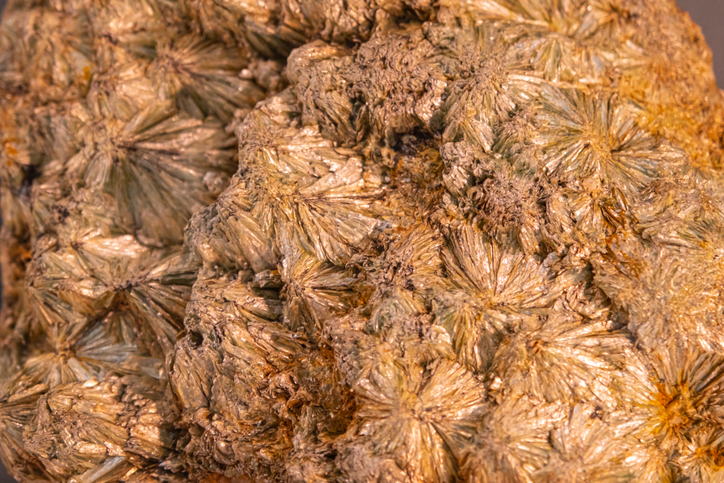
The Klerksdorp spheres were found in deposits of pyrophyllite (Credit: Dina Damotseva via Getty Images)
The Klerksdorp spheres mystery revolves around the discovery of an array of small, unusual objects discovered by miners in three billion-year-old pyrophyllite deposits. They range from about half a centimetre to ten centimetres across, some almost perfectly round, others pressed into squat, disc-like shapes.
What makes them truly striking, though, are their surfaces. Many are marked by crisp, equatorial grooves or neatly parallel ridges that look as if they’ve been carefully incised rather than slowly sculpted by geology. The lines are so regular, so evenly spaced, that for some observers they’ve become more than a curiosity, they’re a tantalising hint that these might not be natural formations at all.
The Scientific Explanation

The spheres' precise grooves resemble those of cricket balls (Credit: Sophonnawit Inkaew via Getty Images)
Scientific studies have shown the spheres are composed mainly of minerals such as hematite (iron oxide), wollastonite (calcium silicate), and sometimes goethite or pyrite, all encased in the host pyrophyllite rock.
The internal structure of the Klerksdorp balls reveals radial patterns, expanding from a central point, which indicates a natural process, rather than intelligent design. The grooves are believed to have resulted from layers of fine sediment in the ancient lakebed where they formed, while the variations in size, shape, and composition are consistent with known geological phenomena.
However, the scientific explanation of the Klerksdorp spheres – the composition, the prominently etched lines and the metallic sheen – does very little to satisfy those who think they’re simply too perfect to be natural. Thus a range of alternative theories have emerged, ranging from out of place artefacts to evidence of lost civilisations or extraterrestrial visitors.
NASA and the Klerksdorp Spheres

Was one of the spheres taken to the USA and studied? (Credit: Tanjim Hasan Tamim via Getty Images)
One of the many theories surrounding the Klerksdorp spheres mystery appears to be an unverified story involving someone who supposedly brought one of the spheres to NASA for analysis.
According to this strange tale, NASA allegedly declared the sphere’s balance ‘too perfect’ to be naturally formed, going so far as to say it could only have been manufactured in zero-gravity conditions. However, there’s no clear evidence, official statement, or indeed anything at all that traces these claims back to NASA. If it happened at all, no-one bothered to file a report…
A separate, unverified letter suggested that one of the Klerksdorp spheres was likely examined by staff at CalSpace, the California Space Institute at the University of California, although the extravagant ‘perfect balance’ claim that circulated later was explicitly denied.
The Prevailing Theories - Part 1
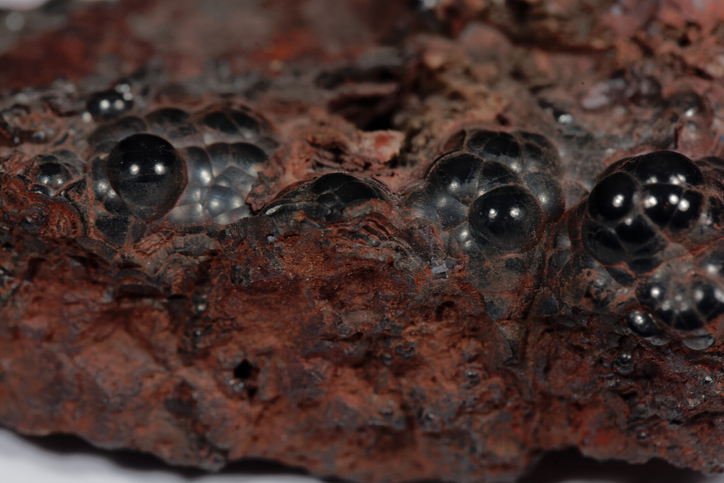
Hematite, an iron ore (Credit: weisschr via Getty Images)
The Klerksdorp alien spheres – as they’re sometimes called – have thrown up a number of theories, from careful geological explanations to classic space invaders…
The Scientific Consensus
Geologists universally regard them as entirely natural formations – specifically, concretions, which are mineral deposits which form within sedimentary rock. They’re thought to have developed between about 2.8 and 3.1 billion years ago, in a pre-oxygen atmosphere, through the precipitation of minerals such as hematite, pyrite, or goethite. They believe the shapes, sizes, and markings of the Klerksdorp spheres are the result of slow chemical and physical changes during their formation deep underground.
Other Theories of Earthly Origin
There are a number of alternative sources which accept that the Klerksdorp balls are natural in origin, but – deliberately or not – misinterpret details to suggest something more exotic. These theories suggest the rocks were machined or manufactured by ancient human or hominid cultures and later incorporated into older rock. But this ignores a basic geological fact: the spheres were found in undisturbed rock layers around three billion years old, formed long before humans, or even early hominins, existed.
The Prevailing Theories - Part 2

Moeraki Boulders on New Zealand's Koekohe Beach (Credit: Martin Ruegner via Getty Images)
The more outlandish speculation around the origin of the Klerksdorp alien spheres often involves lost civilisations and extraterrestrial astronauts.
Advanced Civilisation
Some theories claim the Klerksdorp spheres are relics of an advanced civilisation involved in ancient mining or industrial activity, hinting at a “missing chapter” in Earth’s history. Within this camp, some imagine a pre-human, possibly non-human technological culture that existed long before our recognised history. Others favour a “pre-flood” or Atlantis-style civilisation and argue that the spheres were manufactured by a technologically sophisticated culture shortly before a cataclysmic event, such as Noah’s Flood or a meteorite impact, wiped them out. Proponents typically dismiss conventional radiometric dating, insisting that the host rocks are actually only a few thousand years old. In their view, the spheres might have been decorative objects, game pieces, weights, or even primitive forms of currency.
Alien Astronauts
According to other ideas, the Klerksdorp spheres were made by alien visitors who seeded life on Earth, or who used the objects as bearings, parts of alien machinery, information storage devices, or tools of unknown purpose. Some speculate the spheres are alien hard drives, calibration instruments, or even weapons.
Energy Devices
In recent decades, some have claimed the Klerksdorp spheres are energy devices, capable of spinning by harnessing ‘zero-point’ or ‘orgone’ energy. They claim the Klerksdorp balls can be used for healing, meditation, or even as perpetual-motion machines.
Most of these claims rely on the same pattern: exaggerated roundness (they aren’t actually perfect spheres, many are flattened or irregular), misidentifying natural structures as human-made, and ignore the fact that similar natural concretions form elsewhere on Earth – for example the grooved Moqui Marbles in Utah and the large spherical Moeraki Boulders in New Zealand (which are spherical but not grooved).
Geology vs Mythology: The Klerksdorp Spheres Mystery

Geology did it (Credit: Cavan Images via Getty Images)
The overwhelming evidence points to completely natural – if incredibly old – concretions. The mystery persists mainly because the objects look oddly manufactured at first glance and because the extreme age invites speculation about who could possibly have been around so long ago to have left them there?
It seems though that the answer, rather boringly, is no-one. Geology did it.