Despite the best efforts of some of the world’s best cryptologists, cryptanalysts, mathematicians, computer scientists and amateur codebreaking sleuths, the last of the Kryptos codes, the panel known as K4, remains unsolved. There’s one man on Earth who knows the answer, the sculpture’s creator, but for now at least, he’s remaining tight-lipped.
To the casual observer, the Kryptos puzzle looks like nothing more than a mish-mash of jumbled-up letters, and if it was in a park or a public space, that’s likely what it would remain. But the Kryptos sculpture is outside the entrance to CIA headquarters, one of the world’s most secretive buildings, and everyone inside wants to solve the final piece of the puzzle. Many of them have tried, as have countless thousands of others from all over the world, and all of them have – so far – failed.
There’s an often-repeated rumour that CIA operatives collaborated with their counterparts at the National Security Agency to run the Kryptos codes through the NSA’s Cray supercomputers, some of the most powerful in the world, but, as yet, nada.
What message lies buried in that final cipher? Is it a tell-all, a clue to a new enigma, or perhaps the gateway to an even deeper mystery?
Right now we don’t know, but in August 2025, the creator of the Kryptos sculpture confirmed the existence of K5 in an open letter, which will come after K4.
What is The Kryptos Sculpture?
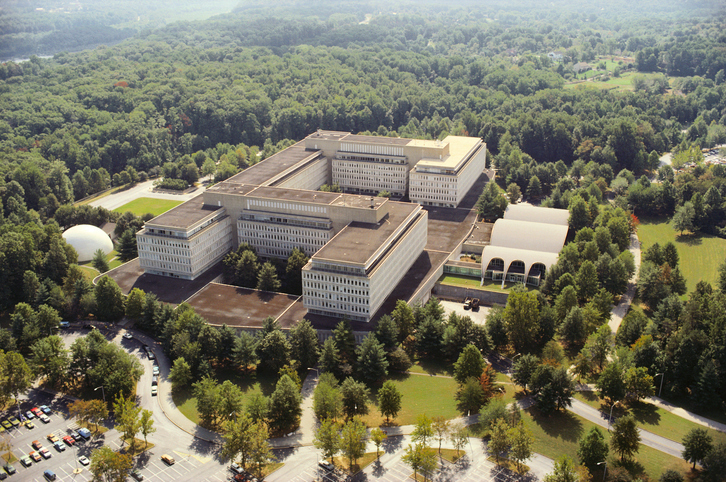
The Kryptos scuplture is in the grounds of the CIA in Langley, Virginia (Credit: Glowimages via Getty Images)
The Kryptos sculpture is one of the world’s most intriguing puzzles, installed just outside the headquarters of the CIA in Langley, Virginia. Designed by American artist Jim Sanborn and unveiled in November 1990, it’s an imposing artwork formed of a curved copper screen, petrified wood, granite, and water features, all symbolically arranged to evoke themes of secrecy and discovery – the very heart of the process of intelligence gathering. Indeed ‘kryptos’ is the Greek word for ‘hidden’.
What sets Kryptos apart is not just its sculptural beauty, but its cryptographic challenge. Across its copper face are 1,735 cut-out letters containing four encrypted passages, the last of which has baffled the world’s best brains for more than three decades.
Sanborn, a sculptor who has created artwork for, amongst others, the Massachusetts Institute of Technology and the National Oceanic and Atmospheric Administration, purposely created Kryptos to challenge the world’s greatest minds. He collaborated with Edward Scheidt, the former Chairman of the Central Intelligence Agency Cryptographic Center (and was referred to by former CIA Director William Webster as ‘The Wizard of Codes’) to ensure its codes were worthy of the world’s most famous intelligence agency.
The first three segments of the Kryptos cipher have been decoded, revealing mysterious messages touching on espionage, archaeology, and references to hidden places, but the fourth section stubbornly resists every attempt at decryption. It’s attracted everyone from CIA veterans to amateur enthusiasts, spawning countless theories, scholarly papers, and online communities dedicated to cracking the Kryptos codes. On occasion, Sanborn himself has dropped subtle clues, keeping the worldwide puzzle hunt alive and fuelling speculation about its true meaning.
The Kryptos Cipher - Section 1
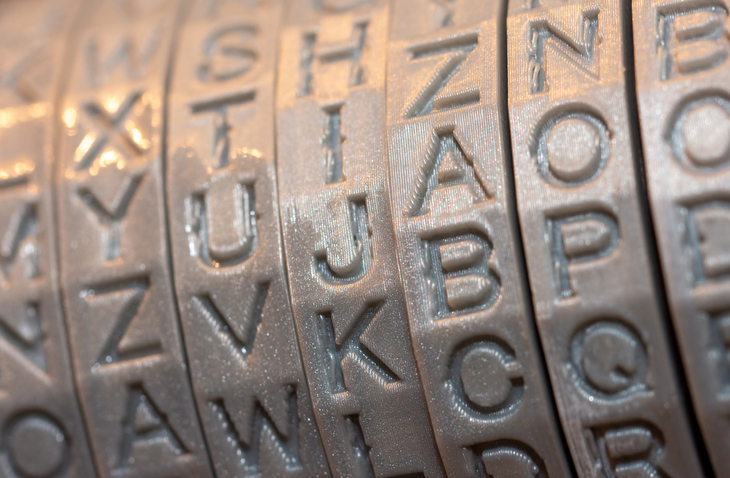
K1 was publicly solved in 1999 (Credit: CobraCZ via Getty Images)
The first section (K1) of the Kryptos puzzle is encoded using a Vigenère cipher, a sophisticated technique, legendary in its complexity, developed in the sixteenth century by French cryptographer Blaise de Vigenère. The system shifts letters according to a keyword, and for this section of the Kryptos cipher, the key words used for deciphering Section 1 were KRYPTOS and PALIMPSEST.
K1 was publicly solved in 1999 by an American computer scientist named Jim Gillogly. The deciphered wording, which doesn’t reference any external text and are believed to be Sanborn’s own words, reads –
BETWEEN SUBTLE SHADING AND THE ABSENCE OF LIGHT LIES THE NUANCE OF IQLUSION.
Importantly, this first section contains a deliberate spelling error – “IQLUSION” instead of the correct spelling “ILLUSION”. This quirk was intentionally inserted by Sanborn to add an extra layer of difficulty and to draw attention to the idea of hidden meaning and deception.
The Kryptos Cipher - Section 2
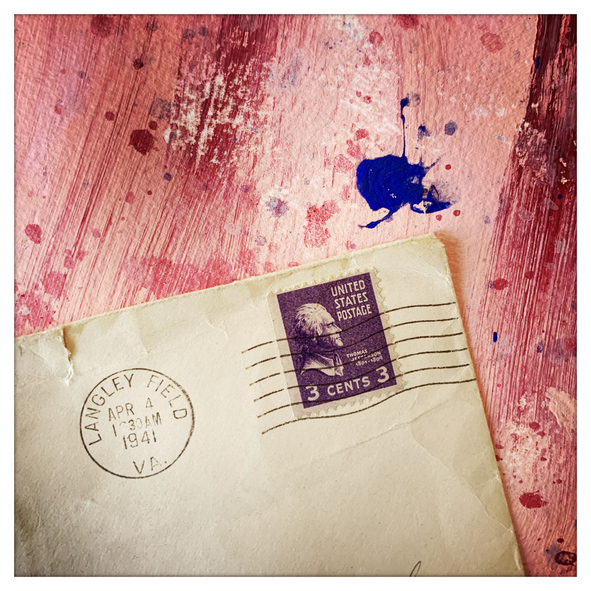
The coordinates are close to the sculpture in Langley (Credit: bgwalker via Getty Images)
Section 2 (K2) of the Kryptos sculpture is also encoded using a Vigenère cipher. This section was also solved by Jim Gillogly. K2’s keywords were KRYPTOS and ABSCISSA and the coordinates (which point to a location fifty-three metres southeast of the sculpture) hint at something buried but has been left purposely vague.
The plaintext translation reads (and all grammatical and spelling errors are represented exactly as the text was decoded) –
IT WAS TOTALLY INVISIBLE HOWS THAT POSSIBLE? THEY USED THE EARTHS MAGNETIC FIELD X THE INFORMATION WAS GATHERED AND TRANSMITTED UNDERGROUND TO AN UNKNOWN LOCATION X DOES LANGLEY KNOW ABOUT THIS? THEY SHOULD IT’S BURIED OUT THERE SOMEWHERE X WHO KNOWS THE EXACT LOCATION? ONLY WW THIS WAS HIS LAST MESSAGE X THIRTY EIGHT DEGREES FIFTY SEVEN MINUTES SIX POINT FIVE SECONDS NORTH SEVENTY SEVEN DEGREES EIGHT MINUTES FORTY FOUR SECONDS WEST X LAYER TWO.
This decrypted section of the Kryptos puzzle refers to apparent buried information and includes geographical coordinates, raising questions about invisibility, the Earth’s magnetic field, and possible hidden locations. The initials WW are widely understood to be those of former CIA Director William Webster.
The Kryptos Cipher - Section 3
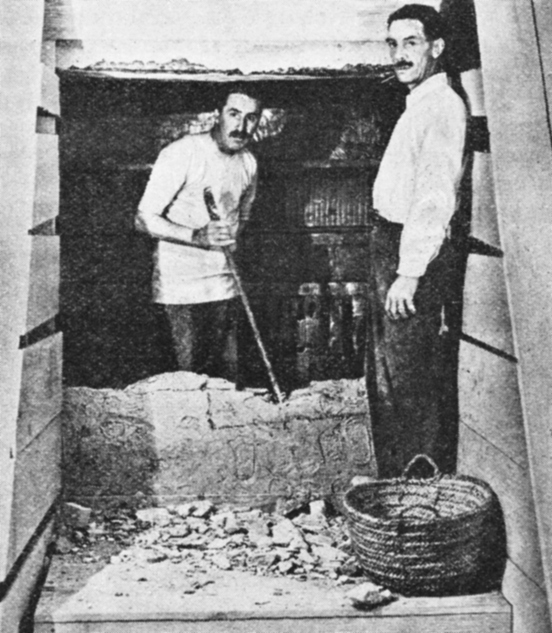
Howard Carter (l) and Lord Carnarvon (r) in Tutenkhamun's tomb (Credit: Photos.com via Getty Images)
The third section (K3) is encoded with a route transposition cipher, which is more complex than the Vigenère ciphers used in K1 and K2. This section was deciphered in 1999, again by Jim Gillogly, and the key for this cipher is KRYPTOS represented numerically as 0362514, which dictates the order in which columns are rearranged in the transposition.
The translation of Section 3 of the Kryptos codes reads (and as with Section 2, all grammatical and spelling errors are represented exactly as the text was decoded) –
SLOWLY DESPARATLY SLOWLY THE REMAINS OF PASSAGE DEBRIS THAT ENCUMBERED THE LOWER PART OF THE DOORWAY WAS REMOVED WITH TREMBLING HANDS I MADE A TINY BREACH IN THE UPPER LEFT HAND CORNER AND THEN WIDENING THE HOLE A LITTLE I INSERTED THE CANDLE AND PEERED IN THE HOT AIR ESCAPING FROM THE CHAMBER CAUSED THE FLAME TO FLICKER BUT PRESENTLY DETAILS OF THE ROOM WITHIN EMERGED FROM THE MIST X CAN YOU SEE ANYTHING Q?
This text is inspired by the archaeological narrative of Howard Carter discovering King Tutankhamun’s tomb, directly referencing Carter’s reported actions and words, which Sanborn used to evoke themes of discovery, secrecy, and illumination. The final question – can you see anything – was asked of Carter by Lord Carnarvon, to which Carter replied either ‘wonderful things’ or ‘yes, it is wonderful.’
It’s worth noting here that although Jim Gillogly was the first to publicly solve K1 – K3 in 1999 using a computer, the CIA later revealed that an operative by the name of David Stein solved it with paper and a pencil a year earlier. In 2013, declassified documents released by the NSA provided direct evidence that one of their internal teams solved K1 – K3 in 1992.
This brings us neatly on to the mystery of Section 4.
The Mystery of Section 4
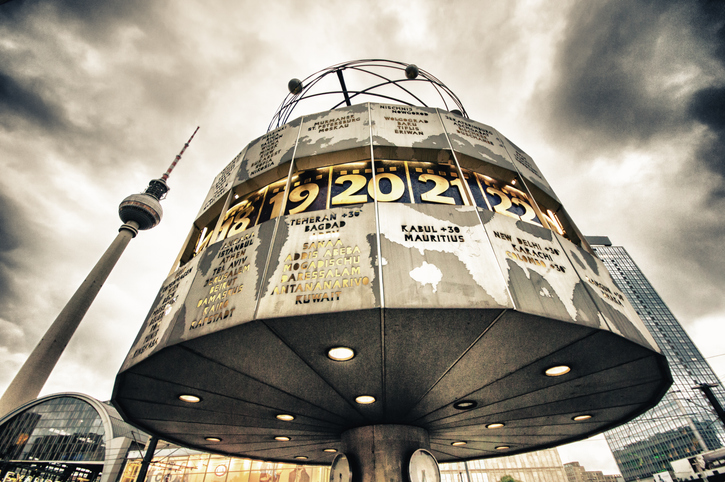
Is Sanborn referring to Berlin's World Time Clock? (Credit: Francisco Martin Gonzalez via Getty Images)
The fourth and final 97-character section of the Kryptos sculpture is considered one of the most famous unsolved codes in the world. Over the years, Sanborn has given out a series of clues –
The fourth and final 97-character section of the Kryptos sculpture is considered one of the most famous unsolved codes in the world. Over the years, Sanborn has given out a series of clues –
- In November 2010, he said that NYPVTT, the 64th to 69th letters, become the word BERLIN once decrypted
- In November 2014, letters 70 to 74 – MZFPK – became CLOCK. Interestingly, the last letter of the code and the last letter of the deciphered word – K – is the same, meaning that it’s possible for letters to encrypt themselves, further complicating attempts to solve the riddle
- In January 2020, letters 26 to 34 – QQPRNGKSS – is the word NORTHEAST, and in August of the same year, letters in positions 22 to 25 – FLRV become EAST.
Regarding the November 2014 clue giving the word CLOCK, Sanborn later added, ‘You’d better delve into that particular clock’ and ‘There are several really interesting clocks in Berlin.’
Time will tell whether these clues yield any results.
Sanborn has stated that the Kryptos sculpture contains a “riddle within a riddle” that will only become solvable after the first four encrypted passages are deciphered, and has subsequently confirmed the existence of a fifth coded message known as K5. He has given conflicting statements about the full solution, at one point saying he shared the complete answer with the then-CIA director at the unveiling, but later clarifying he did not reveal everything.
K4 at the CIA with AI?
More recently, there have been lots of people who have claimed to have solved K4 using AI language models, however Sanborn and experts agree that out-of-the-box AI is not suited for cracking the Kryptos codes due to the intense cryptographic skill required. Specialised AI models trained specifically on complex cryptographic methods might assist but they will likely require expert human guidance.
The Highest Bidder
Over the years, thousands of people have claimed to have cracked K4, and when Sanborn is asked for clues, he’ll often reply with ‘work harder!’ In fact he became so exasperated with the sheer volume of people contacting him convinced they have the solution to the last part of the Kryptos puzzle he began to charge $50 per submission to personally review them in order to weed out the wheat from the chaff.
Some people see it as a fun hobby to keep the mind engaged, some view it as the ultimate test for new versions of cryptanalysis software, and others consider it a battle of wits. For a select few, according to Sanborn, ‘there can be an addiction.’
He also announced that on November 20 2025, a few days after his eightieth birthday, he will auction the solution to K4 to the highest bidder, saying that ‘I no longer have the physical, mental or financial capacities to maintain the 97-character K4 code section of my sculpture and continue my other projects.’
It’s believed the auctioned material will include the original handwritten K4 code, a typed and signed letter from Ed Scheidt, a copper maquette submitted to the CIA as a sample in 1988, photographs of the creation of the Kryptos sculpture, copies of the coding charts Sanborn and Scheidt used to create the piece, and the original dedication leaflet signed by former CIA Director William Webster.
The Kryptos Sculpture: The Last Piece of the Puzzle
For now at least, the gates to the Kryptos code are locked (Credit: George Pachantouris via Getty Images)
More than three decades after its unveiling, the Kryptos sculpture continues to captivate puzzle-solvers and codebreakers worldwide and is one of the world’s great symbols of intrigue. Let’s leave the last enigmatic word to Jim Sanborn himself. ‘The crowd of people trying to crack Kryptos today have no idea what Kryptos is…’