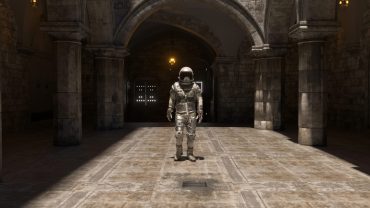
In the shadowy corners of arcade lore, few stories are as persistent as the one about Polybius – a mysterious game that, legend insists, briefly appeared in Portland, Oregon, in 1981 before vanishing without a trace. With its geometric graphics and hypnotic effects, children were said to have flocked to play, spellbound by its psychedelic lights and cryptic gameplay. Yet rumours swirled of odd side effects, including headaches, memory loss, and unsettling dreams. Evidence, however, is suspiciously scarce. So did the Polybius game actually exist? Was it a sinister government mind control experiment? Or was Polybius nothing more than a bizarre internet hoax that simply became unstoppable.
There are many questions, but seemingly, few answers. Who were the ‘men in black’ reportedly seen servicing Polybius arcade machines? Why have no original cabinets, code, or credible witnesses ever emerged to confirm the existence of the Polybius arcade game? And how did a video game most claim never existed gain such a powerful grip on pop culture? This is the bizarrely baffling story of the Polybius game. Player one, ready…
Is Polybius the Most Famous Arcade Game that Never Existed?

In the early 1980s, everyone went to the arcade (Credit: Imgorthand via Getty Images)
Video game arcades in the early 80s were dim, noisy places that smelled of hot electronics. The screens were portals to alien worlds, where games like Pac-Man, Asteroids and Donkey Kong ruled. A pocketful of coins transformed wet afternoons into thrill-a-minute ghostly chases, galactic battles and barrel-jumping glory where hi-score heroics put you on a path to local superstardom. Some say it was the golden age of gaming.
However, according to the legend, the Polybius game arrived in arcades in Portland, Oregon in 1981 as an apparent anomaly, a cabinet distinguished not just by its addictiveness but by the fact it was black and blank. Men in black suits, strangers to regular staff, were said to have delivered them in the middle of the night, and they would visit the arcades only to look after this game. Their alleged presence fuelled wild speculation about government intervention and surveillance.
How Do You Play the Polybius Game?
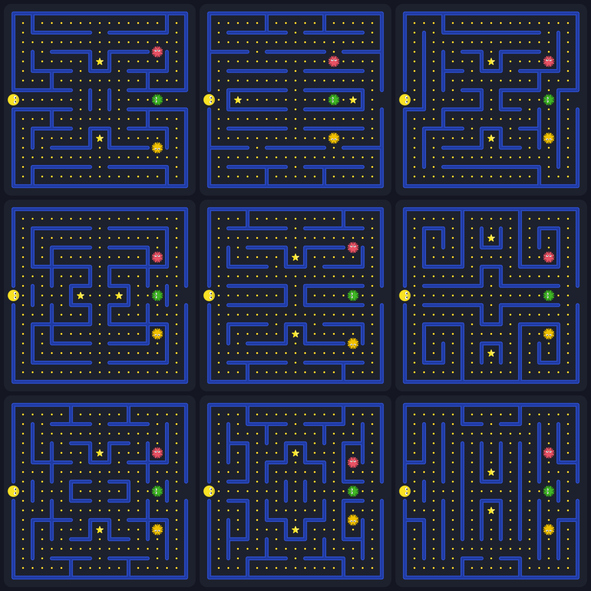
Was Polybius a maze game? No-one seems to know for sure... (Credit: art-sonik via Getty Images)
For an arcade game that’s garnered so much attention, no-one seems to be able to say with any degree of certainty how the game was played, including those who claim to have actually played it. Some say it was a maze game, others say it could have been a space shooter. It could even have been an early type of vector game.
One early 2000s fan-written description of the Polybius arcade game said it featured the player controlling a fighter ship shooting at floating polygons and multi-sided numbered shapes. The objective was to score points by shooting these shapes, which interacted with a central fractal base that needed to be reduced to zero to progress to higher, increasingly intense levels. The game’s visuals were hypnotic and disorienting, with rotating screens and flashing squares.
Smoke & Mirrors
The company supposedly behind the Polybius video game was later reported to be called Sinneslöschen, which is derived from German but is not a proper word. Sinneslöschen roughly translates to “sense delete” or “sensory deprivation”, combining the German words “Sinne” (senses) and “löschen” (to extinguish or delete).
However, despite reported trademark registrations in recent years around the names Polybius and Sinnesloschen, no original cabinets, source code, or proof of the game’s commercial release have ever surfaced. There’s no video footage (although some people have claimed to have ROM downloads of the game), no copyright on file, and the earliest known print mention of the Polybius game is from a September 2003 edition of GamePro magazine. The earliest online reference is believed to be from 1998 (although some say it was later, in 2000) from an anonymous source posting on a gaming site, where he or she first mentioned the men in black theory, as well as the health issues kids who played it were supposed to have suffered.
One interesting addition to the origin story is that the Polybius arcade game shares its name with a Greek historian, also named Polybius, who was born in the city of Megalopolis in Arcadia, modern-day Greece. He was renowned for his belief that historians should base their accounts strictly on information verified through interviews with eyewitnesses, and made significant contributions to puzzles and cryptography, most famously through the creation of the Polybius square, a cipher tool used for encoding messages.
Mind Control?
Was Polybius Bad for Your Health?

Did kids fall ill playing Polybius? (Credit: filo via Getty Images)
Later tellings of the Polybius story state that kids who played the video game experienced serious health issues including amnesia, seizures, night terrors, hallucinations, nausea and headaches. The tale goes on to tell of widespread fear running wild among parents in the early 1980s. Despite these effects, players were said to be oddly addicted, waiting patiently in long queues to play the mysterious game. The legend also claimed that teenagers may have disappeared altogether after playing Polybius. This added to the story’s eerie mystique.
The Curious Case of Bobby Feldstein

A waterfall on Idiot Creek in Tillamook State Forest (Credit: Gary Quay via Getty Images)
Bobby Feldstein’s tale is probably the most movie-ready of the lot – secret tunnels, lost time, mysterious men in suits – but, like much of the Polybius story, it feels far more like a script than a straight piece of history.
He claimed he was abducted in 1981 aged fourteen after playing Polybius at an arcade called Coin Kingdom in Portland. The story goes that he was taken through underground tunnels and found sixty miles away in the Tillamook State Forest, barefoot and disoriented. He alleged the game caused mind-altering side effects that led to his abduction, even said he ran fan walking tours of the places he encountered.
Later however, when others started to examine The Polybius Conspiracy podcast on which ‘Bobby’ was featured, it was reported that the show’s creators admitted he was just a fictional character voiced by an actor, simply used as a way to explore the myth. And once you step outside that story bubble, everything goes quiet: no public records, no local news reports, no trace of Polybius walking tours, and no sign that a teenager by that name really vanished from Portland in 1981.
But as often happens with the idea of life imitating art, the idea of Bobby being real added yet another layer of strangeness to the Polybius urban legend.
Is The Polybius Game Real?
Was polybius an experiment, a test, a joke...or none of the above? (Credit: Rodrigo via Getty Images)
There are a number of theories about the Polybius game, ranging from “it was real and sinister” to “it never existed at all.”
A Government-Run Mind Control Experiment
One popular theory within Polybius folklore claims the game was part of a covert psychological or mind-control programme, sometimes compared to genuine Cold War projects such as MKUltra. However, there’s no obvious evidence pointing to some kind of weird government initiative, or mind-control experiment.
Industry Testing
It’s been mooted the game was some kind of experimental cabinet, either a prototype with unusually aggressive visual effects, or an industry or military study into player behaviour and addiction. The idea is that it may have been pulled quickly after causing adverse reactions. It was well-known that the big gaming companies quietly field-tested unfinished games in arcades, and there were real cases of players collapsing or falling ill after marathon sessions. These stories could quite easily have fed the rumours about the Polybius arcade game, and of a wider parental and media anxiety about the addictive nature of games in the early 80s.
An Elaborate Hoax
Perhaps the most likely of all the prevailing theories about the Polybius game was that it never existed at all, and the story began in the early 2000s as a joke, hoax or creepypasta (a genre of internet horror stories that are copied and pasted across online forums, websites, and social media and deliberately intended to frighten). It then snowballed as each retelling added details and embellishments.
The fact that no records, ROM dumps, cabinets, flyers, or reports from the time have ever surfaced (despite years of intense searching by game historians and other enthusiasts) would seem to back this up. The earliest hard evidence is a single 2000s database listing, which strongly suggests retrospective invention rather than a lost mass-produced game.
False Memories
This idea says that people who ‘remember’ the Polybius arcade game are either misremembering, or recalling another, similar game from the era. Tempest had intense vector graphics allegedly inspired by the nightmares of its creator and made at least one person ill in Portland. Cube Quest (released in 1983) had abstract 3D visuals and video backdrops, and Poly-Play was a multi-game East German arcade machine whose similar name and rarity may have confused Western fans.
Meta-Fiction or Commercial Storytelling
Some modern strands of the legend are intentionally crafted fiction wrapped in documentary style, like podcasts, videos, ‘witness’ tours and ARG (alternative reality game) projects that blur reality for effect.
A Modern Parable
There’s a school of thought in academia that suggests the Polybius game is a parable about fears that new media has the potential to rewire children’s brains, about the suspicions surrounding government surveillance in everyday life, and anxiety about technology that it’s addictive and harmful. In this theory, it doesn’t matter if the game exists or not, it’s more about how the story supports wider 1980s and internet-era worries about games, data, and control.
Across all of these theories, the general view is that there’s no solid evidence the Polybius video game ever existed. But the legend lives on because it sits perfectly at the crossroads of video game nostalgia, health scares, conspiracy culture, and group-think memories.
Game Over…?
Game Over (Credit: Sumeth Charee via Getty Images)
The legend of the Polybius game remains a fascinating puzzle – a mysterious remnant from arcade history cloaked in shadows and unanswered questions. Whether it was a sinister government experiment, a prototype gone too far, a myth born from the anxieties of the early 80s gaming boom, or even just a joke, Polybius has never been confirmed or fully explained. The story continues to lurk in quiet corners of the internet, leaving open the tantalising possibility that the truth is hiding somewhere for those daring enough to insert a coin and press ‘start…’