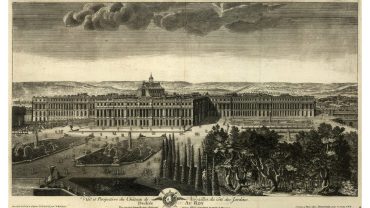
Long before the age of smartphones and smart homes, Scotland was already busy shaping the modern world. From the whir of steam engines to the glow of television screens, Scottish inventors have been at the heart of some of technology’s greatest leaps forward. What began with Enlightenment thinkers questioning how the world worked soon evolved into a nation building the tools to change it. Steam, steel, and science paved the way for the silicon circuits and tidal turbines of today.
So how did a small country of big ideas end up revolutionising everything from communication to medicine, from transport to technology? We’re going full steam ahead to find out.
The Spark Before the Steam: The Scottish Enlightenment
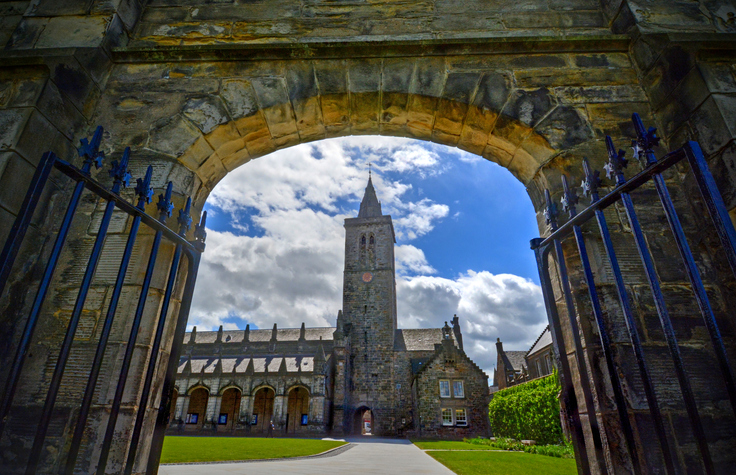
St. Andrews University one of Scotland's incubators for experimentation (Credit: JByard via Getty Images)
Before the pistons pumped and the engines roared, a quieter revolution was already under way. The 18th-century Scottish Enlightenment transformed Edinburgh, Glasgow, and Aberdeen into crucibles of knowledge. Thinkers such as David Hume, Adam Smith, and James Hutton asked profound questions about science, society, and human nature, and crucially, they insisted on answers grounded in observation and logic.
This movement didn’t just fuel philosophy; it lit the fuse for invention. Universities became incubators for experimentation. Collaboration replaced secrecy, and practical science began to thrive alongside theoretical thought. The Enlightenment built the intellectual infrastructure that would allow Scotland’s inventors – from engineers to physicians and beyond – to turn ideas into enduring innovations.
Enlightened Beginnings: 18th Century Ingenuity
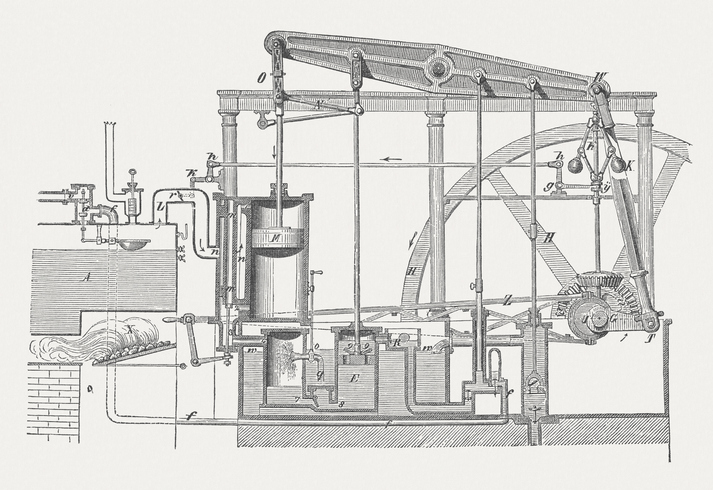
James Watt's steam engine, a milestone of industrialisation (Credit: ZU_09 via Getty Images)
As the Enlightenment’s ideals spread, Scotland’s engineers and scientists began reshaping the world in tangible and practical ways. Like inventing the fridge. In 1748, William Cullen demonstrated artificial refrigeration at Glasgow University. He never built a fridge as we know it, but his work laid the groundwork for modern food preservation – a cool idea that changed the way the world eats.
Meanwhile, in 1775, Scottish watchmaker Alexander Cumming patented what became one of the most enduring inventions in sanitation history: the S-bend. By shaping the humble toilet waste pipe into an ‘S’ and allowing a thin layer of water to linger after each flush, he created a natural seal that kept noxious sewer gases firmly out of living spaces. This neat little trick didn’t just freshen the air, it helped protect public health. And it’s still keeping plumbing systems worldwide ticking to this day.
And then there was engineer James Watt. His improvements to the steam engine have been credited with nothing less than spurring on the entire Industrial Revolution. It transformed the steam engine from a bulky, inefficient machine into a tool powerful enough to drive industry on a grand scale.
Watt partnered with industrialist Matthew Boulton to found Boulton & Watt, producing engines that spread across Britain and beyond. This collaboration didn’t just refine technology – it revolutionised how work was done. By providing a reliable power source independent of rivers, animals, or wind, Watt’s engines became the heartbeat of the Industrial Revolution, fuelling advances in manufacturing, mining, and transportation which reshaped economies and societies worldwide. Today, his name endures even in the unit of power, the “watt,” reminding us how this innovative Scottish engineer helped power a global age of modernity.
Science of the Invisible: 19th-Century Visionaries

The James Clerk Maxwell Telescope in Hawaii, one of the world's most powerful (Credit: elgol via Getty Images)
As the Industrial Revolution thundered on, Scottish minds began to look beyond the visible. In Edinburgh, James Clerk Maxwell revealed that electricity, magnetism, and light were not separate forces but expressions of one elegant law. His work, the significance of which is regularly ranked alongside that of Isaac Newton and Albert Einstein, would one day underpin everything from X-rays to Wi-Fi. Oh, and he also produced the first colour photograph. Not a bad century’s work.
Other fields which benefited from Scottish ingenuity in the 19th century included medicine, policing, and tableware. In 1853, Alexander Wood designed the hypodermic syringe. Modelled on a bee’s sting, this small needle represented a big scientific leap, bringing precision to treatment. Meanwhile, Henry Faulds proposed using fingerprints to identify criminals in 1880, long before forensic labs became standard. And, in 1892, Sir James Dewar invented the vacuum flask – first for scientific experiments, then for picnics everywhere.
Broadcasting Brilliance: 20th-Century Breakthroughs
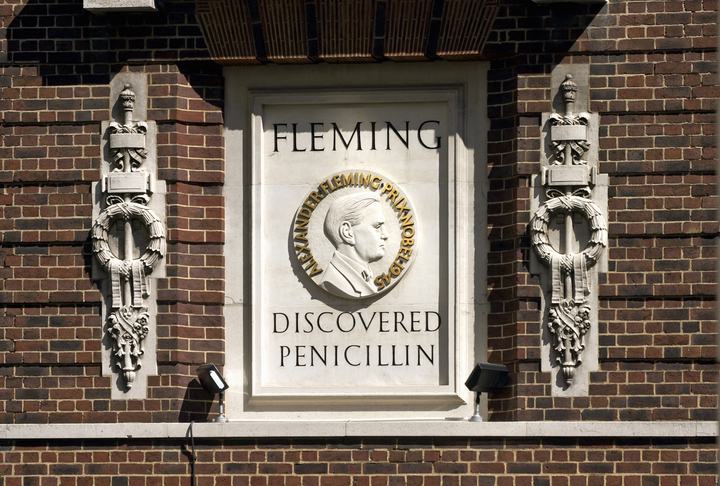
The discovery of penicillin remains one of humankind's greatest achievements (Credit: Andrew Holt via Getty Images)
By the early 20th century, Scottish invention had gone electric. John Logie Baird’s flickering prototype television, demonstrated in 1926, drew crowds who could scarcely believe their eyes. Within a few years, he’d sent images across the Atlantic – the dawn of global broadcasting. Around the same time, a biologist from Ayrshire noticed a mould that killed bacteria. This accidental find would lead Sir Alexander Fleming to discover penicillin, ushering in the antibiotic era and saving countless lives.
Then came the digital wave. In 1966, James Goodfellow created the ATM and PIN system, transforming how people handled money. Two decades later, DMA Design, a small Dundee studio, released Lemmings and later Grand Theft Auto, proving that digital creativity could be as influential as industrial machinery.
As if all that wasn’t enough, in 1995, Scottish engineer Ron Hamilton invented the daily disposable contact lens. A year later, Midlothian’s Roslin Institute pushed the boundaries of genetics with Dolly the Sheep, the first cloned mammal and a global scientific icon.
New Horizons: Innovation in the 21st Century

Scotland's research institutions are world leaders in fields including AI (Credit: MTStock Studio via Getty Images)
Today, Scotland’s inventive energy remains as potent as ever. Its research institutions and start-ups lead the way in biotech, artificial intelligence, data science, and green energy – industries shaping the 21st century. From harnessing tides to decoding genomes, Scotland continues to build on its centuries-old habit of solving problems with elegance and tenacity.
A Legacy Still Unfolding

A Scotch thistle, the flower of Scotland (Credit: LaSalle-Photo via Getty Images)
From the chill of Cullen’s ice experiment to the warmth of Dewar’s vacuum flask, from Bell’s voice on a wire to Baird’s faces on a screen, Scotland’s inventions have shaped how people live, heal, travel, and connect. The same spirit that fuelled the Scottish Enlightenment now drives advances in data, medicine, and clean energy. The tools have changed, but the ambition remains the same: to understand, to improve, and to imagine what comes next.