From forgotten explorers to sibylline scientists, lost legions to infamous rulers, the ancient world is littered with puzzles we can’t quite crack. Misplaced cities, undeciphered scripts, mysterious geoglyphs and artefacts that appear centuries ahead of their time, all hint at beliefs, technologies and stories that didn’t survive in written records. Even with today’s satellites, scanners and laboratories, it’s often the mysteries of ancient history that prove the hardest of all to decipher.
The myriad mysteries in ancient history left by the world’s earliest civilisations have kept scientists, archaeologists and historians guessing for hundreds of years. For every riddle solved by cutting-edge science, there are others which remain as impenetrable as ever. Here, we’ll explore ten of the most baffling unsolved mysteries of ancient history – enigmas that continue to resist even the sharpest investigative minds and the most powerful technology.
The Disappearance of the Maya Civilisation
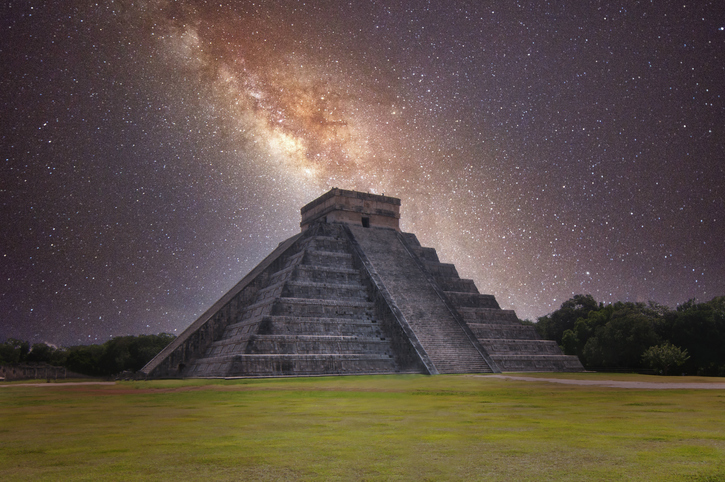
El Castillo at Chichen Itza (Credit: Cesar Dussac via Getty Images)
The disappearance of the Maya is one of the ancient civilisation mysteries that has baffled historians and academics for decades. The Maya flourished for centuries from around 2000 BC in Mesoamerica (some or all of modern-day Mexico, Belize, Guatemala, El Salvador, Honduras, Nicaragua and Costa Rica) and were famed for advanced architecture, hieroglyphic writing, precise calendars, and monumental pyramids including El Castillo at Chichen Itza. But sometime between 800 and 950 AD, many of their great cities in the southern lowlands were suddenly abandoned and their monumental achievements were left to the jungle. What caused the collapse of such a powerful and advanced society?
It Maya Have Been a Number of Reasons
Experts believe the collapse wasn’t due to just one thing, but a mix of troubles hitting the Maya all at once. A long, severe drought dried up their water supplies, making it hard to grow enough food. On top of that, cutting down forests and farming heavily wore out the land, making things even worse. With fewer resources, there was more fighting between cities and growing unrest among the people. Add to all that possible disease and overpopulation, and you get a perfect storm that brought the great Maya civilisation to its knees. Even with modern research, scientists still debate one of the most famous unsolved mysteries of ancient history, and exactly how these factors combined to end such a remarkable culture.
The Mystery of Göbekli Tepe
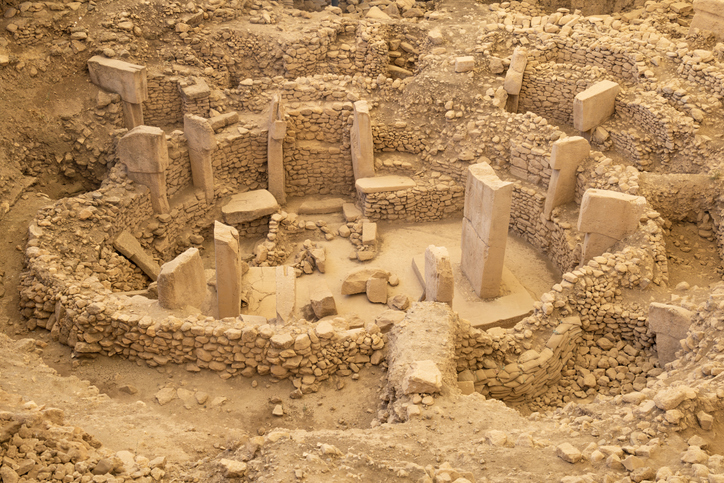
Göbekli Tepe in Turkey (Credit: ibrahim halil yapici via Getty Images)
UNESCO calls it ‘one of the first manifestations of human-made monumental architecture’, but what is Göbekli Tepe and how has it become one of the world’s great ancient mysteries? It’s an extraordinary ancient site in southeastern Turkey dating back somewhere between 10,500 and 12,000 years. It features huge, carved T-shaped pillars arranged in circular enclosures, decorated with mysterious animal reliefs and symbols. What’s most baffling is that it was built by hunter-gatherers who didn’t (or weren’t supposed to) have the technology or social structure to create such sophisticated monuments. Why was this place built? What was its purpose? And how could these ancient people pull off such an engineering feat so early in history?
The World’s Oldest Human Settlement?
The mystery deepens with theories suggesting Göbekli Tepe was a gathering spot for hunter-gatherer groups, who might have come together seasonally to conduct rituals or feasts. Some suggest it was the world’s first temple, a place of worship or ancestor veneration long before cities appeared. Others believe its builders were early villagers experimenting with new ways of living. Despite some fanciful ideas about lost civilisations or aliens, most experts agree it was a groundbreaking step toward organised human society. Yet the exact reason for its abandonment and why it was deliberately buried under earth remains one of archaeology’s most perplexing ancient mysteries.
Did The Romans Beat Columbus To America?

Could Roman ships have made it across the Atlantic? (Credit: Nastasic via Getty Images)
One of the most persistent mysteries of ancient history is the claim that Roman explorers set foot in the Americas centuries before Columbus. Since the early years of the twentieth century, researchers and treasure hunters have found intriguing clues, such as Roman amphorae discovered in Brazil’s Guanabara Bay, coins from the reign of Septimius Severus unearthed in Maine and Massachusetts, and even a terracotta head in a Mexican pyramid matching Roman art from around 200 AD. Some argue these are proof of lost Roman ships blown off course or deliberate ancient exploration, with scattered out-of-place artefacts popping up from Venezuela to Canada. Did Rome leave its mark on the New World as dramatically as it did on the Old? Did the reach of the Roman Empire stretch further than we think?
From Italy to Little Italy?
Were there Romans in America? Most mainstream historians and archaeologists are sceptical. It’s highly unlikely a Roman ship would have been able to survive a transatlantic voyage, and there’s basically no real evidence backing up the idea. Most of the Roman finds in North America probably arrived by later trading, collecting, or shipwreck, while others (like the Brazilian amphorae and Mexican figurine) invite fierce debate about their authenticity. Yet, this tantalising transatlantic tale lives on as a marvellous mix of ancient myth and mystery.
The Mystery of the Sajama Lines
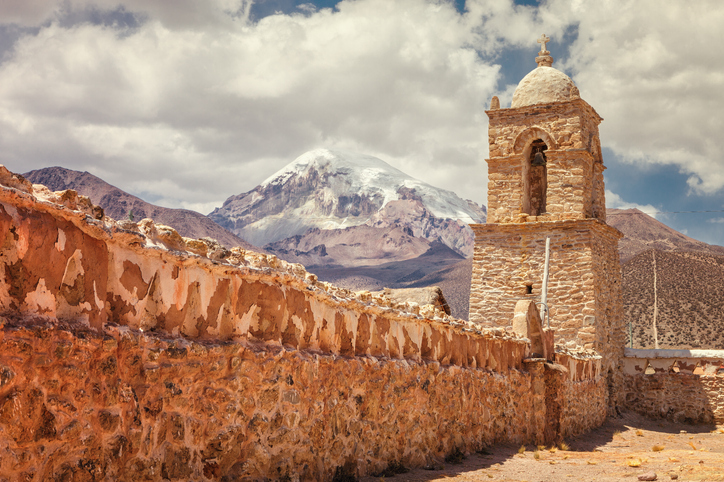
The Nevado Sajama volcano in Bolivia (Credit: jarcosa via Getty Images)
Hidden high in Bolivia’s rugged altiplano near the Nevado Sajama volcano, the Sajama Lines form a mind-boggling network of thousands of straight paths – some twenty kilometres long – etched into the earth, covering over 22,000 square kilometres, fifteen times larger than Peru’s Nazca Lines. Starting as early as 1000 BC and slicing through mountains and valleys with astonishing precision, it’s one of the most perplexing ancient civilisation mysteries of them all, and may have been created by indigenous groups like the Aymara or Tiwanaku. Who had the know-how to lay out such a massive web without modern tools? Were they paths for pilgrims, maps to the stars, or something far stranger? And why go to such lengths – literally and metaphorically – in one of the world’s harshest landscapes?
A Route to the Stars?
Some think these ancient mysteries are a giant roadmap for rituals or simply daily life, with many experts guessing they guided pilgrims on sacred journeys to shrines, burial towers, and villages dotted at key intersections – some paths even overlap modern roads. Others think they’re astronomical, and may have tracked sunrises, solstices, or star movements for farming calendars in the arid highlands. Might they be irrigation channels or crop zones? Whatever the truth, this colossal artwork shows early Andeans mastering their world in ways that still leave us scratching our heads.
The Antikythera Mechanism - A Computerised Conundrum
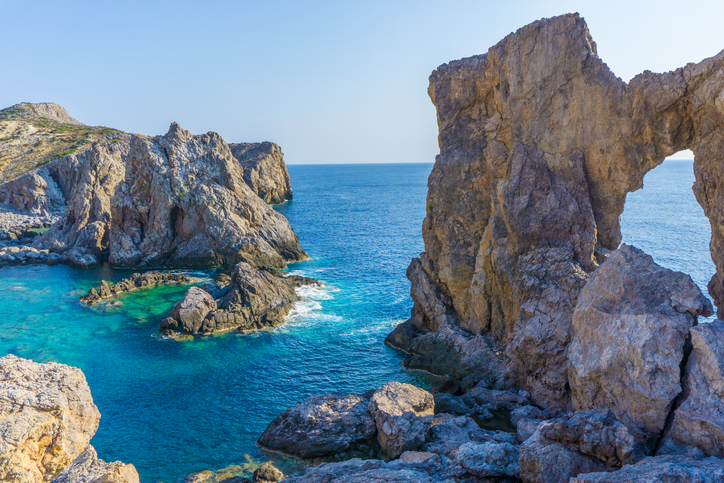
The gadget was found in a shipwreck off the island of Antikythera (Credit: Charalambos Andronosvia Getty Images)
Pulled from a shipwreck off the Greek island of Antikythera in 1901, the Antikythera Mechanism is a corroded bronze gadget dating from around 150 – 100 BC that includes over thirty interlocking gears, dials, and pointers tracking the sun, moon, eclipses, and maybe even planets, with eerie accuracy. One of the greatest mysteries of ancient Greece, the Antikythera Mechanism has been called the world’s first analogue computer, and the kicker is that nothing this mechanically complex pops up again for over 1,000 years. How did ancient Greeks craft such wizardry? Was it a rich merchant’s toy, a navigator’s must-have, or proof of tech we thought impossible back then? And to where did all that know-how vanish?
P-See Into the Future?
Experts see the Antikythera Mechanism as an astronomer’s tool for predicting celestial events like lunar cycles, eclipses, and planetary positions, perfect for sailors, farmers, or timing religious festivals. Users turned a side crank to set a date, and the gears would spin pointers across dials to reveal sky positions based on Babylonian maths and Greek ingenuity. It was probably built in a workshop on Rhodes or linked to thinkers like Hipparchus, and could have been a luxury item for elites or scholars, lost at sea while heading to Rome. X-rays and modern scans confirm it’s one of the genuine ancient mysteries and not a hoax, just a glimpse of genius that outshines anything until medieval clocks were invented.
Where Was Alexander the Great Buried?
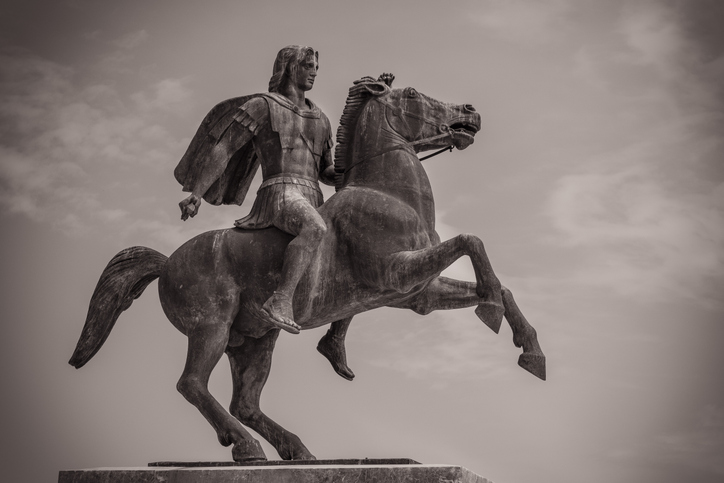
A statue of Alexander the Great in Thessaloniki, Greece (Credit: James Margolis via Getty Images)
This is one of the great unsolved mysteries of ancient history. Alexander the Great, the unstoppable conqueror who built an empire from Greece to India, died in Babylon in 323 BC at just 32, leaving no clear heir or burial wishes. It’s believed his body was moved several times, first to Memphis in Egypt by Ptolemy I, and then to his eponymous city Alexandria around 280 BC. Alexander’s mausoleum welcomed illustrious visitors including Julius Caesar and Cleopatra, but by the fourth century AD, it vanished, possibly lost to earthquakes, rising seas, or urban sprawl. So where exactly is Alexander’s tomb hiding today? Was it looted, submerged, or tucked under Alexandria’s streets? And why did such a prized site slip away without a trace?
Victim of a Tomb Raider?
Archaeologists have chased Alexander’s remains across Egypt and beyond, with Alexandria as the prime suspect. Alexander was first buried in Memphis before his tomb was moved to Alexandria’s royal quarter – possibly somewhere beneath the area around the Nabi Daniel Mosque or near the alabaster chamber discovered in the early twentieth century. Some point to Siwa Oasis close to Egypt’s modern-day border with Libya – a request believed to be his last words – or even Venice, where rumours surfaced it was taken there in the ninth century by Venetian merchants who thought it was the tomb of St. Mark. Some suggest this most peculiar of ancient mysteries was swallowed up by a huge flood and more than a hundred different digs have come up empty-handed, but recent scans near central Alexandria’s former royal quarter keep hope alive that the king still sleeps close to the city he founded.
The Illuminating Tale of the Paracas Candelabra
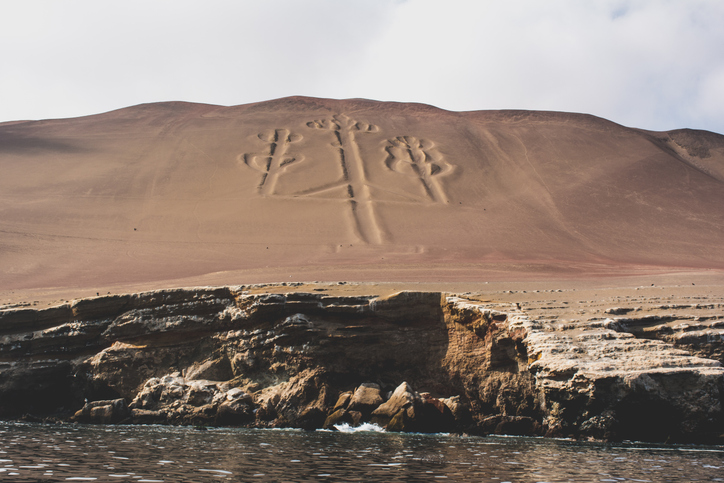
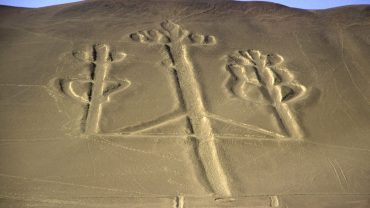
The Paracas Candelabra (Credit: Avel Shah / 500px via Getty Images)
Carved into a hillside overlooking Peru’s Paracas Bay, the Paracas Candelabra is a giant and mysterious geoglyph 170 metres tall and 60 metres across. Dating back around 2,500 years, this deep-etched design cut into the soil looks like a massive three-pronged fork or candelabra and can be seen from almost twenty kilometres out to sea. South America is home to many mysteries in ancient history, and this is one of the most intriguing, with its true purpose a puzzle that continues to spark debate.
Sacred Symbol or Scientific Seismograph?
Was it a religious icon representing the Incan creator god Viracocha, a giant sign for sailors navigating the tricky coastline, or perhaps a depiction of a hallucinogenic plant used in rituals? Some even speculated it might be an ancient seismograph capable of registering earthquakes. Despite many theories, the reason for its creation remains elusive. The impressive scale and clear visibility of the Paracas Candelabra suggests it played an important role for the people of the region, possibly as a landmark or spiritual beacon. Its connection to the nearby Nazca Lines hints at a wider tradition of massive and enigmatic earthworks in Peru’s pre-Columbian cultures. While its exact meaning remains unknown, archaeologists, geologists and historians remain in hot debate over one of the most fascinating unsolved mysteries of ancient history.
Stonehenge - The UK’s Ancient Mystery
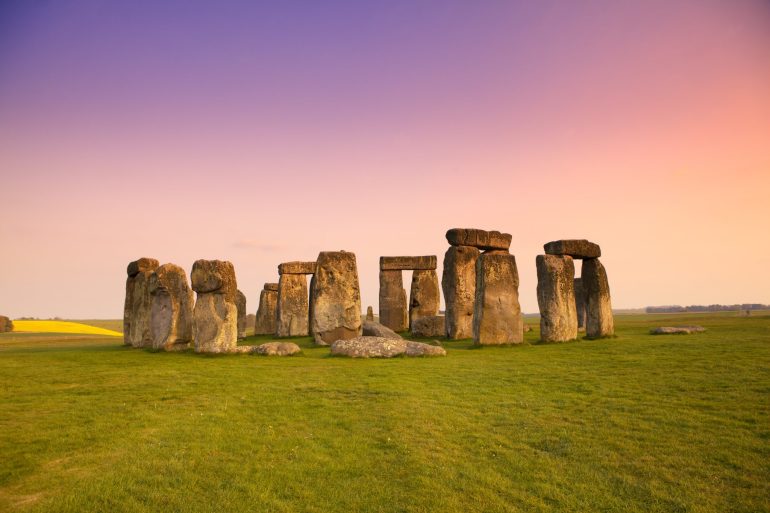
Stonehenge is the most famous Bronze Age monument in the UK (Credit: jessicaphoto via Getty Images)
A globally-recognised cultural icon on Salisbury Plain, Stonehenge is a ring of massive standing stones – some weighing up to 50 tonnes – built in phases between around 3100 BC and 1600 BC by Neolithic and Bronze Age peoples. It features huge monolith-style stones topped with lintels, plus smaller bluestones hauled 150 miles from Wales, all aligned precisely with the summer and winter solstices. This staggering feat of prehistoric engineering has welcomed pilgrims for millennia, but its true purpose continues to baffle experts. Was it a celestial calendar for tracking seasons and eclipses? A sacred burial ground? Or a grand gathering spot for healing rituals and feasts? And the most often-asked question of them all – how were these huge stones moved without wheels or iron tools?
Sign of the Solstice, Cemetery, or Celestial Signposts?
Despite being one of the most famous tourist spots in England, no-one is completely sure why it’s there. It could have been a hub for ancient Britain’s spiritual and social life, blending astronomy, death rites, and community. Perhaps it was used as a solar-lunar observatory, where crowds watched midsummer sunrises to mark farming cycles and celebrate solstices with big gatherings. Others point to cremated remains and nearby burial mounds, suggesting that it could have been a temple for the dead or a type of rudimentary hospital for healing. No single answer fits, keeping this famous stone circle as UK archaeology’s ultimate head-scratcher and the most famous of all ancient British mysteries.
Linear A - What Does It Say?
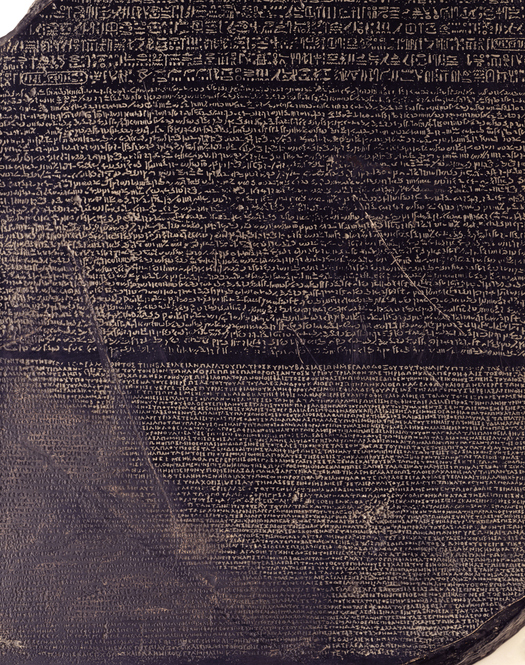
The Rosetta Stone, deciphered in 1822 (Credit: Brand X Pictures via Getty Images)
Another of the great mysteries of ancient Greece, Linear A is one of Europe’s strangest unsolved riddles – a mysterious script scratched onto clay tablets by the Minoan civilisation of Crete between 1800 BC to 1450 BC. They used these 70 – 120 abstract line symbols for everything from tallying olive oil and grain to sacred rituals. Unlike its successor Linear B which was cracked in the 1950s as early Greek, Linear A resists the attempts of every codebreaker, computer, and linguist to understand it, despite sharing similar signs. Does it speak a lost language? Was it just boring account books or does it encode mysterious secrets? And why did it vanish as Mycenaeans took over, leaving us in the dark about what the Minoan civilisation wanted to say?
A Lost Language
Linear A could well be a lost language, perhaps a non-Greek Minoan dialect or similar to one of the languages of Anatolian origin such as Luwian or Lycian. There are patterns which suggest it could be a trade ledger, which parallels the bureaucratic nature of Linear B, but the truth is, no-one’s sure. The hope is that this most delightful of ancient mysteries is something more romantic, like poetry or stories of the stars, but while there isn’t a Rosetta Stone-type translation key, and AI guesses go nowhere, this beautifully elegant script will stay, for now, as Europe’s oldest undeciphered whisper.
Silphium - The Mysterious Plant of the Romans

Is silphium gone forever? (Credit: Brian Woolman via Getty Images)
Silphium was a prized plant of ancient Cyrene (modern-day Libya), flourishing for centuries before the Roman era and so valuable it appeared on the city’s coins. A giant fennel-like herb with a coveted resin called laser, it was used across the Mediterranean as a spice, perfume, cure-all, and possible contraceptive. Overharvesting and failed attempts to cultivate it drove the plant to extinction by the first century AD – Pliny even claimed Nero ate the last stalk. But why couldn’t this cash crop be farmed despite desperate tries, and does it lurk unidentified to this day?
No Grow
Theories about silphium’s extinction highlight a classic clash between human greed and the limits of nature. Overgrazing by sheep and goats, which loved eating its leaves, combined with reckless harvesting of its roots, decimated wild silphium faster than it could grow back. Ancient experts like Theophrastus warned of its fragility, as efforts to farm it failed outside Cyrene’s unique gypsum soil and climate. Some of its closest relatives that thrive today, including asafoetida and a number of different varieties of fennel hint at its rediscovery, but most botanists agree that silphium is truly lost.