Long before cinemas, streaming platforms, or electric stage lights, theatre was one of the ancient world’s most powerful forms of entertainment. Vast crowds gathered to watch tragedies, laugh at comedies, and experience stories brought vividly to life. These early theatres were remarkable not only for their performances but for their design. Hewn into hillsides or built from stone, many were engineered with impressive acoustics and clear sightlines, achievements that still amaze today.
Even more extraordinary is the number of these venues still standing. From Greece and Italy to Turkey and Jordan, here are ten ancient theatres that can still be visited today.
The Theatre of Epidaurus, Greece
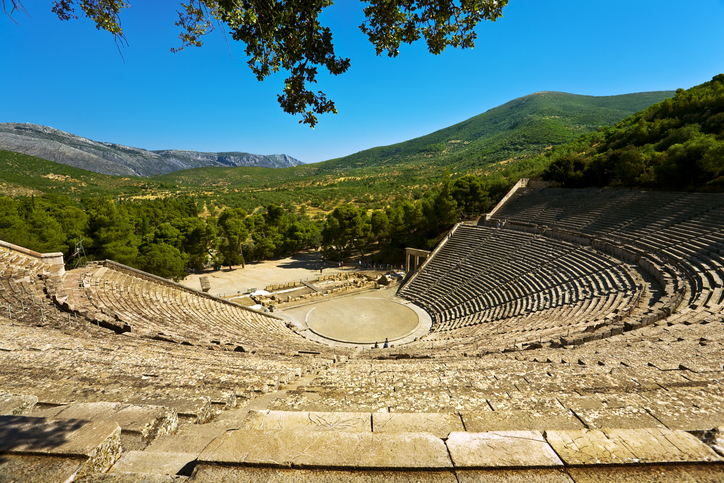
The Theatre of Epidaurus, Greece (Credit: WitR via Getty Images)
Nestled among the hills of the Peloponnese lies what many historians consider the most perfect theatre ever built. Constructed in the 4th century BCE, the Theatre of Epidaurus was part of a sanctuary dedicated to Asclepius, the Greek god of medicine. Pilgrims travelled here seeking healing, and entertainment was believed to play a role in restoring balance to the body and mind.
The theatre could seat around 14,000 spectators and is famous for its astonishing acoustics. Even today, a whisper or dropped coin at the centre of the stage can be heard from the highest seats.
Remarkably well preserved, Epidaurus still hosts performances during the annual Athens and Epidaurus Festival, allowing audiences to experience ancient drama in the same setting where it was first performed over two millennia ago.
The Colosseum, Italy
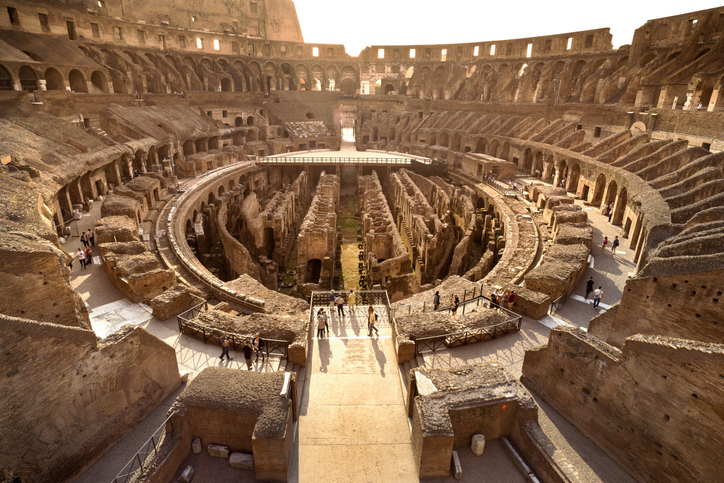
The Colosseum, Italy (Credit: Ted Horowitz Photography via Getty Images)
Few ancient theatres are as instantly recognisable as Rome’s Colosseum. Completed in 80 CE under Emperor Titus, this colossal amphitheatre could hold an estimated 50,000 to 65,000 spectators. While technically an arena rather than a traditional theatre, it served as the grand stage for Rome’s most dramatic spectacles.
Here, crowds watched gladiatorial combat, wild animal hunts, mock naval battles, and elaborate public executions. Beneath the arena floor lay a vast underground complex known as the hypogeum, where animals and performers waited before being lifted into the spotlight.
Despite earthquakes, looting, and centuries of wear, the Colosseum remains one of the most iconic ancient structures in the world, and one of Italy’s most visited historical sites.
The Theatre of Orange, France
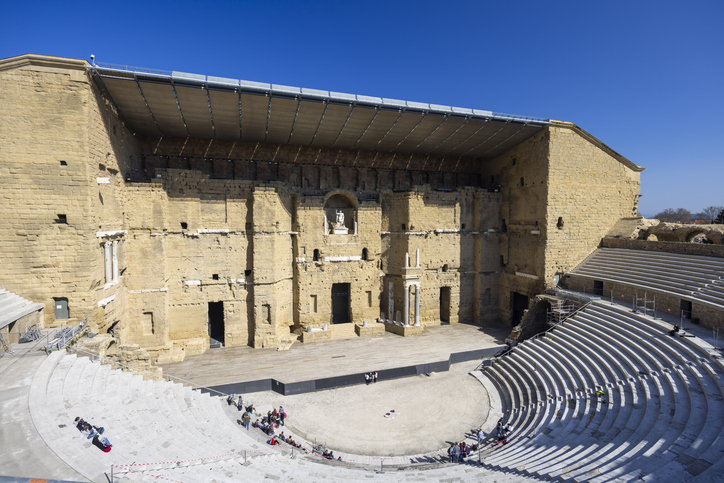
The Theatre of Orange, France (Credit: phbcz via Getty Images)
In southern France stands one of the best-preserved Roman theatres in existence. Built during the reign of Emperor Augustus in the 1st century AD, the Theatre of Orange once hosted performances of drama, music, and poetry for up to 10,000 spectators.
What makes this theatre truly exceptional is its towering stage wall, known as the scaenae frons. Rising nearly 120 feet high, this monumental façade once supported elaborate decorations and statues.
Today, it remains almost completely intact, a rarity among ancient theatres. The venue continues to host concerts and operas during the annual Chorégies d’Orange festival, combining modern performances with ancient surroundings.
The Aspendos Theatre, Turkey
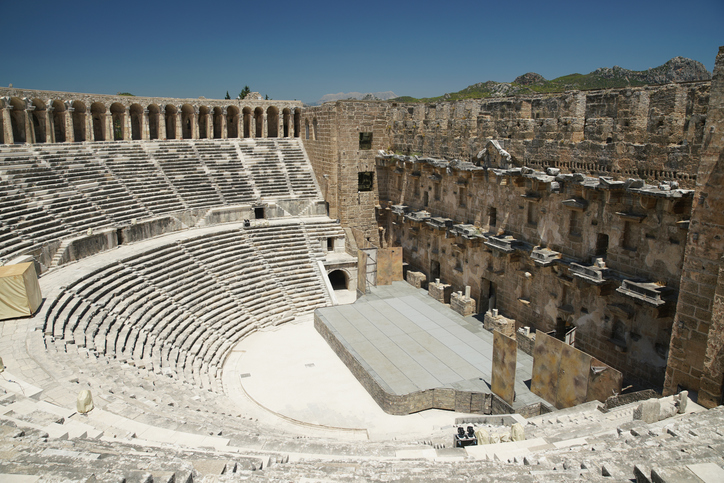
The Aspendos Theatre, Turkey (Credit: EvrenKalinbacak via Getty Images)
Deep in southern Turkey lies one of the most stunning Roman theatres ever constructed. The Aspendos Theatre was built in the 2nd century CE during the reign of Emperor Marcus Aurelius. Designed by a Greek architect named Zenon, the theatre could seat roughly 15,000 spectators.
Its preservation is extraordinary, largely because it was later used as a caravanserai – a roadside inn – during the Seljuk period. The theatre’s stage building, seating tiers, and arches remain largely intact, giving visitors a vivid impression of how Roman performances might have looked and sounded.
The Theatre of Dionysus, Greece
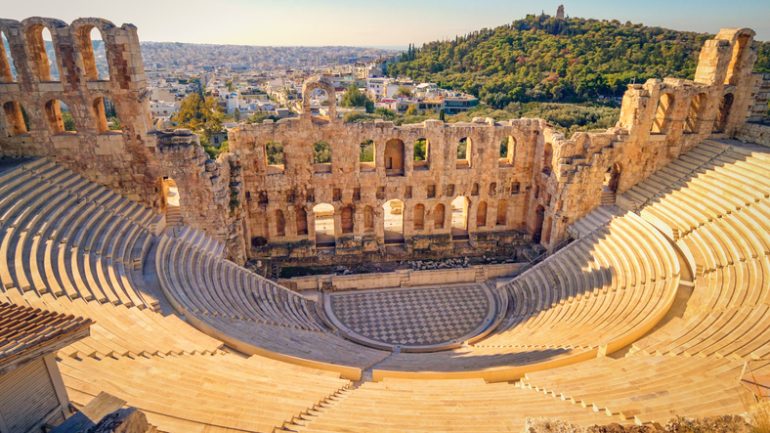
The Theatre of Dionysus, Greece (Credit: CrackerClips via Getty Images)
If theatre has a birthplace, it may well be here. Located on the southern slope of the Acropolis in Athens, the Theatre of Dionysus is widely considered the world’s first theatre. It was here, in the 5th century BCE, that the great playwrights of ancient Greece – including Sophocles, Euripides, and Aeschylus – staged their legendary tragedies.
Originally built from wood before later being reconstructed in stone, the theatre eventually held around 17,000 spectators. Although only ruins remain today, it still marks the spot where Western drama first took shape.
The Roman Theatre of Mérida, Spain
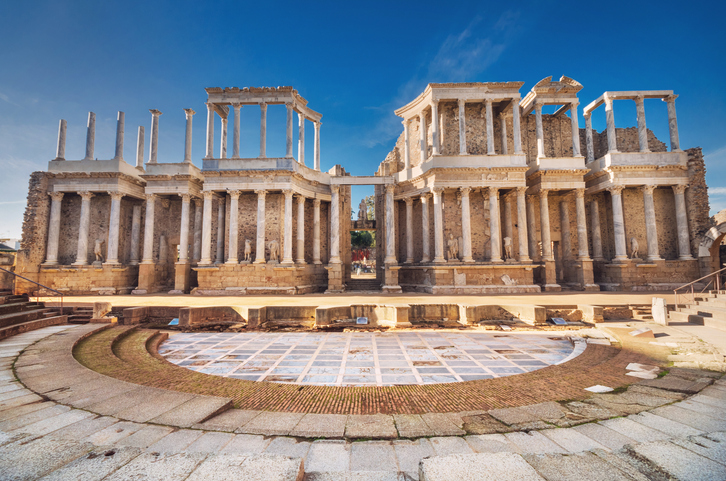
The Roman Theatre of Mérida, Spain (Credit: herraez via Getty Images)
In the heart of Extremadura sits one of Spain’s greatest Roman treasures. The Roman Theatre of Mérida was built in 16 BCE under the rule of Emperor Augustus as part of the Roman colony of Emerita Augusta.
The theatre once accommodated around 6,000 spectators and featured elaborate marble columns and statues decorating its grand stage. After centuries buried beneath sand and earth, the theatre was excavated in the early 20th century. Today it forms part of a UNESCO World Heritage Site and hosts the annual Mérida Classical Theatre Festival, where ancient plays return to life under the Spanish night sky.
The Odeon of Herodes Atticus, Greece
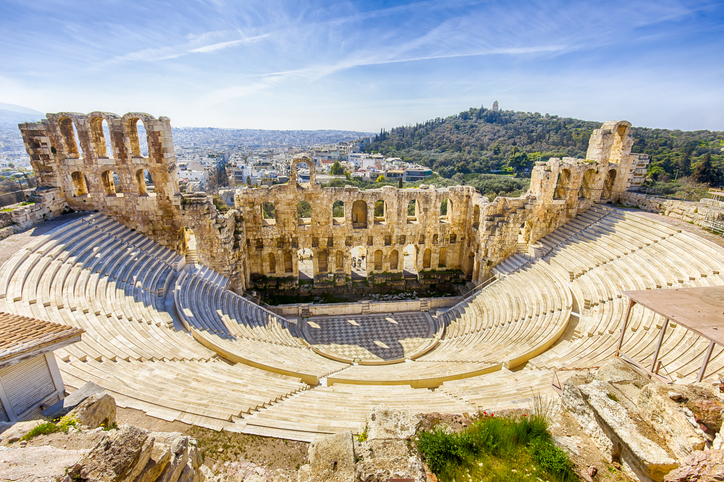
The Odeon of Herodes Atticus, Greece (Credit: elgreko via Getty Images)
Another gem of Athens stands on the southwestern slope of the Acropolis. The Odeon of Herodes Atticus was built in 161 AD by the wealthy benefactor Herodes Atticus in memory of his wife.
Unlike open Greek theatres, this venue originally had a cedar-wood roof and was used primarily for musical performances. It could seat roughly 5,000 people. Although the roof no longer survives, the theatre was restored in the 1950s and remains an active performance venue today. Concerts, ballets, and theatrical productions continue to take place in this ancient setting.
The Roman Theatre of Amman, Jordan
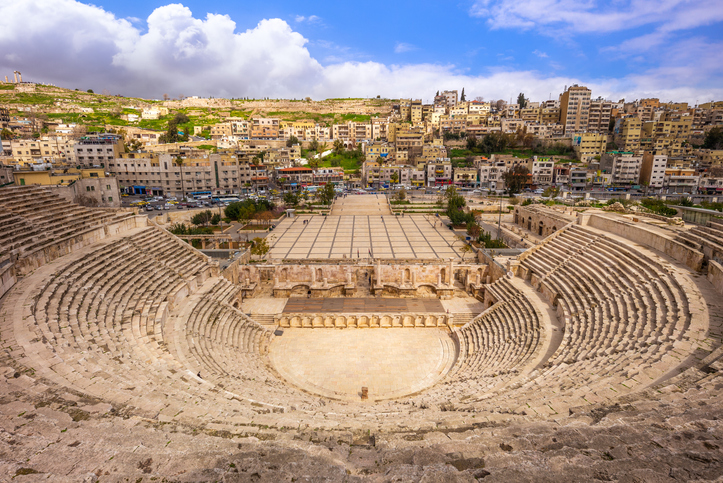
The Roman Theatre of Amman, Jordan (Credit: Jui-Chi Chan via Getty Images)
Carved into a hillside in the heart of Jordan’s capital stands a theatre that once formed the cultural centre of the Roman city of Philadelphia. Built during the 2nd century AD under Emperor Antoninus Pius, the Roman Theatre of Amman could hold approximately 6,000 spectators. Its steep seating tiers were designed to maximise visibility and acoustics, while the stage once featured elaborate decorations and columns. Today the theatre remains one of Amman’s most impressive historical landmarks and is occasionally used for concerts and events.
The Theatre of Taormina, Italy
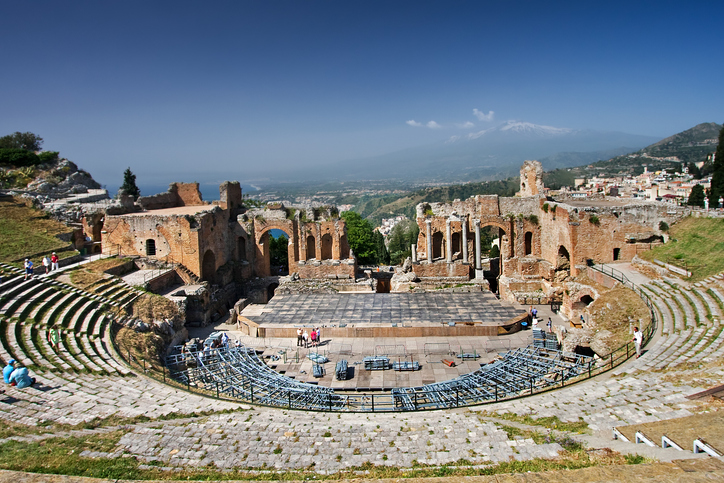
The Theatre of Taormina, Italy (Credit: Ellen van Bodegom via Getty Images)
Perched dramatically above the Ionian Sea on the island of Sicily, the Theatre of Taormina offers one of the most breathtaking views of any ancient performance venue. Originally built by the Greeks in the 3rd century BC and later expanded by the Romans, the theatre overlooks both Mount Etna and the shimmering Mediterranean. At its height, it could hold around 10,000 spectators.
The theatre remains an active venue today, hosting concerts, operas, and film festivals. Watching a performance here, with the Sicilian sunset as a backdrop, offers an experience unlike any other.
The Roman Theatre of Philippopolis, Bulgaria
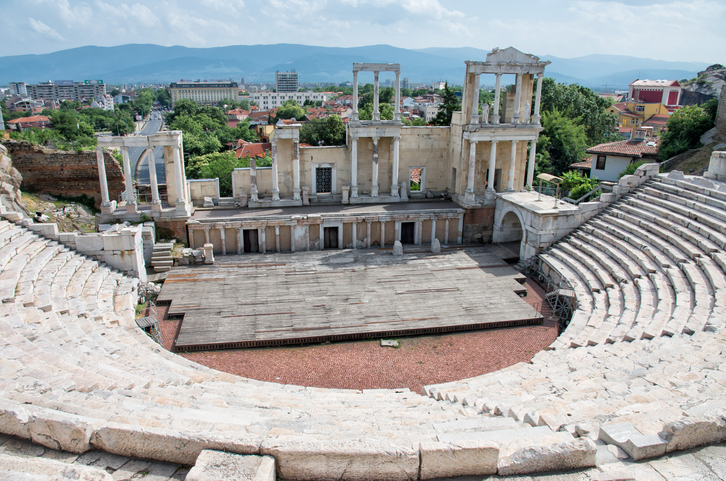
The Roman Theatre of Philippopolis, Bulgaria (Credit: Sekundemal via Getty Images)
The Roman Theatre of Philippopolis, located in modern-day Plovdiv, Bulgaria, is one of the best-preserved ancient theatres in the world. Built during the reign of Emperor Trajan in the early 2nd century AD, it once served as a centre for theatrical performances, gladiatorial events, and civic gatherings in the Roman city of Philippopolis. Carved into the natural slope of the Three Hills, the theatre could seat around 6,000 spectators. Its elegant marble seats, ornate stage building, and sweeping semicircular design reflect the architectural sophistication of Roman engineering. After centuries buried beneath layers of earth, it was rediscovered in the 1970s and carefully restored. Today, it once again hosts concerts and performances.
Echoes Across the Centuries

The most famous amphitheatre in the world (Credit: vwalakte via Getty Images)
Whether perched on a Greek hillside or rising from a Roman city centre, ancient theatres were far more than places of entertainment. They were centres of culture, politics, religion, and drama. Today, their stone steps and weathered stages still carry echoes of applause, laughter, and tragedy from centuries past.