It might come as a surprise to some, but the story of pasta doesn’t begin in Italy. In fact its origins stretch back as far as 4,000 years to a tiny village in China called Lajia between the modern-day provinces of Qinghai and Gansu in the upper reaches of the Yellow River. Archaeologists found millet-based noodles, suggesting the main ingredients of pasta – water and dough – existed (and may have originated) in Asia. These early versions of pasta may have made their way west along the Silk Road, or were developed independently, but the journey started to plates and bowls all over the world.
By the first century AD, the Romans were experimenting with laganum, flat dough sheets resembling modern lasagna. Arabs later revolutionised pasta between the ninth and the twelfth centuries, introducing dried semolina techniques to Sicily, which spread across Italy. By the 1150s, the Sicilian city of Palermo was home to some of the earliest pasta workshops and production centres, and Naples, with over sixty shops by the early 1700s (and almost 300 by 1785), earned its title as Italy’s pasta capital, setting the stage for pasta’s industrial and cultural dominance.
In the 1850s and 1860s, pasta went global. One of the earliest adopters of standardised mass production outside of the Mediterranean was in Hungary with the establishment of their first factory in 1859, and Buitoni, one of Italy’s first major commercial pasta brands established in 1827, was exporting dried pasta throughout Europe and the Americas by the late nineteenth century.
Today, annual global pasta production is around seventeen million tonnes, and it’s not surprising that the Italians are the largest consumers, with each person eating around 23 kilograms a year!
Most of us eat pasta, but what are the stories behind our favourite dishes? Let’s find out.
World Pasta Day
World Pasta Day (Credit: Morrison1977 via Getty Images)
At the first World Pasta Congress in Rome on October 25, 1995, representatives from 40 pasta makers and producers gathered to talk all things pasta, and one of the takeaways from the get-together was that they unanimously agreed this staple deserved its own annual international recognition, establishing October 25 as World Pasta Day.
The first official celebrations kicked off in 1998 in Naples, and since then, the day has been marked worldwide with events, recipes (using an estimated 600 different types of pasta worldwide), and tributes organised by industry bodies both in Italy and elsewhere.
Today, World Pasta Day celebrates not just Italian pasta but recognises how nearly every culture enjoys a version of noodle or pasta, ensuring it reigns supreme as the world’s comfort food!
Hungry? Let’s dive fork-first into the history of the world’s most famous pasta dishes!
Spaghetti alla Carbonara
Spaghetti alla Carbonara (Credit: Jordan Lye via Getty Images)
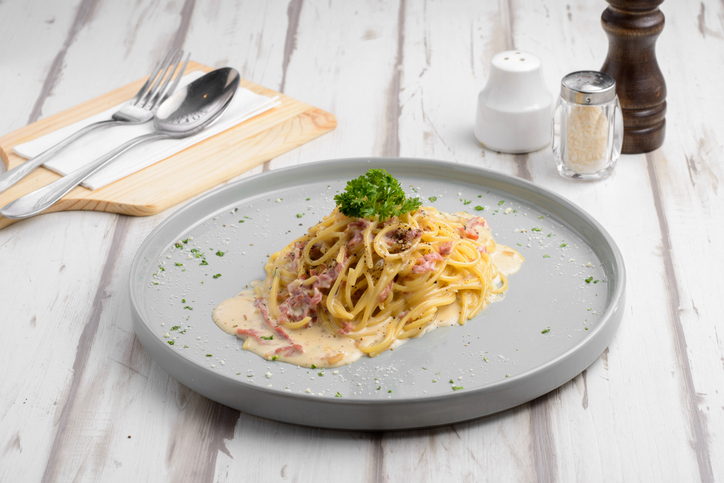
Spaghetti alla Carbonara is a Roman classic – spaghetti tossed with crispy cured pork cheek, egg yolks, Pecorino Romano cheese, and black pepper, but absolutely, positively, definitely no cream! As for its origins, they are hotly debated. Some have suggested that the dish was made for Italian charcoal workers (carbonari), while others maintain it emerged in the Lazio region of Rome towards the end of World War II when American soldiers’ bacon and egg rations inspired local cooks to create a new dish.
Fettuccine Alfredo
Fettuccine Alfredo (Credit: lauraag via Getty Images)
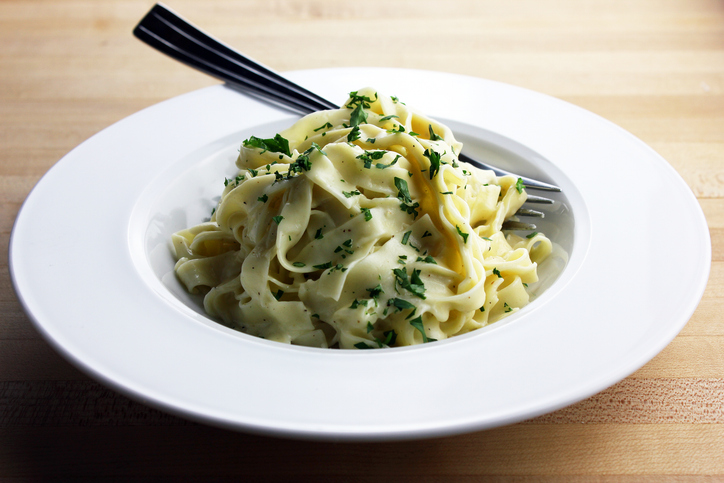
Simple yet spectacular, Fettuccine Alfredo is a three-ingredient superstar – fettuccine pasta, Parmesan cheese, and butter, but where did it come from? Unlike carbonara, there’s no doubting its origin. It was created in 1907 or 1908 by an Italian chef called Alfredo Di Lelio who was working at a restaurant run by his mother Angelina in Rome. He made the dish to tempt his convalescent wife’s appetite after she gave birth to their first child, Armando. While Alfredo’s recipe calls for just the three ingredients, legends abound that he added olive oil to the pasta dough, and that he cooked his pasta in milk instead of water. We’ll never know…!
Lasagne
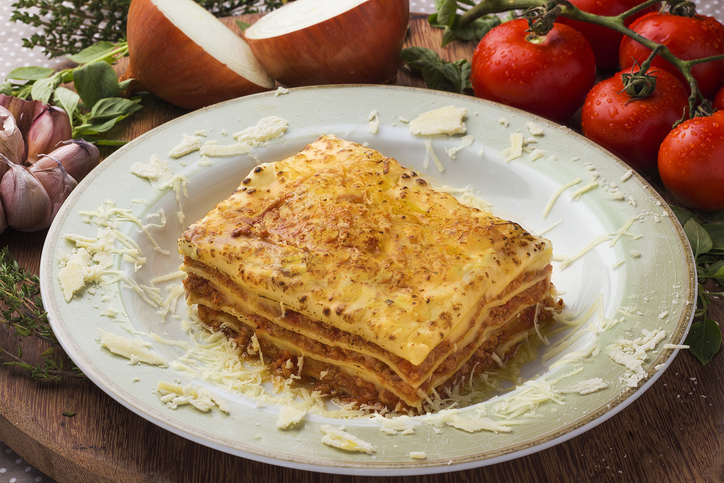
Lasagne (Credit: angelalourenco via Getty Images)
One of the most iconic of all Italian pasta dishes, lasagne is a beloved Italian dish of layered flat pasta sheets, slow-simmered meat ragù, creamy béchamel sauce, fresh mozzarella, and Parmigiano-Reggiano cheese baked to bubbling perfection. Its origins trace to ancient Greece’s laganon – flat dough sheets – adapted by Romans as laganum. By the Middle Ages, regions like Emilia-Romagna and Naples refined layered lasagne, with Renaissance chef Bartolomeo Scappi documenting lasagne recipes for Vatican feasts in 1570. Today, the recipe and ingredients are slightly different from those of 450 years ago (béchamel and tomato sauce are later additions) but for many, it has become the ultimate comfort food!
Cacio e Pepe
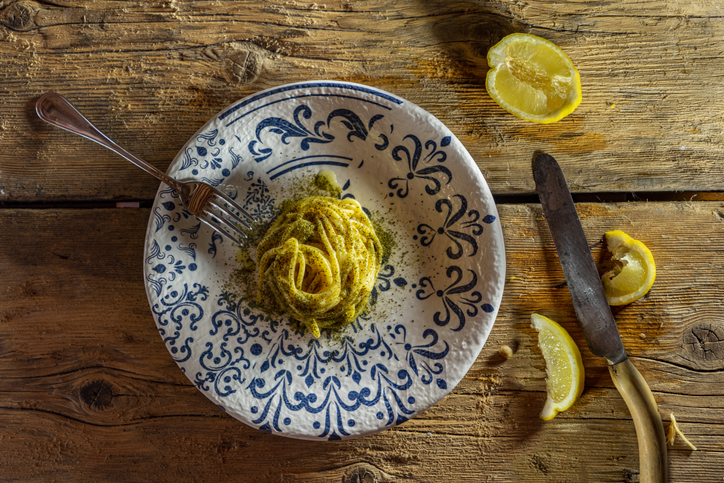
Cacio e Pepe (Credit: Guido Cozzi/Atlantide Phototravel via Getty Images)
Literally ‘cheese and pepper’, cacio e pepe is a classic Roman pasta made, like fettuccine Alfredo, with just three simple ingredients – spaghetti (or a pasta similar to spaghetti called tonnarelli), Pecorino Romano cheese, and freshly ground black pepper. The magic of this dish lies in its simplicity – the combination of starchy pasta water with cheese and pepper to create a creamy, silky sauce without any butter or cream. As for its origins, the most often-repeated tale is that it was created in the eighteenth or nineteenth century by pastoral and farming communities in the central Italian regions of Lazio, Umbria, Tuscany and Abruzzo, but it’s likely that black pepper, at the time extremely expensive and quite rare in rural central Italy, was a later addition.
Pasta alla Norma
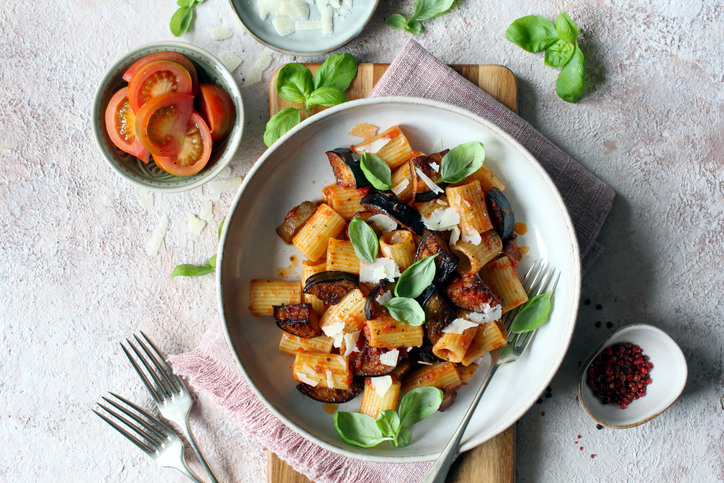
Pasta alla Norma (Credit: Ale02 via Getty Images)
Pasta alla Norma is a beloved dish from the Catania region of Sicily and is made using short tubular pasta such as penne or rigatoni in a rich tomato sauce with fried aubergine, fresh basil and grated ricotta salata cheese. The dish was named in honour of famous early nineteenth century Italian composer and Catania native Vincenzo Bellini whose opera Norma, is one of his most famous pieces. One version of the story (although hard evidence is scant) is that on tasting the dish, Italian writer Nino Martoglio said ‘this is a real Norma’ – meaning a masterpiece.
Ravioli
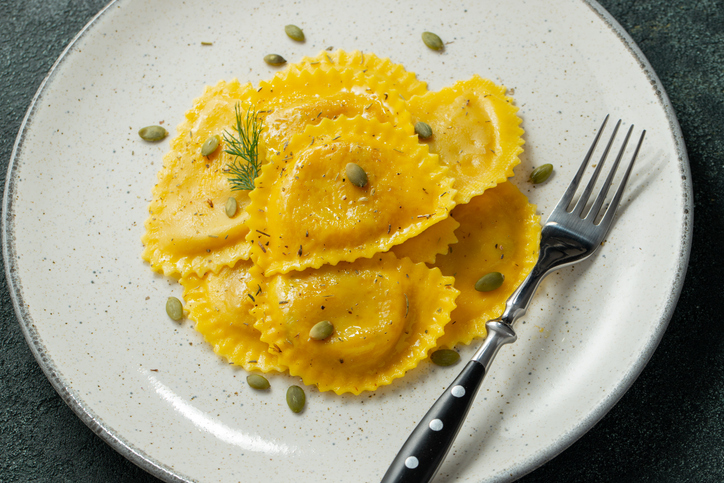
Ravioli (Credit: vasiliybudarin via Getty Images)
Ravioli are small Italian pasta pockets traditionally filled with a classic mixture of ricotta cheese and spinach, or minced meat, enclosed in a thin fresh egg pasta dough and served in a light broth, a rich and unctuous tomato sauce or a meat ragù. Although the dish may have been created earlier, the first documented mentions are from the fourteenth century, in the famous medieval cookbook The Form of Cury as rauioles, and around the same time in the letters of Tuscan merchant Francesco Datini. They were believed to have been served by the aforementioned Bartolomeo Scappi with boiled chicken at the 1549-50 papal conclave that elected Pope Julius III.
Ravioli has made its way around the world in various forms, including manti, from the cuisines of Turkey, Armenia and other parts of central Asia, stuffed with spiced meat and served with yoghurt and paprika sauce. Kreplach are from Jewish cuisine and are ravioli filled with meat and simmered in a chicken broth, and in Argentina, sorrentinos are large ravioli stuffed with meat and cheese and served with a thick tomato and meat sauce.
Spag Bol
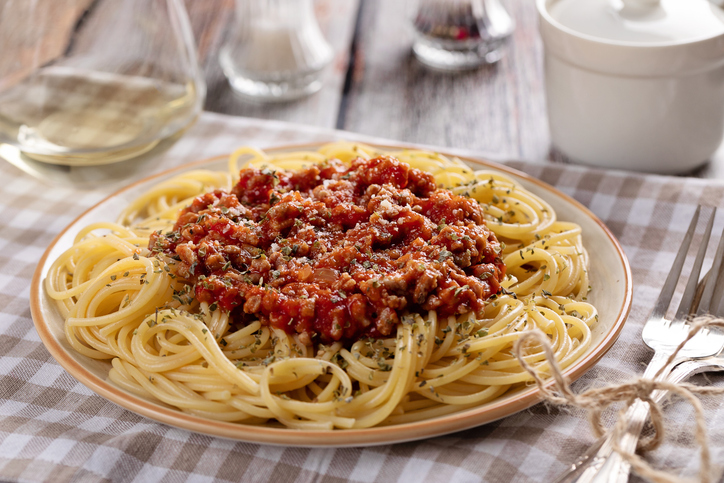
Spaghetti Bolognese (Credit: Cris Cantón via Getty Images)
A midweek dinner favourite in homes up and down the British Isles, but if you went to a trattoria anywhere in Italy and asked for spaghetti Bolognese, they’d look at you perplexed. Some of the more traditional chefs may even get offended! In Italy, the famous meat sauce originates from Bologna as Ragù alla Bolognese, traditionally a slow-cooked, meat-first sauce made with finely chopped beef, pork, soffritto (onion, celery, carrot), a splash of wine, usually no tomato, and often finished with milk or cream to enrich it. It’s traditionally served with broad, flat pasta such as tagliatelle, not thin spaghetti, which Italians consider too delicate to hold up to the sauce’s rich texture. Other acceptable pasta variations according to many Italians include wide flat varieties such as pappardelle or fettuccine, or tubes, including penne and rigatoni.
The origins of this true Italian icon are from the eighteenth century and may come from the French ragout, a type of meat stew. The first documented Italian recipe for a dish of meat ragù and pasta comes from the town of Imola in northern Italy in the 1780s or 1790s, and was created by Alberto Alvisi, the chef to Cardinal Barnaba Chiaramonti who was elected Pope Pius VII in 1800. Italian-inspired but universally adapted, spag bol remains a dinnertime favourite!
Bueno appetito!