If there’s one thing that makes a room feel instantly Christmassy, it’s an evergreen tree covered in lights. This is the story of how that simple tradition grew out of old winter customs, medieval rituals, and a few well-timed royal influences.
The Roots of Holiday Greenery

A forest of evergreen trees in Rendalssölen in Norway (Credit: Mikael Svensson via Getty Images)
People have been cherishing touches of green through the depths of winter for thousands of years. Ancient civilisations frequently expressed admiration for plants that remained evergreen while the rest of the natural world slipped into hibernation. The Egyptians filled their homes with palm rushes during the winter solstice to mark the recovery of Ra’s strength. Romans honoured Saturn with evergreen decorations during Saturnalia. And Norse cultures in the northern forests regarded evergreens as embodiments of endurance and sacred protection.
Paradise Found in the Middle Ages
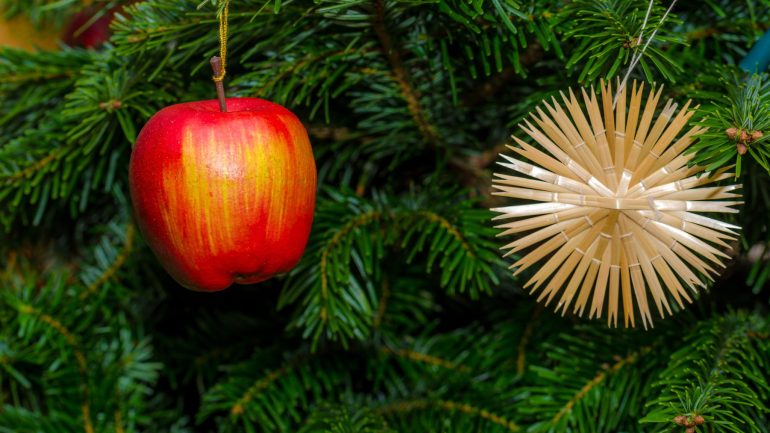
German trees were decorated with apples to represent the Garden of Eden (Credit: Hermenau via Getty Images)
Moving forwards in time to the late Middle Ages, church records across Europe mention purchases of holly and ivy for seasonal decoration. Private households mirrored this practice, with 15th-century London often seeing homes decked with holm, ivy, bays, and other evergreen plants. In medieval German‑speaking countries, “paradise plays” for the feast of Adam and Eve on 24 December used an evergreen “paradise tree” hung with apples to represent the Garden of Eden. This is often seen as the precursor to the Christmas Tree we know today. A pre-tree, if you will, especially as it was adopted in homes over time.
Also around this time, festive trees were documented in the Baltic countries. In particular, merchant guilds in cities such as Tallinn and Riga set up decorated evergreens during Christmas and New Year, sometimes dancing around them before ceremonially burning them.
The Tree Tradition Flourishes
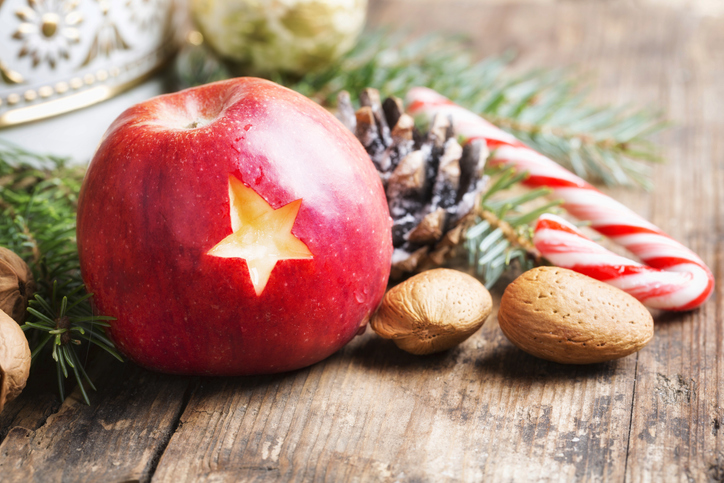
17th and 18th century decorations we still see today (Credit: SilviaJansen via Getty Images)
During the 1600s and 1700s, Christmas trees grew more common among German-speaking Protestants, particularly Lutherans. Evergreen tops or whole fir trees appeared in homes, churches, and guildhalls, decorated with apples, paper flowers, nuts, and candles. These adornments established many features that we still see today, from the placement of candles to colourful lights and festive treats.
Branching Out Internationally
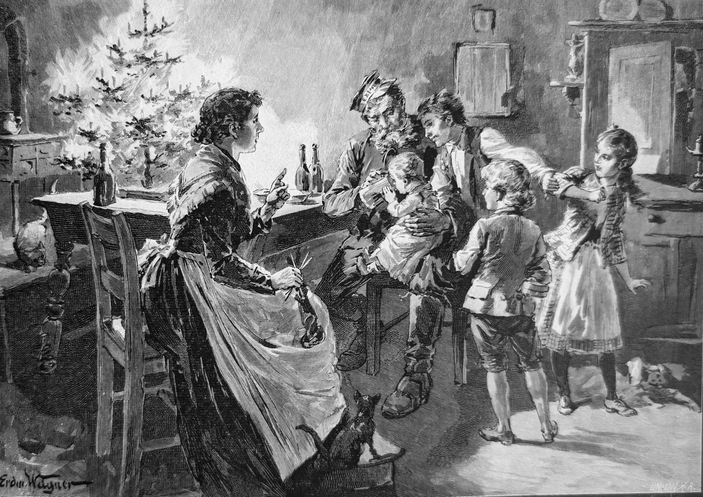
A 19th century illustration of Christmas at home (Credit: clu via Getty Images)
Over time, German migrants and royal marriages helped to spread the idea of the Christmas tree during the late 18th and early 19th centuries. By the end of the Georgian period, German influence introduced decorated trees into the British upper classes. In 1800, Queen Charlotte, the German wife of King George III, arranged an elaborate yew tree at Queen’s Lodge, Windsor, adorned with candles, sweets, fruits, and small gifts. Soon enough aristocratic households were copying the trend, and it soon started to take root more widely in Britain.
During the reign of Queen Victoria and Prince Albert, their celebrations featured Christmas trees, and this was widely publicised in an 1848 engraving in the Illustrated London News. This further propelled the Christmas tree into the public eye. Within a few years, middle-class families across Britain had also embraced the tree. Candles flickered on branches; ornaments multiplied; parlours filled with sweets, fruit, homemade decorations, and gifts gathered beneath the evergreen’s lower limbs. The Christmas tree entered British tradition not merely as a fashionable display but as the heart of the family celebration. Indeed, by 1860, Christmas trees had become a core feature of holiday décor in many British homes.
That same image of Victoria and Albert with their tree is often credited with sparking a trend in the US. For, while German immigrants introduced decorated trees to North America well before the Victorian era, the custom had remained relatively localised until then.
Commercialisation and Modern Forms
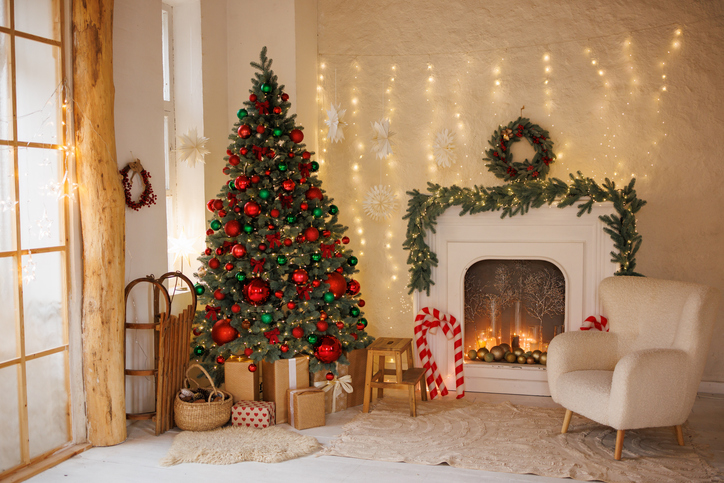
A richly decorated modern Christmas tree (Credit: Sergii Kolesnikov via Getty Images)
The 20th century saw a shift from forest-cut evergreens to organised cultivation. For instance, in 1901, the first widely recorded dedicated tree farm was planted in New Jersey.
Meanwhile, decorative trends continued to evolve. In earlier centuries, apples, wafers, nuts, and hand-carved ornaments dominated. Later periods introduced tinsel, and eventually mass-produced baubles, alongside innovations in lighting and display. Electric lights supplanted candles, and LED technology brought new possibilities for energy-efficient brilliance. Artificial trees, first appearing in the early 20th century, grew increasingly popular alongside traditional real trees.
An Evergreen Tradition

Merry Christmas! (Credit: Andreas von Einsiedel via Getty Images)
The Christmas tree stands today as the result of countless traditions: ancient reverence for winter greenery, medieval German celebrations, royal endorsement, and global enthusiasm. Its history resembles not a single line of development but a branching, interwoven tale, much like the tree itself.