For almost 10,000 years, cats have slinked through human history, from ancient temples to bustling city apartments. First domesticated in a region known as the Fertile Crescent (in the modern-day Middle East), cats were drawn to early settlements by an abundance of grain-loving mice, and it was a partnership that would run and run, literally!
Revered as deities in Egypt and cherished as companions all over the world, today’s domestic cat owes its origins to the wild Felis silvestris lybica which evolved somewhere between 200,000 and 500,000 years ago. Fast-forward to 2025, and cats are truly citizens of the world. Estimates suggest there are about 600 million cats globally, with more than 370 million living as pampered pets. America tops the charts with around 74 million pet cats, followed by China with about 58 million. In the UK, around 11 million cats are kept as pets.
Cats have clawed their way into our homes and the history books as well as into the annals of legend and pop culture. From the ancient Egyptian goddess Bastet and the intrepid Unsinkable Sam – supposedly the survivor of not one, but three shipwrecks – to iconic concepts such as Schrödinger’s quantum cat, no other animal boasts such a mythic résumé. Cartoon luminaries like Garfield, Tom of Tom and Jerry, and Felix, echo their real-life counterparts by charming, scheming, or mystifying us. Whether inspiring poems, starring in scientific paradoxes, or simply curling up in a sunbeam, cats have made history their playground. Here’s a list of some of the most famous cats ever.
What is International Cat Day?
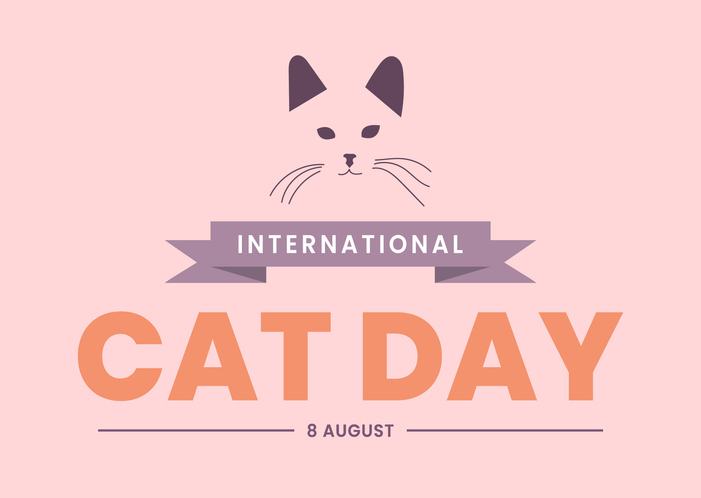
International Cat Day (Credit: Rizwan Mehmood via Getty Images)
International Cat Day is a global celebration held annually on 8 August to honour cats and promote their well-being. Created in 2002 by the International Fund for Animal Welfare, this day aims to raise awareness about cat welfare, encourage responsible pet ownership, and highlight the important role cats play in our lives. In 2020, the custodianship of International Cat Day was passed to a not-for-profit British charity based in Wiltshire called International Cat Care who are focused on the commission, collation and dissemination of knowledge, information and education in all matters relating to the health and wellbeing of cats worldwide.
Today, International Cat Day brings together cat lovers, shelters, and animal advocates worldwide in celebrating all things feline. Ready for some phenomenal felines? These cats have quite the tail to tell…
History’s Most Famous Felines
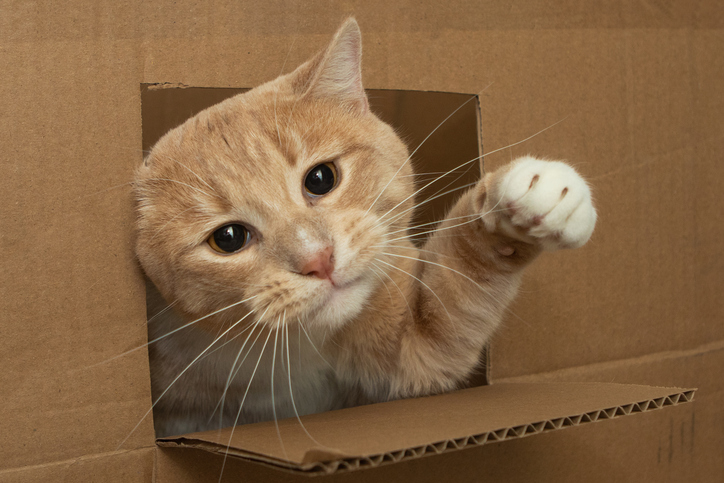
The cat's the star! (Credit: Laszlo Podor via Getty Images)
From Egyptian gods to prime ministerial moggies and cats that are on this list, but also not on this list (all will be explained…), here are some legendary cats.
Nedjem
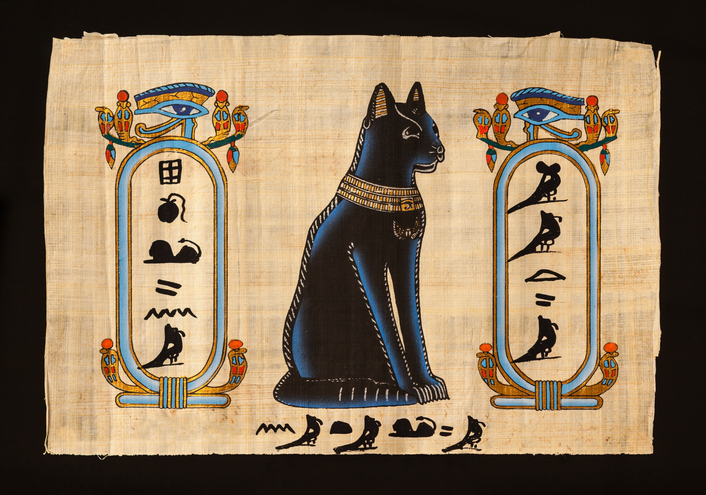
An ancient Egyptian cat goddess (Credit: VolNa69 via Getty Images)
Nedjem – sometimes spelled Nojem – is believed to be the first cat with a documented name. It’s said he was owned by a priest called Puimre during the reign of Pharaoh Thutmose III and Queen Hatshepsut in the fifteenth century BC. Nedjem translates as ‘Sweetie’, or ‘The Sweet One’, and while it’s likely earlier cats were given names, Nedjem was the first known example to be inscribed and preserved.
Unsinkable Sam
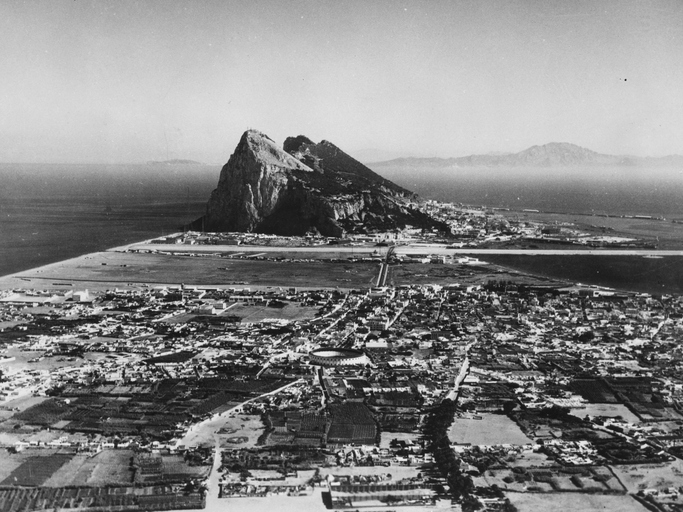
HMS Cossack was torpedoed off Gibraltar and Oscar ended up on the Ark Royal (Credit: Own via Getty Images)
They say cats have nine lives, and Oscar, who was affectionately renamed Unsinkable Sam, certainly needed most of them in 1941. The story goes that this particular cat was aboard the German Navy’s battleship Bismarck which was torpedoed by the British in May, killing all but 114 men from a complement of over 2,200. The cat was found on some driftwood floating in the water by the crew of HMS Cossack who called him Oscar. In October, the Cossack was torpedoed in the waters off Gibraltar by German submarine U-563, and at some point after that the cat was transferred to the aircraft carrier HMS Ark Royal, which itself was torpedoed by U-81 a month later.
One account suggested that Oscar was taken to a sailor’s rest in Northern Ireland and from there, may have gone to America with the rest’s manager who married an American technician. It must be noted that this entire story could be apocryphal, cobbled together from a number of different reports and sailor’s stories, but a portrait of Sam – who was said to have died in 1955 – by artist Georgina Shaw-Baker is in the possession of the National Maritime Museum in Greenwich.
Félicette

Félicette was the only cat to go into space (Credit: Brandon Moser / 500px via Getty Images)
Most people have heard of Laika, the stray dog found on the streets of Moscow who was launched into space onboard Sputnik 2, but few have heard of Félicette. Similarly, she was a stray cat found on the streets of Paris and was the first (and so far as we know, only) cat to go into space. Named after the famous cartoon cat Felix, Félicette was chosen from a group of fourteen cats for her calm demeanour and was launched into suborbital flight by the French from the Centre Interarmées d’Essais d’Engins Spéciaux – the Interarmy Special Vehicles Test Centre – in Algeria in October 1963. Electrodes monitored her neural activity, providing valuable data, before the world’s first astrocat returned safely to Earth after a flight lasting thirteen minutes.
Schrödinger’s Cat
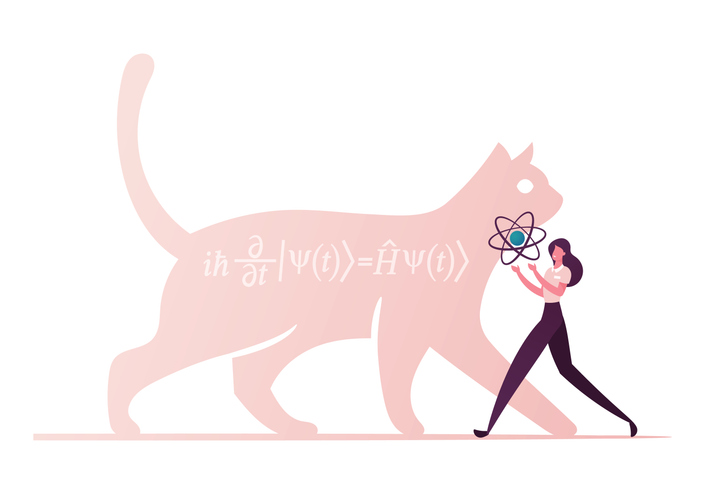
Schrödinger’s cat is one of the world's great thought experiments (Credit: invincible_bulldog via Getty Images)
Schrödinger’s cat is a famous thought experiment devised by physicist Erwin Schrödinger in 1935 to illustrate the paradox of quantum superposition and challenge the Copenhagen interpretation of quantum mechanics. Put rather more simply, the experiment – which doesn’t involve a real cat, rather a hypothetical one – involved the make-believe moggie being placed inside a sealed box with a radioactive atom, a Geiger counter, and a vial of poison. If the atom decays, the Geiger counter triggers the release of poison, killing the cat. If it doesn’t decay, the cat remains alive.
According to quantum theory, until the box is opened and observed, the cat is considered to be simultaneously alive and dead – existing in both states – a concept which has cat-apulted it into a cultural and scientific icon.
Scarlett

NYFD firefighter David Giannelli named the heroic cat Scarlett (Credit: Bim via Getty Images)
This is a truly astonishing story. In March 1996, a fire broke out in an abandoned garage in the New York suburb of Brooklyn. The fire department was called, and quickly put the blaze out. However one of the firefighters, David Giannelli, noticed a stray cat carrying her kittens out of the burning building, going back in five times to retrieve them, one by one. Scarlett, as he subsequently called her, was severely burned, and as she got them out, she touched each one with her nose to make sure she had them all because her eyes were fused shut. Scarlett and her kittens were treated at a veterinary clinic at the North Shore Animal League in New York for three months but unfortunately one later died.
The remaining four were adopted in two pairs, and Scarlett was herself adopted by Karen Wellen of Brooklyn. Scarlett died in October 2008 – she was probably around 13 – and as a legacy, the North Shore Animal League created the Scarlett Award for Animal Heroism, presented to animals or humans who have performed heroic acts of bravery for the benefit of others.
Larry
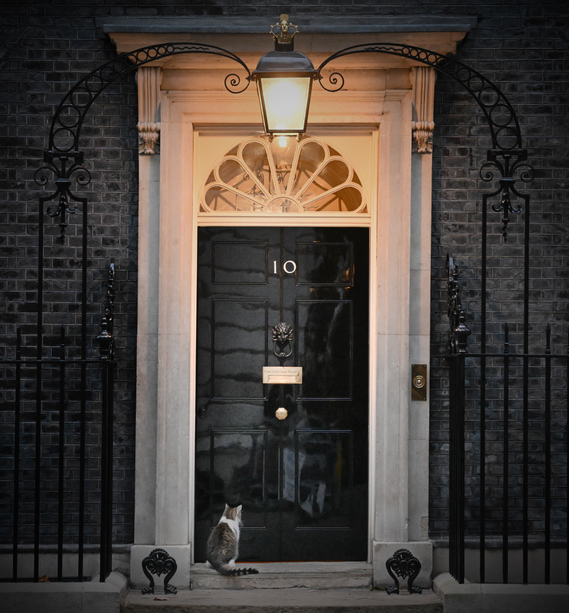
Larry, waiting to be let in... (Credit: oversnap via Getty Images)
The current Chief Mouser to the Cabinet Office is Larry, a tabby cat who has lived at 10 Downing Street since 2011. He isn’t, as many think, the personal property of the Prime Minister, and is cared for by Downing Street staff. He is the first cat to be bestowed with the title of Chief Mouser, but the tradition of cats in the English government likely goes back to the reign of King Henry VIII when his Lord Chancellor, Cardinal Thomas Wolsey, had his cat with him while on official duty. Records of Downing Street cats only go back as far as the mid-1920s with Rufus of England (nicknamed ‘Treasury Bill’) who was in residence under Ramsay MacDonald.
The longest-serving Chief Mouser was Peter III who was in Number 10 for seventeen years (1947 – 1964) under the prime ministerships of Clement Atlee, Winston Churchill, Anthony Eden, Harold Macmillan and Alec Douglas-Home. According to the official government website, ‘Larry spends his days greeting guests to the house, inspecting security defences and testing antique furniture for napping quality. His day-to-day responsibilities also include contemplating a solution to the mouse occupancy of the house. Larry says this is still ‘in the tactical planning stage’.
Garfield
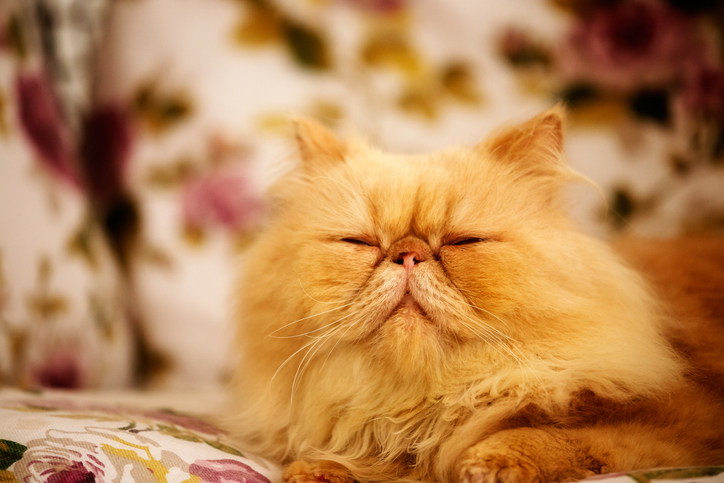
Garfield loves lasagna but hates Mondays! (Credit: Chinese independent photographer via Getty Images)
Created by Jim Davis in 1978, Garfield is the lasagna-loving, Monday-hating chubby orange tabby who stars in one of the world’s most syndicated comic strips. At its peak in around 2004, Garfield appeared in an estimated 2,600 newspapers with a readership of about 270 million and sold somewhere between $750 million and $1 billion worth of merchandise.
His sarcastic wit and relatable laziness have made him a cultural mainstay, with movies, TV shows, video games and merchandise spanning generations. There was even a short-lived restaurant serving lasagne, Garfield-shaped pizza and chocolate bars, and Garfuccinos, a play on the frothy Italian coffee.
Creme Puff & Stewie
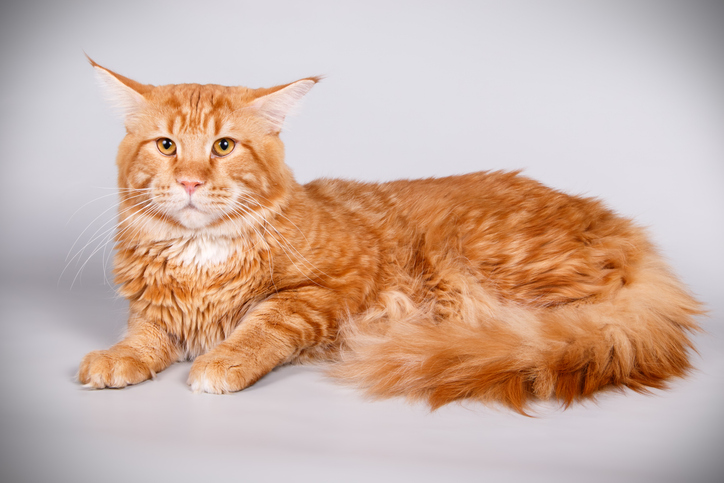
Maine Coons are one of the largest domestic cat breeds (Credit: photo by Volchanskiy via Getty Images)
You may not have heard of these cats, but they’re world record holders! Creme Puff was born in August 1967 and died in August 2005, making her the oldest cat in history at 38 years and three days. According to her owner, Texan native Jake Perry, the secret to her longevity was a tiny amount of red wine every few days!
Stewie, or to give him his full name, Mymains Stewart Gilligan, was a Maine Coon cat who measured a staggering 1m 23cm long, breaking the record for the longest domestic cat ever. He was owned by Robin Hendrickson and Erik Brandsness but sadly died in 2013.
Famous Make-Believe Moggies
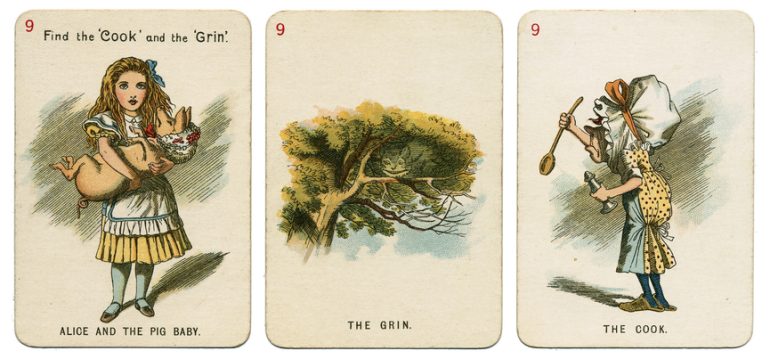
Grinning like a Cheshire cat! From Alice's Adventures in Wonderland (Credit: Whiteway via Getty Images)
Cartoon, literary and telly cats have charmed audiences for decades, embodying a range of personalities from mischievous to heroic. Across pages, screens, and generations, these animated felines have left an indelible mark on popular culture, particularly in the UK, where some of the earliest and most iconic cartoon cats were created and continue to captivate.
Felix
Felix the Cat, created in 1919 by Australian cartoonist Pat Sullivan and American animator Otto Messmer, is one of the earliest and most iconic cartoon cats. With his black body and big grin, he became the first animated superstar with his mischievous adventures during the silent film era and beyond.
Thomas Jasper Cat Sr.
Tom, the determined blue-grey house cat from Tom and Jerry, has entertained audiences since 1940 with his endless but often failed attempts to catch Jerry, whose real name is Gerald Jinx Mouse. The classic chase has become a timeless symbol of cartoon slapstick comedy.
Sylvester James Pussycat
Famous for his lisping voice and relentless pursuit of Tweety Bird, Speedy Gonzales and Hippety Hopper, Sylvester the Cat debuted in Warner Bros. cartoons in the 1940s and was created by legendary American animator Fritz Freleng. His mix of comic frustration and persistence has made him a beloved figure in animation history.
Bagpuss
Referred to in the show’s introduction as ‘the most important, the most beautiful, the most magical, saggy old cloth cat in the whole wide world’, Bagpuss was a stop-frame animation TV series broadcast in the UK between February and May 1974. With his nostalgic charm and soft voice, he remains an enduring icon of British storytelling and childhood imagination, despite the fact only thirteen episodes were ever made.
Top Cat
Top Cat, or TC to his friends, is the super-suave, street-smart leader of a gang of Manhattan alley cats in the 1960s American animated series. Produced by William Hanna and Joseph Barbera, TC and his friends Benny the Ball, Brain, Choo-Choo, Fancy-Fancy and Spook lived in Hoagy’s Alley and were relentlessly pursued by Officer Dibble who always tried to nab them when their scam get-rich-quick schemes inevitably backfired. The smooth-talking tabby remains a favourite for his charismatic and humorous personality.
Hello Kitty
Hello Kitty, created by Japanese designer Yuko Shimizu in 1974 and owned as a brand by entertainment giant Sanrio, is a mouthless white cat with a red bow. This famous feline has become a global symbol of Japanese kawaii (translated as ‘cuteness’) culture. Far beyond being a cartoon, she embodies warmth and friendship, appearing on everything from fashion to theme parks. It’s believed Hello Kitty is one of the highest grossing media franchises of all time, with a lifetime revenue of around $80 billion.
The Cat in the Hat
One of the most famous and popular children’s books of all time, The Cat in the Hat was written by Theodore Seuss Geisel, otherwise known as Dr. Seuss, and was published in March 1957. The 61-page book centres on The Cat, a mischievous, tall-hatted feline who disrupts a dull rainy day with playful chaos. For almost seventy years, he has introduced generations of children to reading through his whimsical rhymes and unpredictable adventures.
Cheshire Cat
The Cheshire Cat from Lewis Carroll’s 1865 children’s novel Alice’s Adventures in Wonderland is known for its enigmatic grin and ability to disappear at will. A symbol of whimsy and mystery, this British literary cat has fascinated readers for over 150 years.