The humble hamburger occupies a unique place in food history. For millions of people around the world, it’s a classic everyday indulgence. But its roots stretch far deeper than the Big Mac or the Whopper.
Centuries before the fast food frenzy, ancient Romans were savouring their own seasoned minced meat patties called Isicia omentata, a dish that some food historians regard as the original ‘burger’.
The story soon gallops eastward, where – if the stories are to be believed – Mongol horsemen would ride with raw meat under their saddles, tenderising it as they travelled across the steppes. This method not only marked an early form of minced meat cuisine but also set the stage for further innovations as different types of food moved between Eurasian, and then European, cultures. By the nineteenth century, waves of immigrants took these traditions to American shores, where the hamburger began its transformation from Old World staple to New World phenomenon.
Yet, despite its familiarity, the exact origin of the hamburger as we know it – in a bun, with toppings, as a quick meal – is subject to heated and ongoing debate. Competing claims from towns and chefs across the United States vie for recognition, but one thing is indisputable – the hamburger has become a ubiquitous marker of modern life, shaping everything from fast food culture to global dining trends. As we embark on this journey, prepare for unexpected tales and curious twists that have seasoned the story of the burger. Join us as we beef up your knowledge of this global icon.
From Saddle to Sizzle - The Journey of the Hamburger
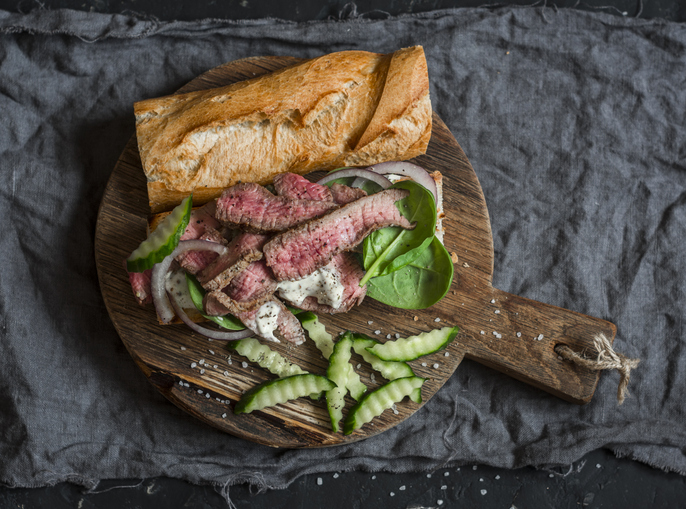
Bread and beef have been eaten together for millennia (Credit: OksanaKiian via Getty Images)
Perhaps the earliest ancestor of the hamburger can be traced to ancient Rome, where a dish called Isicia omentata – preserved in the late fourth or early fifth century cookbook Apicius – blended minced meat with pine nuts, pepper, wine, and garum, graced their tables. Still cooked today, it bears a striking resemblance to the modern patty and it offers a reminder that this culinary classic has roots stretching back nearly two millennia.
However, the two main ingredients in a hamburger – bread and beef – have been eaten separately, all over the world, for thousands of years, so who’s to say no-one had the brainwave to put them together before the Romans? We may never know.
But if we fast-forward a thousand years, it was Genghis Khan’s Mongol warriors who some believe may have inadvertently invented the hamburger…
The Mongols - Mayhem & Munchies
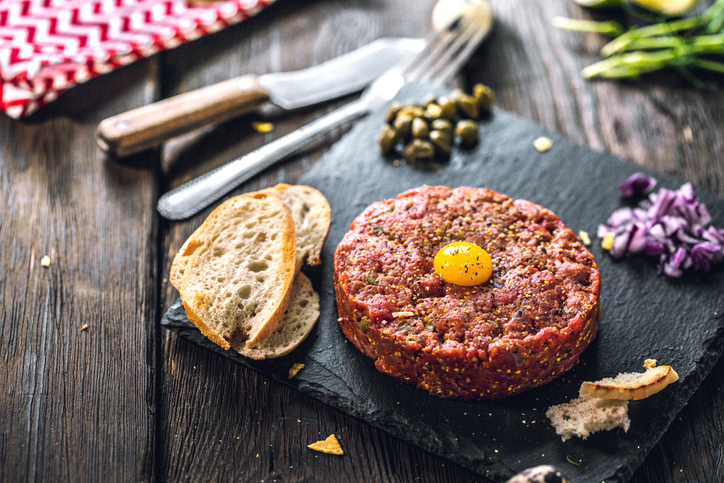
The story of steak tartare may have started under Mongolian saddles... (Credit: da-kuk via Getty Images)
In the thirteenth century, contemporary writers claimed that Mongol horsemen softened raw meat by placing it under their saddles during long rides so they could eat it without dismounting. This vivid tale, passed through European travellers’ accounts, became part of the romanticised origin stories for steak tartare and, much later, the hamburger.
While it’s a captivating, colourful, and exotic story – and one that’s often repeated as fact today – modern historians doubt the practice ever happened, and theorise that this idea likely sprang from misunderstanding or embellishment. Putting meat under a saddle would spoil it and harm the horse – an unlikely choice for skilled riders who valued their mounts. More plausibly, if such a food was consumed, the Mongols more likely prepared the minced meat before they set off.
The next part of this often-repeated story goes that when the Mongols invaded Russia, they also introduced their ground meat to the locals, and the Russians called it ‘tatar’, their term for the Mongols. These meat dishes were seasoned with herbs, onions and eggs, which some believe eventually made it to France and became steak a la tartare. Again, while it’s a great story, there’s probably very little truth in it. Indeed it’s said that French chefs applied the exotic-sounding term to finely chopped raw steak, retrofitting the Mongol–Tatar legend as a colourful origin story rather than genuine culinary heritage.
The Hamburger From Hamburg

Did German sailors bring hamburgers to Hamburg? (Credit: Igor Tichonow via Getty Images)
So how did the burger patty end up in Europe? One possible – albeit highly speculative – explanation was that in the seventeenth or eighteenth century, German sailors brought meat patties back from Russia to Hamburg where it was adapted and became known as the Hamburg steak. In fact, in a 1750s cookbook called Art of Cookery, Made Plain and Easy by Hannah Glasse (the Mary Berry of her day), she refers to a ‘hamburgh sausage (sic)’ of minced meat and spices including cloves, nutmeg and garlic, served with toast.
But come the middle of the nineteenth century, the humble hamburger started on its journey to superstardom.
Coming to America

Making hamburgers at home became quick and easy (Credit: TomekD76 via Getty Images)
As German immigrants poured into the United States during the nineteenth century, they brought with them culinary traditions, including the Hamburg steak. At first, it was considered a delicacy, found mostly in port cities like New York and Chicago, where street vendors and restaurants offered it as a nostalgic taste of home for the new arrivals. Yet the blossoming American appetite for convenience food would soon transform this little patty into a national staple.
The story’s pace quickened thanks to industrial innovation. In the early 1800s, Karl Drais, a German inventor with a knack for kitchen gadgetry, created the first meat grinder, and within forty or fifty years, there were dozens of patents for improved versions. These machines allowed butchers and home cooks alike to produce ground meat quickly and cheaply, making dishes such as the Hamburg steak both affordable and widely available. Later, America’s “Golden Age of Beef” – fuelled by cattle drives, the railways, and a booming ranching industry – put juicy, flavourful beef on tables across the country. By the late 1800s, Hamburg steak had jumped from street food stalls to mainstream menus, an early taste of the fast-food revolution to come.
But Who Invented The Modern Hamburger?
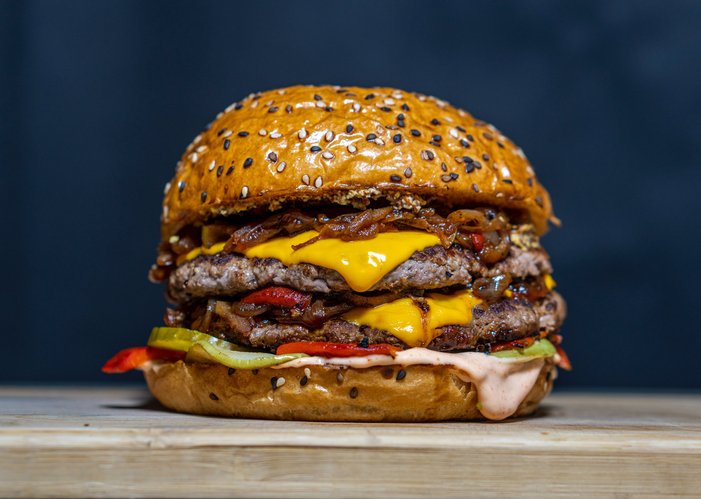
Who invented the modern hamburger? (Credit: novanym 95 / 500px via Getty Images)
The question of who truly invented the hamburger as we know it remains hotly debated, and several contenders ‘steak’ their claim. The modern hamburger emerged in the late nineteenth century in America, with multiple origin stories vying for recognition.
Delmonico’s
It’s often claimed that New York’s famed Delmonico’s Restaurant had Hamburg steak on their menu as early as 1834 or 1836. However, historical research shows that while Delmonico’s probably had a version of the hamburger on their menu by the 1880s, there is no authentic menu from the 1830s listing it as a sandwich or with bread. The supposed early Delmonico’s menu is said to be an elaborate forgery – the printer in question wasn’t in business in the 1830s!
Frank & Charles Menches
These Ohio brothers claimed they invented the hamburger at the 1885 Erie County Fair in Hamburg, New York, when they substituted ground beef for sausage in sandwiches after running out of pork. Their version was served between slices of bread, topped with simple condiments, and christened the ‘hamburger’ after the fair’s location.
Charlie Nagreen
Also known as ‘Hamburger Charlie,’ at the age of fifteen at the 1885 Seymour Fair in Wisconsin, he supposedly invented the hamburger by pressing a meatball between slices of bread for a portable snack. He created the ‘hamburger’ name to appeal to German immigrants familiar with Hamburg steak.
Fletcher ‘Old Dave’ Davis
Davis reportedly sold a grilled beef patty sandwich with mustard and Bermuda onion with a pickle on the side at his lunch counter in Athens, Texas, as early as the 1880s. He later served it alongside his wife Ciddy from a sandwich stand at the 1904 St. Louis World’s Fair. Some attribute the spread of the hamburger to Davis, but hard evidence is scant.
Oscar Weber Bilby
In Tulsa, Oklahoma, Oscar Bilby is credited with serving the first hamburger on a yeast bun (rather than regular bread) on July 4 1891. Bilby’s descendants maintain the claim and in 1995, then-governor of Oklahoma Frank Keating proclaimed the first true hamburger was indeed from Tulsa, calling the city ‘The Real Birthplace of the Hamburger.’
Louis Lassen
It’s thought that the Local Legacies Project run by the Library of Congress recognises Danish immigrant Louis Lassen of Louis’ Lunch in New Haven, Connecticut, as the creator of the American hamburger in 1900, despite the fact that similar ‘sandwiches’ had been served across the states for decades. The project itself documents community‑nominated traditions and does not actually adjudicate such origin claims – meaning this isn’t indeed an ‘official’ endorsement.
It’s worth noting that while these stories are widely retold, there’s very little documented evidence to support any of these claims. Putting meat and cheese between slices of bread was nothing new, so perhaps they all did it. As for the very first one, that seems to have been lost to history.
The Emergence of the Fast Food Phenomenon
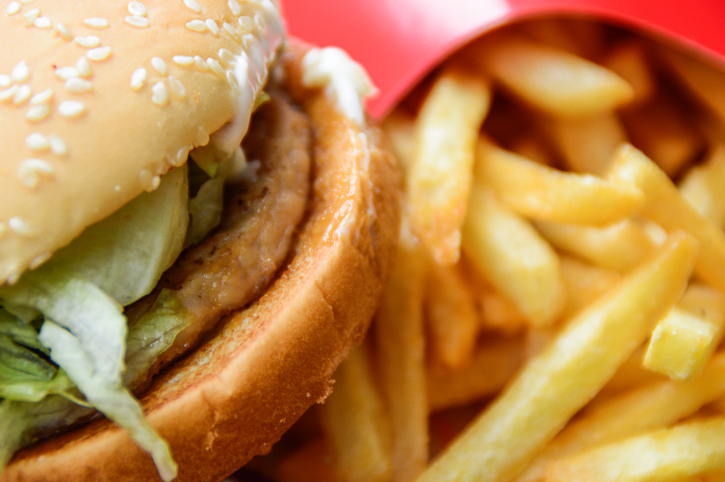
The fast-food phenomenon took off in the Twenties (Credit: Nick Tan via Getty Images)
White Castle, founded in Wichita, Kansas in 1921 by Walt Anderson and Billy Ingram, is widely credited as the first true fast-food hamburger restaurant. With its open grills, and focus on cleanliness and uniformity, White Castle set a new standard for quick-service dining in America. Their iconic small, square ‘slider’ burgers cost five cents and were made and sold very quickly, paving the way for the mass production and instant satisfaction that became the hallmark of American fast food.
White Castle’s success quickly inspired a host of imitators and competitors. In California, the first A&W root beer stands appeared in 1919 and within a few years they added burgers to their menu, evolving into another major quick-service chain. In the following decades, drive-in burger stands – most notably the original McDonald’s in San Bernardino, California, founded in the 1940s – pushed the boundaries of efficiency and volume, introducing assembly-line preparation that would revolutionise the industry. Other pioneers, such as Krystal from Tennessee, Kewpee Hamburgers from Michigan, Big Boy from California, Little Tavern in and around Washington DC, and White Tower Hamburgers from Wisconsin, also emulated White Castle’s model, targeting small towns and urban centres with affordable, standardised burgers.
The hamburger’s leap from local treat to national icon was powered by these early chains, whose inexpensive menus and quick service fit perfectly with the growing pace of American life. As the car culture expanded, so did the need for food on-the-go, and fast-food chains multiplied across the country. The innovations introduced by White Castle – consistency, cleanliness, and speed – became cornerstones of an industry that would transform not just how America ate, but how the world dined out.
How The Hamburger Became A Cultural Icon
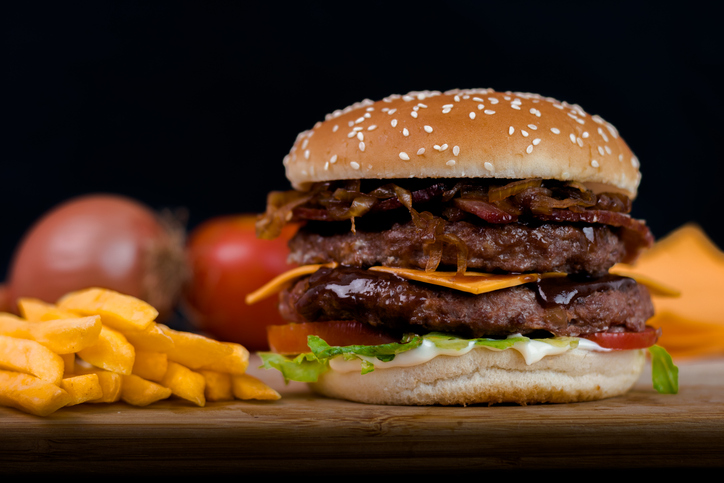
Who's hungry... (Credit: Marcelo Araujo via Getty Images)
In the 1960s, McDonald’s boasted that you could eat exactly the same burger anywhere in America, and within twenty years, that boast wasn’t just nationwide, it was global.
Today, you can barely turn a corner in any of the world’s major towns and cities without stumbling across a burger joint. From humble beginnings as a working-class street food, the hamburger has become a symbol of global fast food culture, led by iconic chains including McDonald’s, Burger King, and Wimpy.
McDonald’s itself rapidly expanded to become the world’s largest fast food chain, with over 40,000 locations in more than 100 countries serving around 70 million customers a day. Burger King, founded in Florida in 1954, followed with its own international expansion, popularising the Whopper as a rival to the Big Mac. Meanwhile, Wimpy, which started in Indiana, but found much of its success in the UK and South Africa, brought the burger to new continents and cultivated its own loyal following.
With its expansion across the globe, the humble hamburger has evolved far beyond its simple origins to become a cultural icon, instantly recognisable the world over. From street vendors to gourmet restaurants, this once-simple patty now occupies a central place in global cuisine.